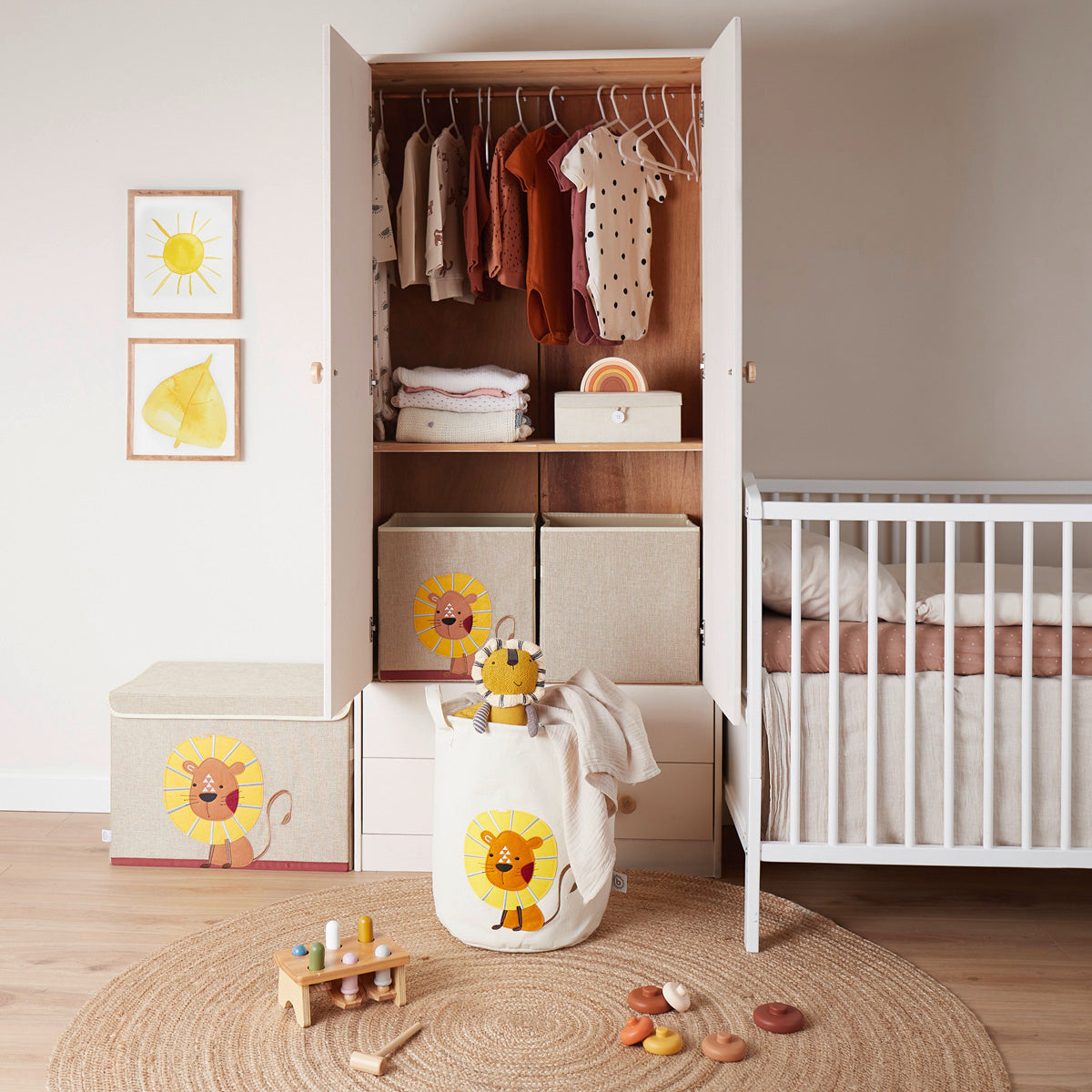
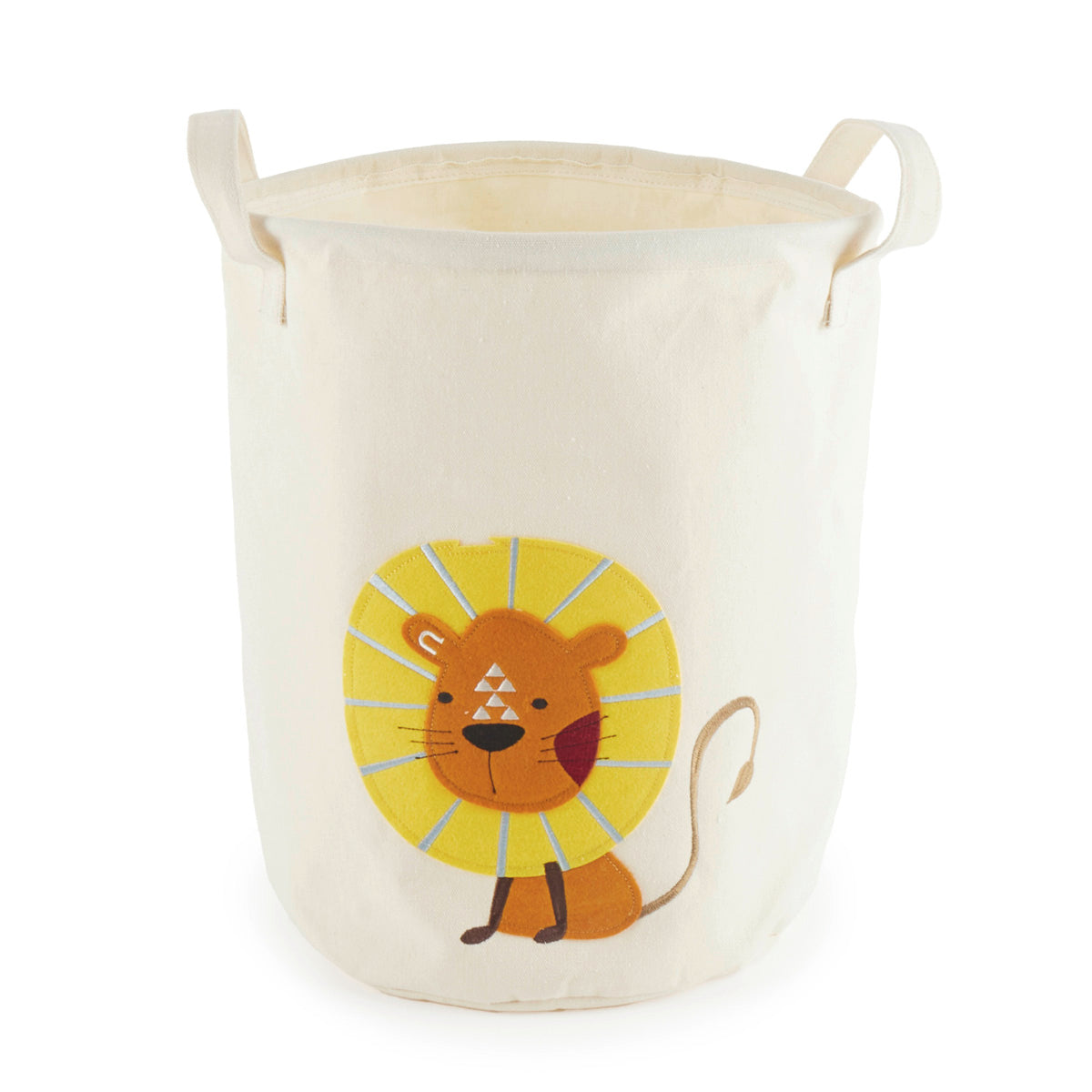
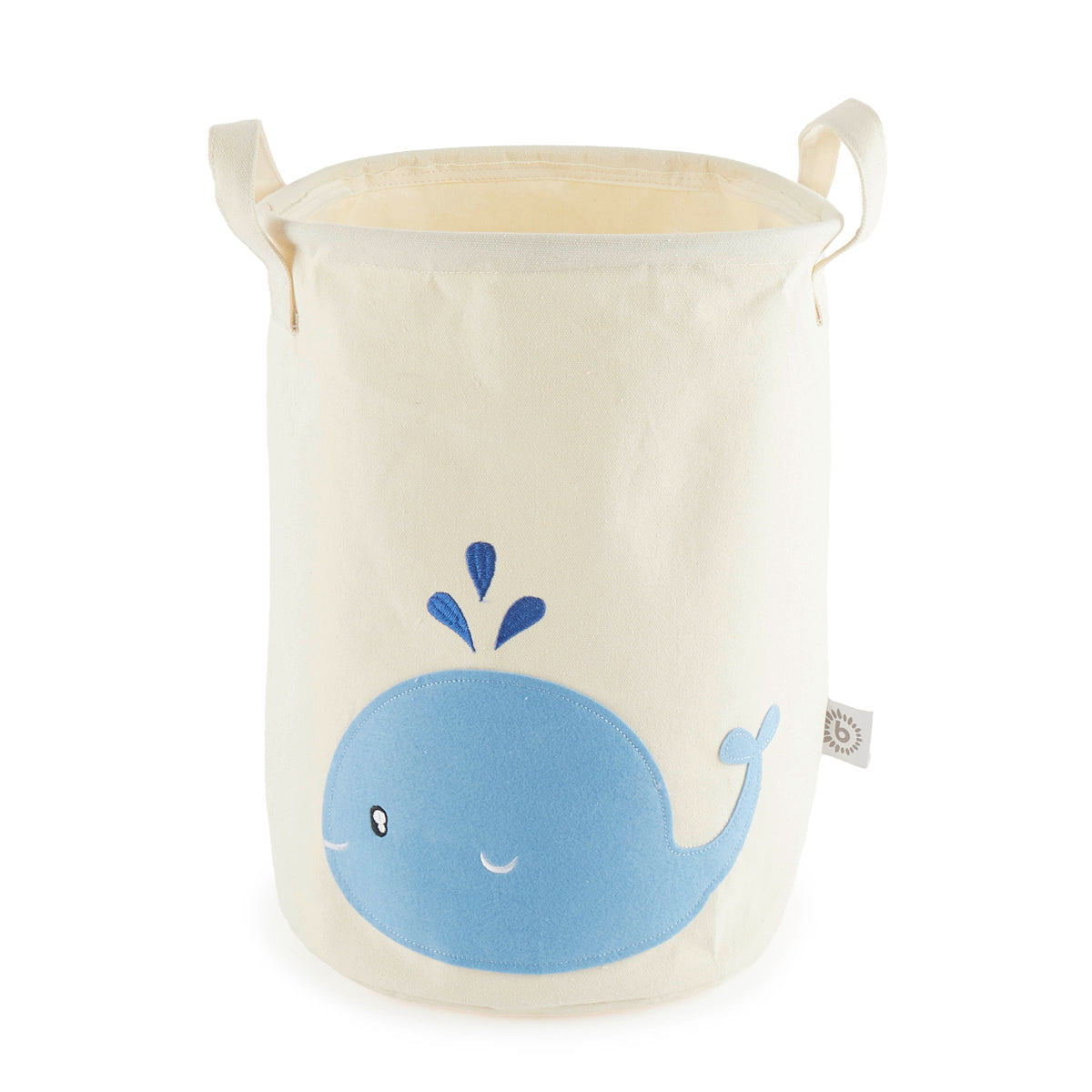
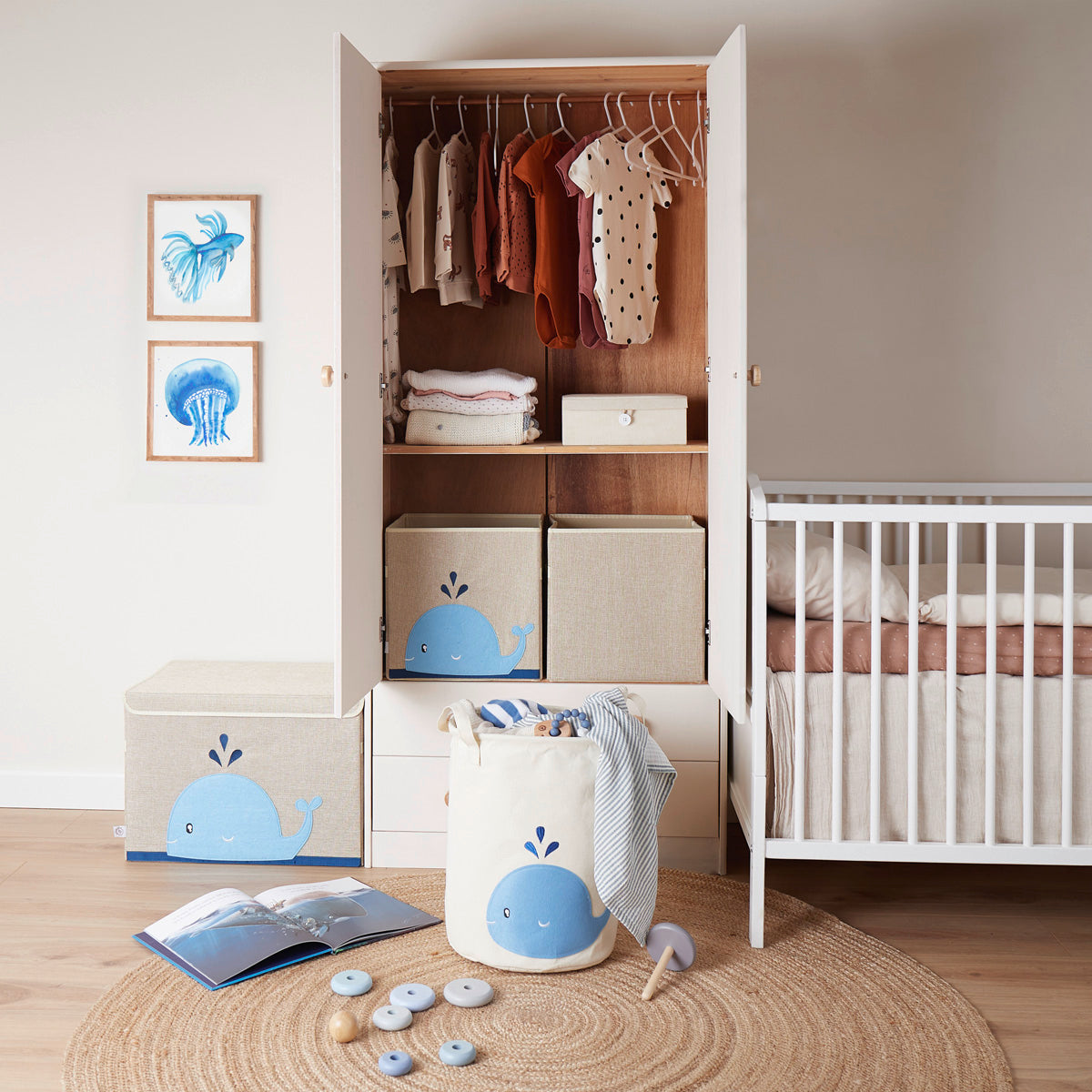
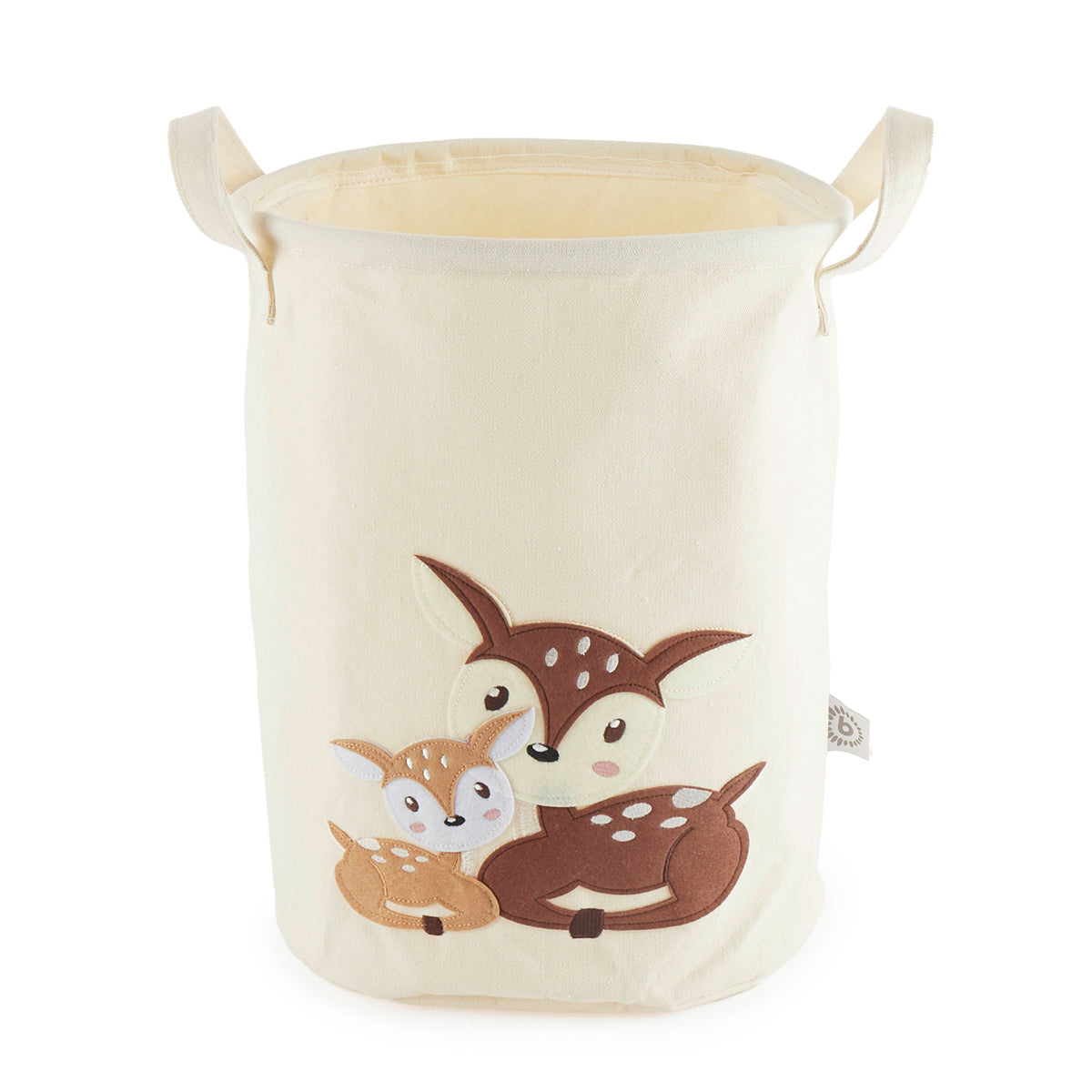
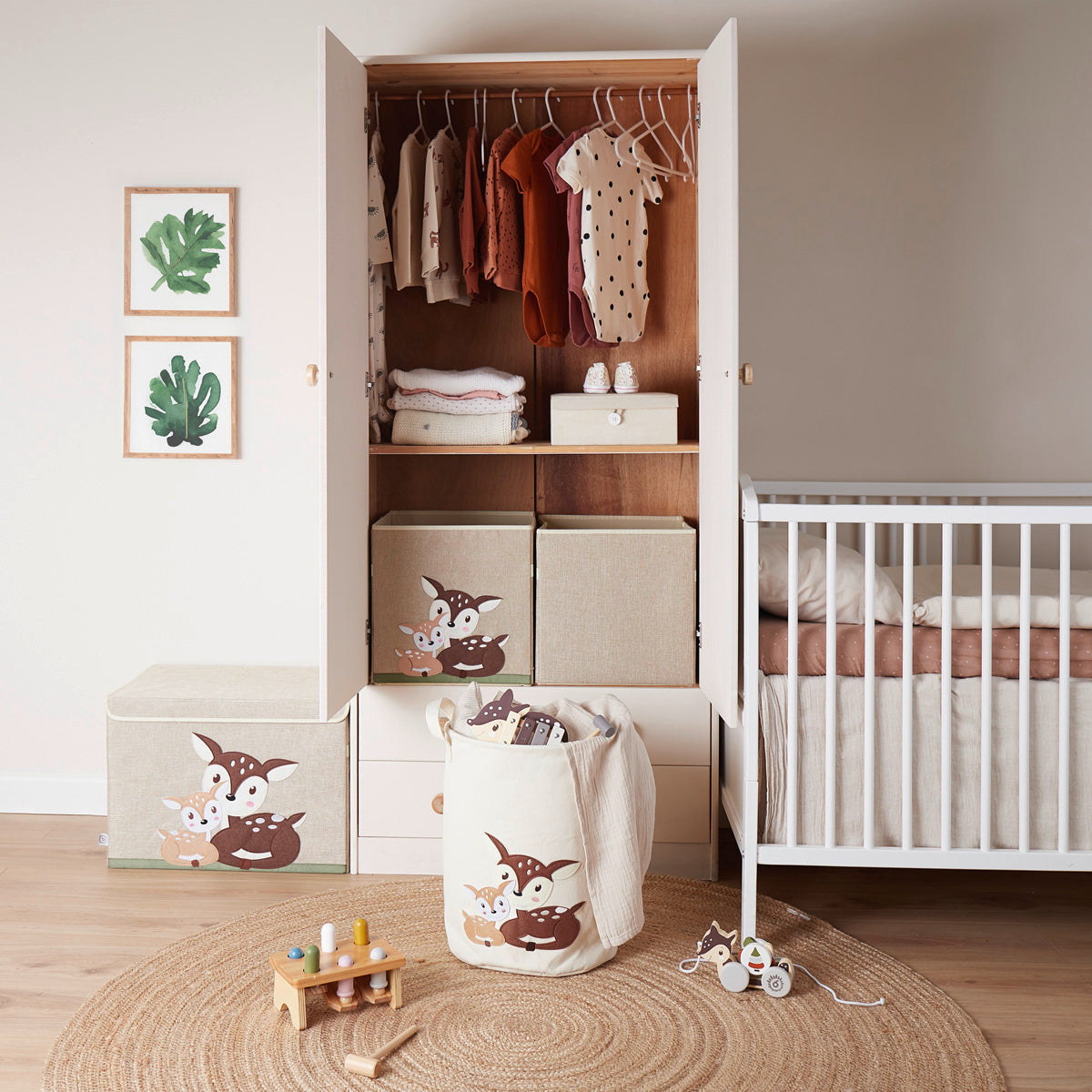
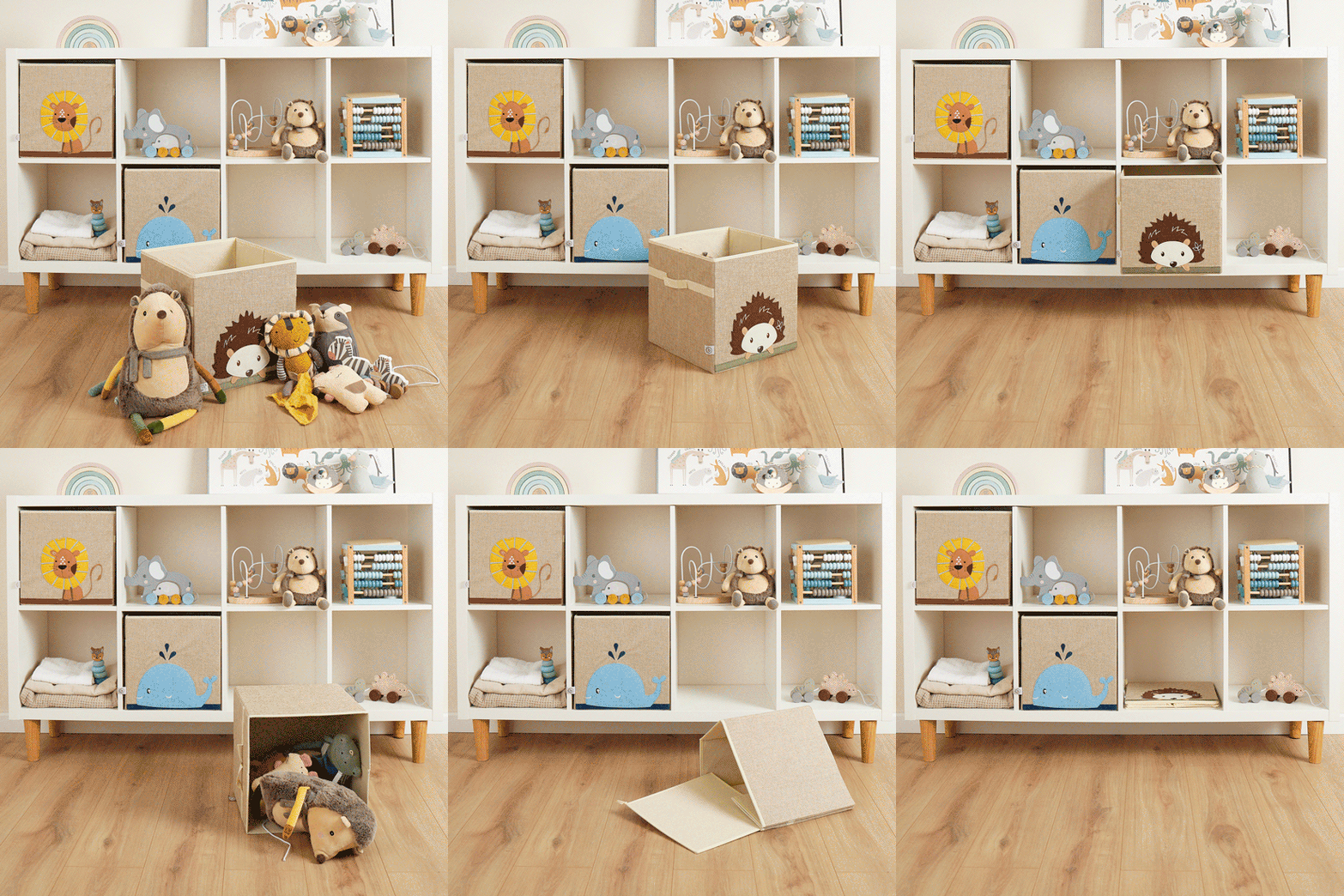
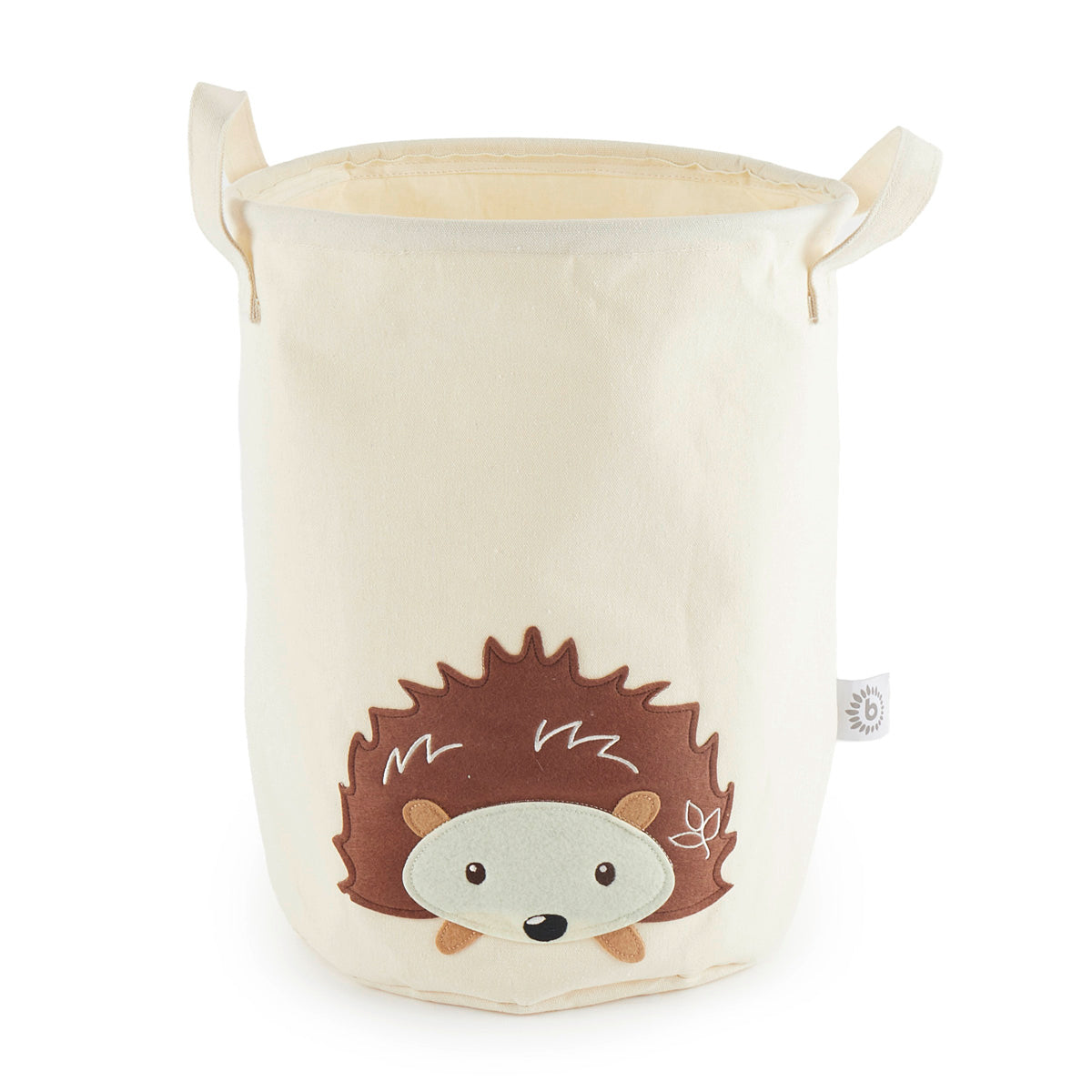
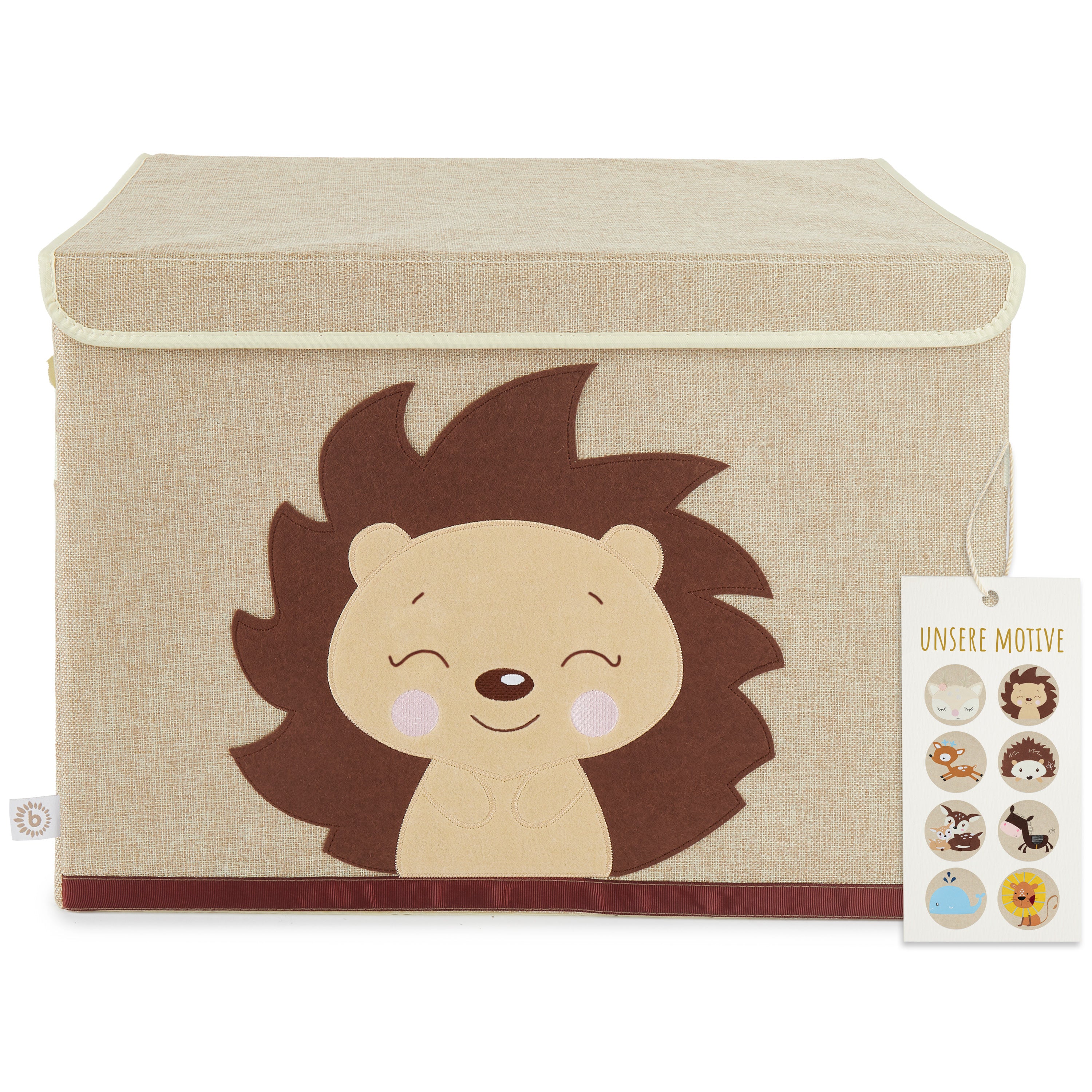
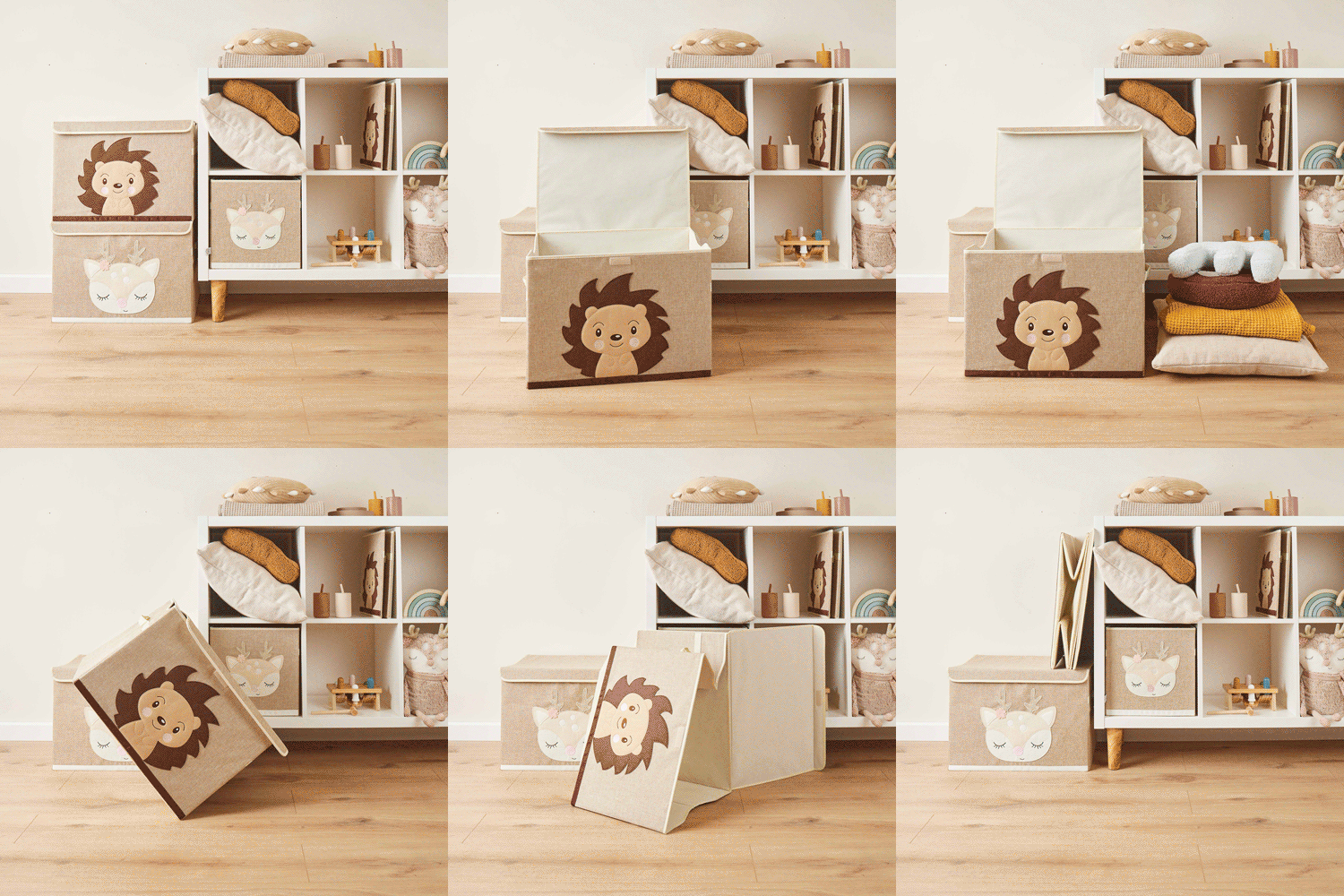
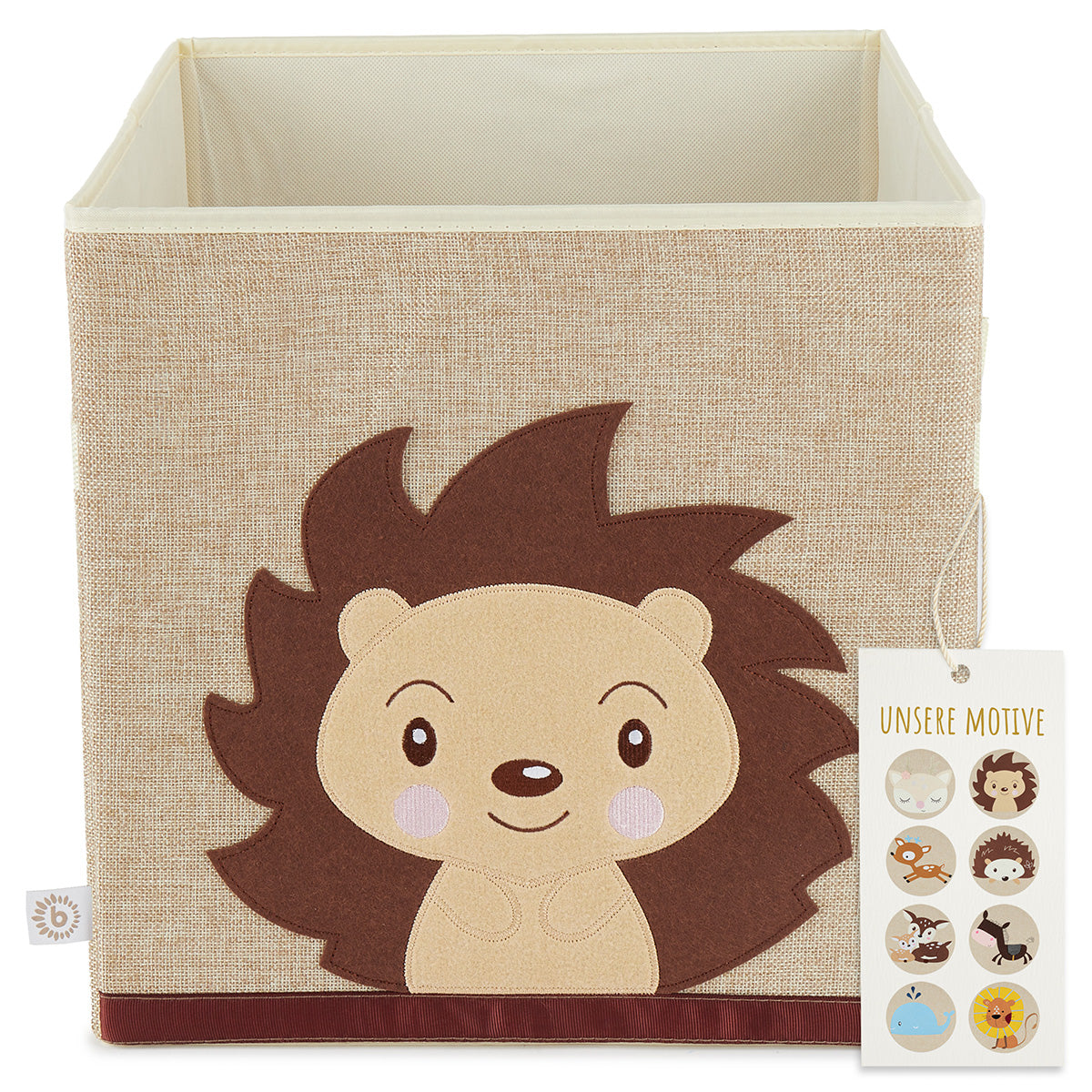
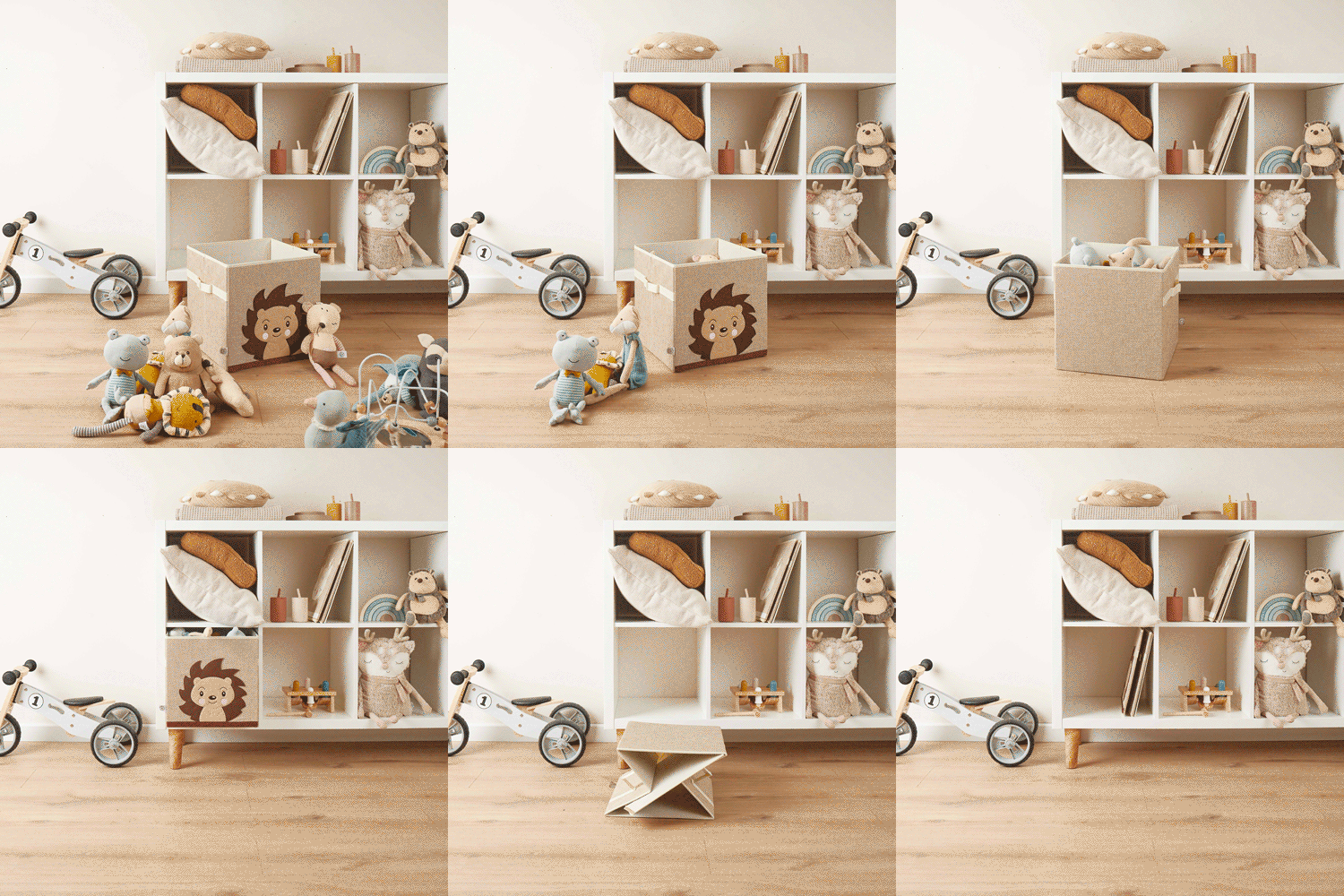
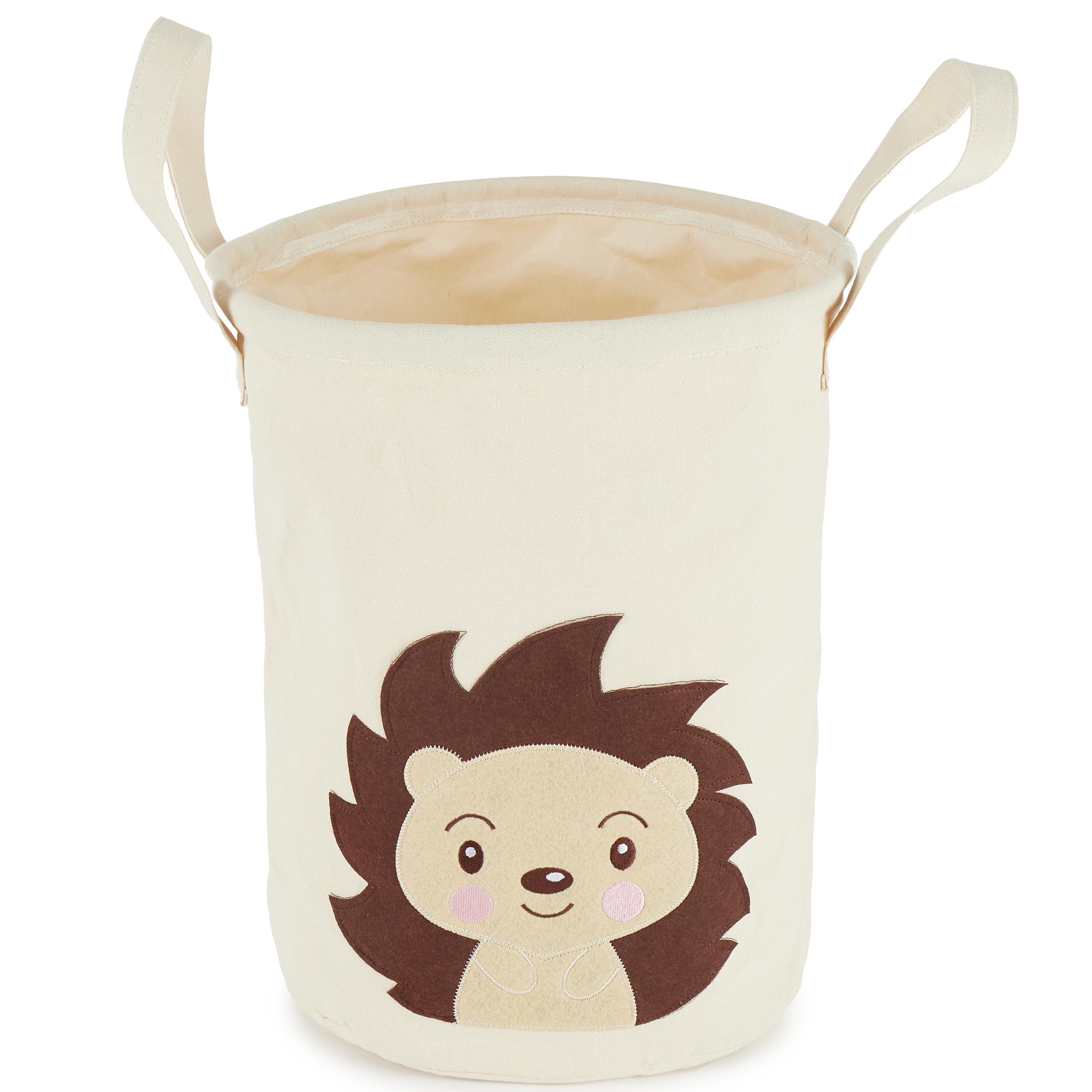
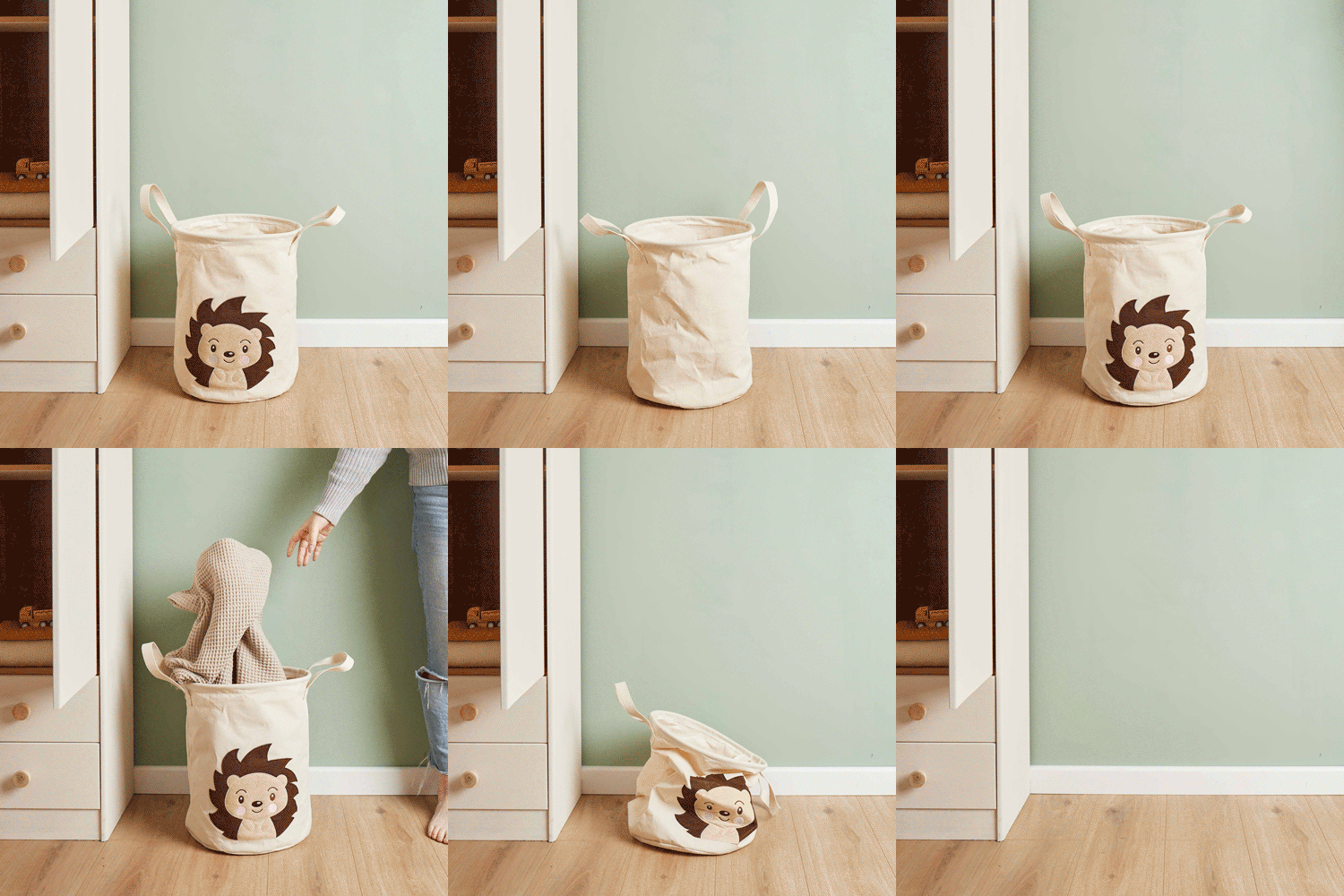
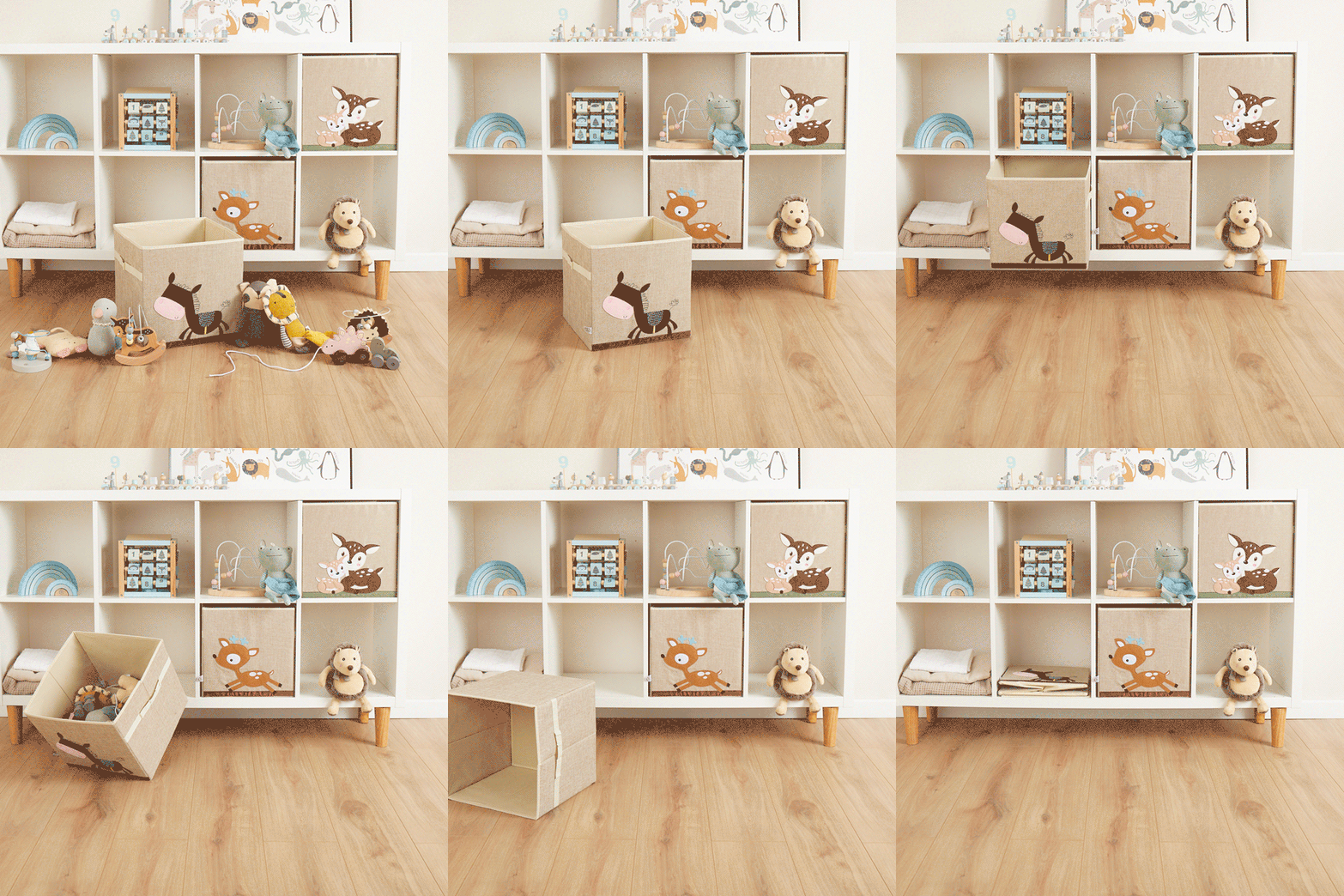
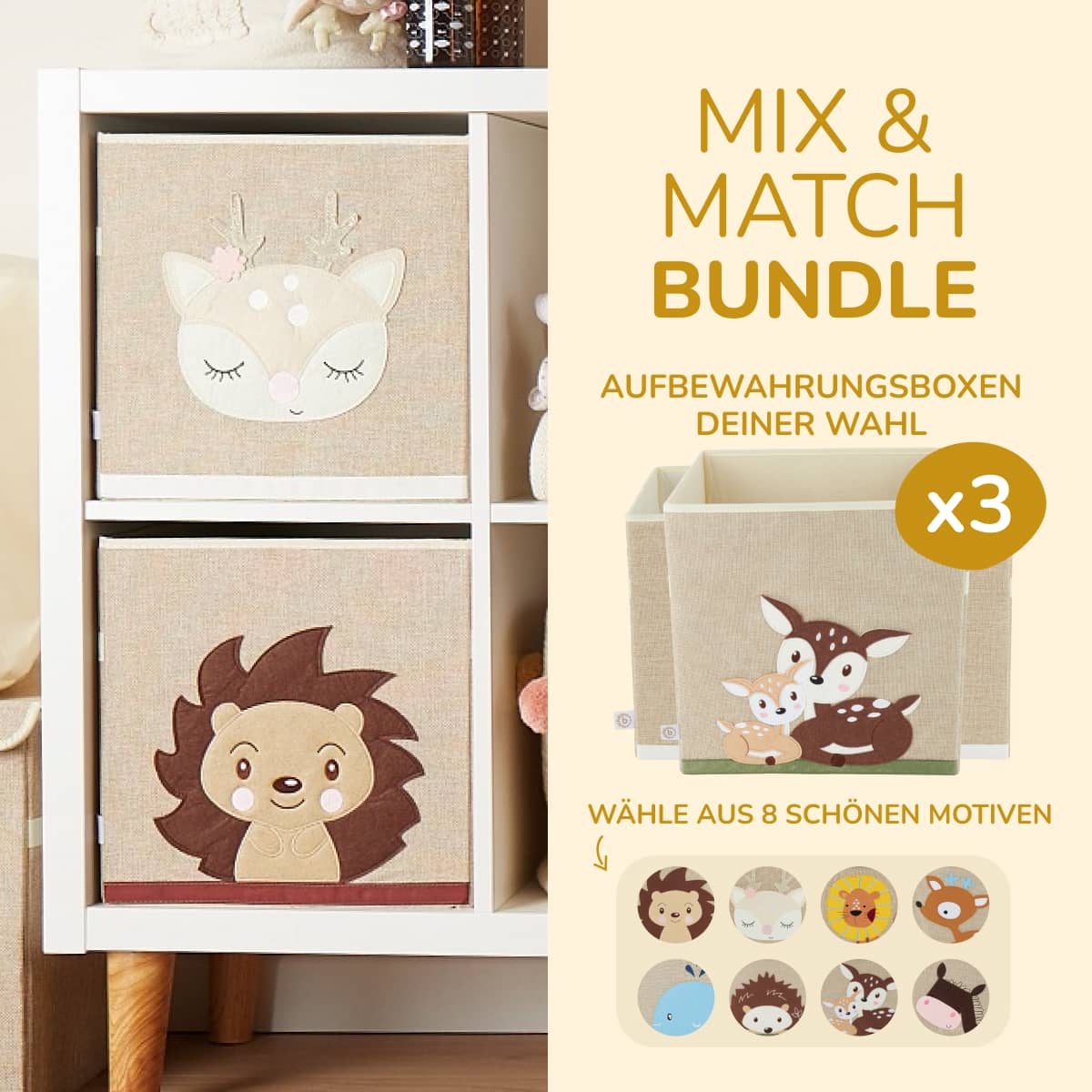
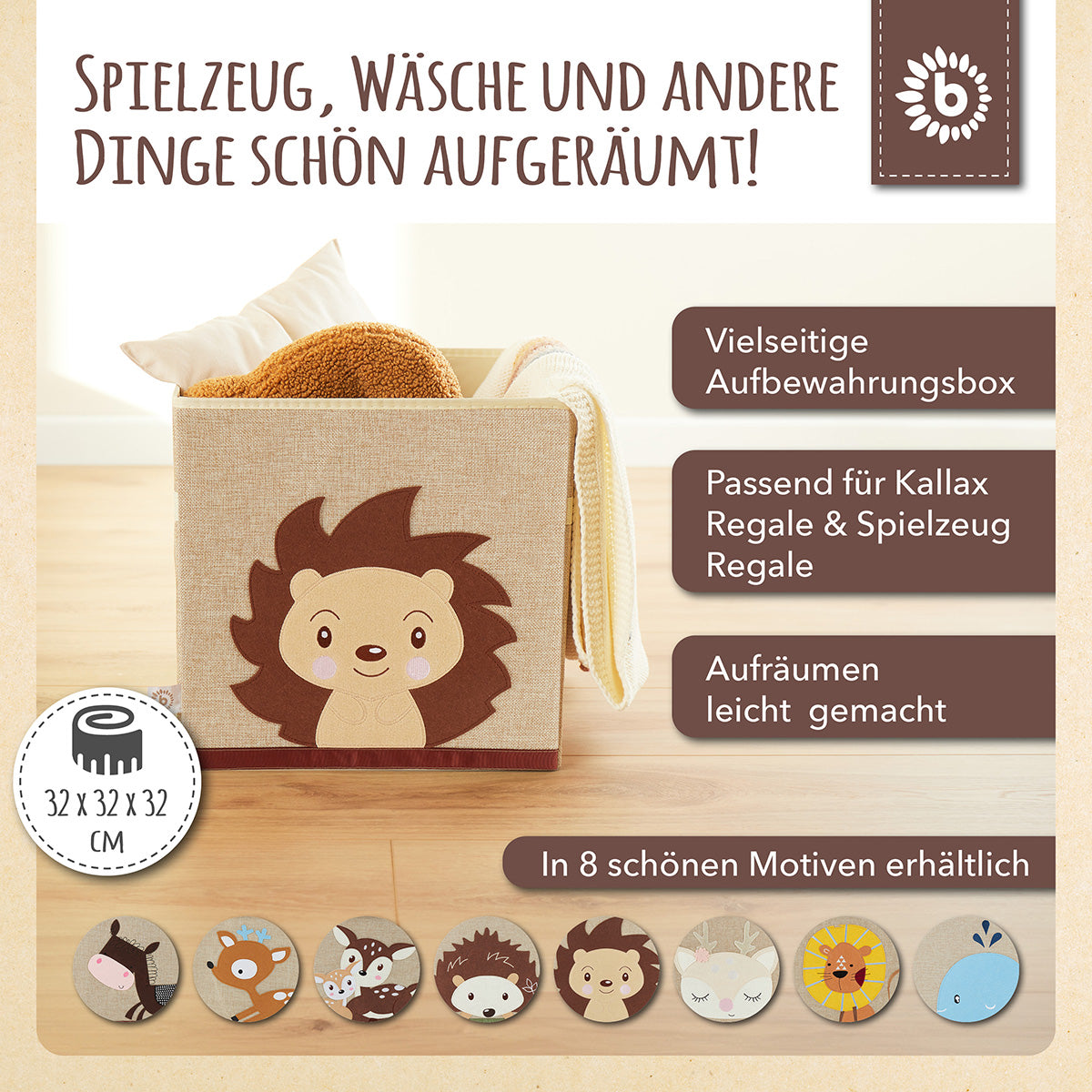
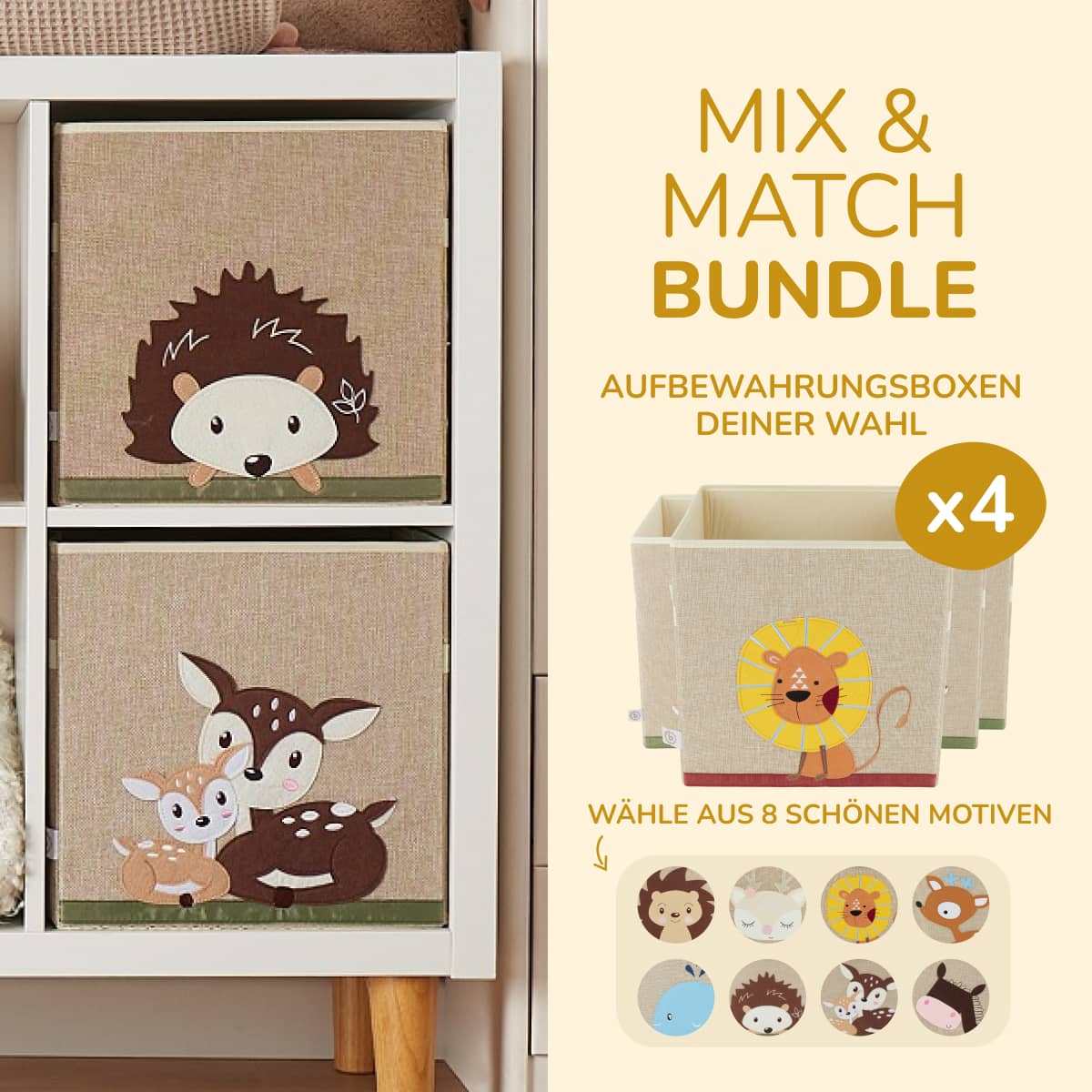
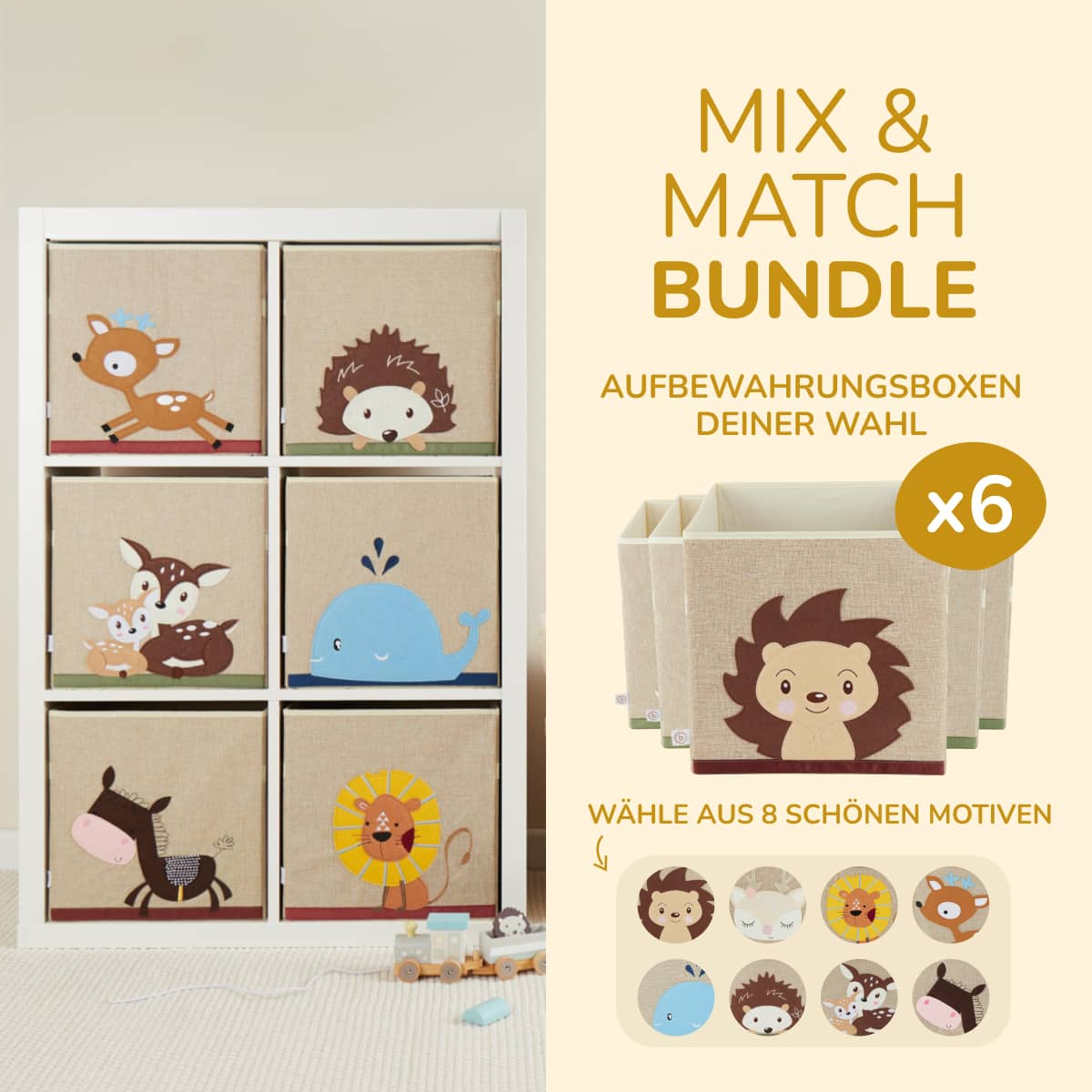
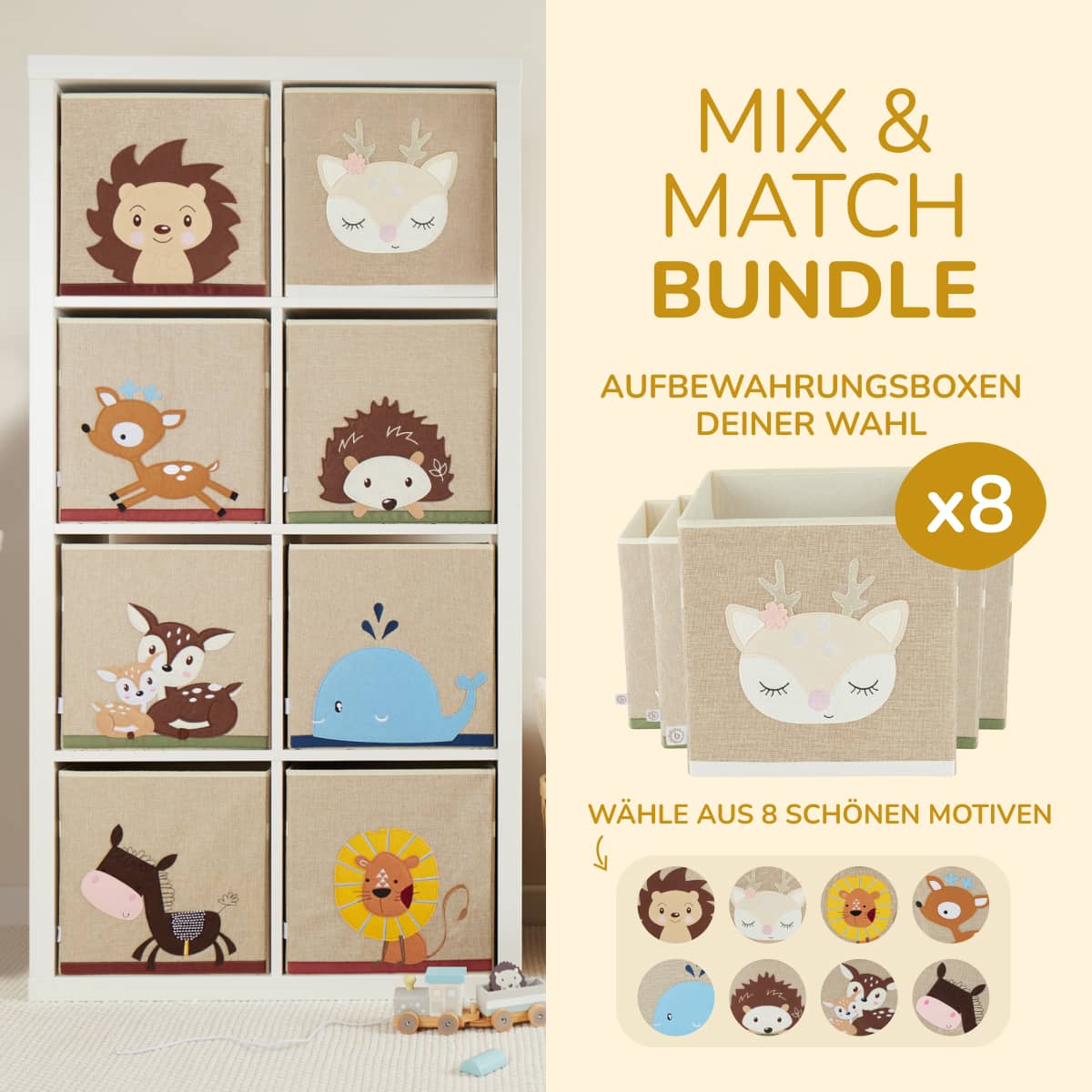
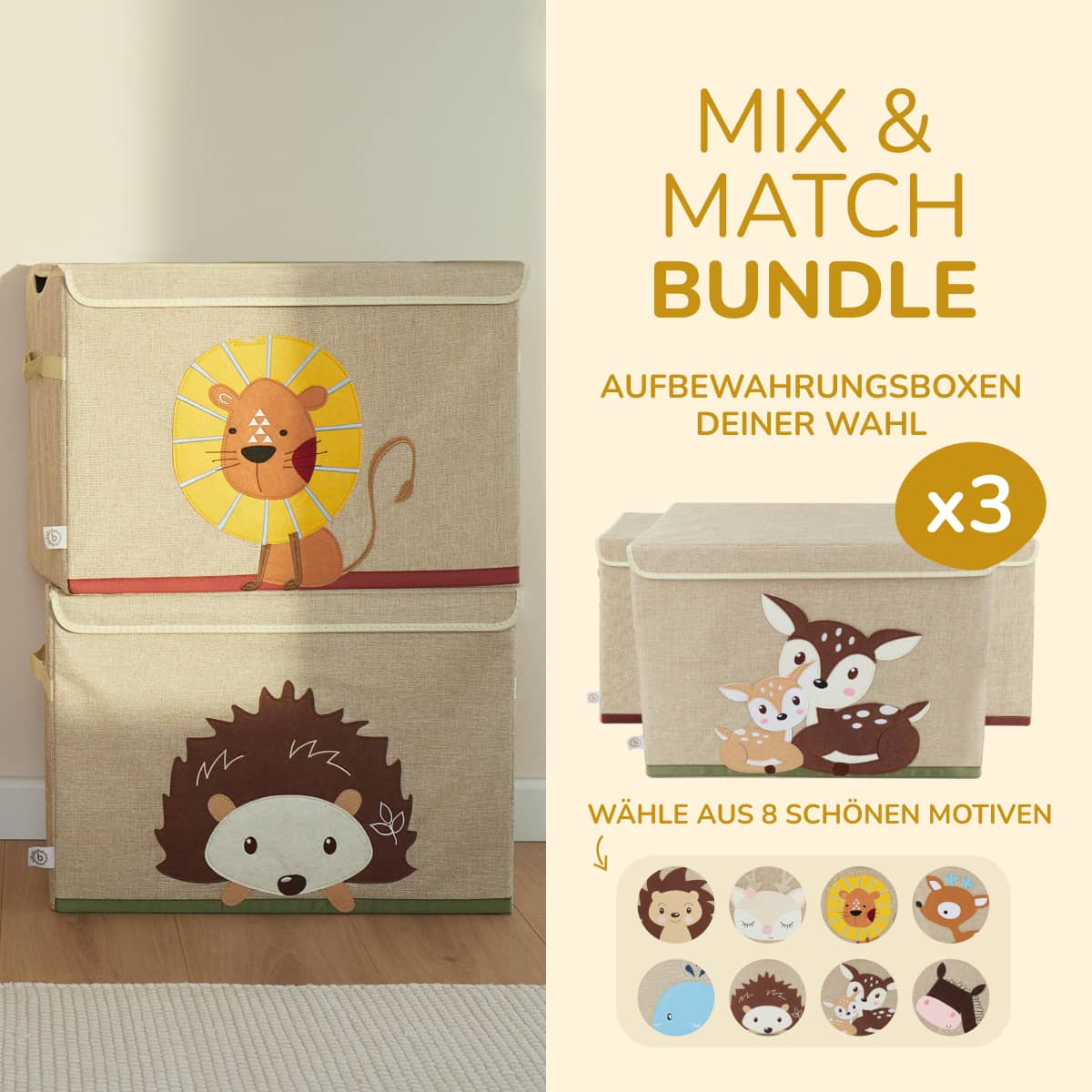
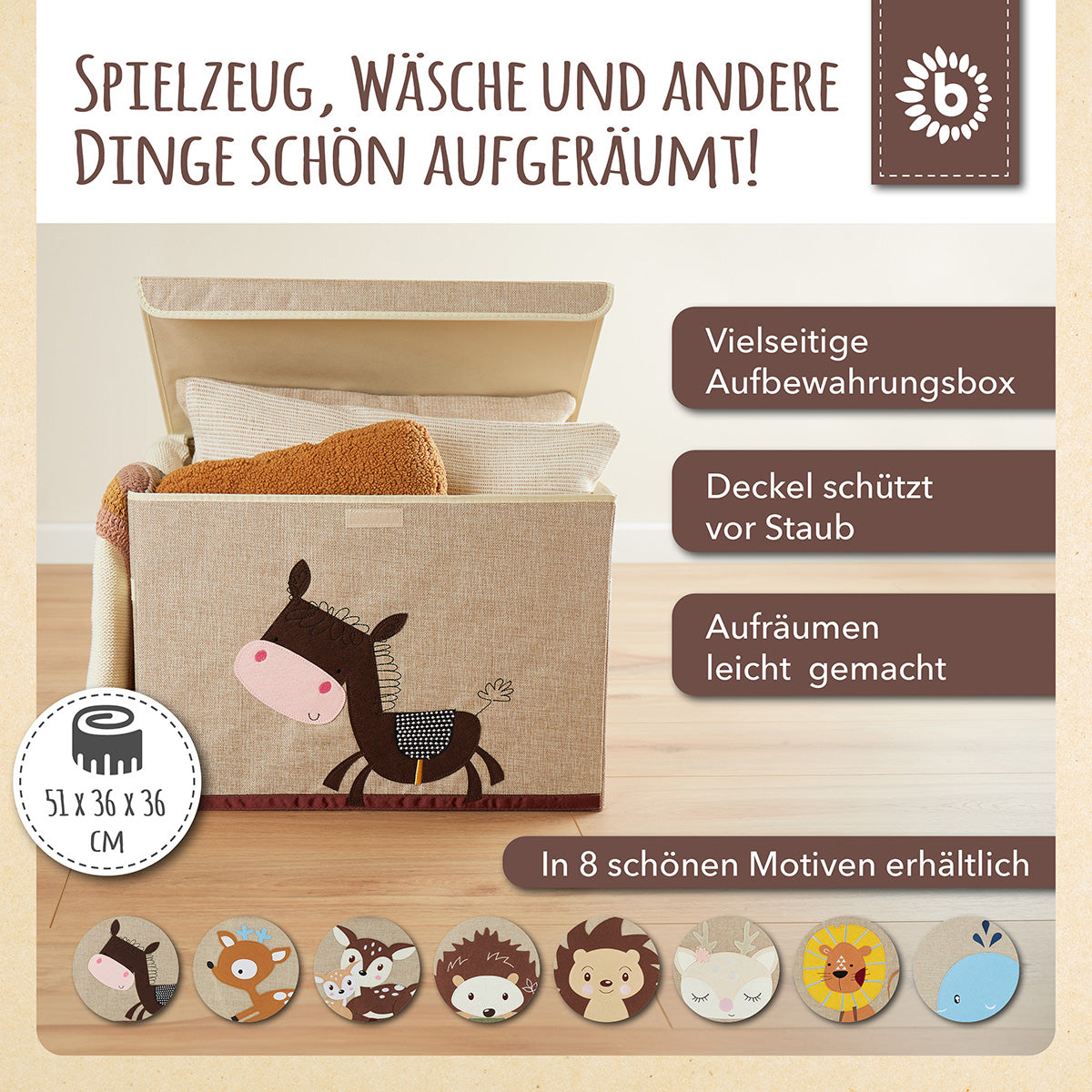
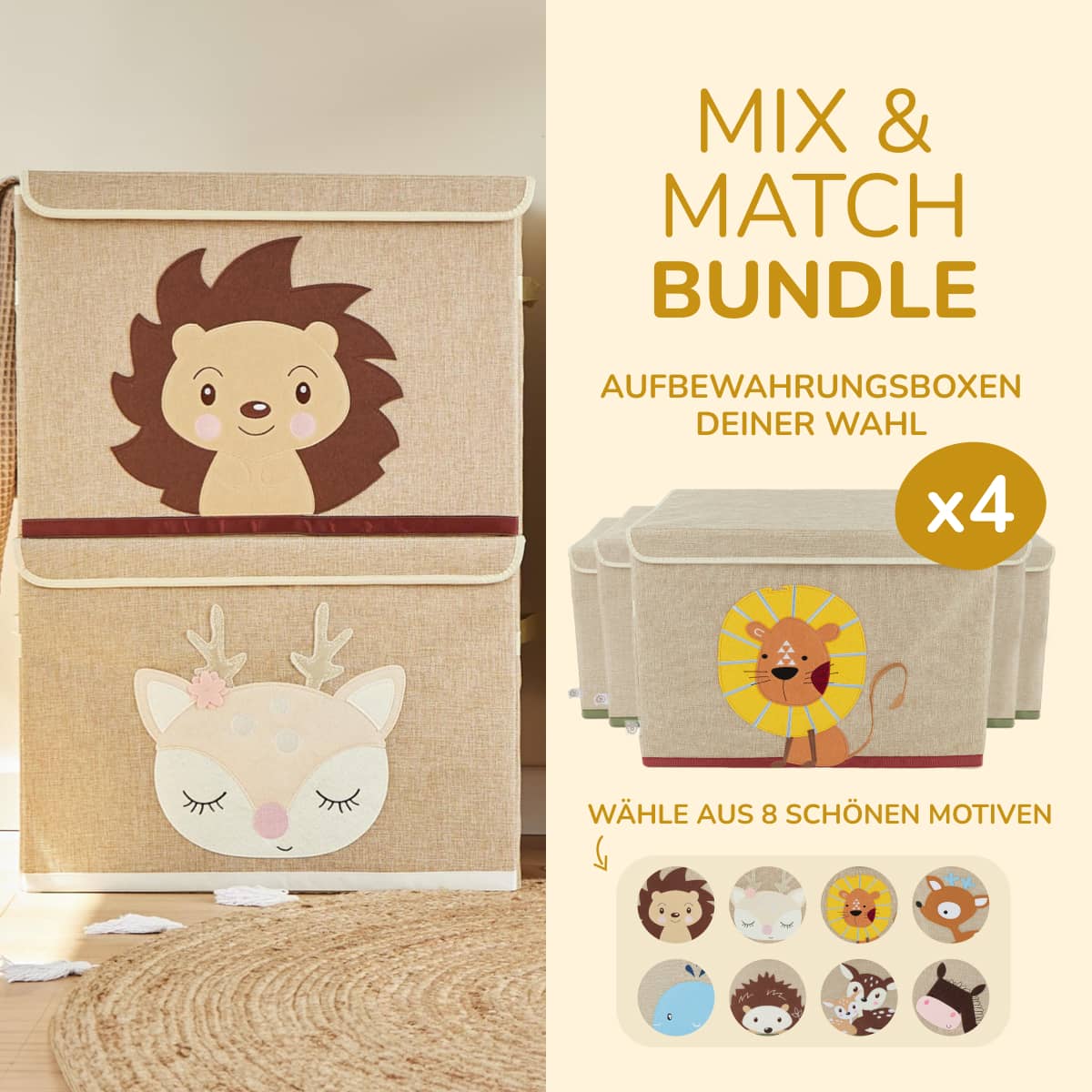
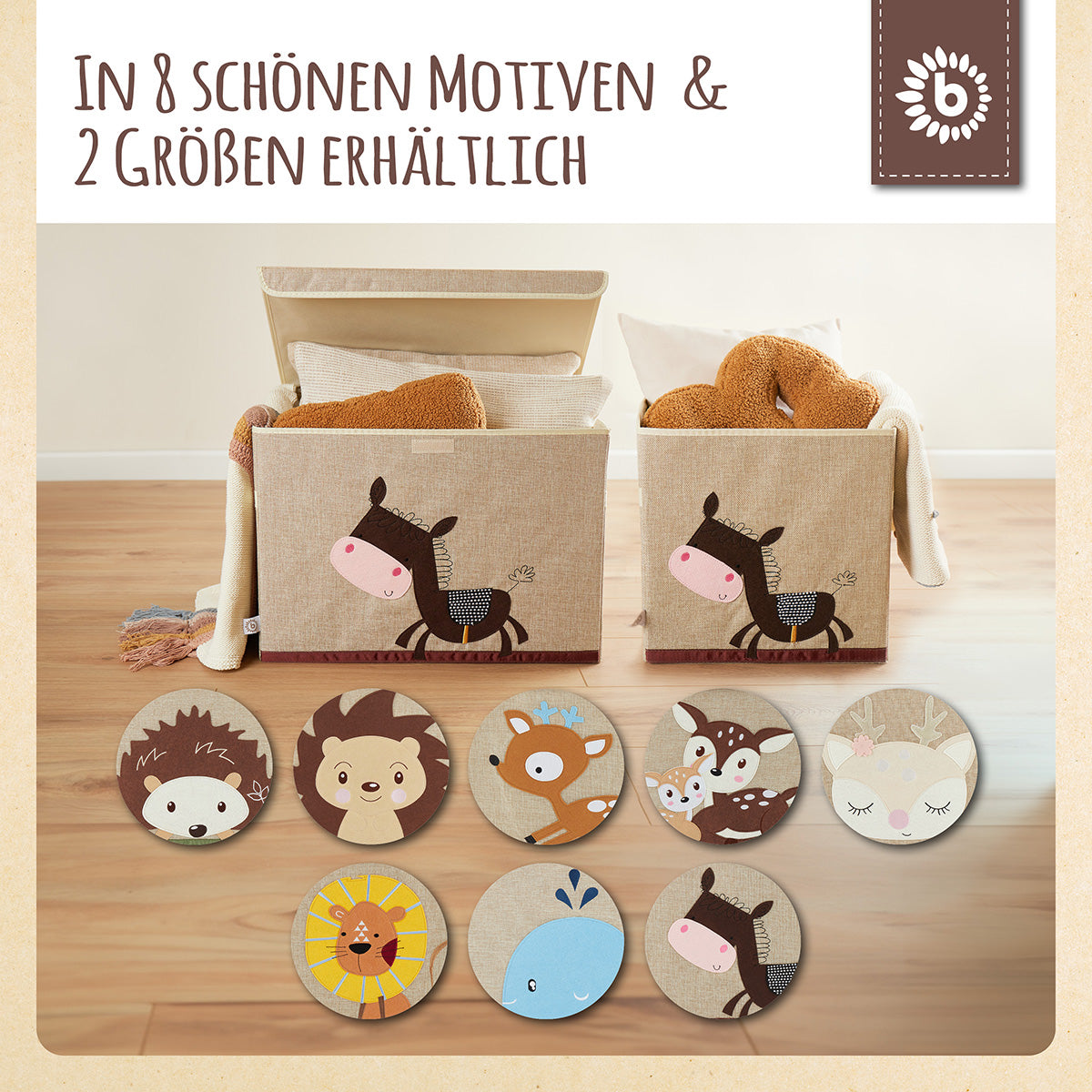
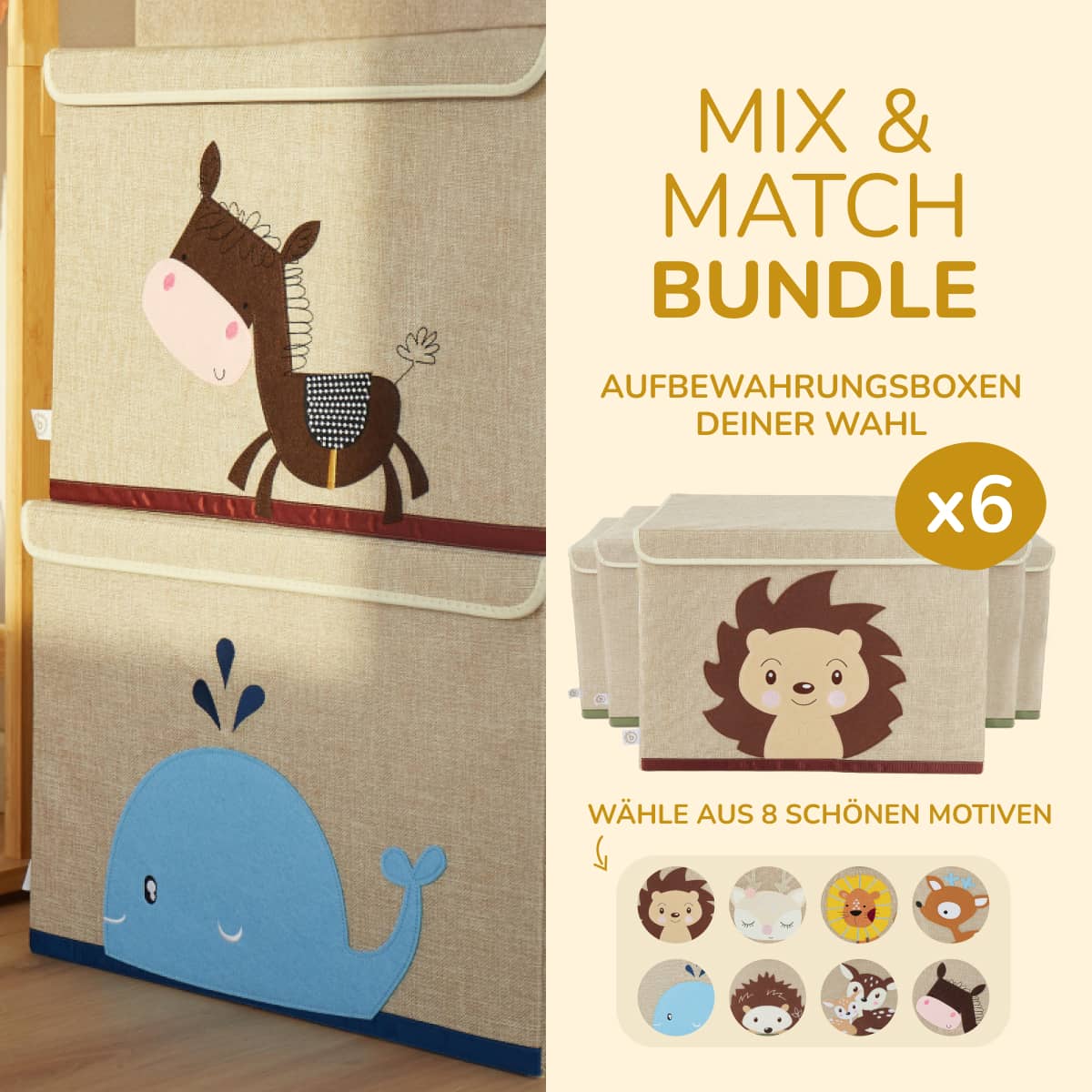
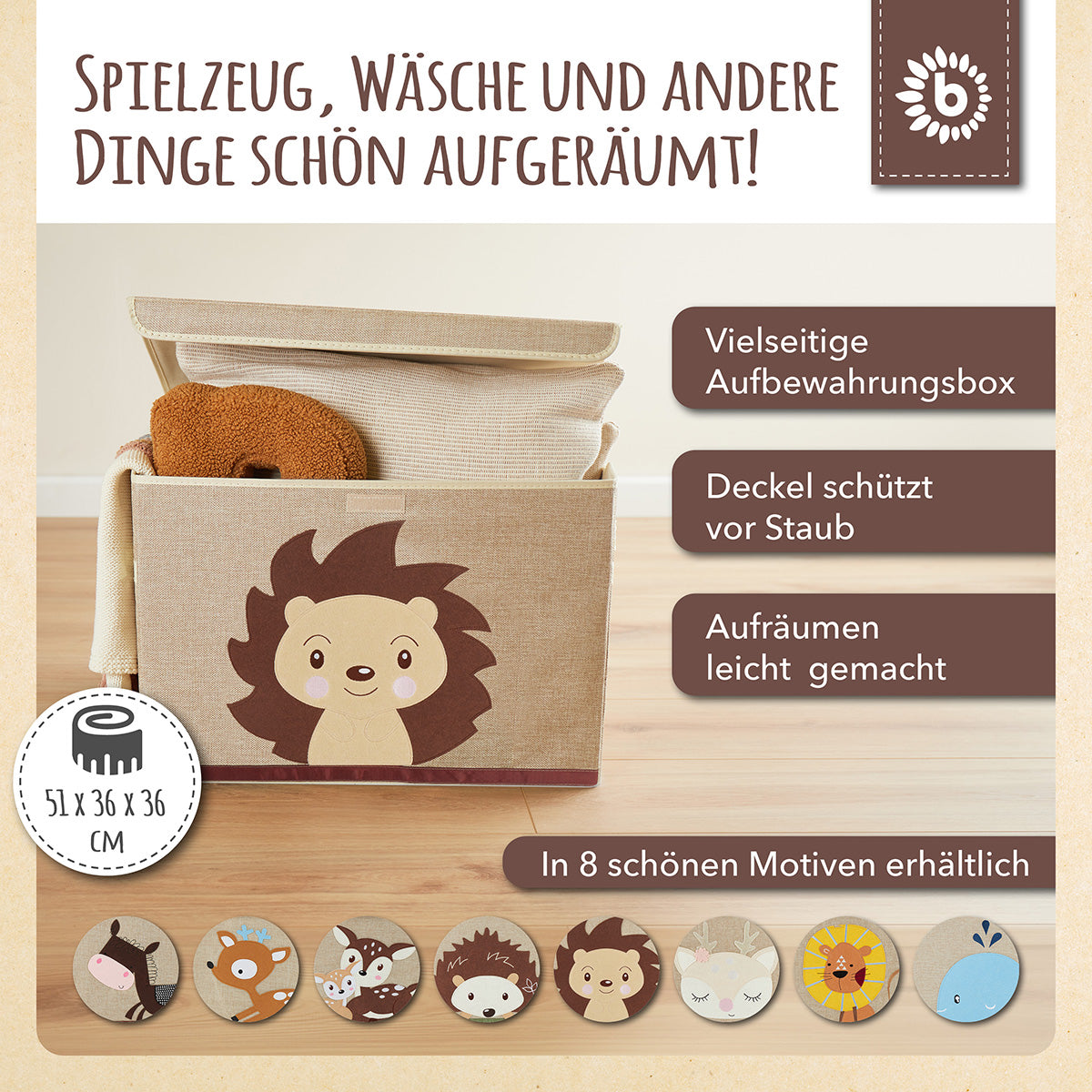
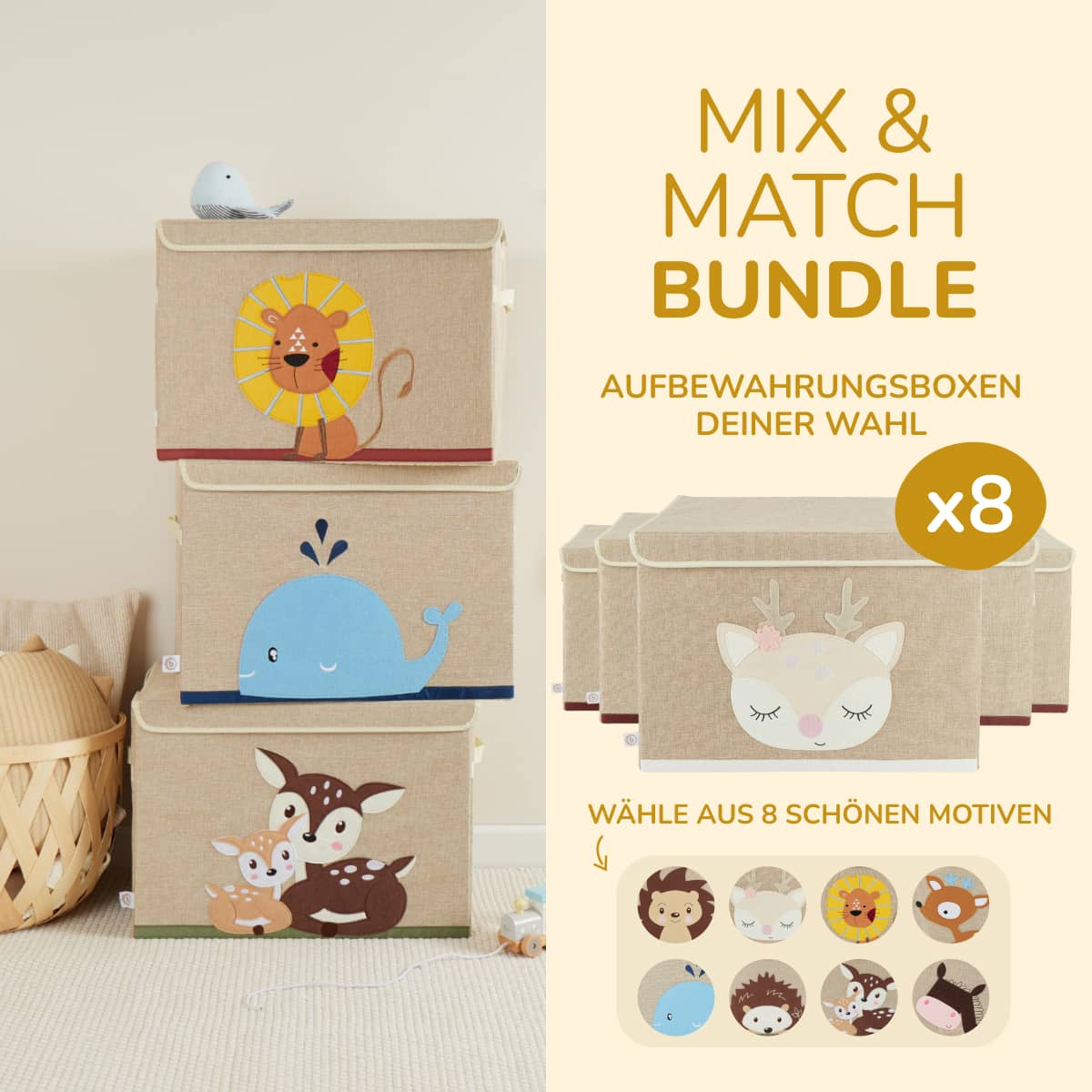
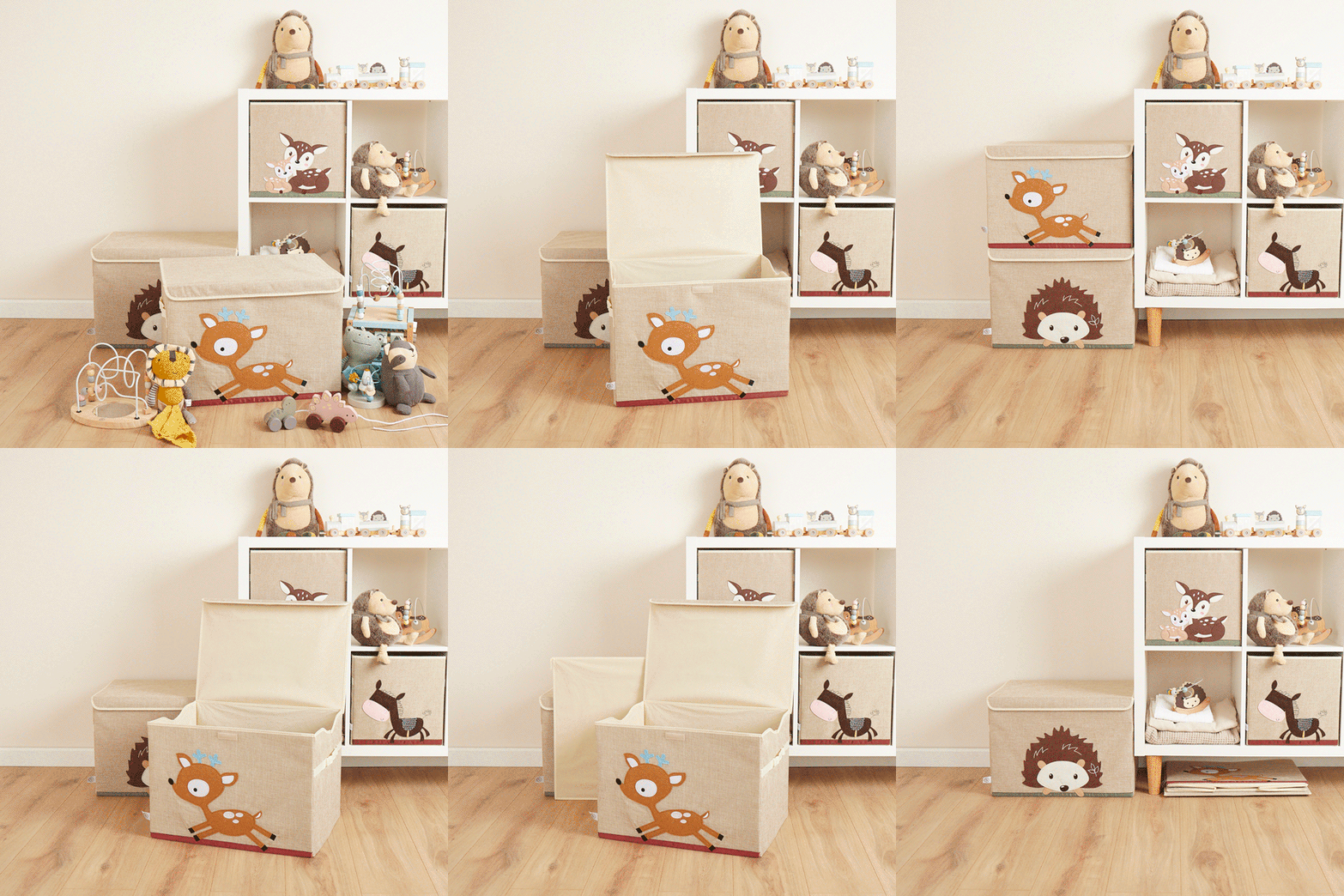
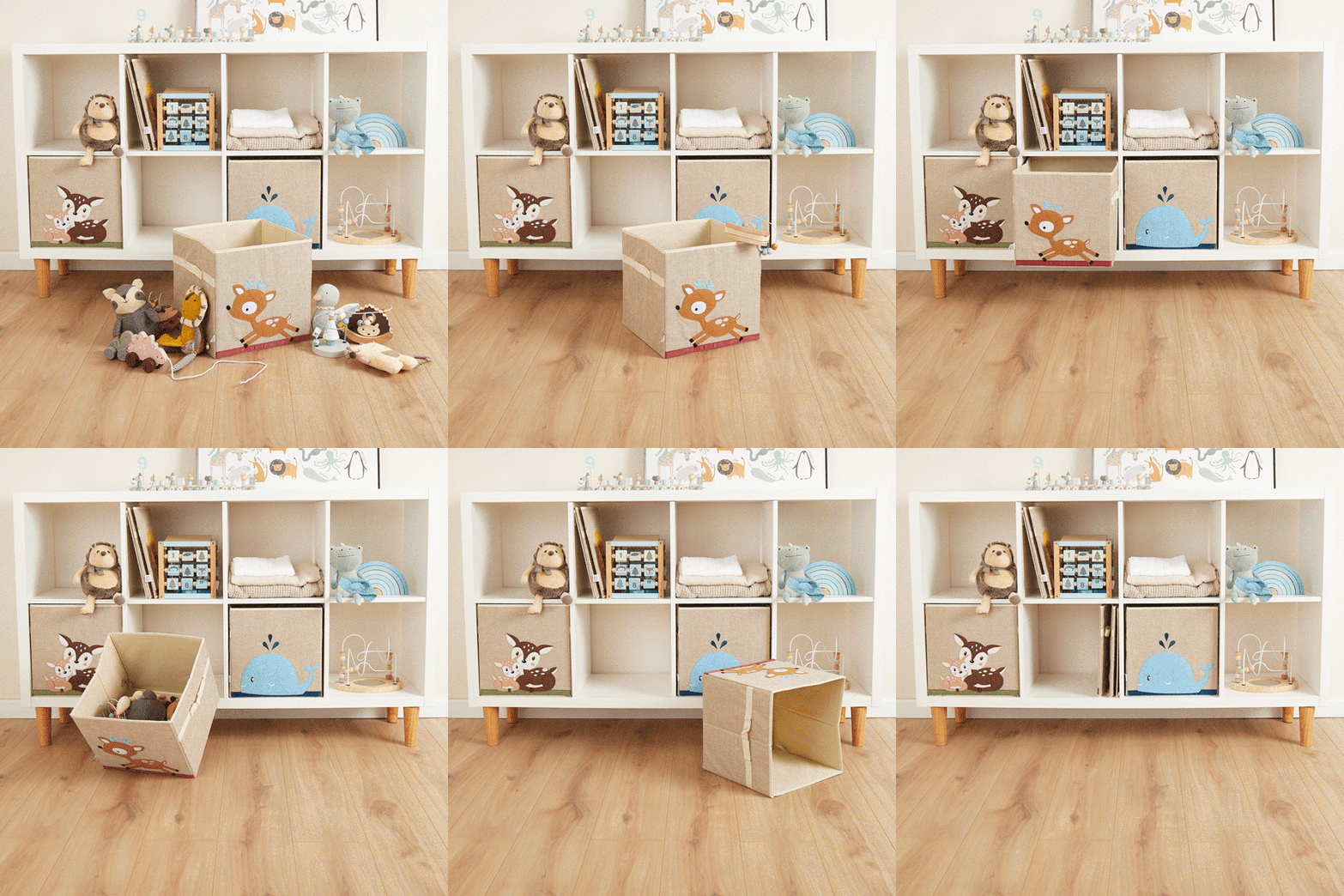
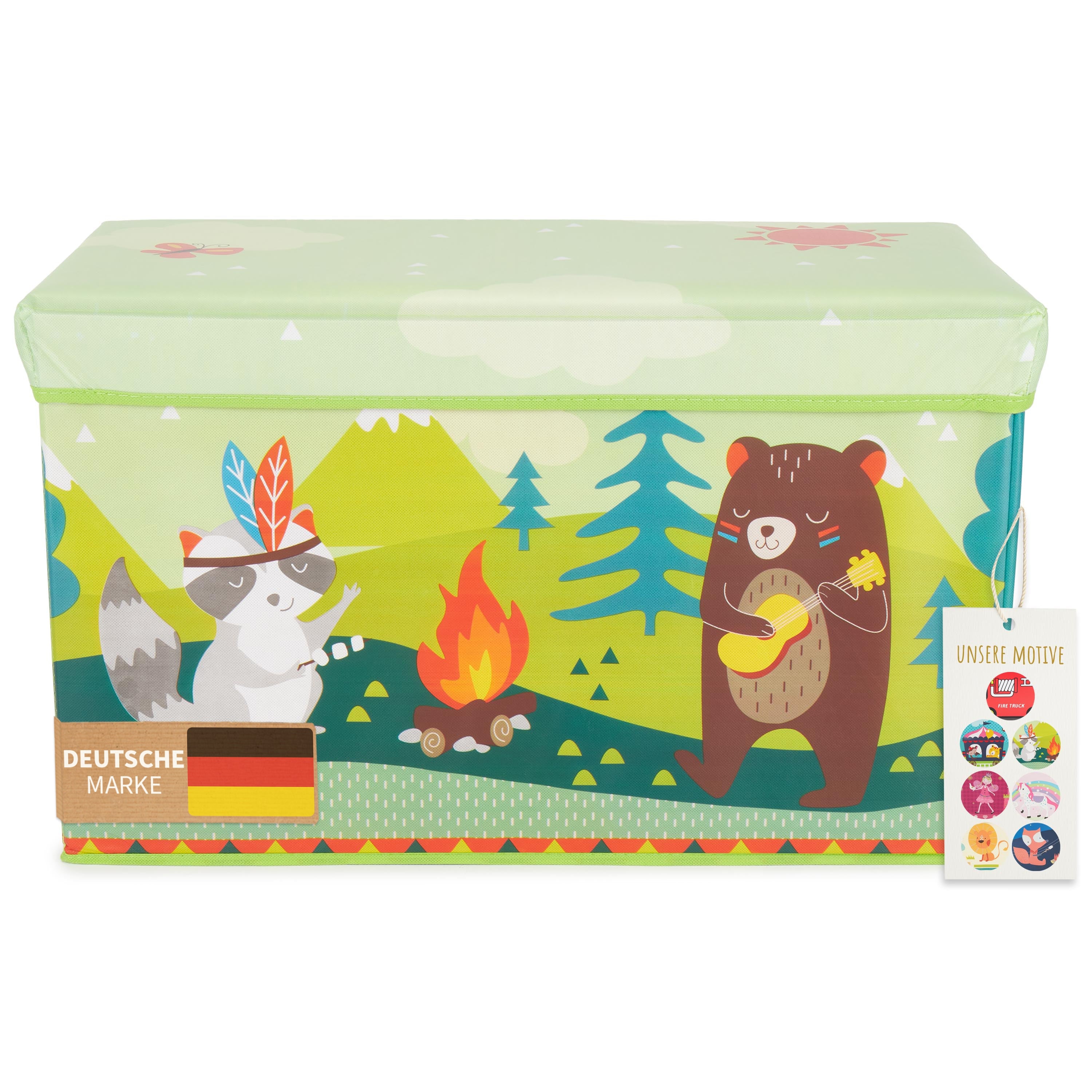
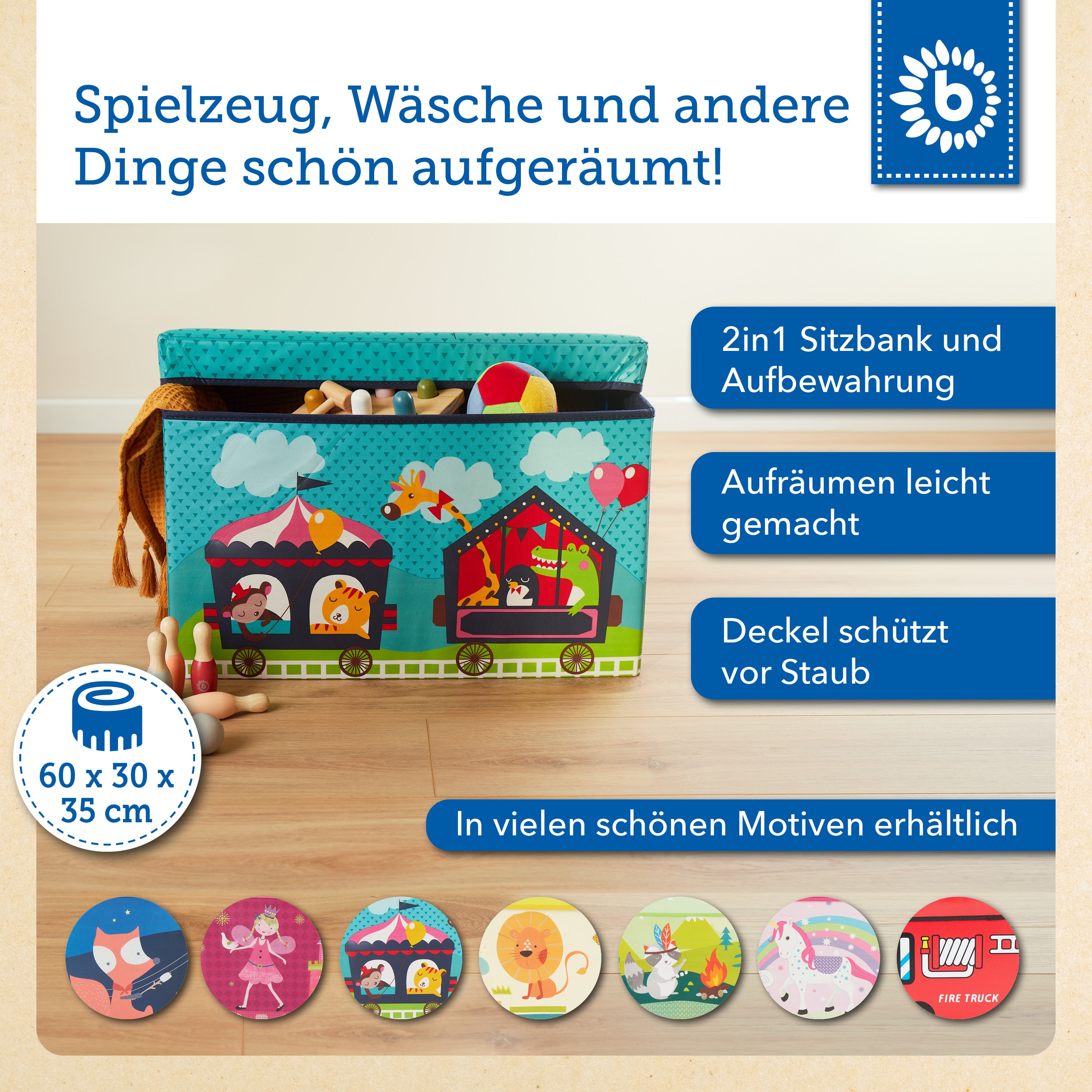
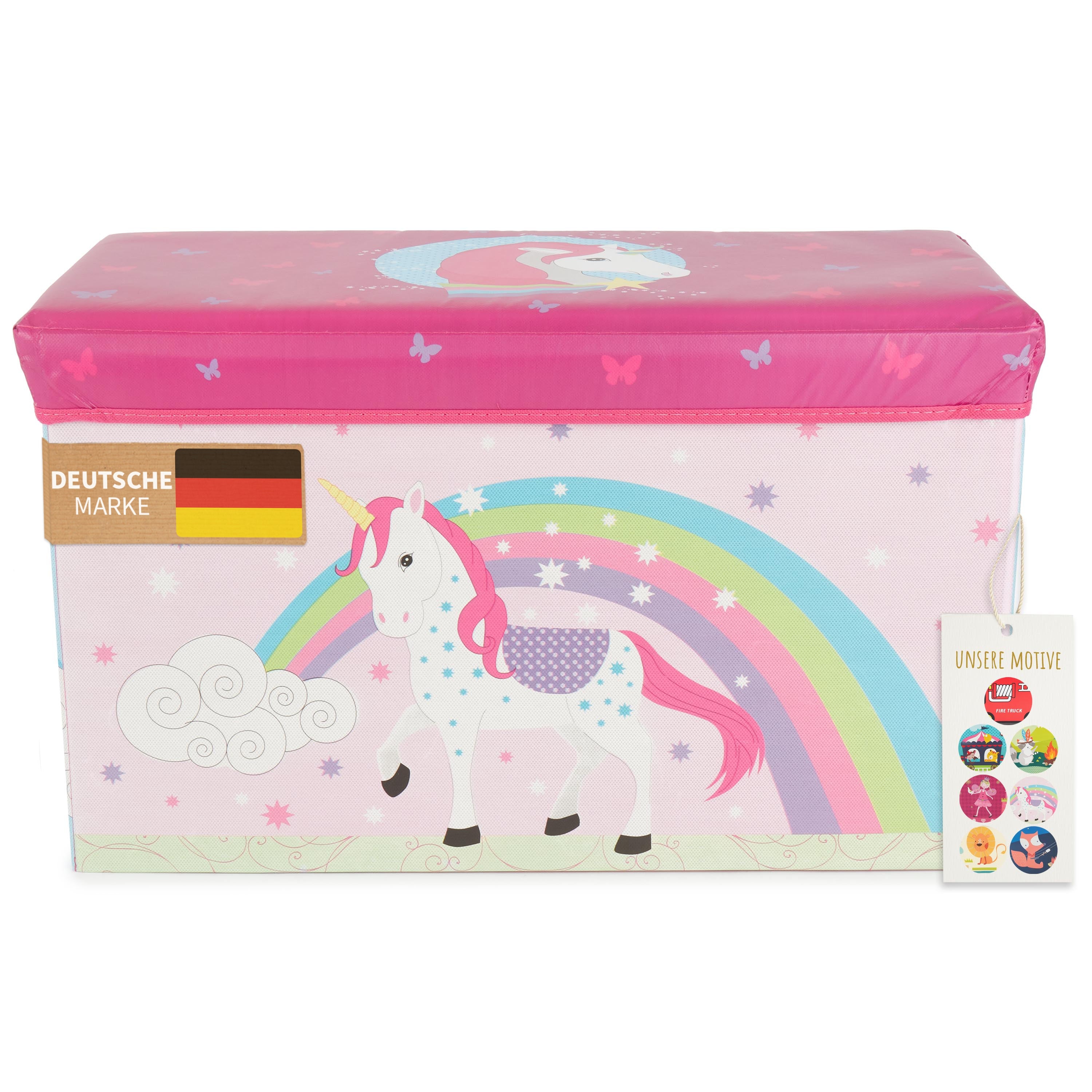
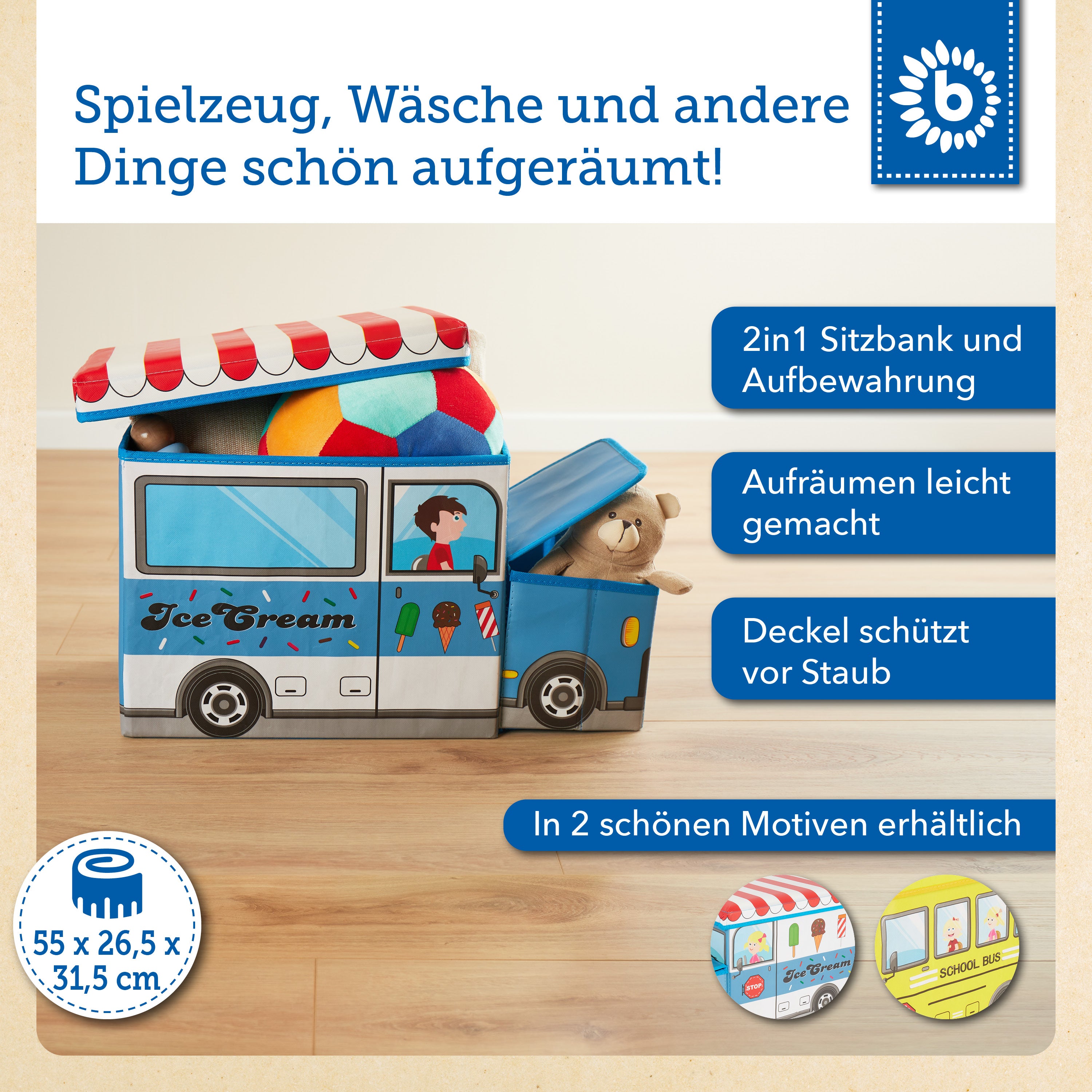
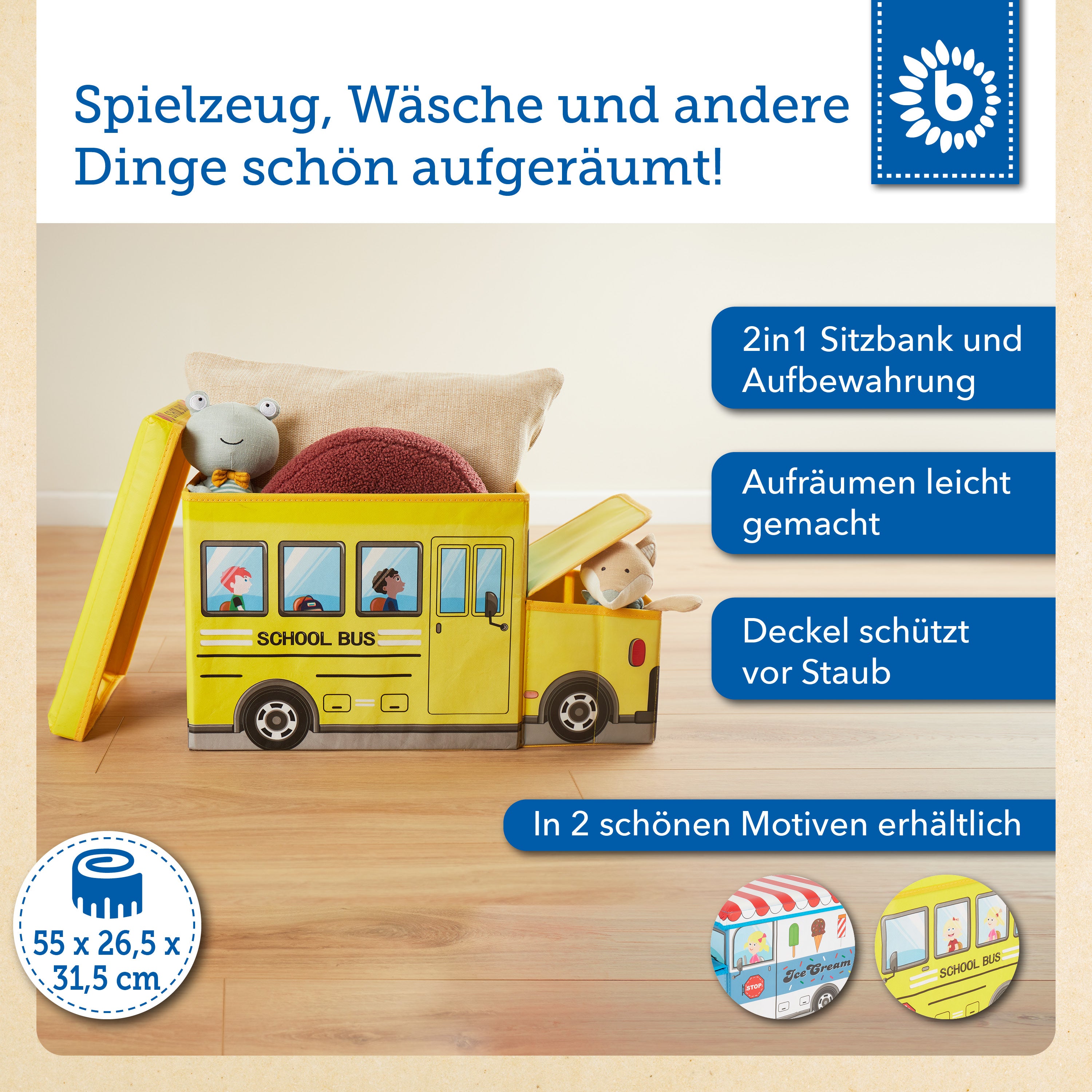
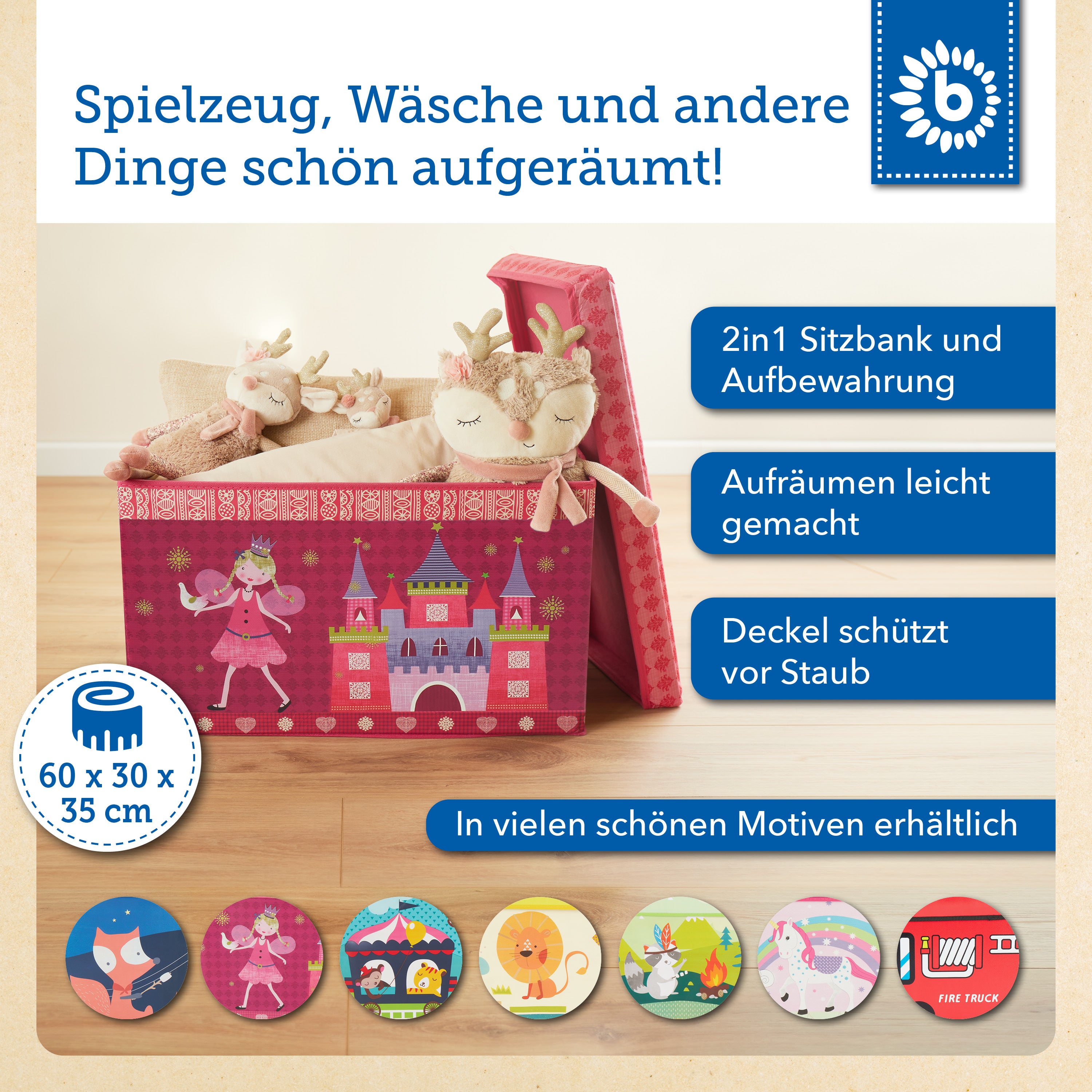
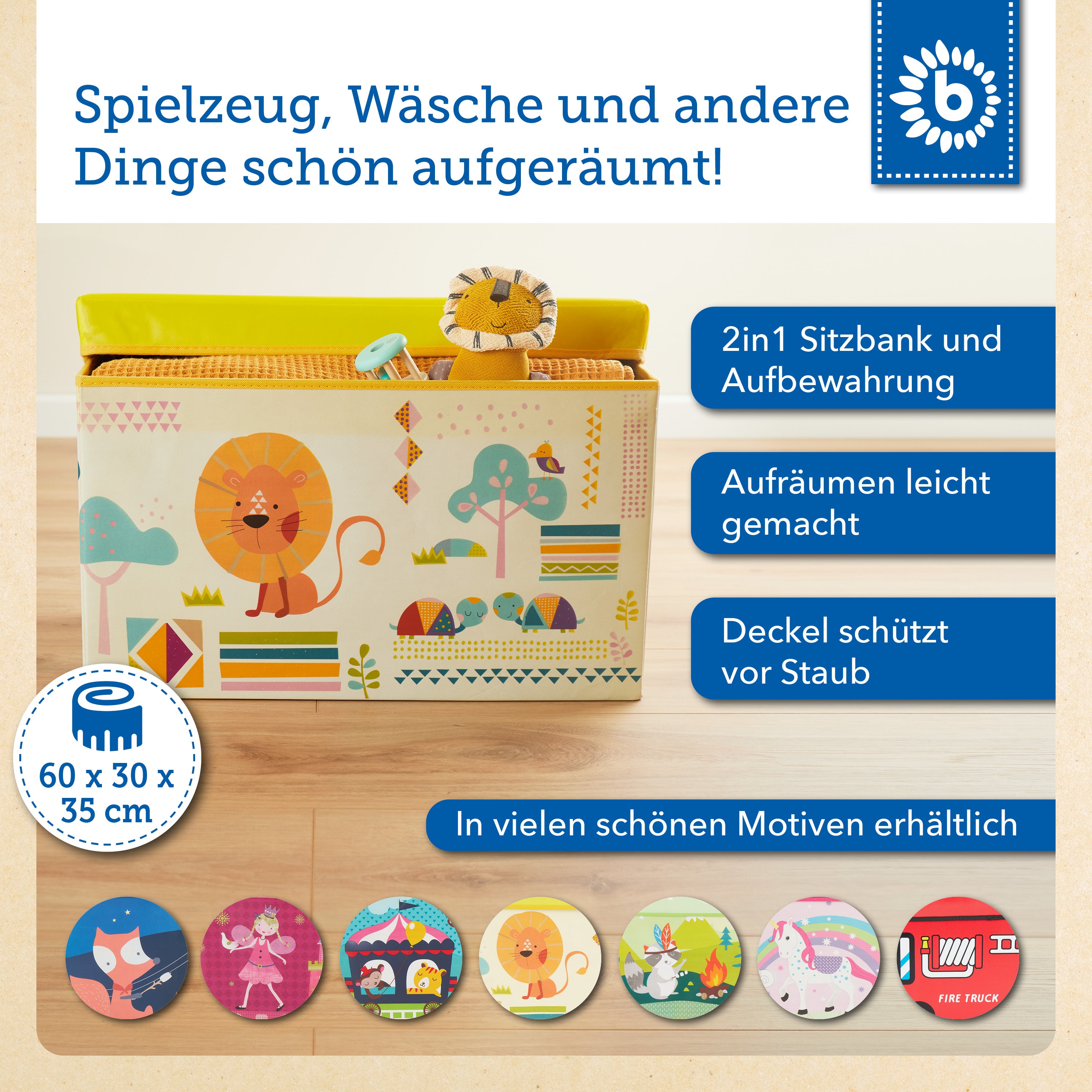
A storage basket is a quick, kid-friendly solution for keeping toys and everyday clutter neatly stowed away in plain sight. That's exactly why we love it for kids' rooms: toss it in, done – no need to play “sorting service” in the evening. To get started, a small mix of a basket, a box and a fixed spot is often enough. And yes: tidiness can look a little friendly in families.
TL;DR: Here's how to find the right storage in 30 seconds. Choose open for everyday items, with a lid for rarely used or dusty things, and for the bathroom only solutions that dry well.
- Everyday use: daily = open & quick, rarely = box with a lid.
- Accessibility: Kids are more likely to help tidy up when they can reach things themselves.
- Dust & moisture: Dust = lid, bathroom = airy storage so things can drain.
The Key Points at a Glance
- Open beats complicated. For toys used daily, baskets and open boxes are usually more realistic.
- A system needs fixed spots. Three categories are often enough: building, creative, cuddly.
- Lids are great – if you actually use them. Perfect for dust and “rarely used” items, sometimes annoying for “daily” ones.
- In the bathroom, drying is what counts. Bath toy storage should let water drain, otherwise it quickly gets musty.
- Air out new items first. For indoor air with fewer pollutants, ventilating and avoiding strong fragrances makes sense.
How to Find the Right Storage Basket (and Yes: Measurements Really Help)
If you check three things, the storage almost always fits: size, material, everyday pace. Sounds simple – and it is. And it saves you that “If only I had…” feeling when the basket turns out to be too small (or too heavy) after all.
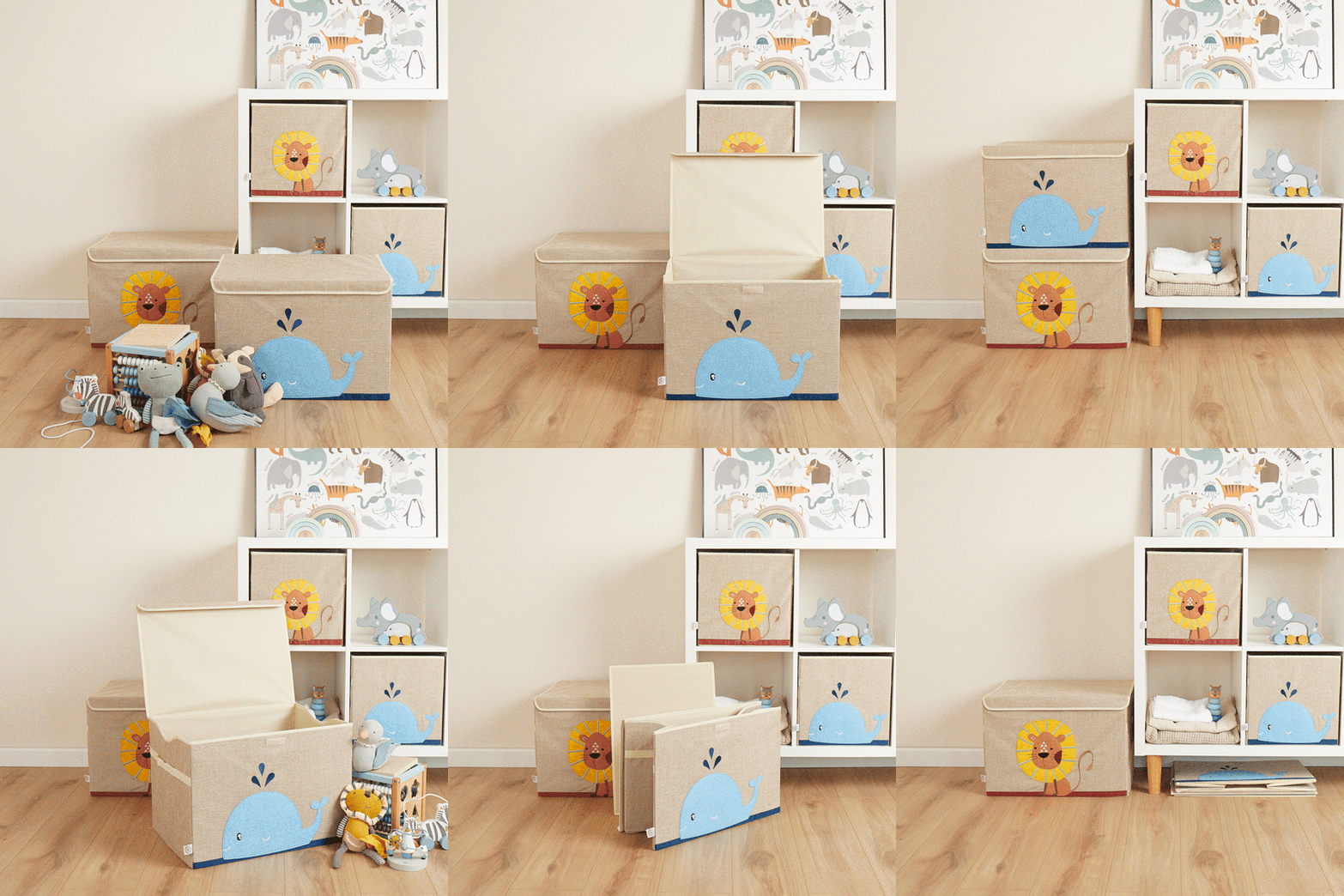
- Size/volume: Large boxes are great for lots of toys – but only if your child can still move them. Our range also includes large, foldable versions with 65 L (see the product link below).
- Material: Fabric/felt feels warm and is often lightweight. Smooth surfaces are handy when cocoa or play dough has been involved: wipe it off and carry on.
- With lid/without: A storage box with lid helps against dust and looks calmer. For everyday use, go for open or a lid that kids can easily handle.
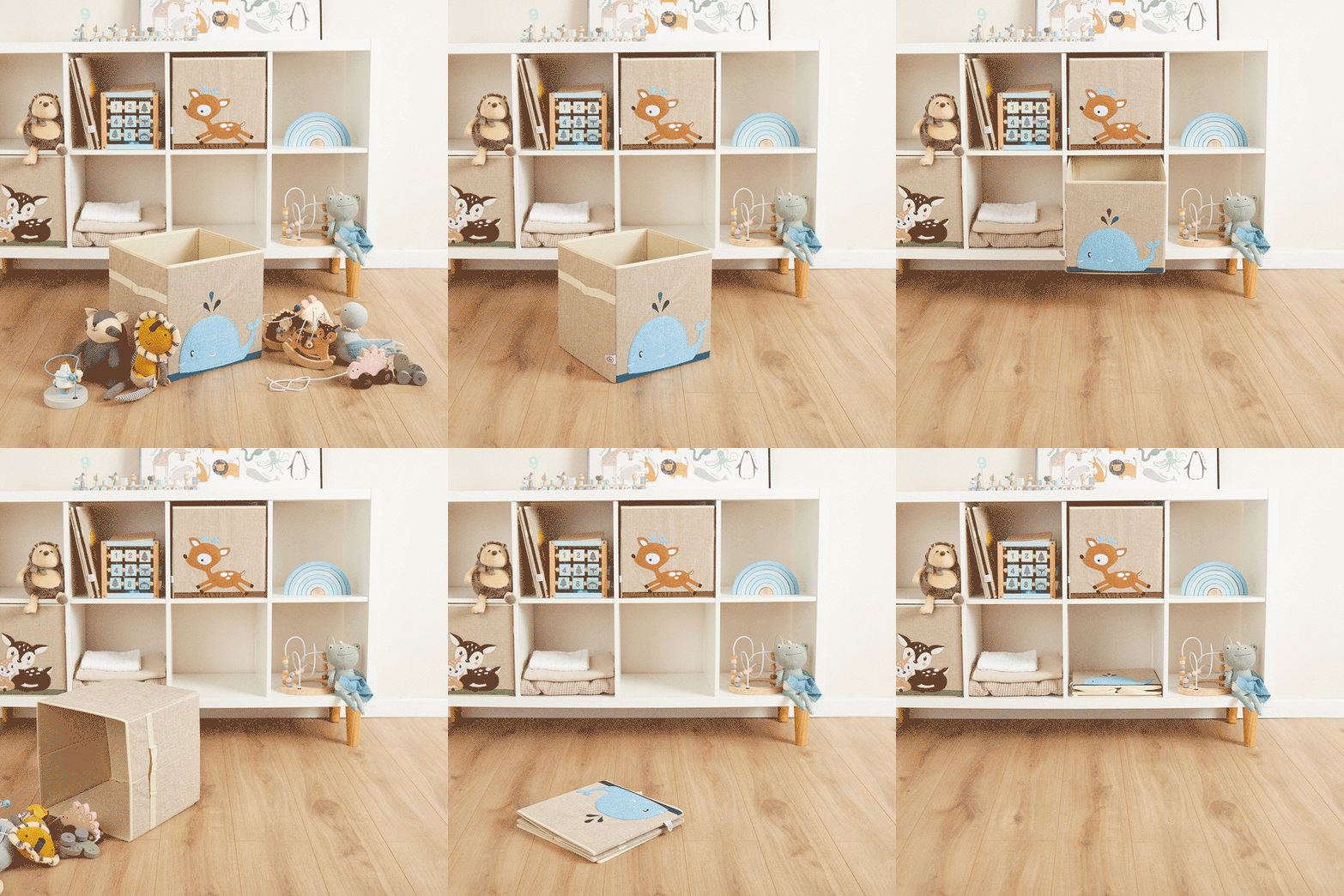
- Foldable & carry handles: Worth their weight in gold when you rearrange or when toys travel between the living room and the kids' room.
If you're specifically looking for “lid”, “foldable” or “bench”: it's best to use the filters/search in the collection – that way you'll get to the right pieces faster.
Which Storage Piece Suits Your Daily Life? (Basket, Box, Shelf)
The best start is: 3 categories, 3 containers, 1 fixed spot. Often you don't need more than that. A storage basket for stuffed animals, a kids' storage box for building blocks and a spot for books – and your first storage system for the kids' room is done.
- Storage basket: Tossing things in is allowed – perfect for stuffed animals, blankets and dress-up.
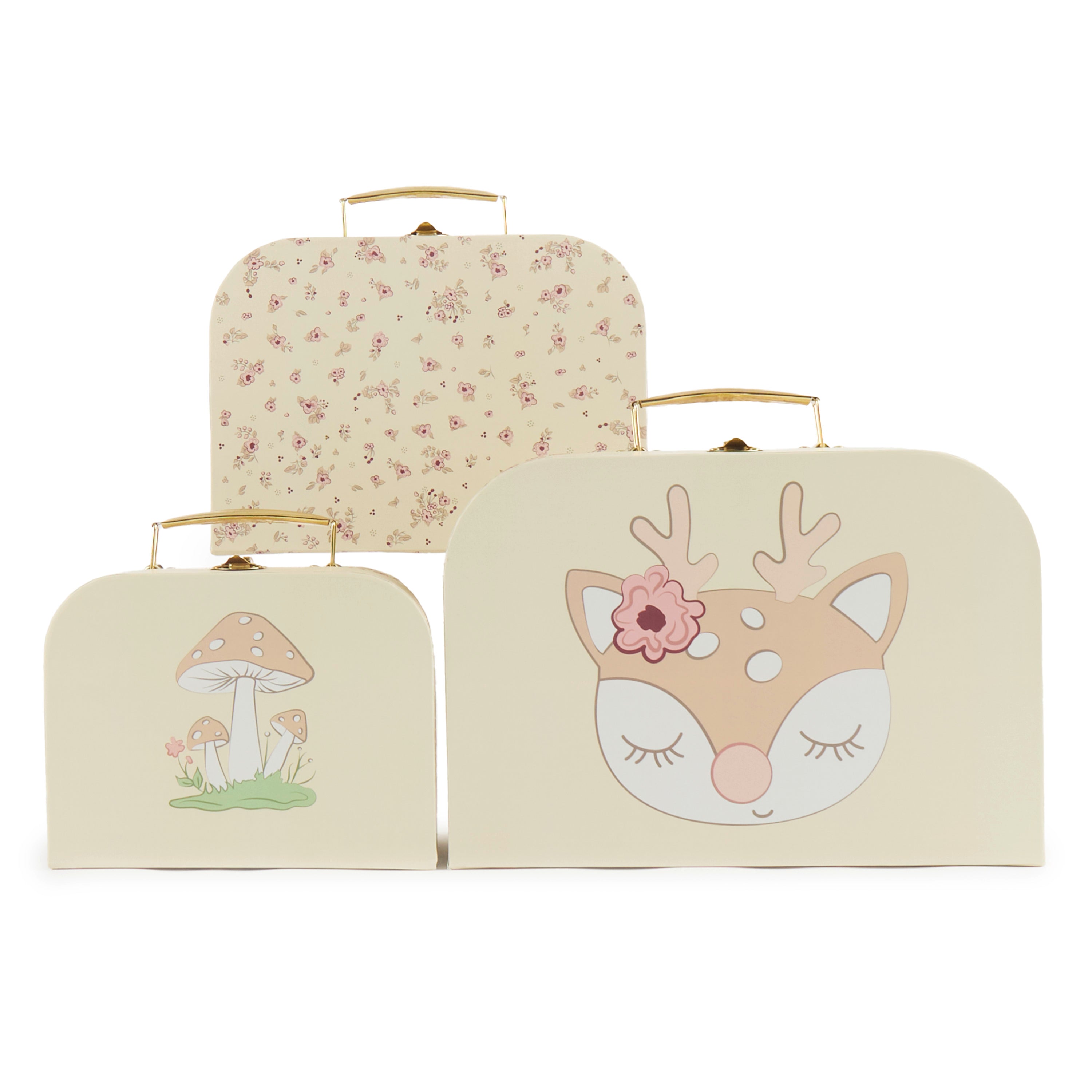
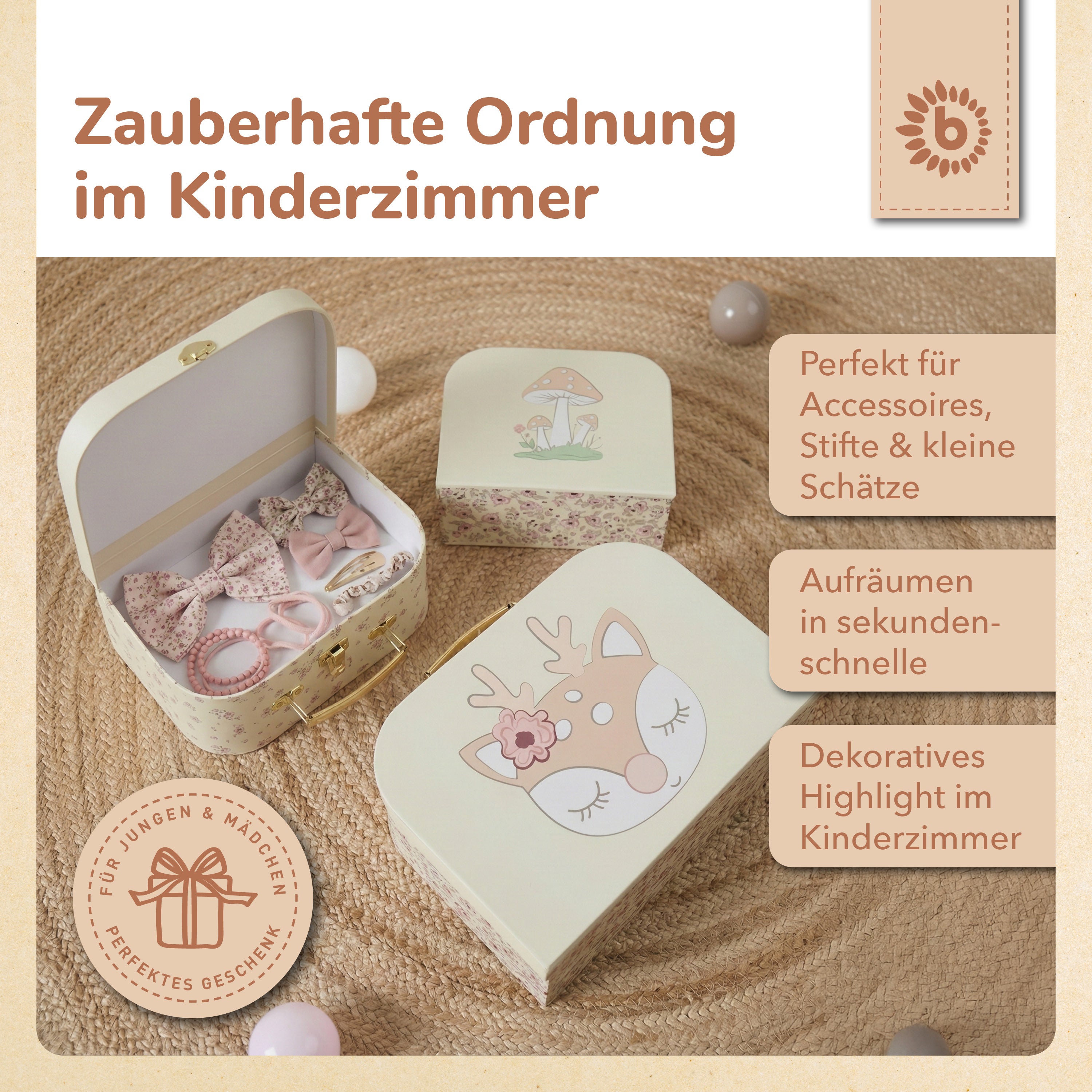
- Storage box: Keeps sets and craft supplies sorted; with a lid it's less dusty, without a lid it's faster.
- Storage shelf with boxes: Brings calm to the wall – kids can see what's there and find it again.
If you want to dive deeper into boxes (sizes, lid questions, shelf compatibility): explained in detail in our guide The Best Storage Boxes for the Kids' Room Compared.
Fabric, Felt, Plastic, Wood – Materials at a Glance (with Honest Pros and Cons)
The best material is the one that fits your cleaning and tidying pace. Nobody benefits if it looks great but is annoying in everyday life. Here's a quick overview – no drama.
Comparison: Storage Basket vs. Storage Box vs. Storage Shelf
Open is faster, closed is calmer – and a shelf makes things easy to find. If you take away just one thing: “daily” has to work without any grumbling. Otherwise it stays theory.
Storage at the Changing Table & for Baby Essentials (Diapers, Care, Formula)
At the changing table, storage you can operate with one hand helps. Sounds trivial – but it's the difference between “running smoothly” and “where on earth is the cream again?!”. Small baskets or a baby storage box are handy for diapers, wet wipes, muslin cloths and care products.
- Changing table storage: Open baskets for daily items, a box with a lid for spare supplies (so they don't get dusty).
- Formula storage: If you transfer formula into a container, pay attention to food-safe containers and hygiene; according to the BfR (German Federal Institute for Risk Assessment), substances can migrate from food-contact materials, which is why suitable materials matter (BfR: Materials for food contact).
- Hot items & melamine: The BfR advises against using melamine resin or “bamboo ware” tableware for hot food/drinks, because substances can migrate (BfR press release (2019)).
If you need something more “big & flexible”: a foldable box can also work as a changing table organizer – e.g. when baby items end up in the living room during the day and disappear again in the evening.
Toy Storage Kids Will Actually Join In With (Without You Becoming the Entertainer)
Joining in works best when every compartment has “a job”. Instead of 12 mini categories, it's better to stay broad: “building”, “role play”, “creative”, “books”. That way toy storage becomes a routine rather than a project.
- Toy chests are great for large sets – but please not so heavy that nobody wants to move them.
- Kids' room storage bag is handy for soft items (ball pit balls, costumes) and quick to carry.
- Kids' room storage furniture (shelf/chest/cabinet) should be placed so that walkways stay clear – otherwise it becomes a tripping hazard.
You'll find more ideas (short & practical for everyday life) in our guide Toy Chests & Storage Ideas: Order in the Kids' Room.
Book Storage for Kids: Better Visible Than “Somewhere on the Shelf”
For many kids, “seeing” is half the reading fun – covers facing forward often help. That's not a law of nature, but you'll quickly notice it in everyday life: when favorite books are within reach, they're more likely to be pulled out again. For thin booklets, boxes help so nothing gets bent – and a small stack by the bed is fine too.
Bath Toy Storage: The Main Thing Is That It Dries
In the bathroom, “being able to drain” matters more than “looking nice”. If water stays put, the smell arrives faster than you'd like. So: choose bath toy storage that lets air reach the toys – and tip them out/rinse them briefly once a week.
To go with this, you can also browse our collection Bath Toys – and for bathroom storage there's the subcategory Bath Toy Storage. More detail (with ideas) in our guide Storing Bath Toys Cleverly: Tips & Products.
Safety & “New Smell” – Short but Important
Let new storage air out before it moves into the kids' room. Furnishings can release pollutants into indoor air; the consumer advice center (Verbraucherzentrale) explains that, for example, solvents/plasticizers can off-gas and sometimes end up in the air or house dust (Verbraucherzentrale: low-pollutant indoor air). And the German Environment Agency (Umweltbundesamt) recommends regular intensive ventilation and advises against fragrance sprays/air fresheners (UBA: Ventilate instead of fragrance sprays).
With furniture, tip-over safety counts – especially when kids climb. The BZgA information platform kindergesundheit-info.de advises securing shelves and other (small) furniture against tipping over (kindergesundheit-info.de: Safety rules for ages 1–3) and explicitly describes anchoring freestanding shelves to the wall in the kids' room (kindergesundheit-info.de: A safe kids' room).
The EU Toy Safety Directive sets limit values for 19 elements in materials. This shows how seriously material safety is taken in the children's environment (EUR-Lex: Directive 2009/48/EC).
What Will You Find in BIECO's Storage Range?
BIECO is a family business from Hamburg – and we like things practical. For 66 years we've been making toys and kids' room favorites that work in family life and look friendly (modern Scandi design). In this storage collection you'll find storage baskets, storage boxes (also with lids), seat boxes/chests and practical sets.
If you want to browse in a targeted way: Storage Basket, Storage Box with Lid and Toy Chest.
Mini Cheat Sheet: If … Then … (Without the Table Feeling)
The decision gets easy when you go by use and surroundings. Here's the quick matching that surprisingly often works in everyday life:
- If something is used daily: go for a storage basket or open box.
- If something gets dusty or should look calm: storage box with lid.
- If something is damp (bathroom): airy storage so it can drain.
- If you often hear “where is…?”: storage shelf with boxes for clear spots.
Pros & Cons: Basket, Box, Chest, Cabinet – Honestly Short
Usually the mix wins: quick + tidy + a little bit of “out of sight”. So you don't have to scroll forever, here's the short version:
- Kids' storage basket – Pro: quick, soft, child's play. Con: no dust protection, looks “full” sooner.
- Kids' storage box – Pro: easy to sort, often stackable. Con: the lid can be too fiddly for daily use.
- Kids' room storage chest – Pro: swallows a lot, often doubles as a seat. Con: keep an eye on the lid/pinch points, don't overfill.
- Kids' storage cabinet – Pro: looks very calm, dust stays out more. Con: often less “doable on their own” for small kids.
FAQ: Frequently Asked Questions About Storage
What is a storage box?
A storage box collects things so you can find them again quickly. In the kids' room it's ideal for sets (building blocks, figures, craft supplies), because nothing wanders off on its own. For “daily” items, open is often more practical; for “rarely used” or dusty ones, a lid is welcome. Explained in detail in our box comparison.
How big should a storage box for the kids' room be?
The right size is the one your child can still handle on their own. For heavy sets, several medium-sized boxes are often better than one huge crate – it saves your back and your nerves. Start with 3 categories (building, creative, role play) and adjust from there. You'll find more details in our guide.
What storage options are there for toys?
For toys, baskets, boxes, shelves and chests all work – depending on your daily routine. Baskets are quick, boxes bring order, shelves make things easy to find and chests swallow a lot at once. Many families do best with a mix: open for daily, closed for rarely used. You'll find more ideas in Toy Chests & Storage Ideas.
How do I keep the kids' room tidy in the long run?
Staying tidy long-term works when cleaning up is possible in 5 minutes. Set up 2–4 collection spots that are within reach, and sort by type of play rather than by small parts. And yes: sometimes “everything into the storage basket” is a perfectly legitimate strategy. More detail in our guide.
How do I find the best storage box for my needs?
The best box is the one you actually use – daily, without eye-rolling. Ask yourself briefly: Should it be on display (look), fit on the shelf (dimensions), keep dust out (lid) or be quickly accessible (open)? If you get lost between systems: our overview helps you sort things out in your head: Flexible Storage Instead of Trofast & Co..
What should I look for in a storage shelf for the kids' room?
A kids' storage shelf should stand stably and ideally be secured against tipping over. Especially in the kids' room, shelves invite climbing; kindergesundheit-info.de recommends anchoring freestanding shelves to the wall (BZgA/Kindergesundheit). It's also practical to start low so kids can put things in and take them out themselves.
How many storage baskets do you need in a kids' room?
To start with, 2–4 storage baskets or boxes are often enough. One for stuffed animals, one for building, one for creative – and optionally a basket for “everything that still has to go away today”. As things grow, your storage grows with them. Tip: better light & portable than huge & unwieldy.
What's better: storage basket or storage shelf with boxes?
A basket is faster – a shelf is more organized. If you put away a lot every day, the basket wins (speed). If you need structure and like to find things again, the storage shelf with boxes wins (overview). Many families use both: shelf for sets, basket for “soft” items. That keeps things relaxed.
About This Page
This page was created by the BIECO editorial team in Hamburg – with real family life in mind. Here we bring together practical tips on kids' room storage and supplement them with reliable sources on indoor air and safety. For example, the Verbraucherzentrale explains that furnishings can release pollutants into indoor air (Verbraucherzentrale), and kindergesundheit-info.de recommends securing shelves against tipping over (kindergesundheit-info.de). That gives you quick orientation – and afterwards you can simply browse the collection.
In Closing: Tidiness Can Be Friendly
With the right storage, “chaos” simply becomes “family life”. Browse the collection, grab a storage basket for the kids' room, add a kids' storage box or a kids' room storage chest if needed – and build your system step by step. And if it doesn't work out: tomorrow is another day. (The basket is patient.)