

Beach Tent
With UV protection
Sort by
4 products
recently viewed
A beach tent is your quick spot of shade at the beach – especially with a baby and small children, when you need a moment of calm, a nursing break or snack time. It keeps the wind off a little, slows down flying sand and gives you a fixed “this is us” spot, so nobody has to move the towel camp every five minutes. For a baby beach tent (or beach tent for baby), three things matter most in everyday use: good ventilation, a stable stand and sensible UV protection. And yes: setting it up may look like a wrestling match at first – that gets better faster than you think.
The most important points at a glance
- Babies in their first year belong in the shade at all times – please avoid direct sun.
- From UV index 3, you need real sun protection – even if it is “only” slightly overcast.
- Ventilation beats “tent feeling” – otherwise it quickly gets uncomfortably warm inside the tent.
- Anchoring is not an extra, it is a must – the wind likes to send beach tents on a trip.
- Packed size & weight decide whether you will really take it along – especially when a stroller & bag are coming too.
How to choose your beach tent (a quick guide before the products)
You can tell the right beach tent by the fact that it suits your beach day – not an ideal picture. These 6 points are the real buying criteria (and will save you cursing in the sand later):
- Size/interior space: Is there enough room for lying down/nursing and for a child who also wants to turn around now and then?
- Ventilation: Are there openings/windows or a second opening for a cross-breeze?
- UV protection/UPF: Is there a stated UV protection factor (UPF), and is it clear which standard it was tested to?
- Anchoring: Are pegs/guy points included and sensibly placed?
- Packed size & weight: Will you really carry it all the way to the dune – or will it stay in the car?
- Floor (yes/no): Without a floor, more air & sand contact; with a floor, often cozier but warmer – depending on the day.
What is a beach tent – and what is it not?
A beach tent is best described simply: It is a shady spot and a windbreak, not a miracle heat shield. That means: it helps you avoid direct sun – but it replaces neither breaks in the shade nor drinking, airing and good timing.
Very clear for the smallest ones: according to BZgA Kindergesundheit (the German Federal Centre for Health Education’s child health service), babies should be exposed to no direct sunlight at all during the first twelve months of life (BZgA Kindergesundheit).
UV index & UV protection/UPF: the two numbers that really help
If you only check one number, make it this one: the UV index. The UV index is a standardized measure of UV radiation, explains the German Weather Service (DWD: UV index). The practical part: it tells you how “strong” the sun is today – regardless of skin type.
For family life, the threshold is simple: according to BZgA Kindergesundheit, a UV index of 1–2 is considered harmless, from 3 or 4 onwards, sun protection is required (BZgA Kindergesundheit). The DWD classifies UVI 3–5 as “moderate” and recommends protection such as shade, a shirt, hat, sunglasses and sunscreen (DWD: UV index table).
And then there is UPF/UV protection in the fabric: UPF describes how strongly textiles block UV radiation – and you cannot reliably tell that just by looking at the fabric. The consumer advice center also stresses the order “shade, clothing, sunscreen” (Consumer advice center: sun protection clothing).
If you want to look more closely at UPF: UV STANDARD 801 tests textiles under conditions of use as well (e.g. stretched/wet), as Hohenstein explains about UV STANDARD 801 (Hohenstein: UV STANDARD 801).
Pop-up or pole frame – which suits you?
The choice is often less about “technology” and more about how frazzled your nerves are. Pop-up is great when things need to happen fast – so pretty much always, as soon as children see sand. Pole-frame models, on the other hand, are often a bit more “predictable” when guying out, depending on the design.
A short, quotable sentence for real life: Pop-up beach tents spring open when unpacked and stand up fast – which saves time when you are one hand short.
Mini comparison: BIECO pop-up beach tent vs. “Babymoov beach tent” (neutral)
If you search for “babymoov beach tent”, you usually do not want a brand – you want confidence when buying. It is best to compare criteria rather than logos: UPF/UV protection rating, ventilation, anchoring, size, packed size and whether a floor is included. These are exactly the points that decide whether the tent stays truly comfortable at the beach.
And because holidays are often about “kids and the sea”: At the seaside, it is not only UV protection that counts, but also avoiding heat build-up – so think about location, airflow and breaks as well.
Avoiding heat build-up: the most important “parent check”
You do not prevent heat build-up with a single feature, but with behavior. Position the tent so that air can flow through, and change the spot when the sun moves.
Concrete, practical advice also comes from pediatrics: the Professional Association of Pediatricians (BVKJ) recommends in hot weather, among other things, regular breaks in the shade and watching for warning signs such as dizziness/nausea (BVKJ Bavaria: heat tips). In addition, the German Environment Agency advises avoiding physical activity during the hottest part of the day on hot days (roughly 11 a.m. to 6 p.m.) (UBA: tips against summer heat).
Folding a pop-up beach tent: 2 minutes of practice, 20 minutes less arguing
At the beach, folding is often the moment when suddenly everyone wants to “help out quickly”. Practice folding 2–3 times at home – then it will work even with wind, sand and a child who has to rescue their ice cream right now.
If you want the detailed step-by-step version: Pop-up beach tent: What is it and what are its advantages?.
What will you find in the BIECO beach tent collection?
BIECO is a family business from Hamburg – for 66 years. We like products that simply work in everyday family life: quick to set up, pretty in Scandi design and without any fuss. In this collection you will find our pop-up beach tents – ideal when you want a fixed spot of shade quickly.
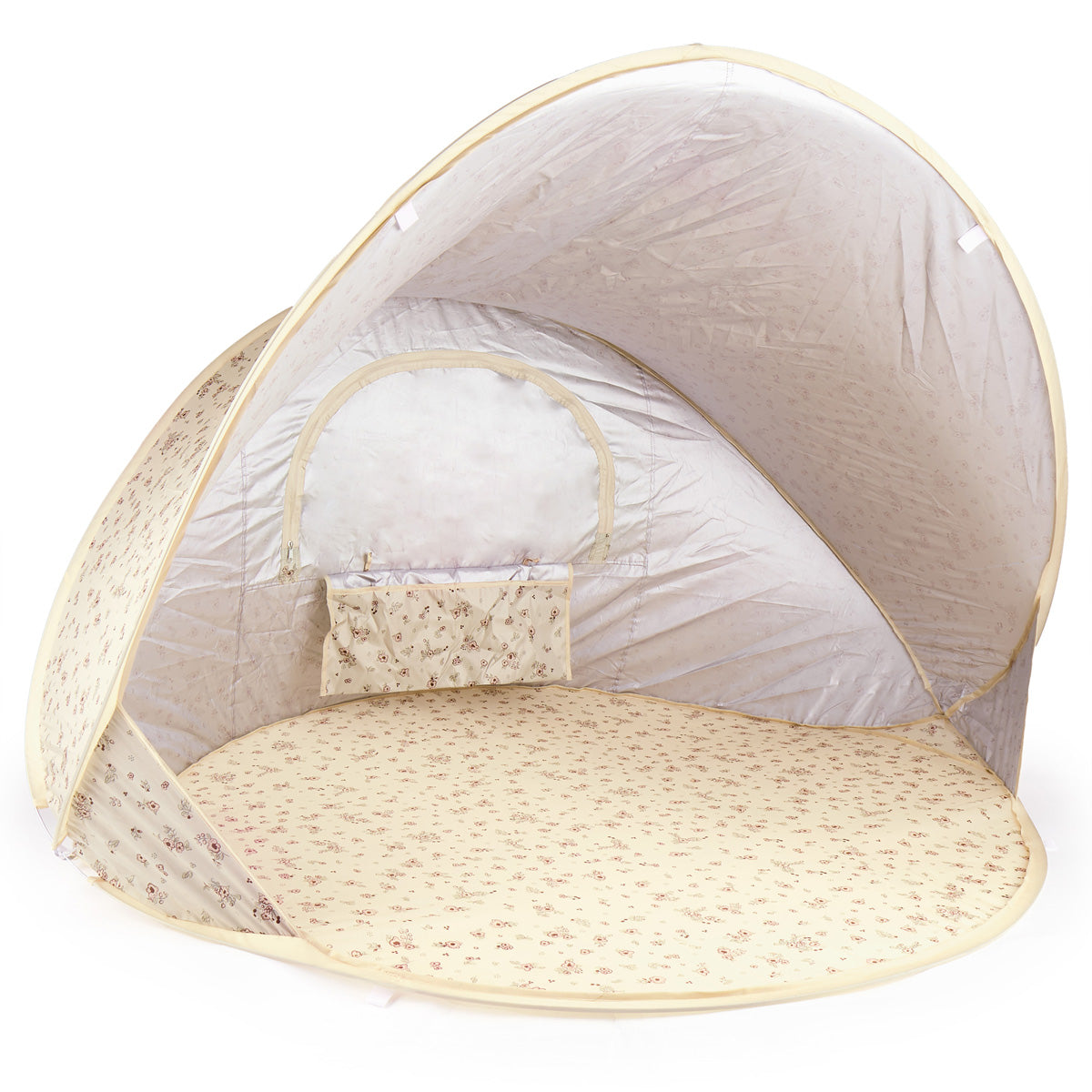
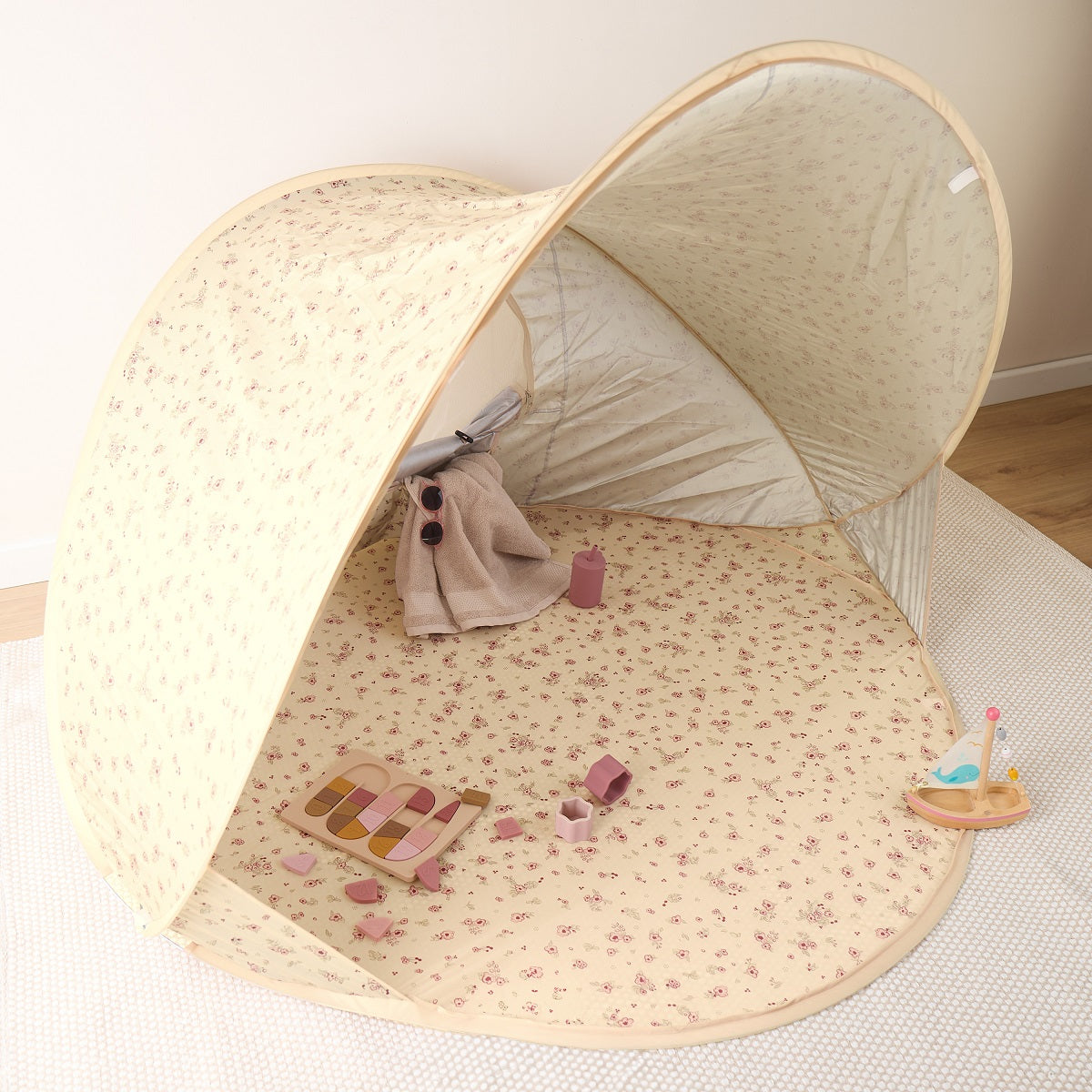
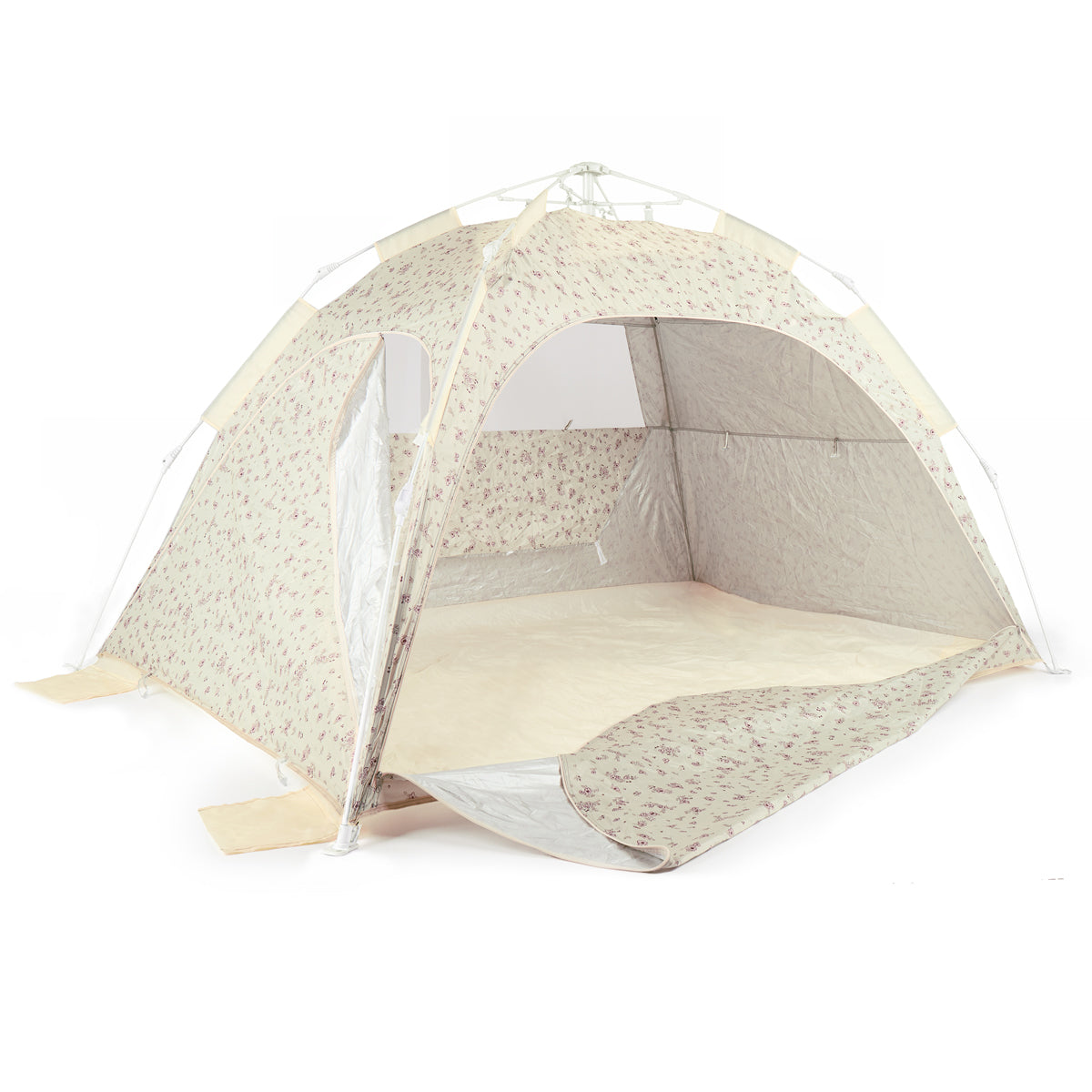
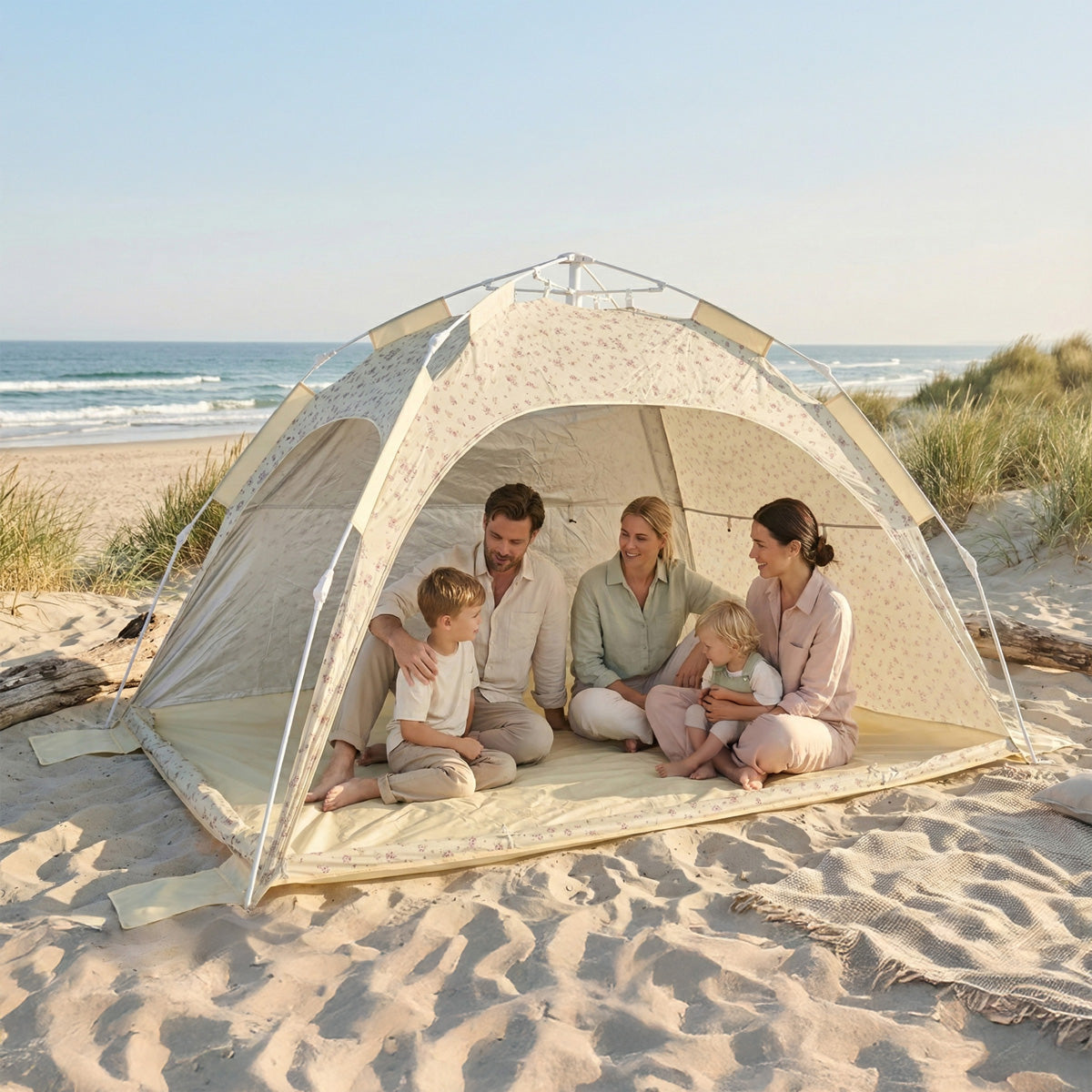
Pop-up beach tent “Vintage Flowers” – key specs
The most important data should be right on the product – dimensions, weight, packed size, UV protection/UPF, ventilation and scope of delivery (e.g. pegs/guy lines). As soon as this information is fully maintained in the shop, we will mirror it here as a mini table so you can compare faster.
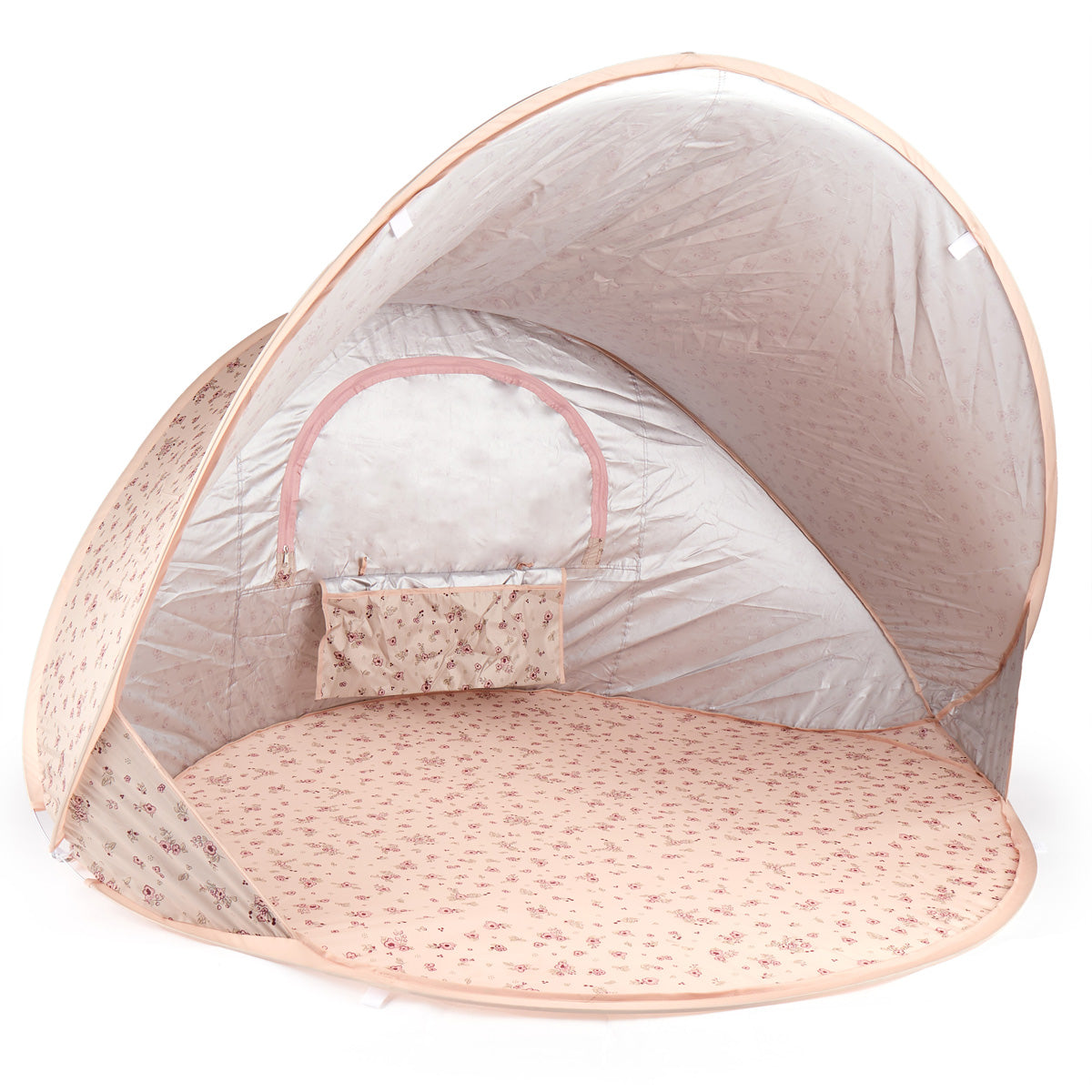
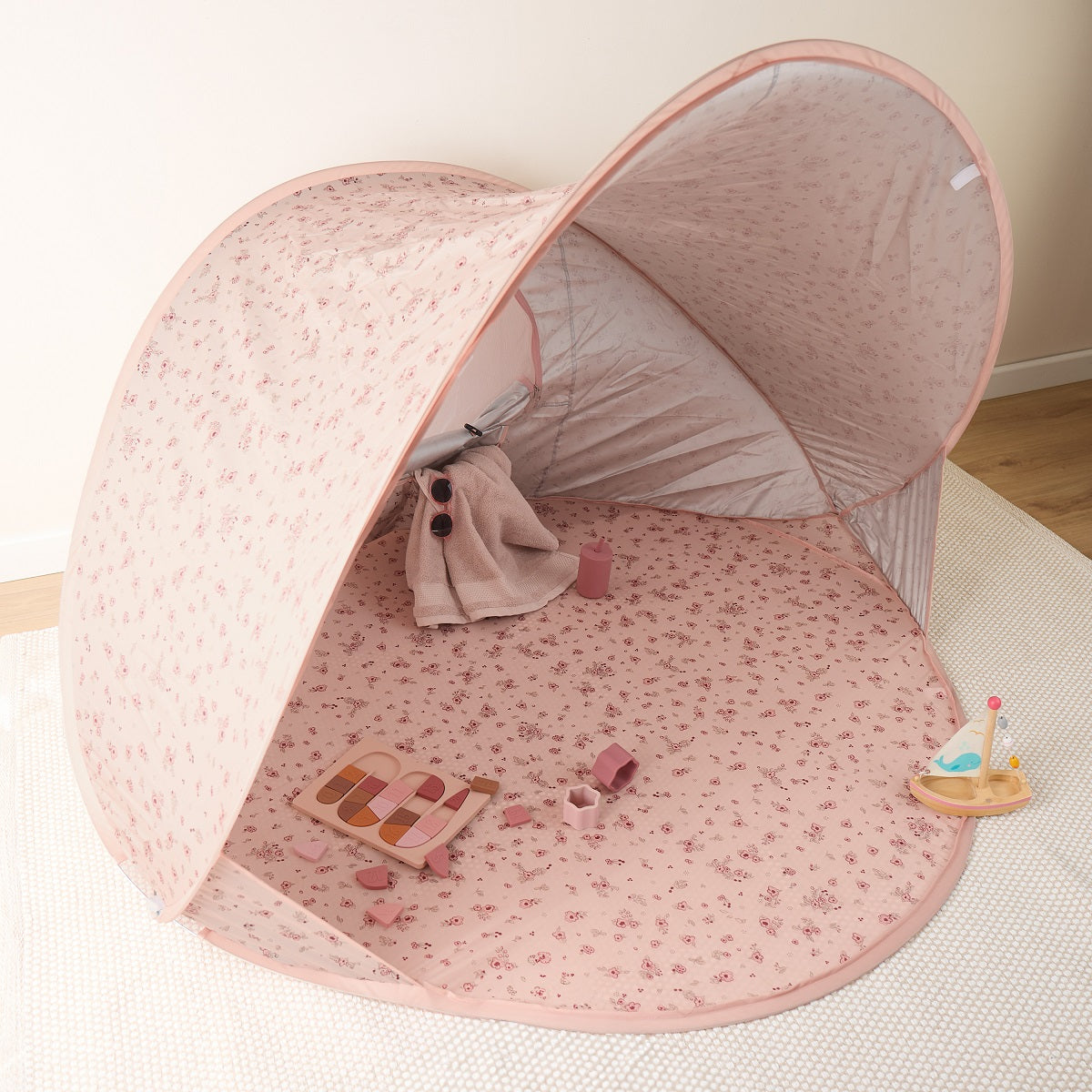
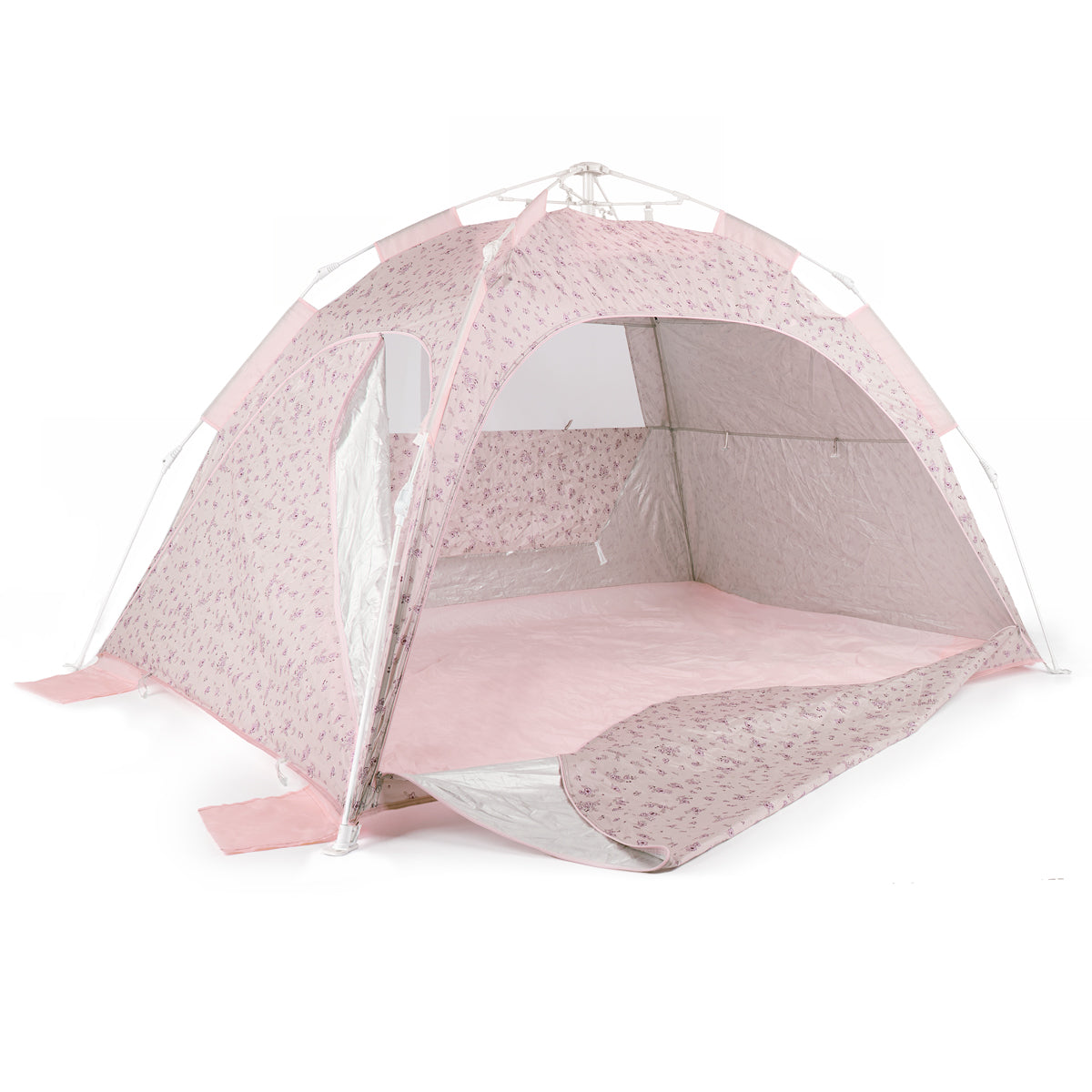
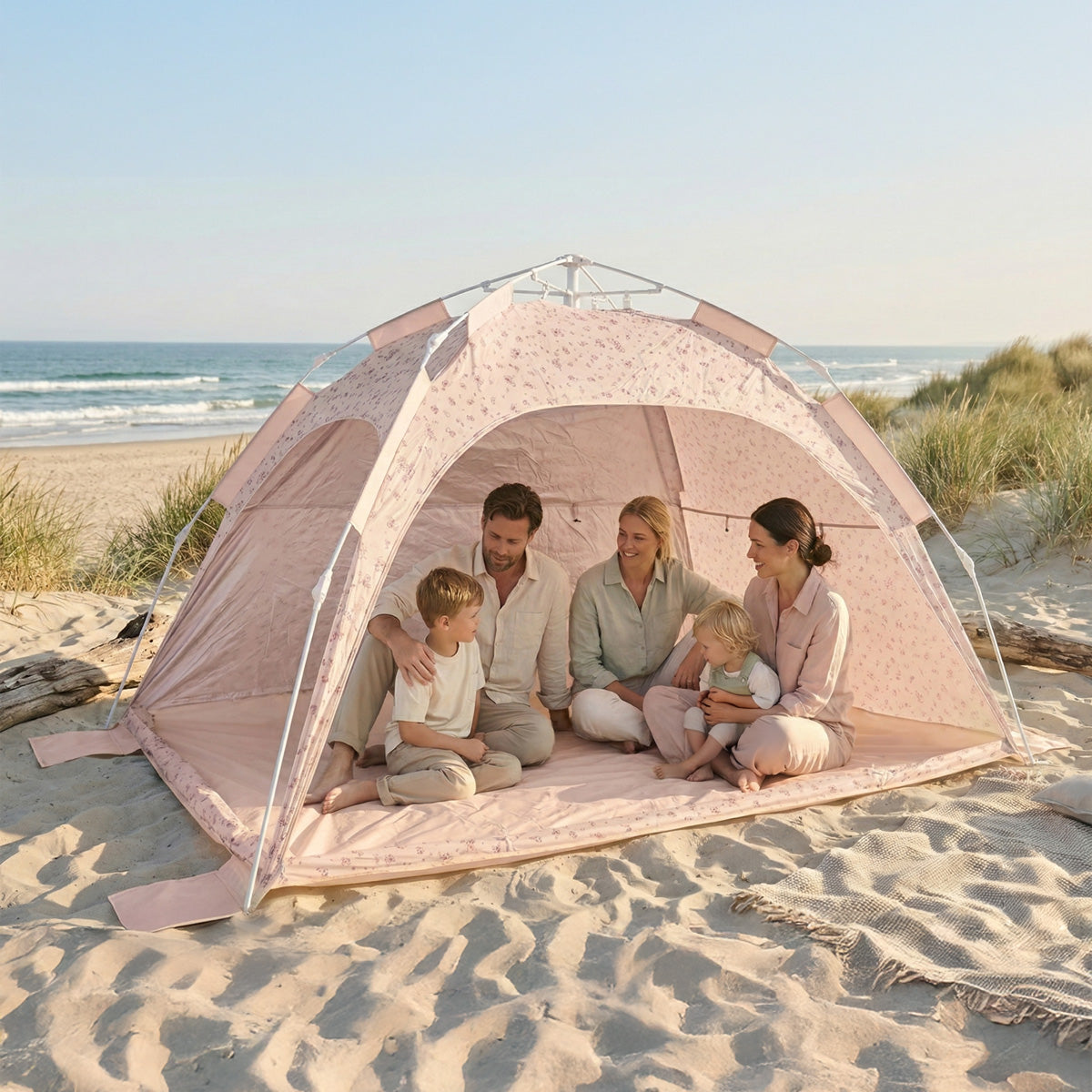
Pop-up beach tent “Dreamy Flowers” – key specs
For comparison, hard facts count, not just the pattern – so here too, please look at: dimensions when set up, packed size, weight, UPF/UV protection rating, ventilation openings and anchoring/scope of delivery. Once the data has been added in the shop, we can show them neatly side by side on the collection page.
Material & harmful substances: brief and without drama
With anything close to your child, you want to feel good about it – understandably. Labels such as OEKO-TEX can be a helpful guide, because OEKO-TEX STANDARD 100 tests textiles for harmful substances and describes particularly strict requirements for baby articles (product class I) (OEKO-TEX: STANDARD 100).
Important for clear expectations: Whether a specific model is certified must be stated in the product details – if you have questions about it, it is better to ask than to guess.
FAQ: short, honest, helpful
What UV protection should a beach tent have?
A beach tent should provide reliable shade and be well ventilated. From UV index 3, protective measures are necessary, as recommended by BZgA Kindergesundheit (BZgA Kindergesundheit). More detail (with UPF/standards) in our guide: What UV protection is important for beach tents for babies and children?.
What is a pop-up beach tent?
A pop-up beach tent almost sets itself up when unpacked and stands in no time. That is practical when children need shade right away and you do not want to spend ten minutes sorting out poles first. More in our guide: Pop-up beach tent: What is it and what are its advantages?.
From what age does a beach tent make sense for a baby?
A beach tent makes sense as soon as you are outside with your baby for longer and need a fixed spot of shade. In the first year of life the rule is: no direct sun, as BZgA Kindergesundheit explicitly points out (BZgA Kindergesundheit). Also plan for airflow, drinking/nursing and short breaks.
How do I prevent heat build-up in the beach tent?
Position the beach tent so that air can circulate, and avoid blazing sun when it “burns in”. Shade breaks and observation are more important than toughing it out; in hot weather, the BVKJ advises taking breaks in the shade and watching for warning signs such as dizziness or nausea (BVKJ Bavaria). Better to take them out once too often than to think “it’ll be fine”.
How does “folding a pop-up beach tent” work without stress?
It works best with two or three dry runs at home – really. Folding slowly beats force, especially when it is windy and there is sand everywhere. If children want to help: let them hold the bag or collect the pegs – that is help that saves your nerves.
Beach tent UV protection: is the tent alone enough as sun protection?
No, the tent is only one building block. The most effective order is: shade, clothing, sunscreen, as the consumer advice center sums it up (Consumer advice center). That means: create a shady spot, cover the skin, apply suitable sunscreen to uncovered areas – and do not “sit out” the midday sun.
Is a “Babymoov beach tent” better than others?
“Better” depends less on the name than on the data. Compare UPF/UV protection rating, ventilation, size, packed size and anchoring – that determines comfort and safety at the beach. If these points work for you, it is usually the right tent, no matter which brand.
How do I quickly check the UV index for our beach day?
The easiest way is to look at official UVI information or apps. The DWD explains the UVI levels along with protective measures very clearly (DWD: UV index). Rule of thumb: UVI 1–2 is usually relaxed, from 3 protect actively – and at very high values, take a midday break in the shade.
About this page
This page was created by the BIECO editorial team – as a family business from Hamburg with 66 years of experience and an eye on real beach life. For facts, we rely on reliable sources instead of gut feeling, for example the sun protection recommendations of BZgA Kindergesundheit and the UV index classification of the German Weather Service. Our goal: to explain briefly what matters – so you can get to the right beach tents faster.
In closing: better a tent you will actually use
The best beach tent is the one that comes along – and then actually gets set up. When packed size, ventilation and anchoring are right, the beach automatically becomes more relaxed. Take a look at our pop-up models in the collection, and if you have questions about data/details while comparing: a quick follow-up is perfectly fine. There is enough going on at the seaside already.
Structured data (JSON-LD)
Note: Please include the following code in the theme of the collection page (do not output it as visible text).
By Ulli & Flo · Owners & parents More about us ↓

About this page
Ulli & Flo
Owners of bieco · Hamburg · parents ourselves
We've learnt that at the beach, it's not the "perfect" gear that wins, but the gear you actually put up. When ventilation and anchoring are right, the beach quickly turns into a break – and that does everyone good.