

For sports and play
Hobby Horses
Sort by
13 products
recently viewed
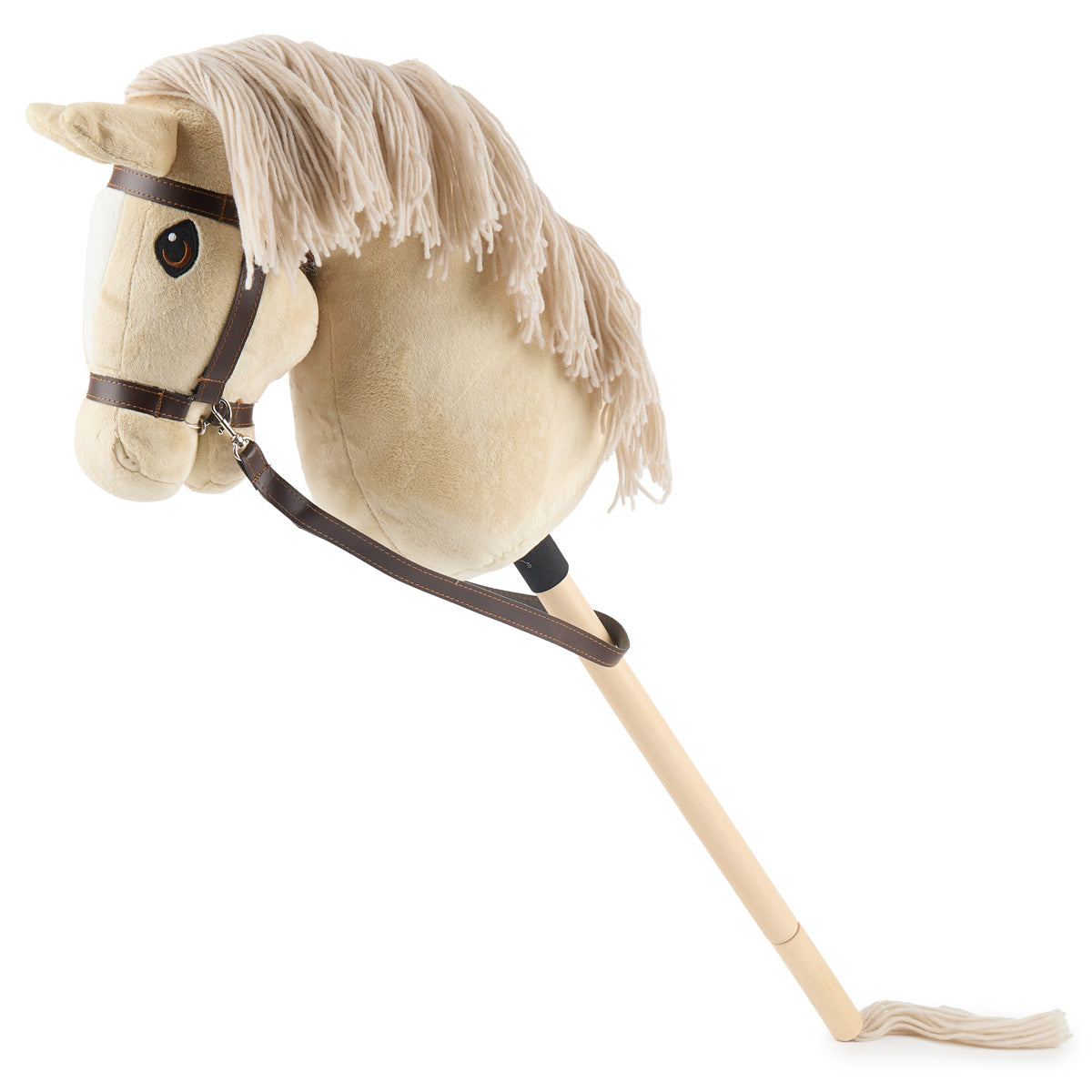
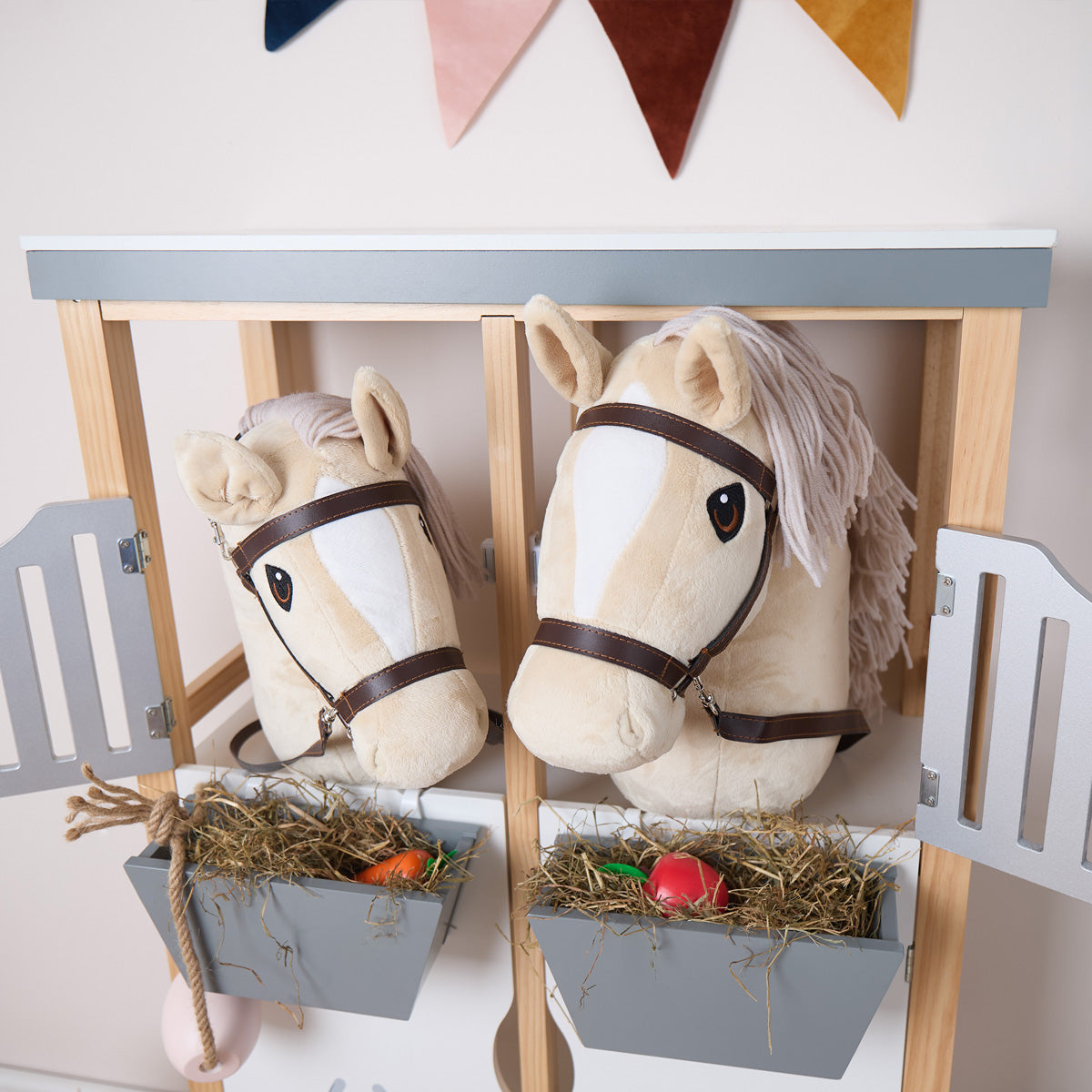
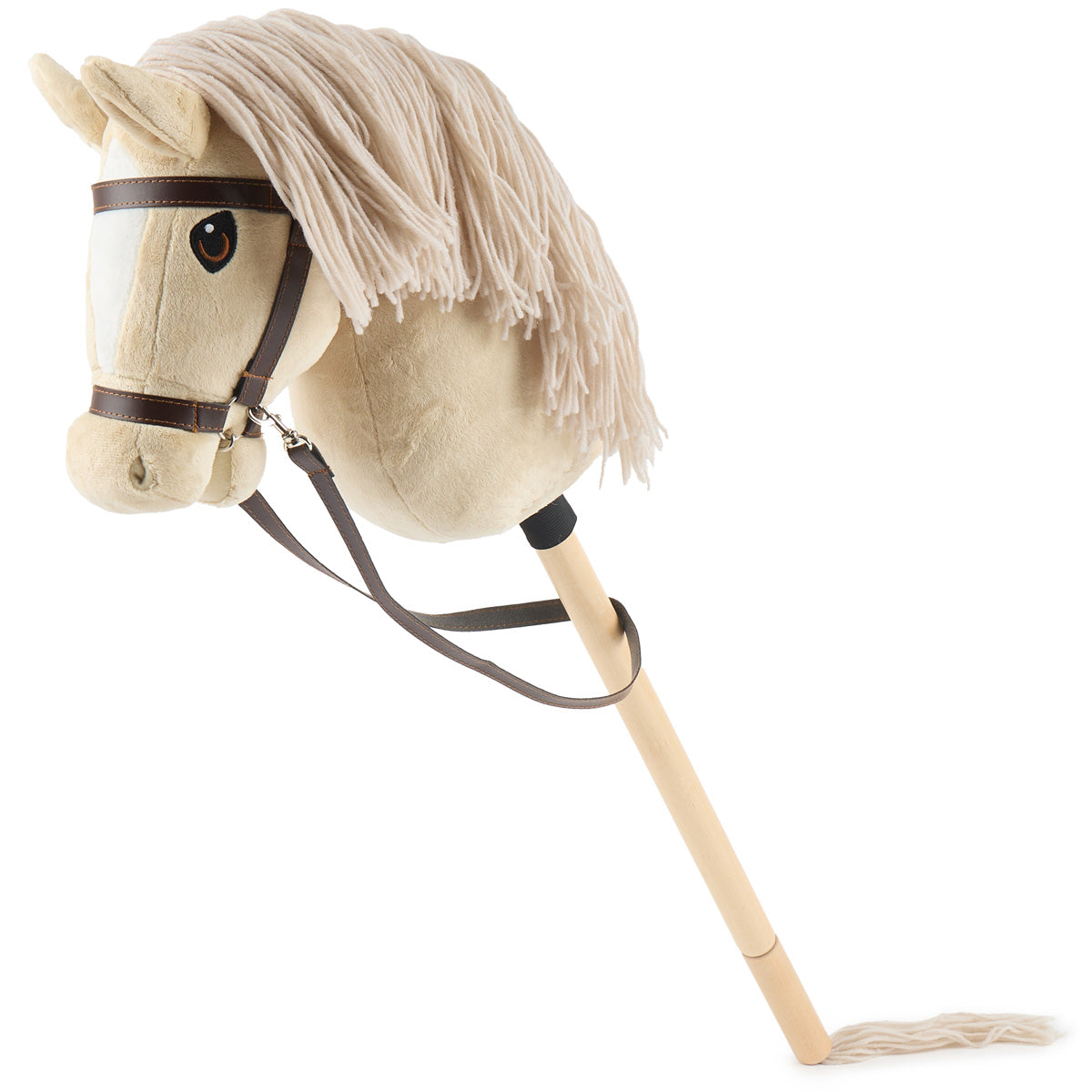
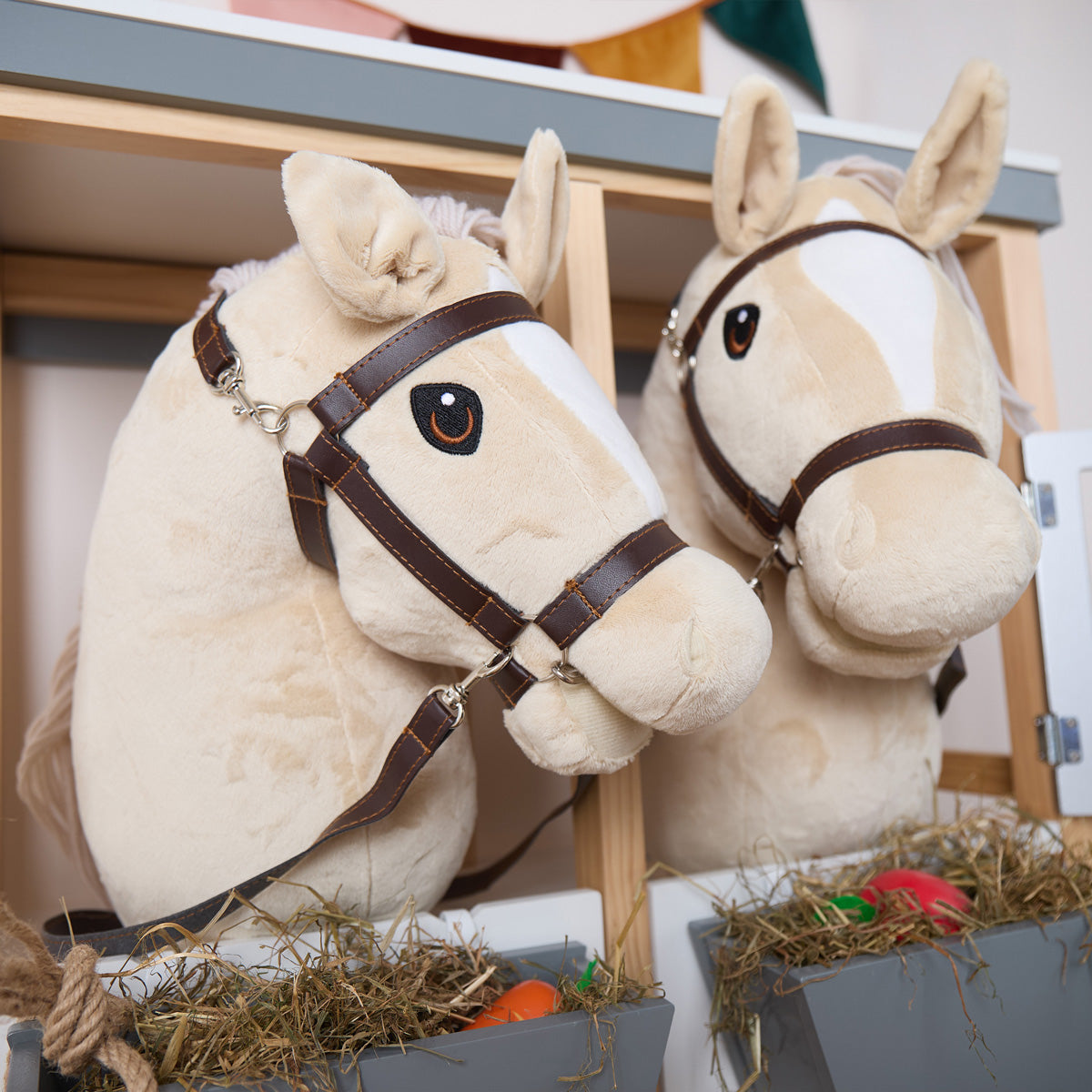
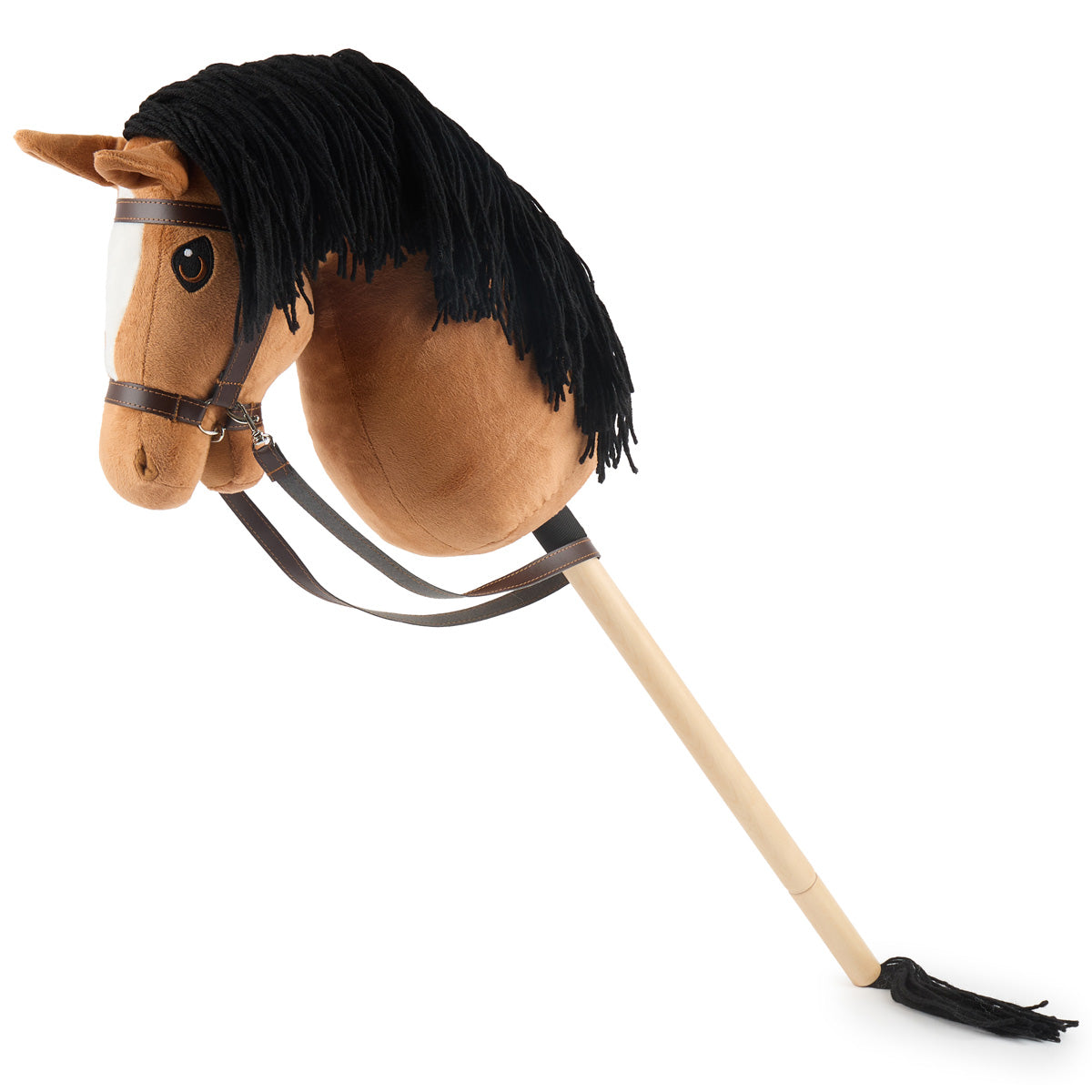
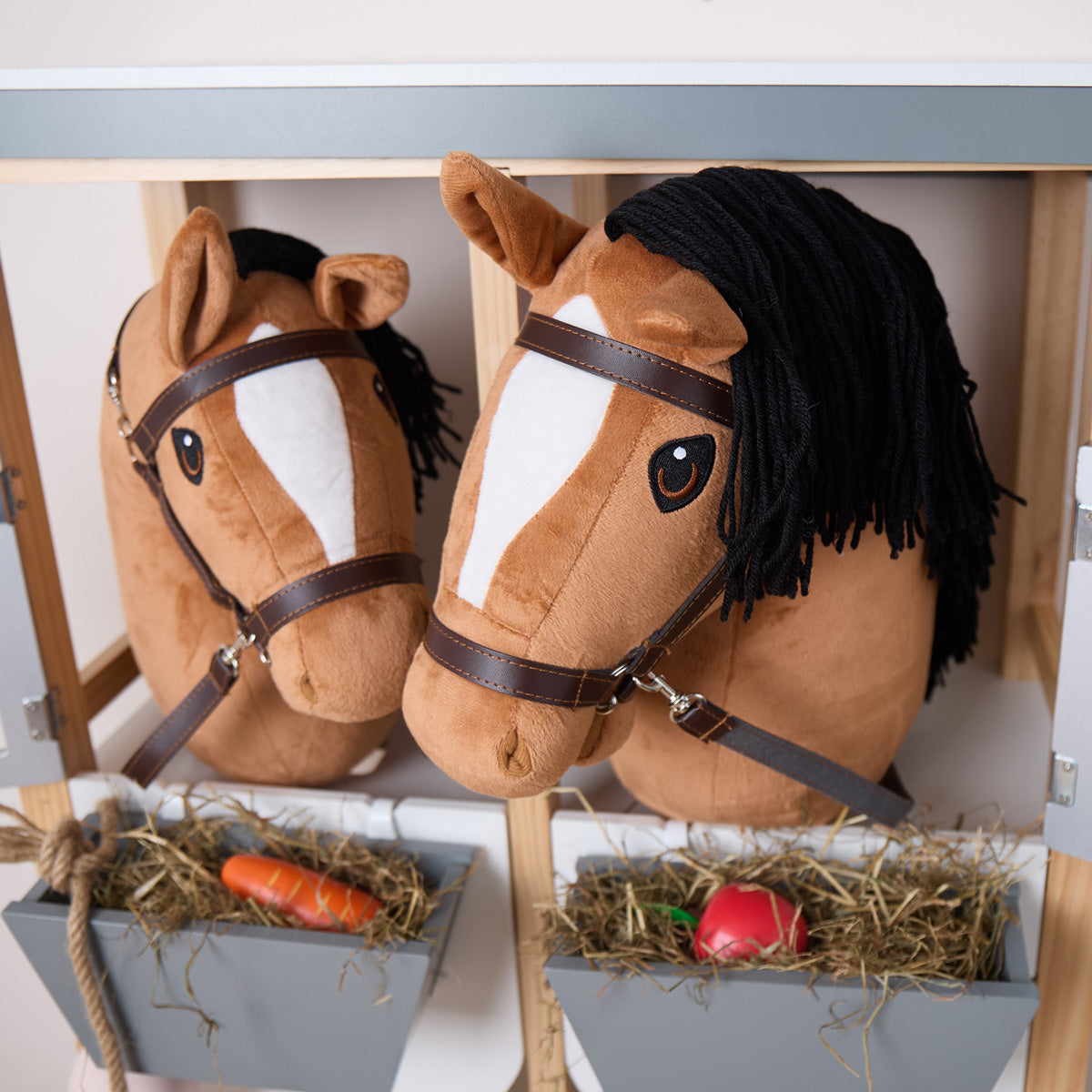
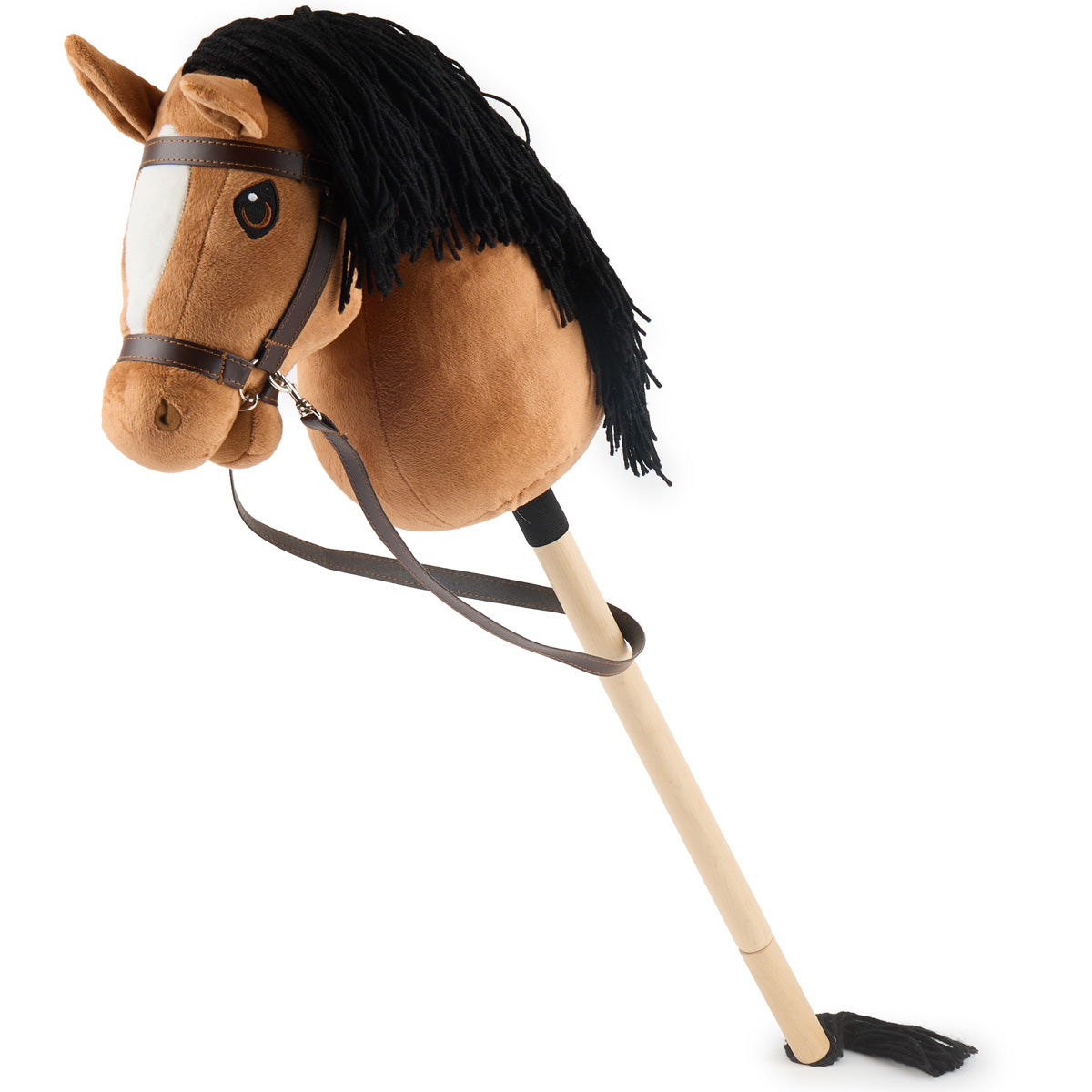
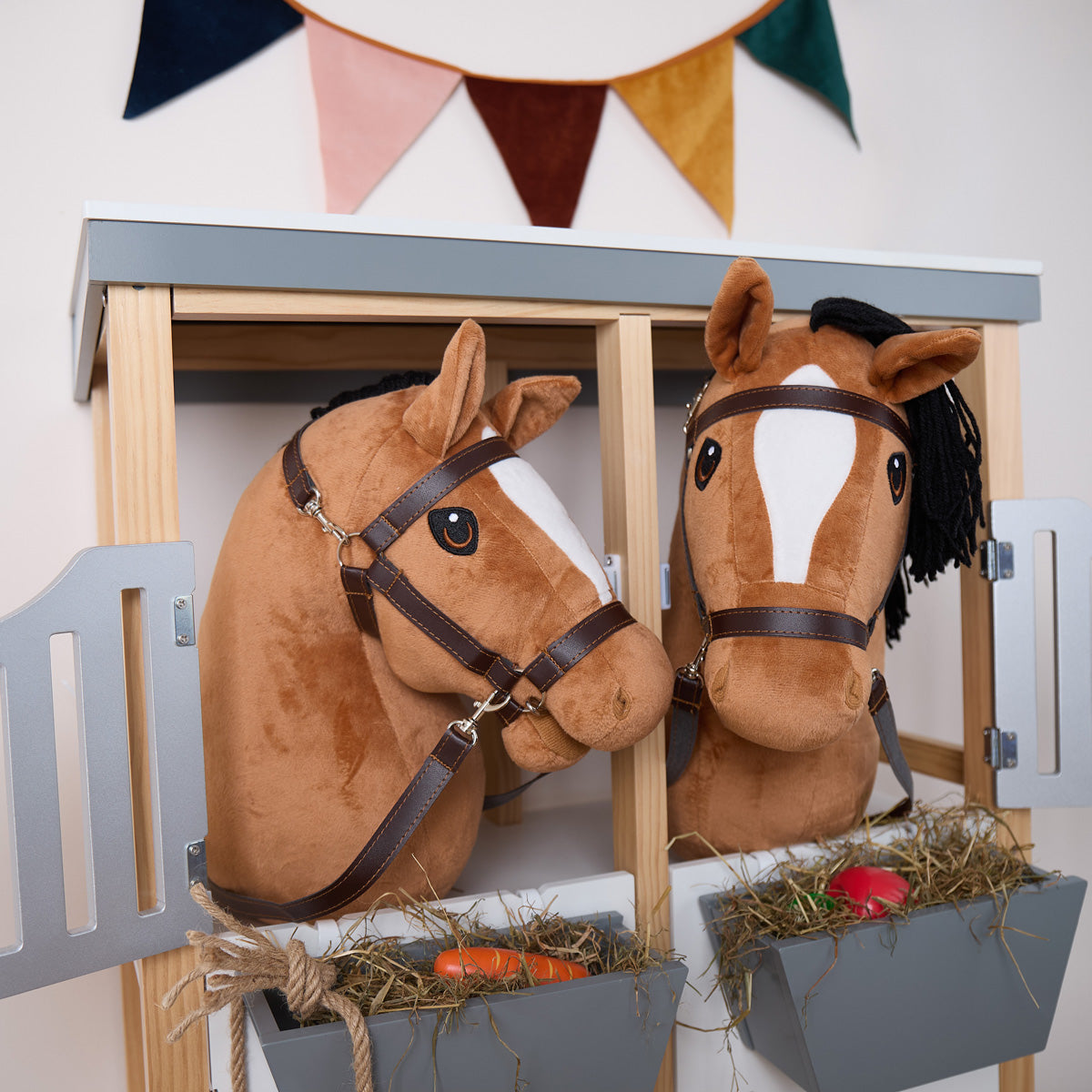
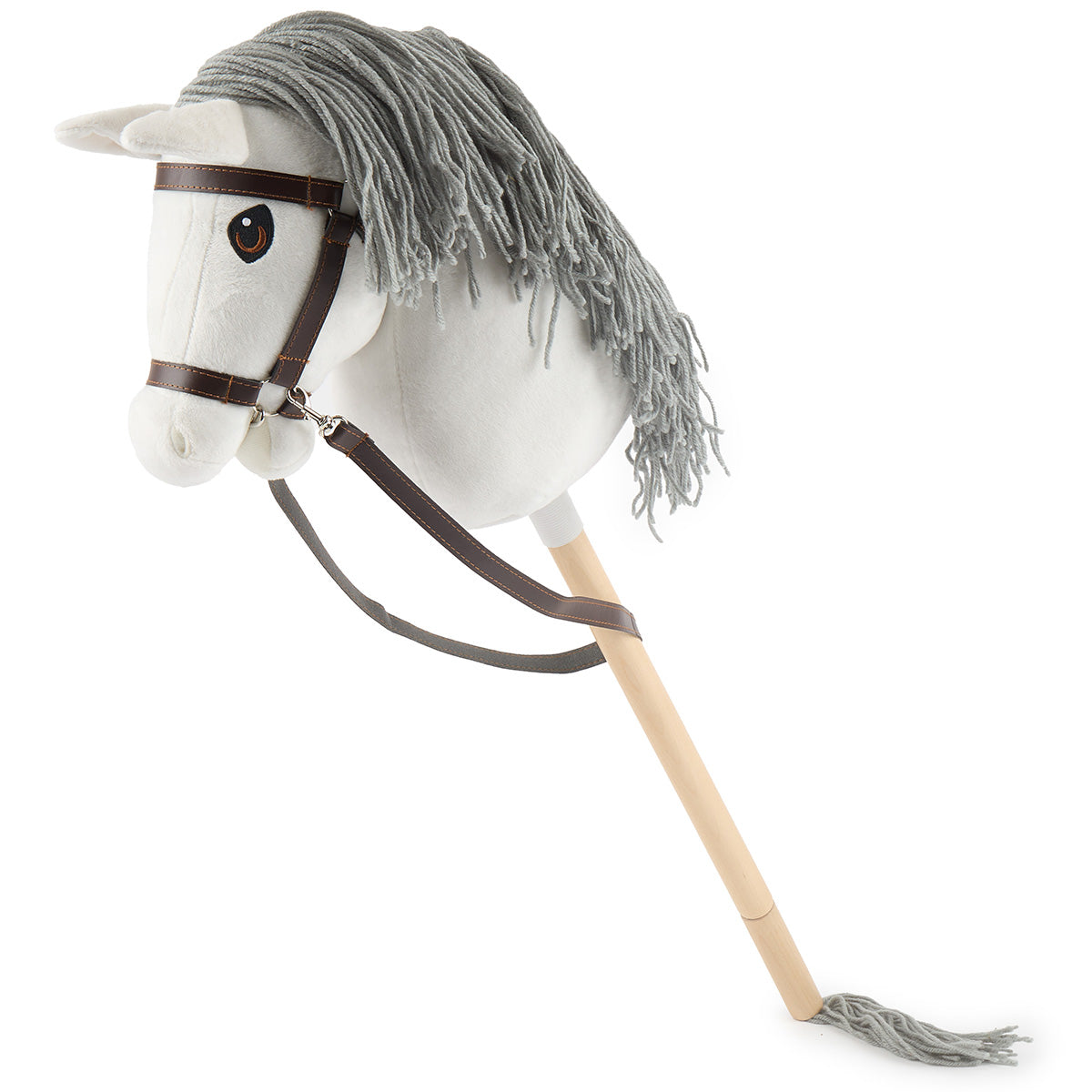
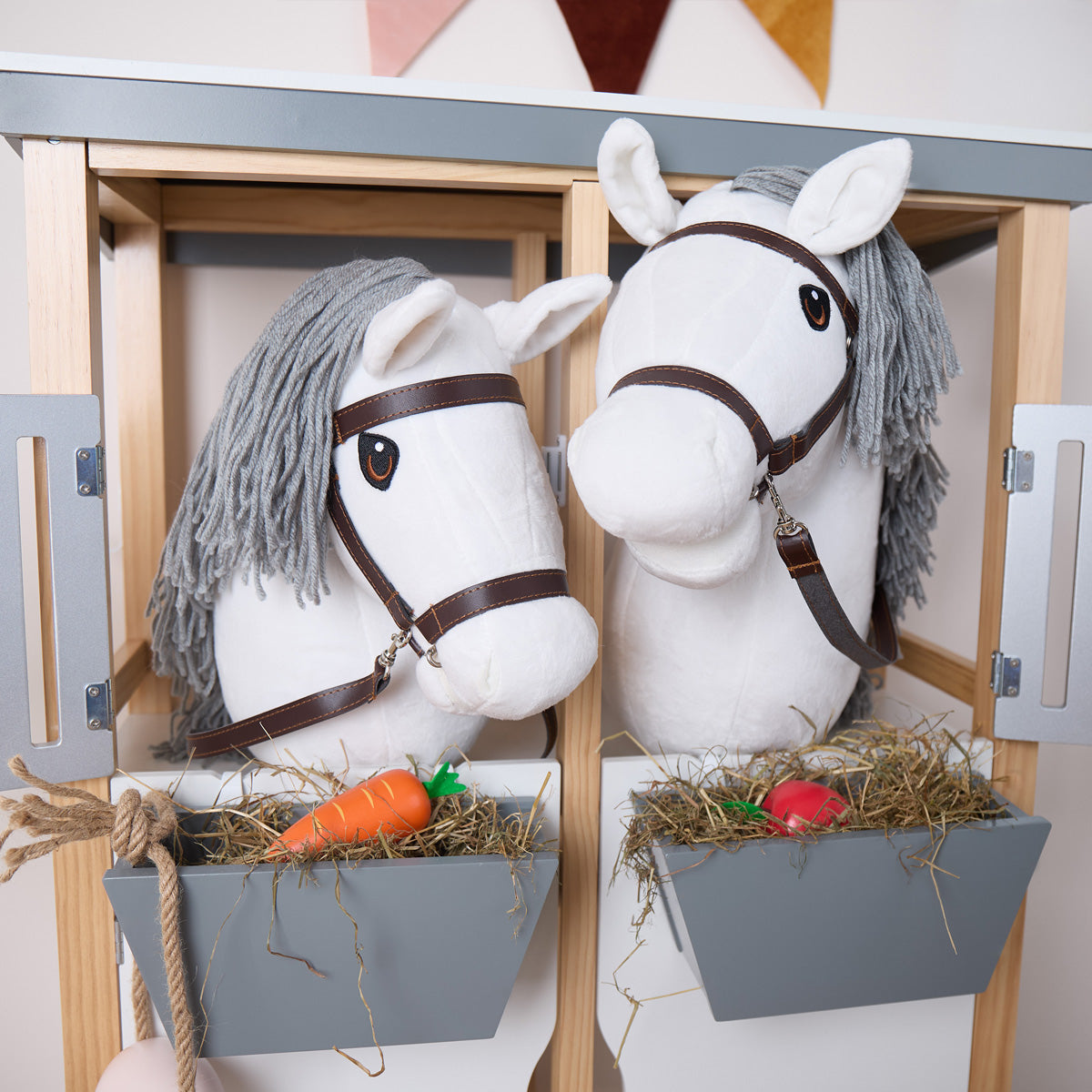
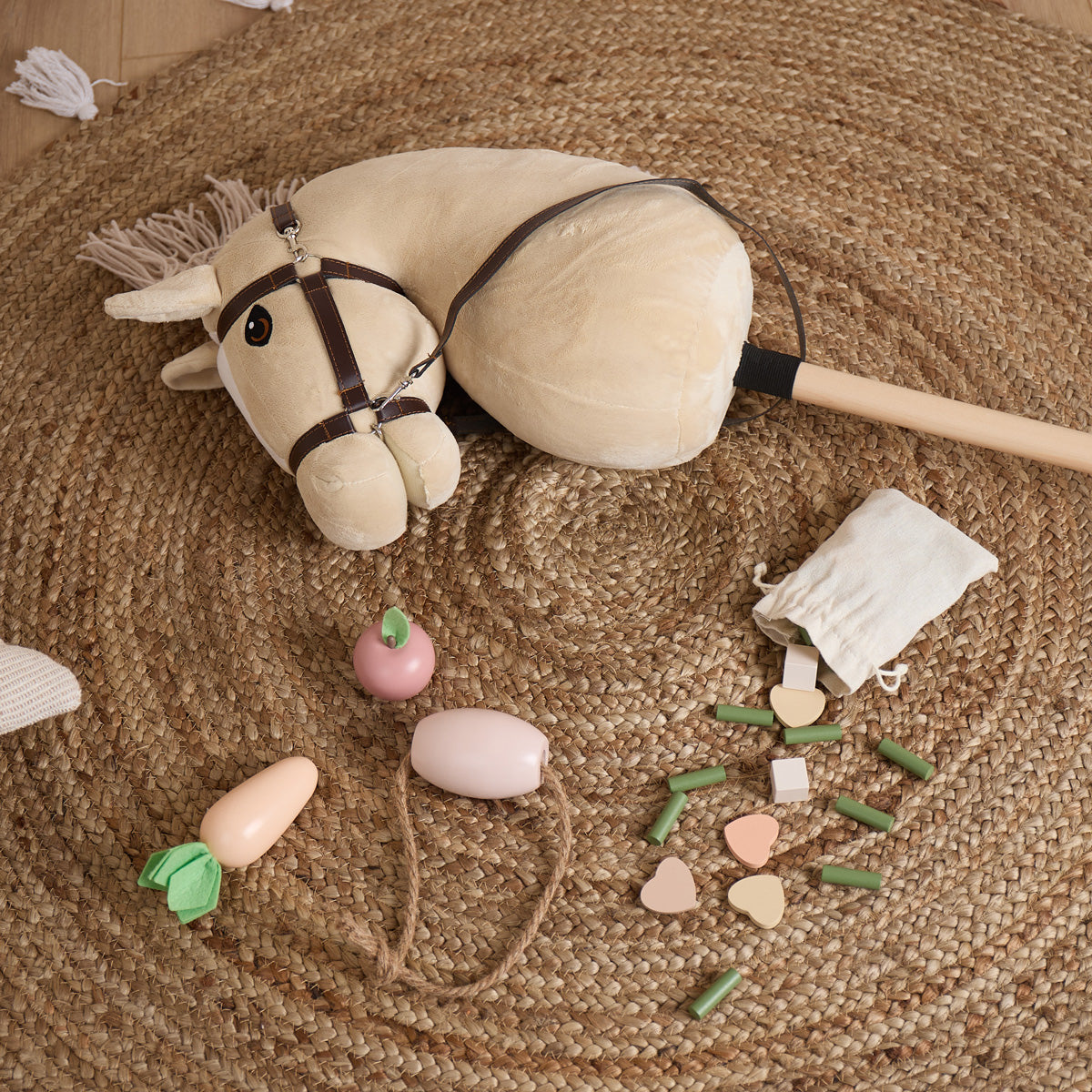
A hobby horse is a stick horse for riding, jumping and role play – and that's exactly what our models are made for: grab it, run off, be happy. A good hobby horse feels in the hand like a favorite toy. Whether your child is currently horse-crazy or you're looking for a gift: in this collection you'll quickly find the right size and the right look – without having to wade through ten riding forums.
Quick answer if you're in a hurry: If you want to buy a hobby horse, decide by size first (S/M), then by “realistic” (details) or “sturdy” (for lots of obstacle courses). For toys in the EU, the rule is: they must carry a CE marking (EU Toy Safety Directive 2009/48/EC, according to EUR-Lex: eur-lex.europa.eu). Size + feel in the hand beat any theory.
- Size: S is more agile indoors, M feels more “tournament-style” outdoors.
- Look: “realistic” = more horse details for role play.
- Safety: CE marking is mandatory for toys in the EU.
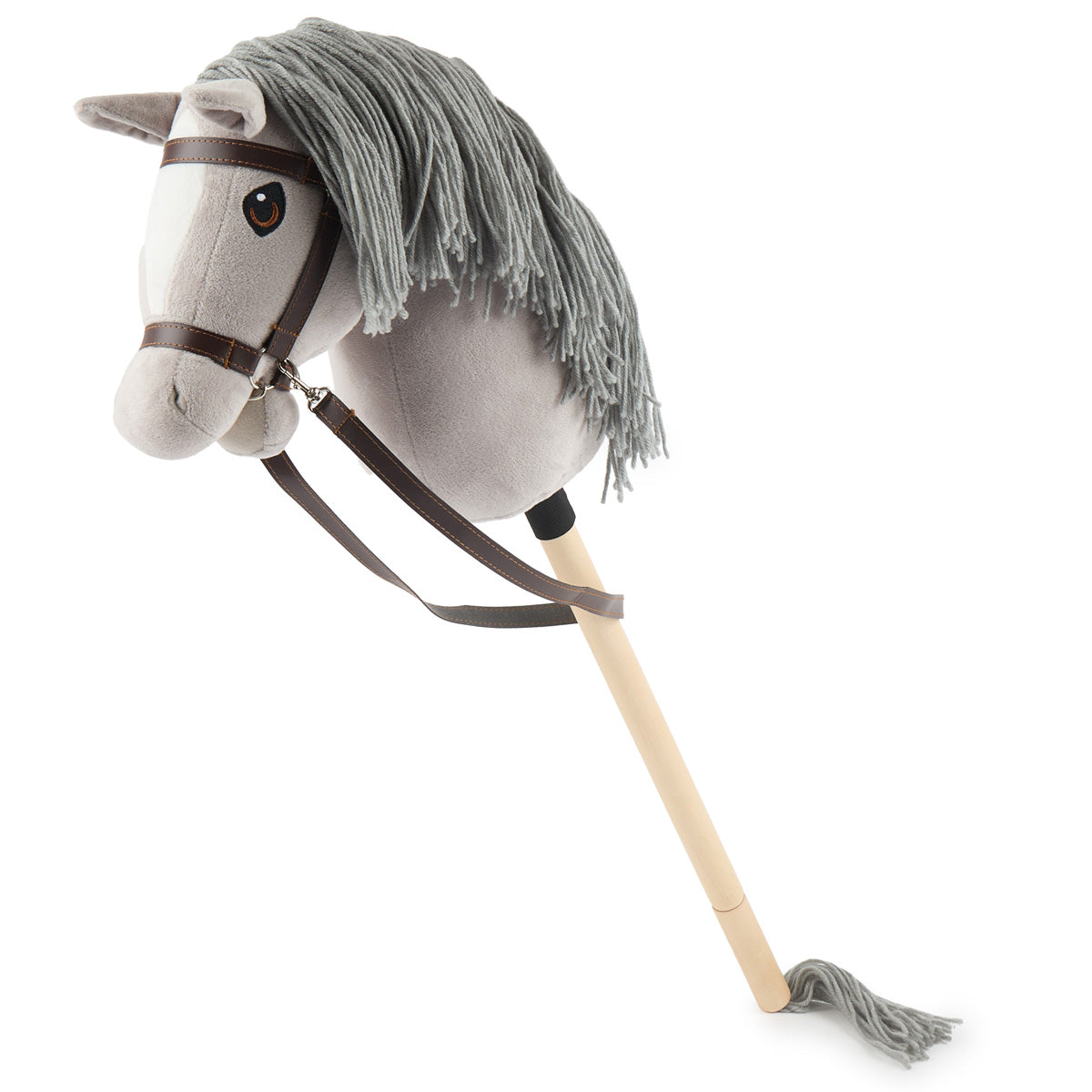
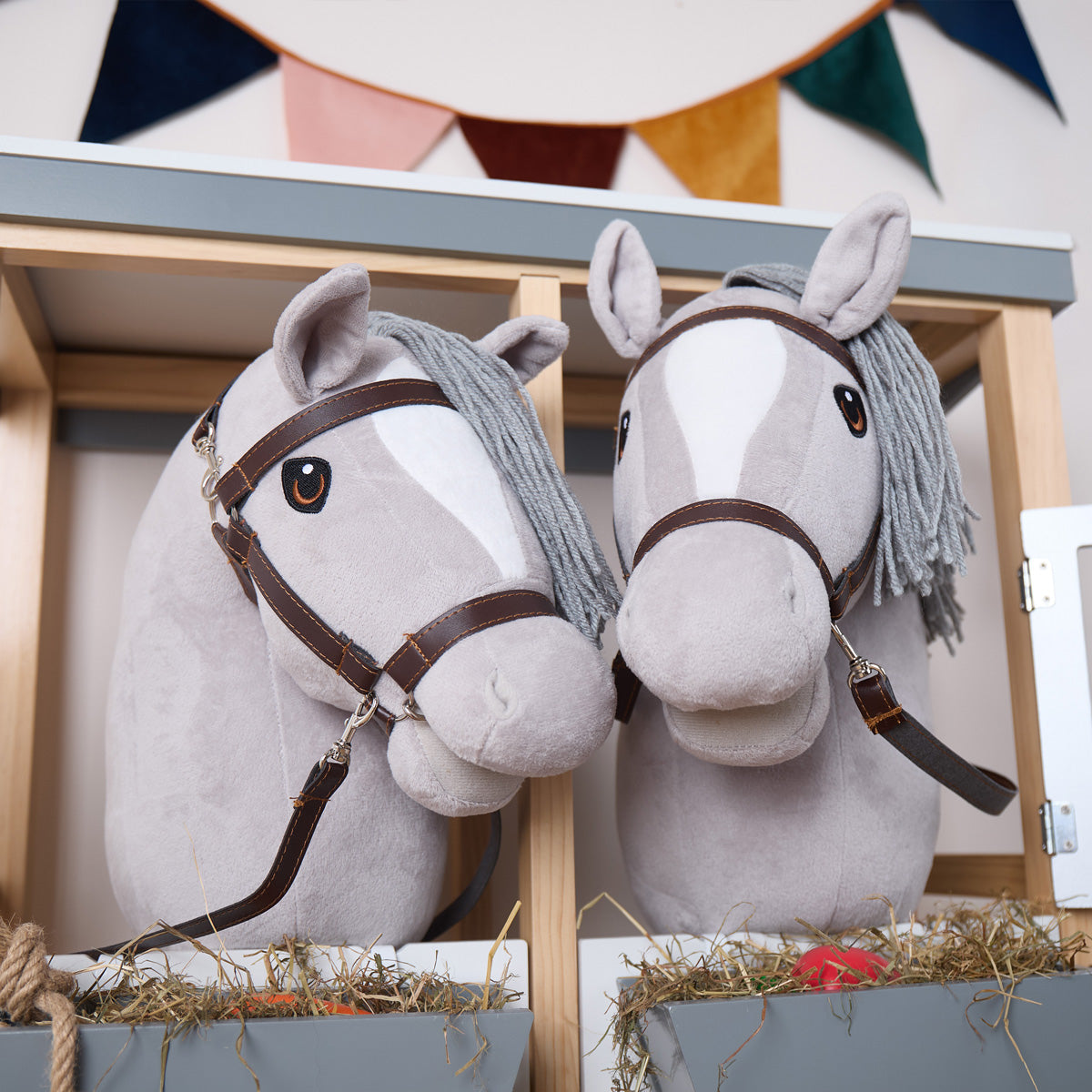
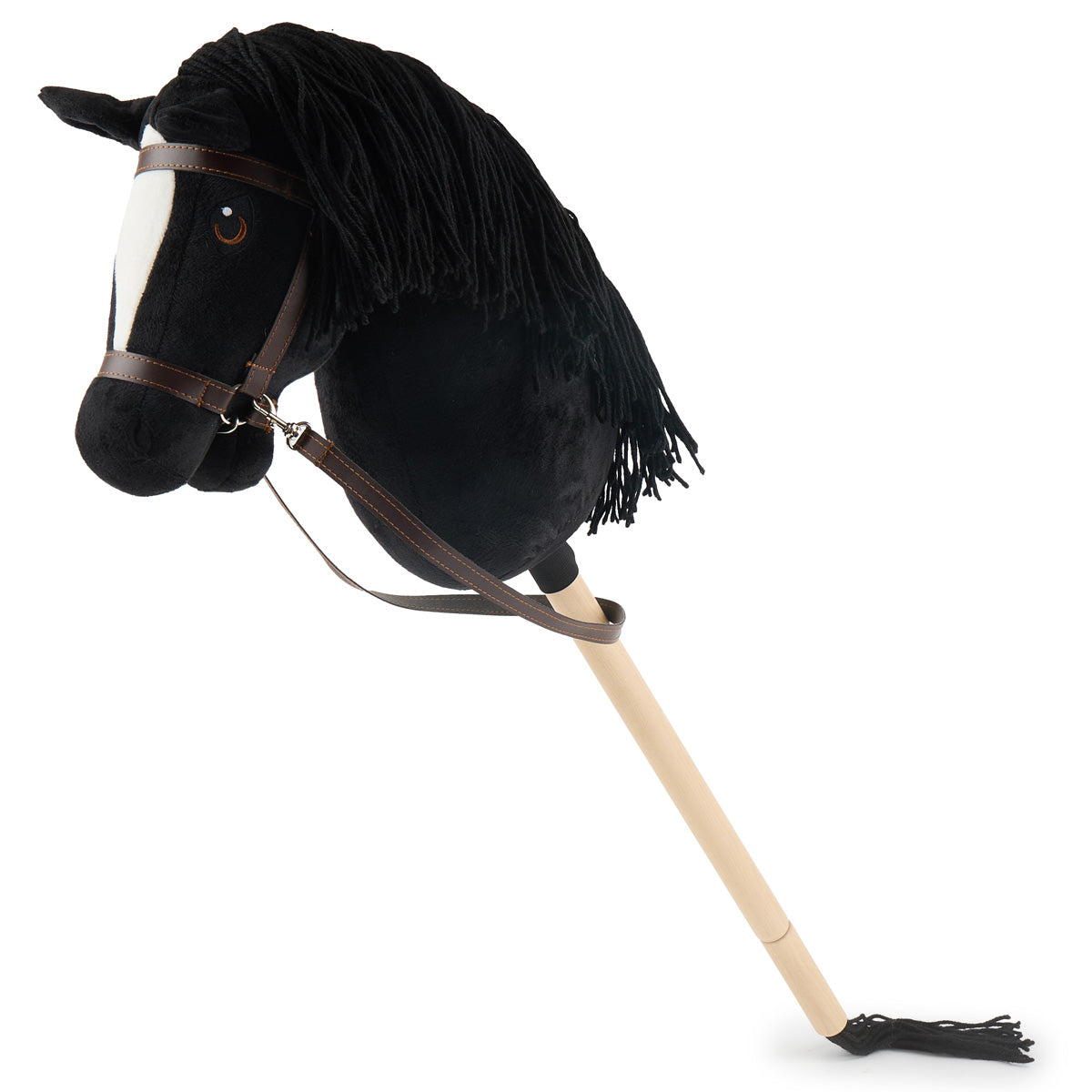
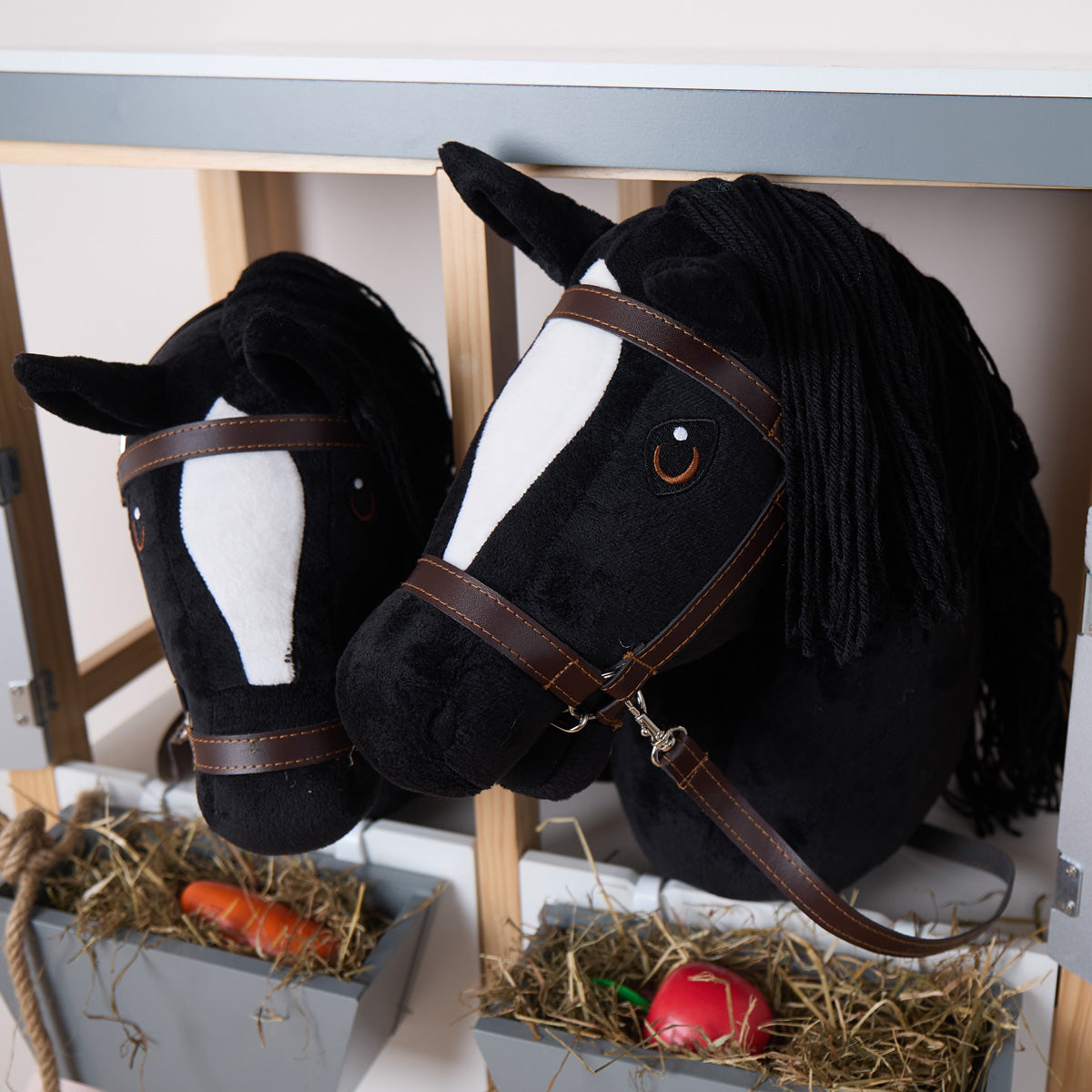
In this collection: 12 hobby horses, sizes S & M, colors including Rappe (black), Schimmel (light grey/white), Schecke (pinto), Fuchs (chestnut brown) and Grey/Beige. Buy a hobby horse now.
The key points at a glance
- When it comes to hobby horses for kids, what matters first: easy to grab and easy to steer. Then the horse won't end up in the corner after five minutes.
- Size S is often more relaxed in apartments, hallways and kids' rooms. Fewer bumps, more galloping.
- Size M feels “sportier” for hobby horsing and more like a tournament. Outdoors, that's really fun.
- “Realistic” means: head shape, fur look and details look horse-like. That helps many children with role play.
- CE marking is mandatory when toys are sold in the EU. This is regulated by the Toy Safety Directive 2009/48/EC.
Buying a hobby horse: how to find the right one in 2 minutes
If you want to buy a hobby horse, it's best to proceed in this order: size, feel in the hand, then color. First it has to fit – then it's allowed to be pretty. Sounds unromantic, but it saves nerves (and returns).
A hobby horse is a toy and an exercise partner in one. It accompanies role play in the kids' room just as well as obstacle courses in the garden – depending on how much space and energy there is at the moment.
And yes: exercise often happens quite incidentally. For children and teenagers (ages 5–17), the WHO gives at least 60 minutes of physical activity per day as a guideline (according to the WHO: who.int). If a horse motivates kids to run, that's already half the battle.
Hobby horse for kids: what parents should really look for
A hobby horse for kids should above all be practical for everyday use – not just “pretty”, but also easy to handle. The best horse is the one your child likes to grab on their own. Here's a little cheat sheet for your head (or your shopping list):
- Grip & control: Can your child hold the stick securely, even while running?
- Weight: Can it be carried for longer without the arms giving out?
- Space needed: Indoors, more agile is better; outdoors, it can be bigger and “sportier”.
- Notes & warnings: Look for the CE mark and age/warning notices on the packaging/label.
Fabric, mane, “realistic”: what does that actually mean?
“Realistic” isn't a must for a hobby horse – but it makes role play easier for many children. A realistic hobby horse looks like a little horse thanks to its head shape, fur look and details. If your child loves horse books or already has names, a stable and a tournament schedule in mind, a realistic hobby horse is often exactly the right pick.
Rules of thumb you can understand even with a coffee in your hand:
- Hobby horsing is obstacle-course and “riding” play on foot – with lots of jumping and technique.
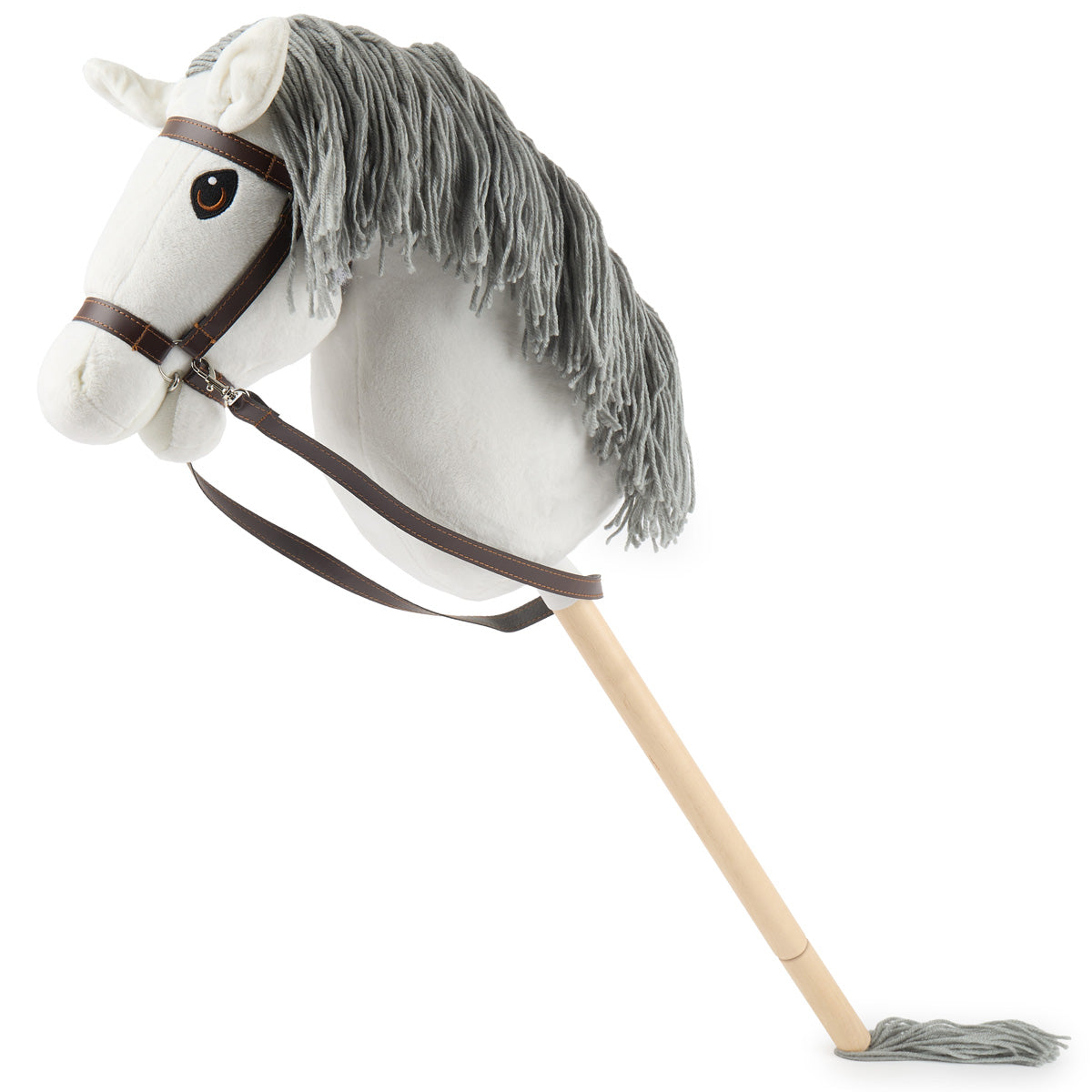
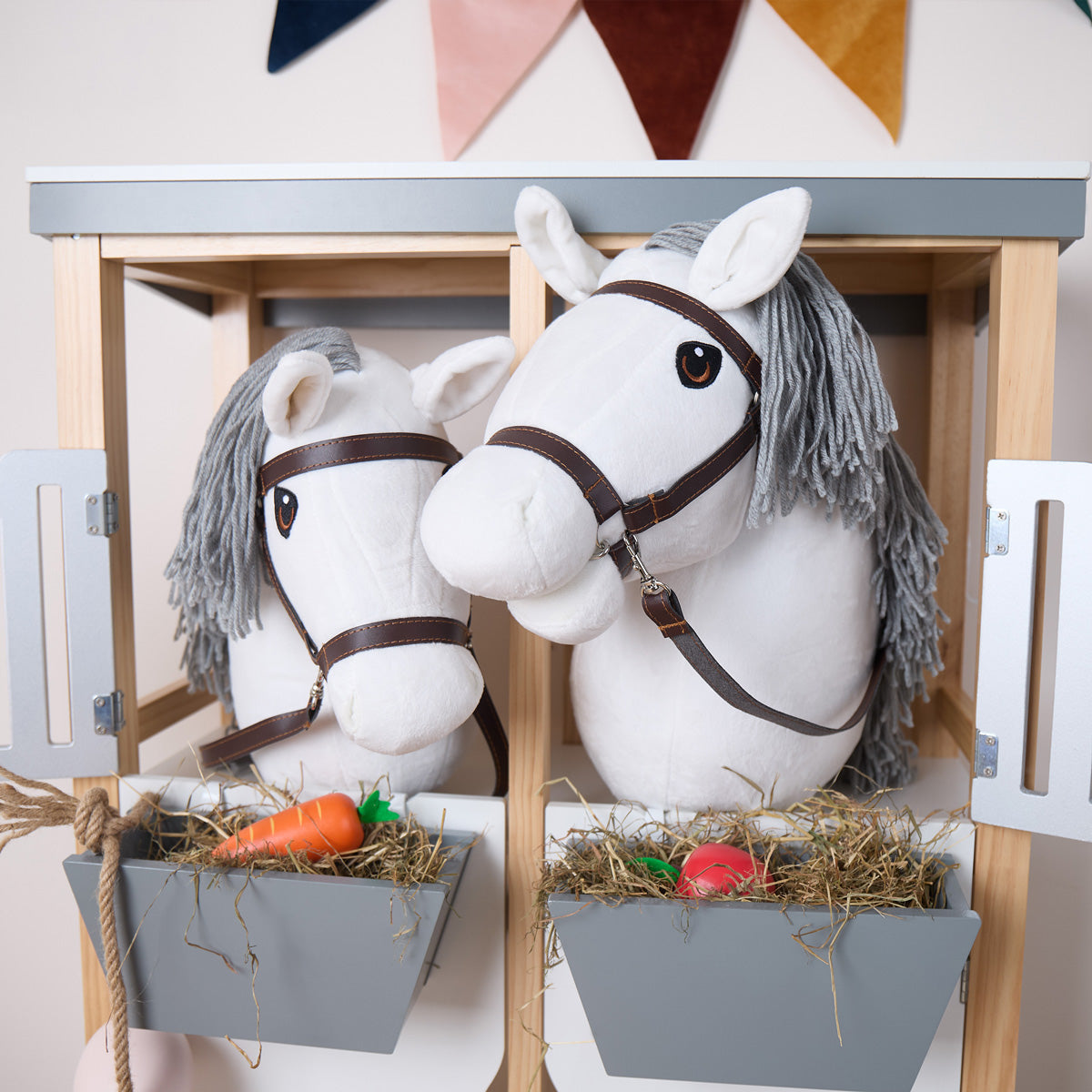
- Schimmel (grey/white horse) looks light and “tournament-ready” – always a little star in photos.
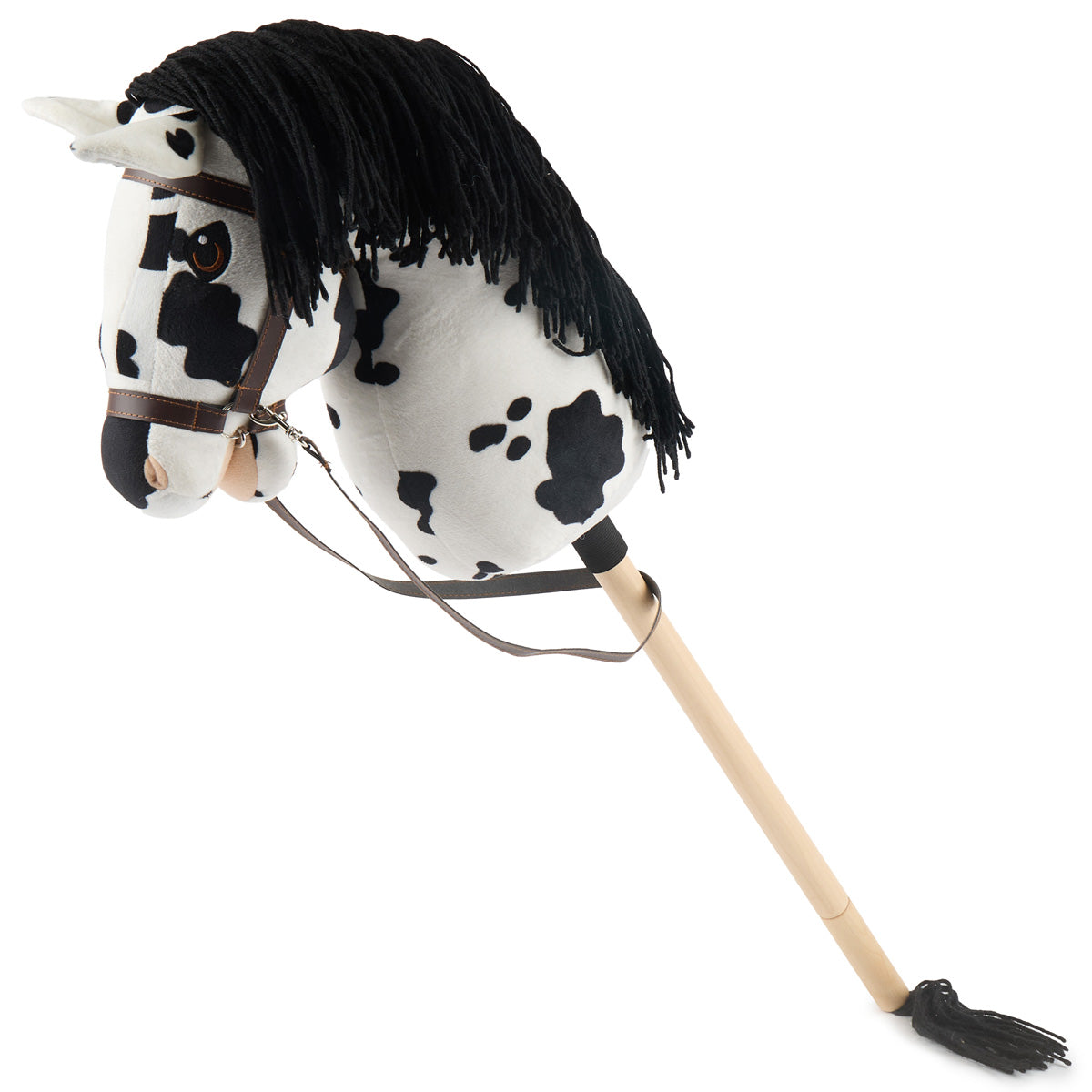
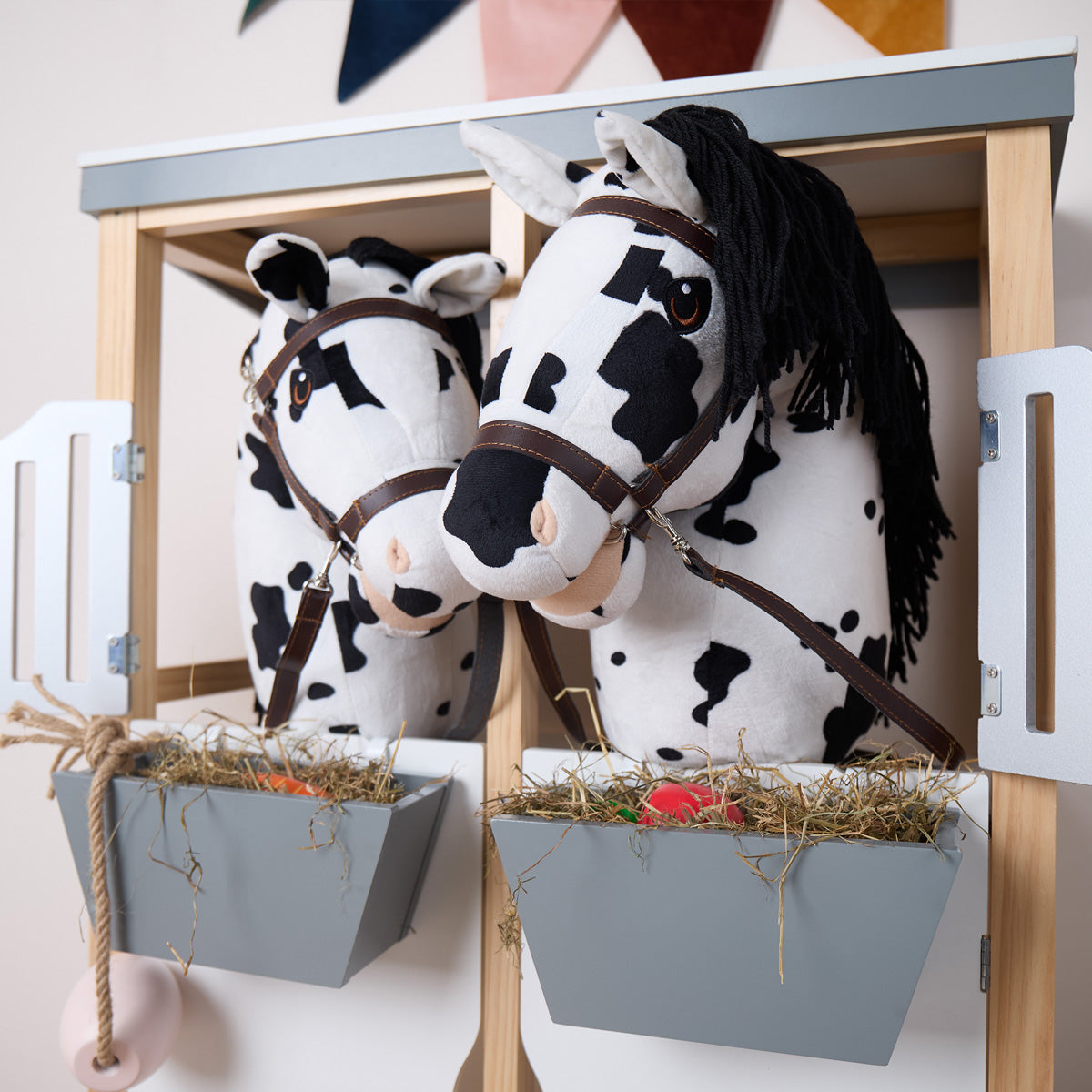
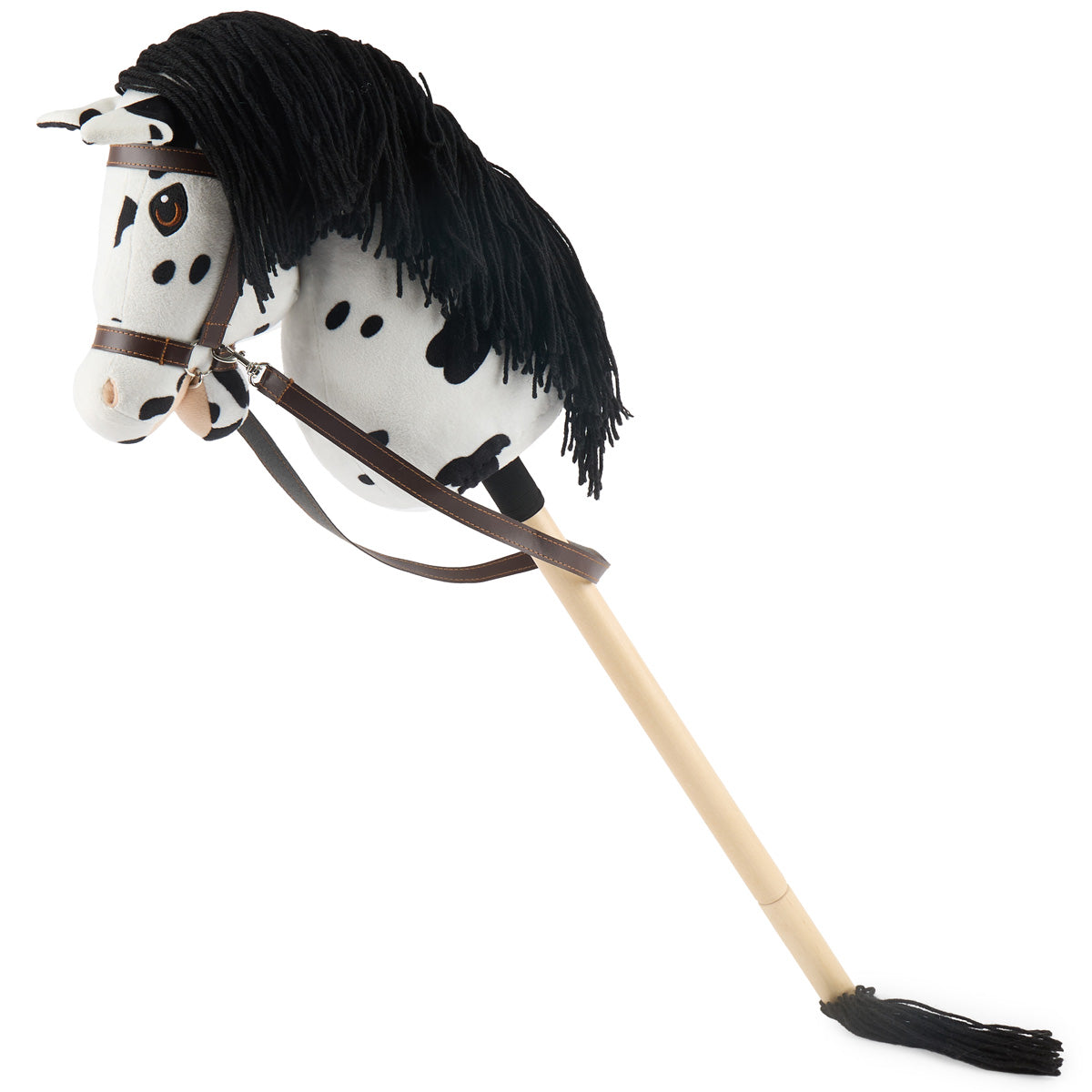
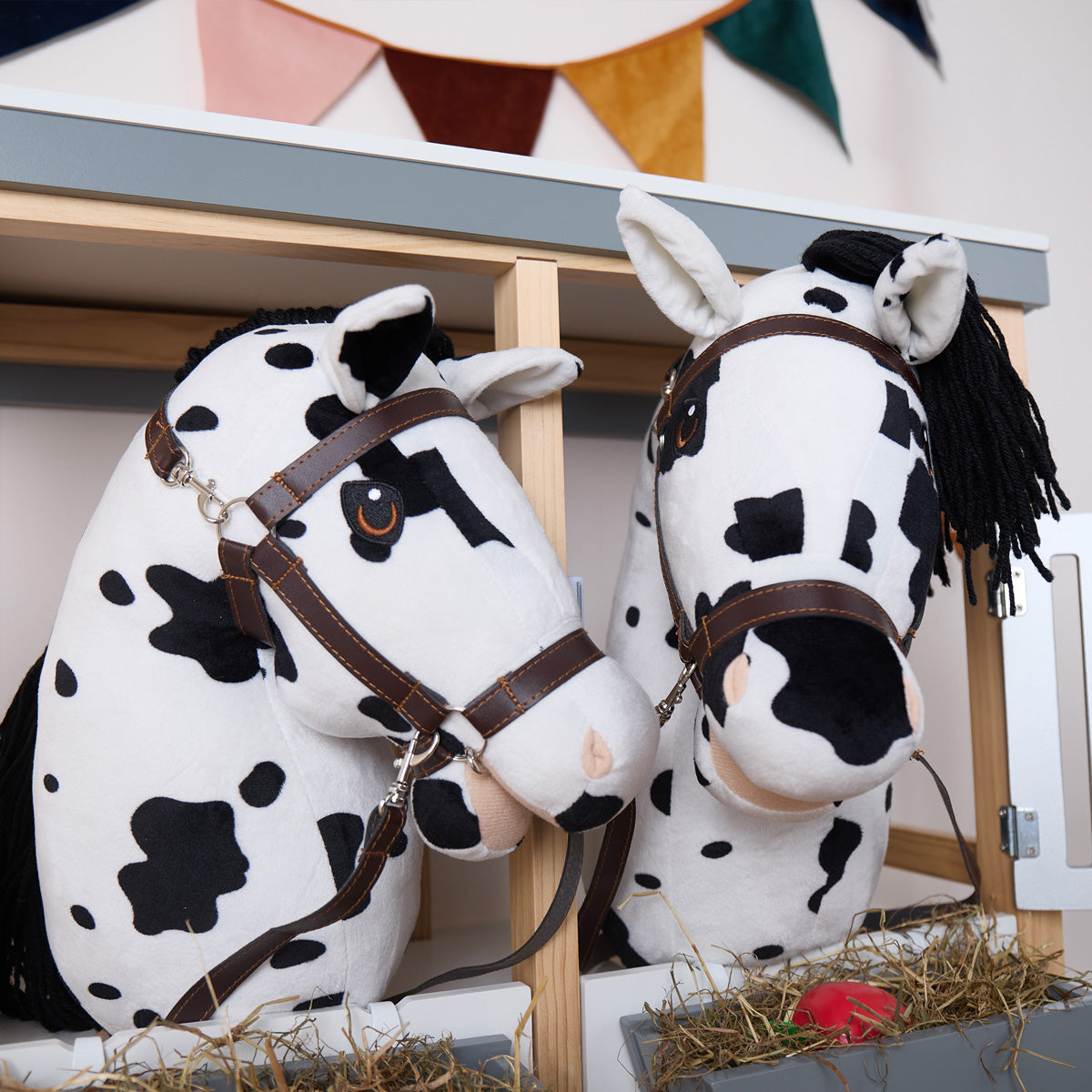
- Schecke (pinto) is spotted/patterned – perfect for children who invent stories.
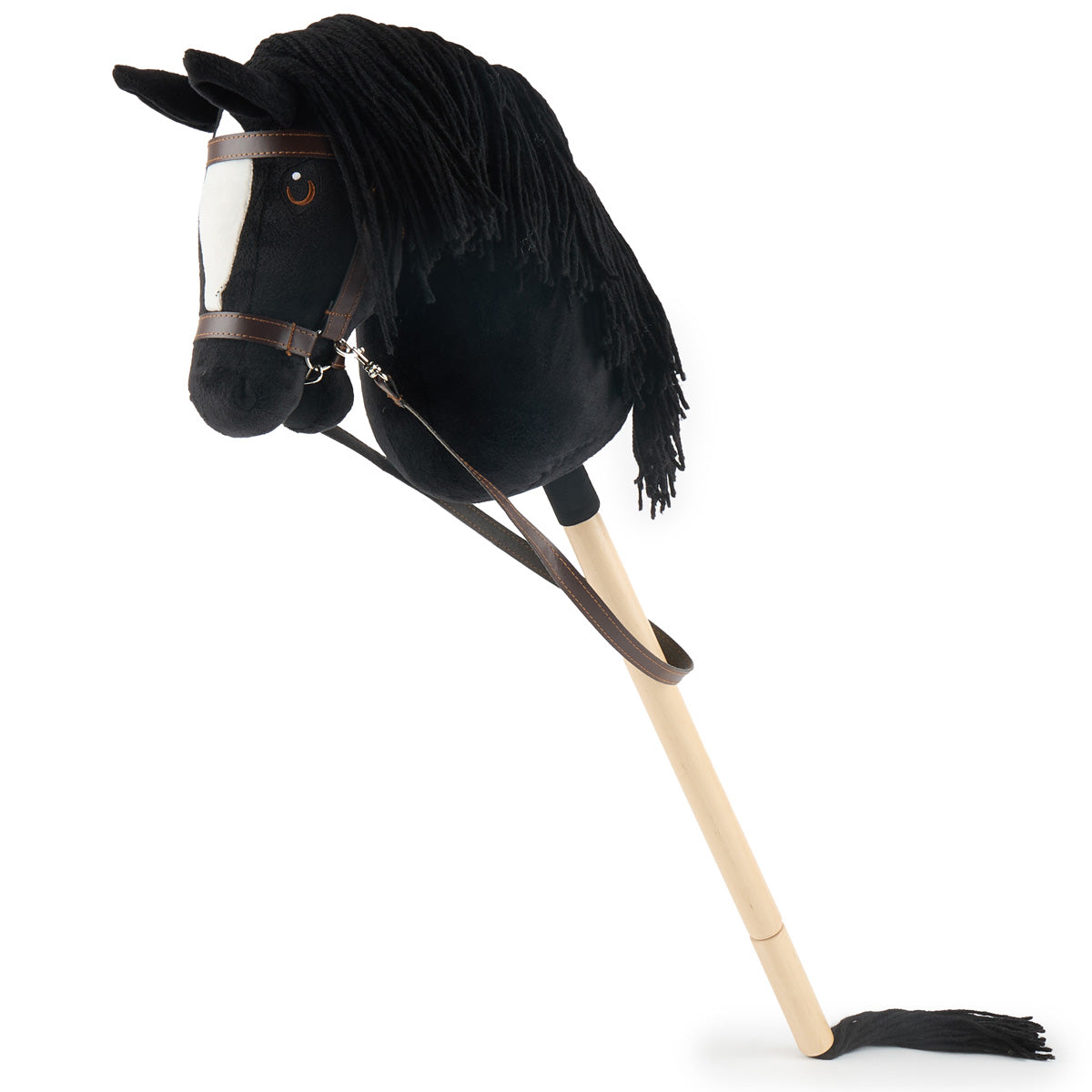
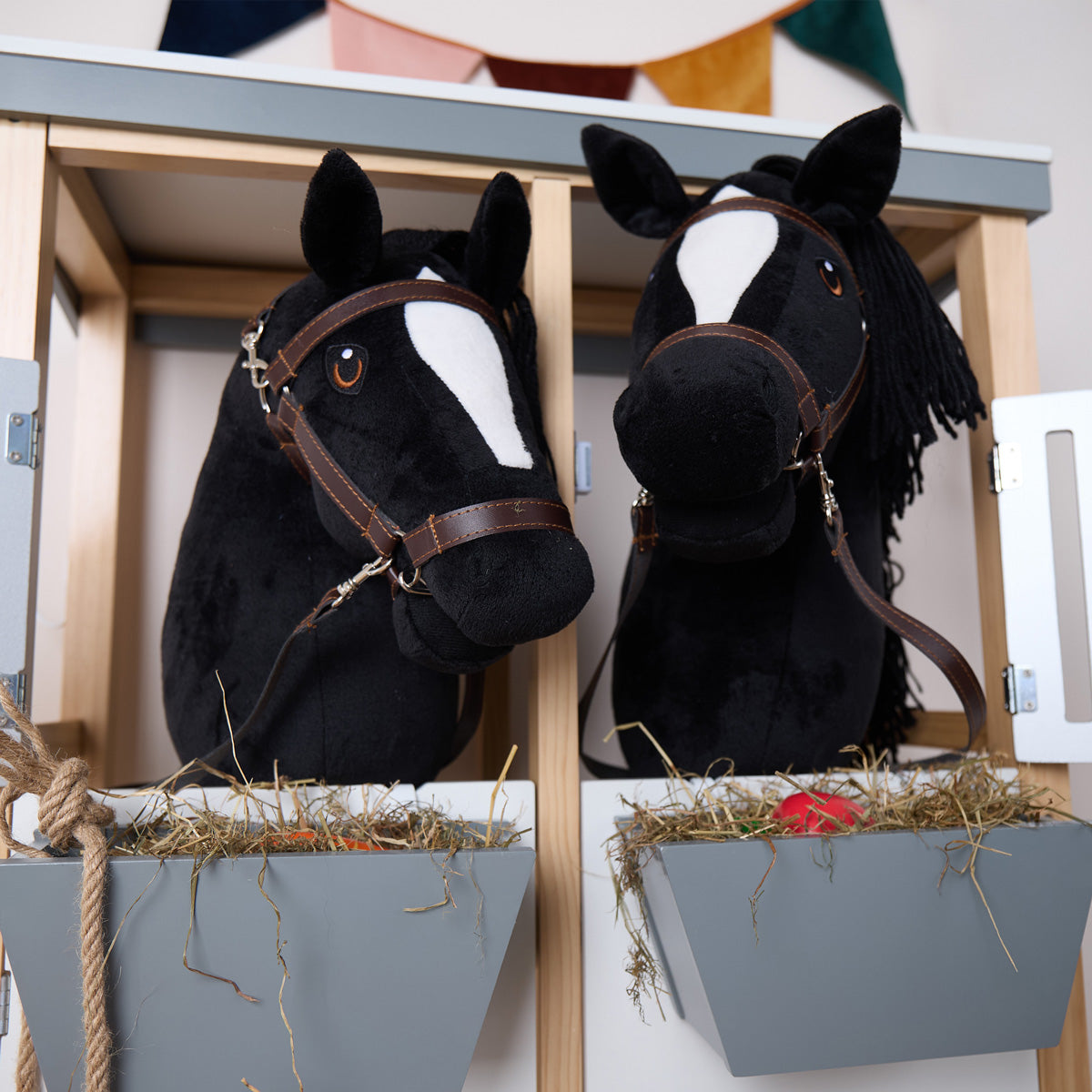
On to colors (because kids are rarely willing to compromise on these): “Rappe” means: black hobby horse – cool, strong, often the favorite. “Fuchs” is classic brown/warm (brown hobby horse), and Grey/Beige are the calm all-rounders if you prefer a more Scandi-simple look.
Hobby horse size: S or M – and why it matters more than you think
When it comes to hobby horse size, it's less about “right” and more about “handy”. The right size is the one your child can control comfortably. Indoors, a horse that's too long quickly becomes the king of the door frame. Outdoors, it can happily look a bit more “tournament-style”.
Practical tip from real life: When held, the stick should reach roughly to the hip. Then “riding” works, and when jumping the horse tends to stay where it should.
Technical data & comparison: what we don't (yet) promise – and how you can still compare well
You probably wanted stick length in cm, weight in g and material in black and white here – totally understandable. Without manufacturer specifications for each product, we don't state dimensions or materials. That data isn't available to us, and we don't guess (otherwise it ends in frustration when things turn out differently at home).
But here's what you can compare right away, without juggling numbers:
Pros & cons: what really matters in hobby horsing?
In hobby horsing, it's not about perfection, but about fun, exercise and a horse that plays along. For hobby horsing, what counts is: grip securely, run freely, laugh a lot. Here's a short comparison, with no drama:
- Pro: Realistic look. Motivates many children to train “properly” and play roles.
- Con: Too “precious” for romping around. Some children then dare less to really let loose.
- Pro: Less frills. What doesn't stick out is less likely to break on the obstacle course.
- Con: Fewer details. For some, that's exactly the magic of the horse.
If you'd like a taste of tournament atmosphere: Germany now has an official association for it. The German Hobby Horsing Association (DtHHV) lists, for example, the 2nd German Championship on 2–3 May 2026 in Frankfurt am Main/Kalbach (according to the DtHHV: deutscher-hobby-horsing-verband.de). For dates, it's always worth checking the current calendar.
Safety & harmful substances: short, clear, no panic
Toys should be fun – and parents should be able to sleep at night. In the EU, toys must carry a CE marking. This is the manufacturer's declaration that the essential safety requirements are met (EU Toy Safety Directive 2009/48/EC, according to EUR-Lex: eur-lex.europa.eu).
One concrete number, because “roughly” doesn't help anyone here: the EU lists 19 elements with migration limit values (colloquially often called “heavy elements”) in the Toy Safety Directive; the European Commission summarizes this in its toy safety overview (according to the European Commission: ec.europa.eu). These rules are the technical background for why CE is more than a sticker.
And if you can hear about “standards” without your coffee going cold: for the migration of certain elements, EN 71-3 is the well-known test standard; it is listed as a harmonized standard in the EU Official Journal (e.g. EN 71-3:2019+A2:2024, according to EUR-Lex: eur-lex.europa.eu). This is the part that provides clear testing rules in the background.
Care: so your hobby horse stays pretty for a long time
A hobby horse is loved, kissed and dragged across the floor – that's its job. Care here means: clean gently, let it dry well, done. For everyday use, brushing, a lint roller or a slightly damp cloth is usually enough. For heavier dirt: test on an inconspicuous spot first.
If you like having guidance for textiles: OEKO-TEX® STANDARD 100 explains how textiles are tested for harmful substances (info: oeko-tex.com). It's not a must-have criterion for every toy – but a good compass if you like to play it relaxed and safe.
Our hobby horses at BIECO: 12 favorite horses, found quickly
In this BIECO collection you get 12 variants in two sizes (S & M) – so you don't search forever, but quickly find the “That's mine!” horse. You choose by character: black, brown, light grey/white or pinto. Here's a quick start to the most popular looks:
- Rappe (black hobby horse): Hobby Horse Rappe size S or size M
- Schimmel (grey/white hobby horse): Hobby Horse Schimmel size S or size M
- Schecke (pinto hobby horse): Hobby Horse Schecke size S or size M
- Fuchs (brown hobby horse): Hobby Horse Fuchs size S or size M
If you're looking for the classic variant: Stick horses are often “simpler”, while hobby horses are usually designed to be sportier. Feel free to also take a look at our matching category: Stick horses. And if it's going to be a gift (grandparents, we see you): Gift ideas helps with browsing.
FAQ: short & helpful
What is the difference between a hobby horse and a stick horse?
A hobby horse is usually designed more for “riding, jumping, training”, while a stick horse is often the classic role-play horse. With a hobby horse, hobby horsing as an exercise game is more in the foreground. If you prefer something more traditional, take a look at our Stick horses category.
From what age is hobby horsing suitable?
Hobby horsing is suitable as soon as your child walks confidently, likes role play and can control the stick well. More important than age is motor skills plus enough space to practice. As a guideline, the WHO gives at least 60 minutes of activity daily for 5–17-year-olds (according to the WHO: who.int).
Which hobby horse size suits my child?
The right size is the one your child can steer comfortably without constantly bumping into things. As a rule of thumb, a stick height of roughly up to the hip is often comfortable. If you play indoors a lot, more compact is usually more practical; outdoors, a larger variant can feel “sportier”.
How much does a good hobby horse cost?
“Good” here means: neatly made, pleasant to hold and suited to how you play. The price depends mainly on workmanship, details and material. A tip: better one horse that is truly loved than three that are just “okay”.
Is hobby horsing a real sport?
Yes, many people practice hobby horsing competitively with training, technique and obstacle courses – others stick to free play. Both are fine, as long as it's safe and fun. For the tournament context, you'll find information and links to the rules at the DtHHV (according to the DtHHV: deutscher-hobby-horsing-verband.de).
What accessories do you need for hobby horsing?
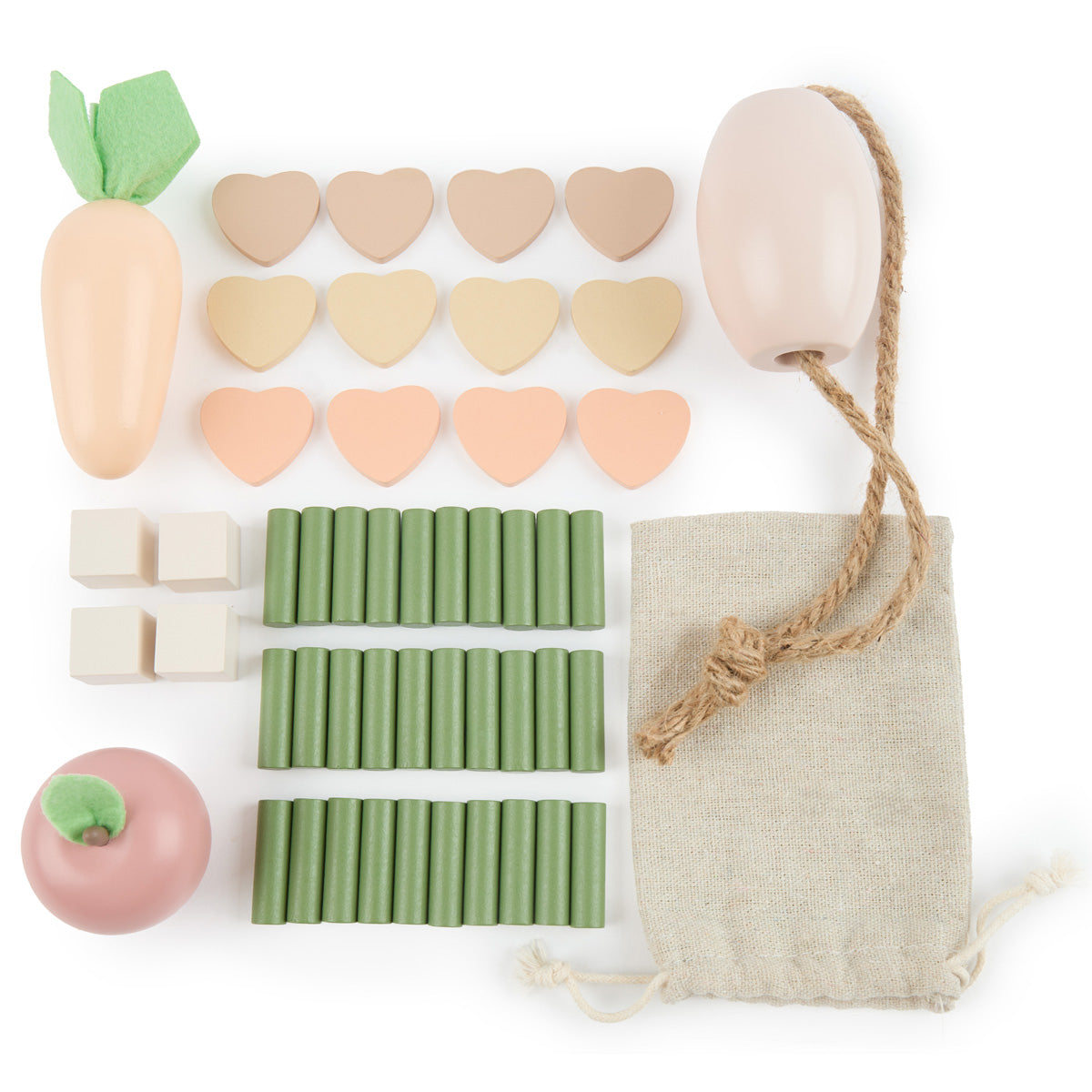
To get started, you mainly need a hobby horse and a bit of space – nothing more is required. Obstacles work wonderfully with pillows, chalk or small poles. Accessories only get interesting once your child really wants to play obstacle courses regularly.
How do I care for my hobby horse?
Brushing, a lint roller or a slightly damp cloth is usually enough, followed by letting it dry well. What matters is that it doesn't stay damp after cleaning. If you like having guidance for textiles: OEKO-TEX® STANDARD 100 explains testing principles for harmful substances (info: oeko-tex.com).
Where do hobby horse tournaments take place?
Tournaments and meetups vary greatly by region and change constantly. The fastest way to find dates is through associations, clubs and current calendars. The DtHHV, for example, collects dates and information on the German Championship (according to the DtHHV: deutscher-hobby-horsing-verband.de). To get started, though, a mini obstacle course in the garden is enough.
About this page
This page was created by the BIECO editorial team – we are a family business from Hamburg and have been part of families' everyday lives with toys for 66 years. We write the way we would shop ourselves: practical, honest, without jargon. For safety facts, we use EU sources such as the Toy Safety Directive (EUR-Lex: eur-lex.europa.eu) and the European Commission's toy safety overview (European Commission: ec.europa.eu).
If you're now looking for a hobby horse for your child: Open the collection, filter in your head by S or M – and then by favorite color. Pick two favorites (e.g. Rappe and Schimmel), let your child “test gallop” briefly – and the rest usually takes care of itself. Including gallop sounds in the hallway. Sorry in advance.
By Ulli & Flo · Owners & parents More about us ↓

About this page
Ulli & Flo
Owners of bieco · Hamburg · parents ourselves
We like toys that get children moving without you having to print out a weekly schedule first. With a hobby horse, we therefore pay particular attention to how well it can be gripped and steered in everyday life.