
Toy Box
Sort by
7 products







recently viewed
A toy box (often also called a toy chest) is sturdy kids' room storage where toys disappear quickly and just as quickly reappear. That's exactly why this dedicated collection page is worthwhile: it's all about chests, boxes and “chest with lid” solutions that really help with daily tidying up – without having to rebuild half a furniture store. If you first want to see all the options for kids' room storage (baskets, boxes, organizers), start in the parent hub Storage.
- A good toy box is low enough for children to reach on their own.
- A lid is fine – but only if it opens easily and protects little fingers.
- In a kids' room, smooth, wipeable surfaces are often worth their weight in gold.
- Better 2 categories than 1 “everything goes in” box – it saves searching.
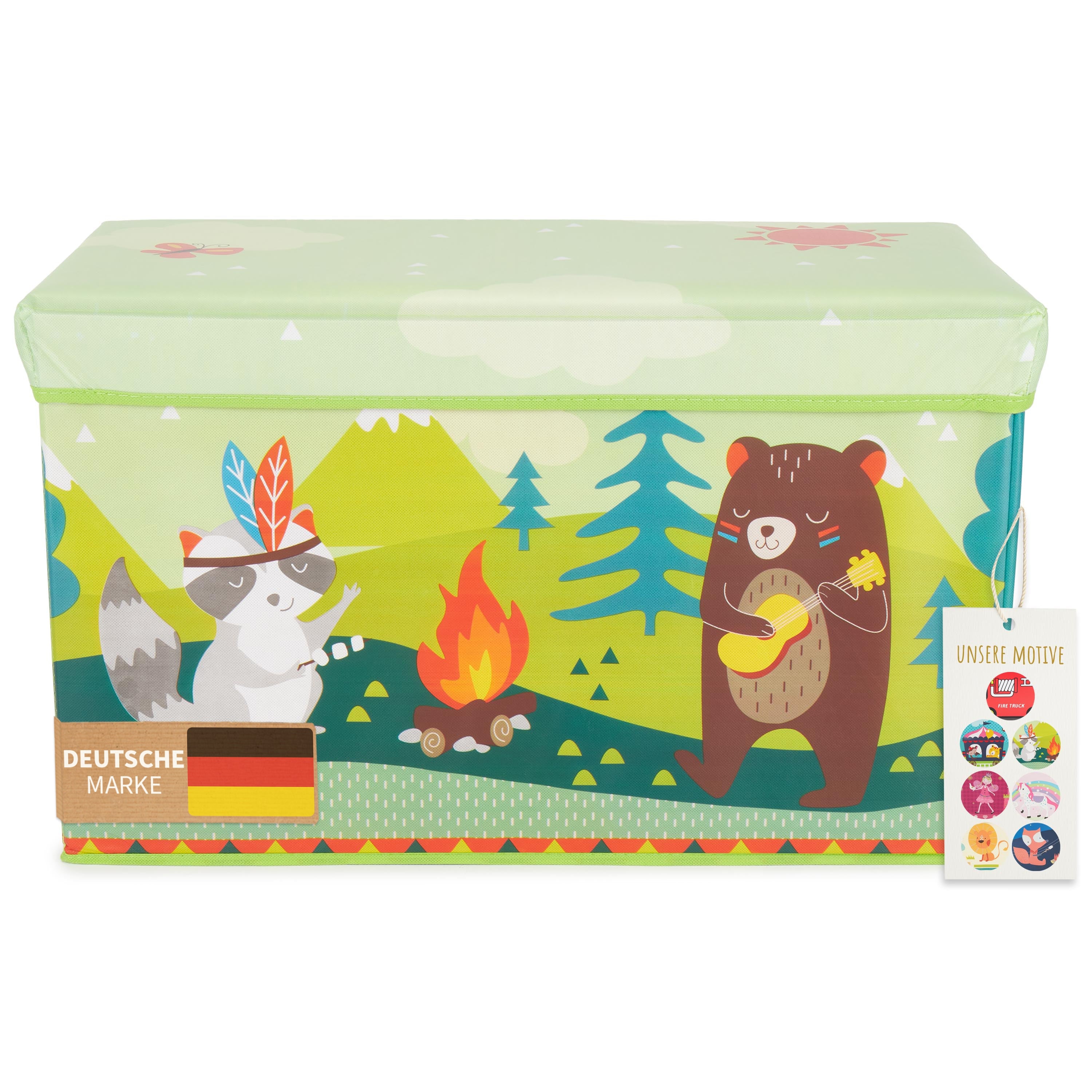
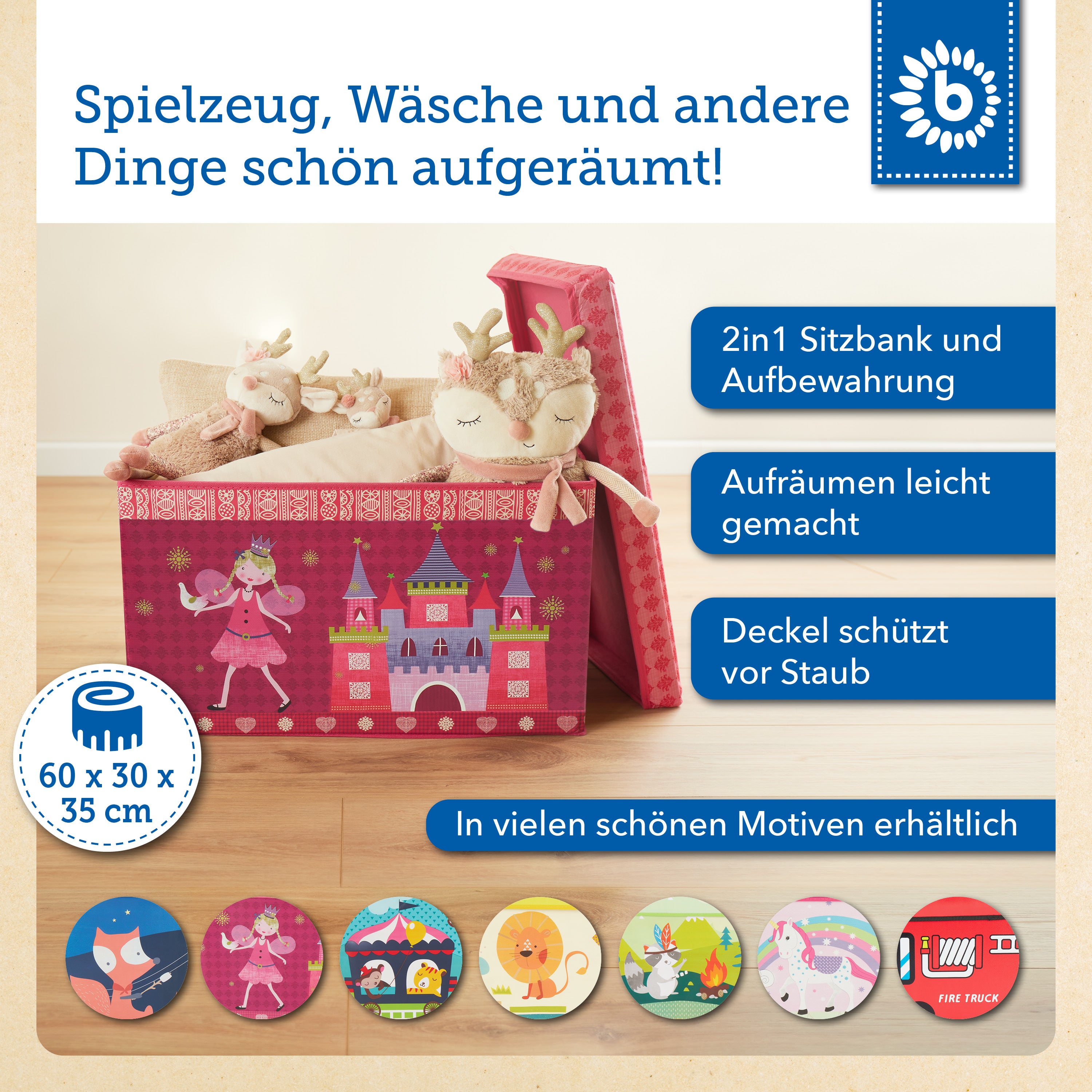
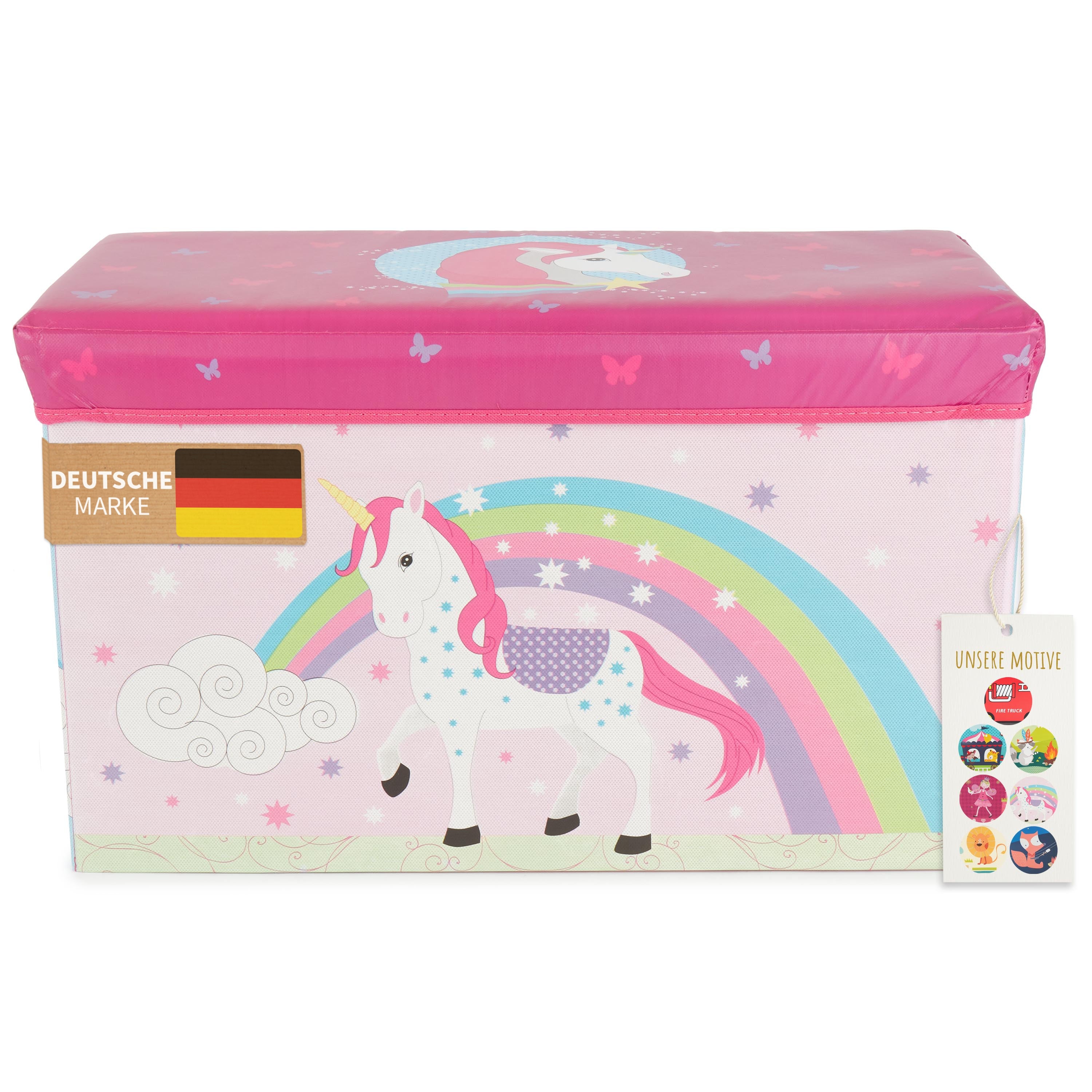
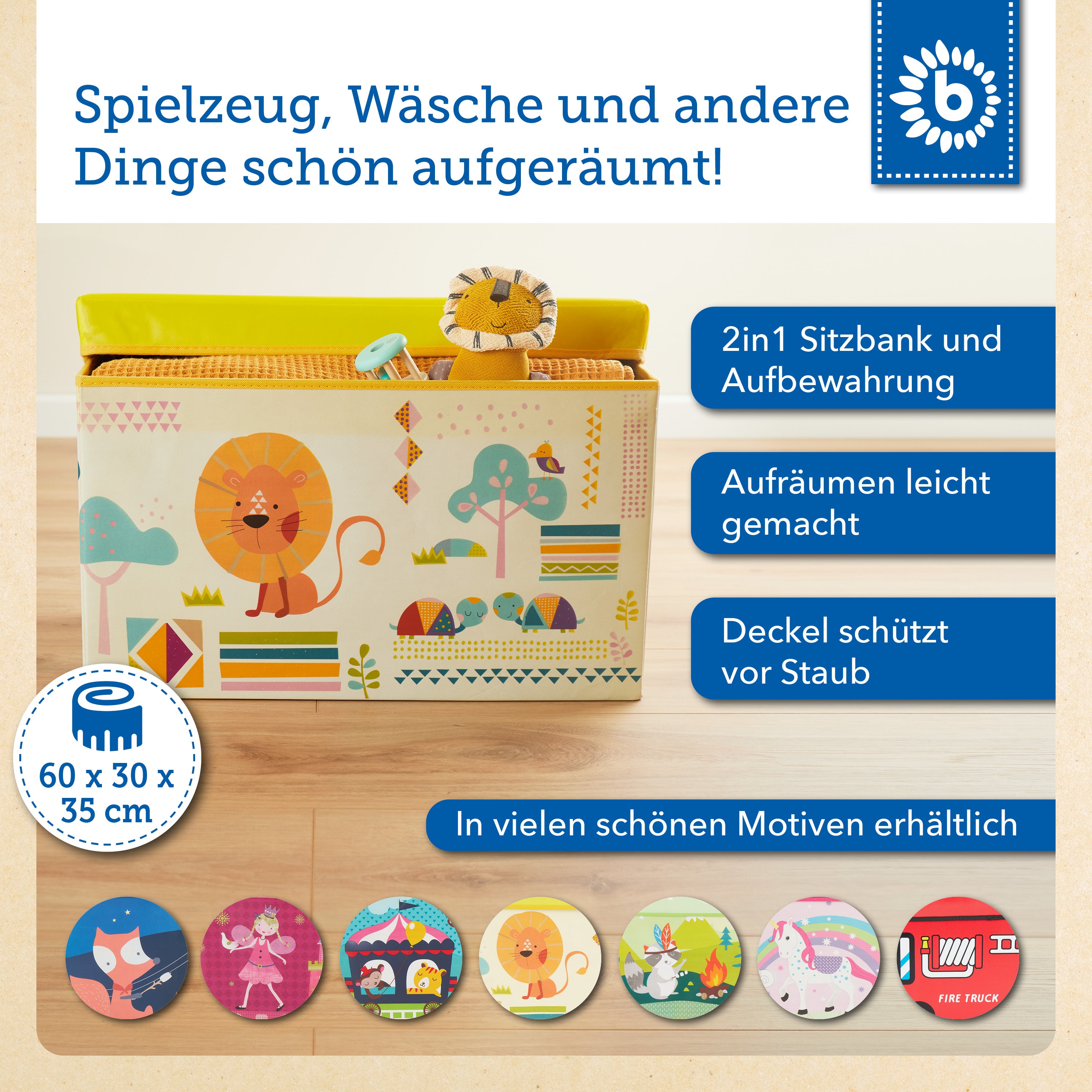
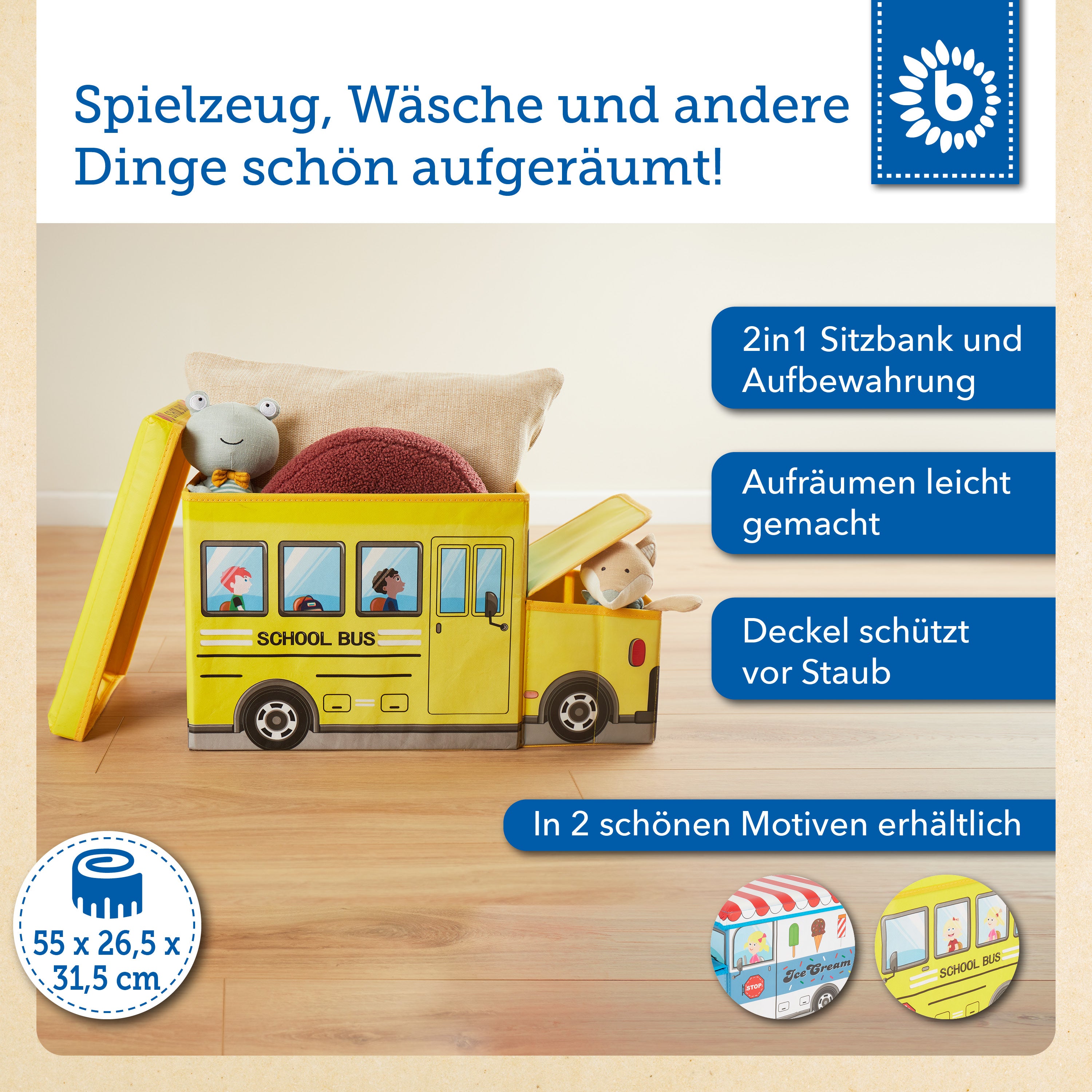
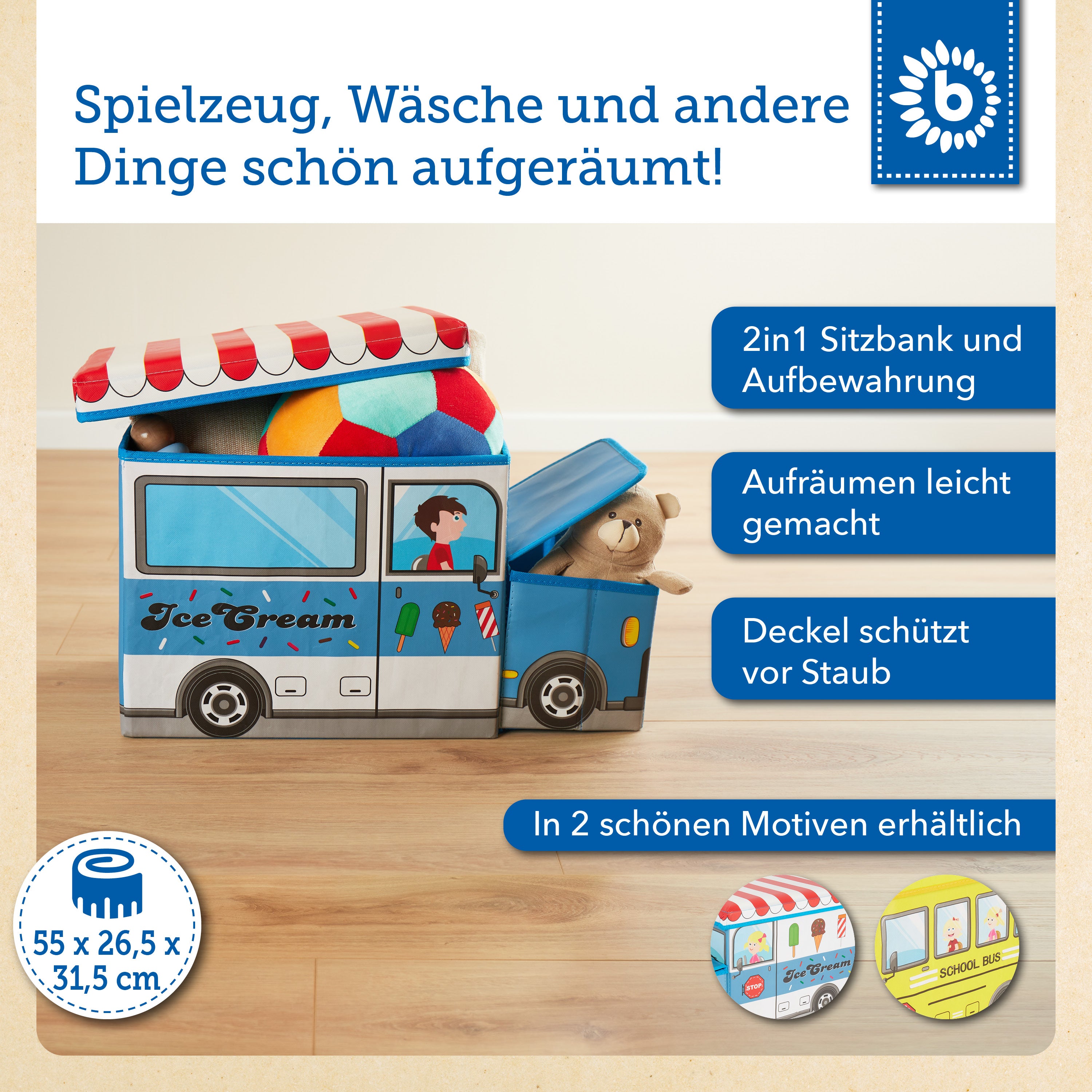
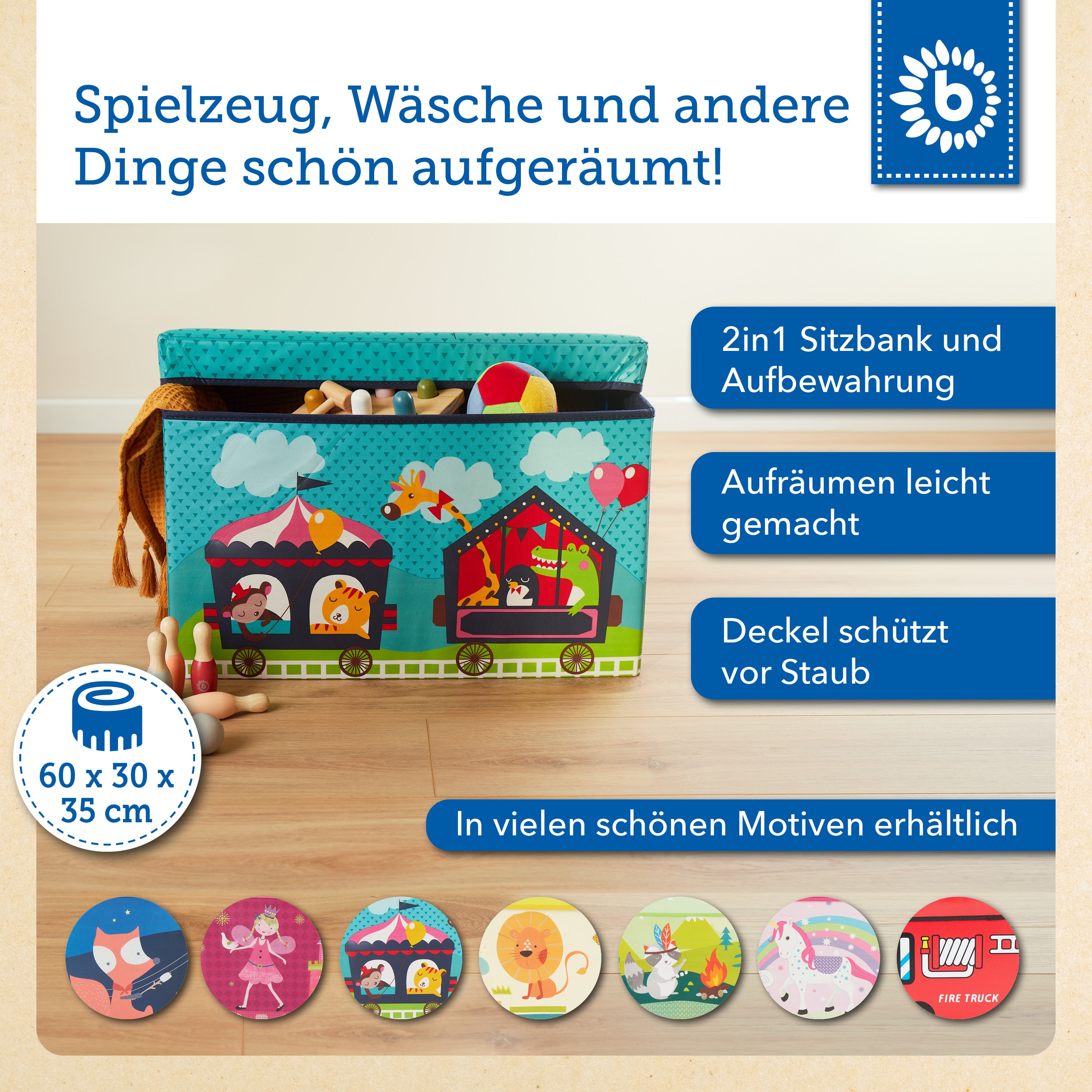
In this collection you'll find toy boxes and toy-related storage for the kids' room. Depending on availability, these include, for example, options with lids, open boxes or chest-style solutions that work as everyday toy storage.
- Toy boxes & toy chests for quick tidying up
- Models with lids for a “visually calm” look in the room
- Kids' room storage to match play zones (building, cuddling, role play)
- Storage that can be wiped clean (for when things get dusty or sticky)
- Ideas for combining with boxes & baskets from the storage range
Start browsing now: find the toy box that fits your everyday life. And if you can't find a suitable box right now: in the Storage hub you'll also find storage boxes for the kids' room and baskets as a flexible alternative.
Which toy box is right for you? (Size, access, lid)
A toy box works best when your child can use it without help. For toddlers, that usually means: rather low, rather light, rather “I can reach it.” For older children, a larger capacity is fine – but please not so huge that everything disappears at the bottom and only air lives at the top.
A toy chest with a lid brings calm to the room, but it needs child-friendly operation. If a lid is included, look for easy opening and make sure it doesn't suddenly snap shut. Terms like “soft-close” or “lid stay” are the keywords here: they're meant to slow the lid down so it closes less abruptly. (Whether a lid stay is included with a model is usually stated in the product details.)
Open toy boxes are the everyday champions because tidying up takes 30 seconds. Toss it in, done – especially in the evening, when you only have the energy left for brushing teeth. If visible toys stress you out, “open” is still okay: a fixed spot in a corner and a rough sorting will help.
Material & surface: wood, fabric, plastic – what works in family life?
The material mainly determines weight, care and how “homey” it looks. Wood looks warm and sturdy, fabric/felt is light and forgives bumps, and plastic is often especially quick to clean. What matters is less the material itself – and more whether it suits your everyday life (and the vacuum cleaner that regularly comes by).
If fabric is involved, fabrics tested for harmful substances are a good indicator. OEKO-TEX explains that with STANDARD 100, all components of an article are tested for a list of over 1,000 harmful substances. (OEKO-TEX: STANDARD 100) For babies and toddlers, OEKO-TEX also names Product Class 1 as the strictest class. (OEKO-TEX: Product Classes)
For painted or colored surfaces, it's worth looking at toy standards for guidance. Regarding DIN EN 71-3 (“Migration of certain elements”), DIN describes that it specifies requirements and test methods for the release of certain elements (including heavy metals such as lead) from toy materials. (DIN: DIN EN 71-3 explained) This is especially relevant when a toy box itself becomes “play furniture” – that is, touched, climbed on and, if in doubt, occasionally licked (yes, it happens).
Safety & verifiability: CE, standards, chemicals regulations – short and useful
With toy storage, pinch points, edges and loose parts are the most important things to check. Take a look at the lid, hinges, handles and corners – and whether the box stands firmly when a child leans on it. It's not rocket science, more of a quick “parent safety inspection” right in the kids' room.
The CE mark is mandatory, but it is not an independent test mark. The consumer advice center (Verbraucherzentrale) states that for toys the CE mark is not a test mark but a manufacturer's declaration – nevertheless, you should not buy toys without a CE mark. (Verbraucherzentrale: Toys without harmful substances)
The EU Toy Safety Directive sets out the essential safety requirements for toys. EUR-Lex publishes Directive 2009/48/EC (“on the safety of toys”). (EUR-Lex: 2009/48/EC) Whether a toy box itself counts as a “toy” depends on the product – but as guidance for toy-like surfaces, the framework is helpful.
For chemicals in products, REACH is the central EU legal framework. EUR-Lex lists the REACH Regulation (EC) No 1907/2006 as an EU regulation in force. (EUR-Lex: REACH (EC) No 1907/2006) In practical terms, this means: reputable providers must comply with restrictions and requirements – and with children's products, you're welcome to ask for clear information.
New EU toy safety rules entered into force on January 1, 2026, but will apply later. The EU Commission states that the new Toy Safety Regulation enters into force on January 1, 2026 and applies from August 1, 2030; a digital product passport is also planned. (EU Commission: Toy Safety Regulation (News))
How a toy box becomes kids' room storage that actually gets used
The toy box belongs where play happens – not where it looks nicest. This is the trick that's most often underestimated. If the box is “supposed” to go on the shelf, but play happens in front of the sofa, the sofa wins. Always.
2–3 categories are enough for order; more than that, hardly anyone sticks to consistently. For example “building,” “cuddling,” “role play” – and that's it. For the contents, you can think of matching play worlds right away: Wooden toys (building & motor skills), Cuddly toys and stuffed animals (cuddling) or Wooden puzzles (quiet table time).
If you're looking for “lidded storage,” boxes are often the flexible complement to the chest. Especially for small parts (Duplo, figurines, puzzles), storage boxes for the kids' room are often more practical than a large toy chest. If you're specifically looking for a storage box with a lid: also check out our planned spoke Storage box with lid.
For bath & shower, a dedicated solution is worthwhile because drying matters there. If rubber ducks and cups regularly pile up at your place: in the Bath toys collection you'll find suitable play ideas – and for storage ideas, we have our guide Storing bath toys cleverly.
Why BIECO fits here (without the fuss)
BIECO is a family business from Hamburg – and designs products for real everyday life. For 66 years we've been making baby and toy products that you can touch, use and even wipe clean without getting nervous.
Our Scandi-inspired design is made for the kids' room, not for the shop window. That means: rather calm, rather timeless – so that toy storage doesn't look like a “plastic warehouse” but like home.
For materials and surfaces, we follow common EU rules and standards frameworks. Depending on the product category, these include, for example, requirements from the toy sector (such as 2009/48/EC) and chemicals legislation (REACH). (EUR-Lex: 2009/48/EC; EUR-Lex: REACH)
FAQ: Frequently asked questions about the toy box
What is the difference between a toy box and a toy chest?
In everyday use, both usually mean the same thing: a large storage box for the kids' room. “Toy chest” is often used for models with lids, while “toy box” is also used for open variants. What matters is less the name and more whether your child can reach it easily and whether the lid (if there is one) is pleasant to operate.
Toy chest with lid: What should I look for with soft-close / lid stay?
What's important is that the lid closes slowly and opens easily. Soft-close or a lid stay is meant to prevent the lid from suddenly slamming shut. Also look for sturdy hinges and make sure handles don't create pinch points. If your child likes to play “lid open, lid closed,” this is especially relevant.
How can I recognize safe kids' room storage?
Good workmanship is often more important than any single mark. Check edges, stability, screws and possible pinch points at the lid. The consumer advice center helps put labels into context: the CE mark is mandatory for toys, but it is not an independent test mark. (Verbraucherzentrale)
What alternative is there if a toy box is too big?
Storage boxes for the kids' room are often better for small parts and routines. Boxes are easier to sort by category (e.g. figurines, building blocks, crafts) and are quickly rearranged. If you wanted a “chest with lid” but want to stay more flexible, a combination of 1 box + 2 smaller boxes is often the relaxed middle ground.
If you're looking for a toy box now: take your time to look around the collection. And if you realize you need a kids' room storage box or baskets instead: in the parent hub Storage you'll find the full range – without having to fight your way through 20 submenus.
By Ulli & Flo · Owners & parents More about us ↓

About this page
Ulli & Flo
Owners of bieco · Hamburg · parents ourselves
We've learnt that the best toy box is the one children can use themselves, because then tidying up at least sometimes happens without a discussion. And if it's chaotic anyway: children's rooms are allowed to look lived in.