Toys for 5-Year-Olds: Choosing and Gifting Educational Toys
At a Glance
- The best toys for 5-year-olds let children puzzle things out, build and tell stories on their own.
- Educational means short moments of success, real choices and plenty of hands-on doing.
- With our checklist & 7 categories, you'll find fitting ideas faster (gift ideas included).
- Safety: labelling, warnings and condition matter – especially with small parts.
- Everyday trick: put fewer toys on display and swap them out regularly.

Toys for 5-year-olds are educational when your child actively thinks along, experiments and can explain what they're actually doing. At five, many children are little preschool detectives: figuring out rules, spotting patterns, spinning stories – and yes, wanting to win now and then (or at least to be proven right). Here you'll find relaxed guidance for parents, grandparents and anyone buying a gift: which kinds of play support which skills, how to recognise quality, and how to choose things that actually get used in everyday life.

Ulli & Flo
Owners of bieco · Hamburg · parents ourselves
We see it every day: at five, “learning” matters less and “doing it myself” matters more. If a game invites explaining, trying things out and sticking with it, a lot has already been won. Feel free to browse our collection Toys for Ages 5+.
Table of Contents
What does “educational” really mean – without the wagging finger?
Educational means the toy supports development through your child's own activity. It's not about a box looking “smart”, but about your child practising skills along the way: listening, planning, comparing, sorting, storytelling, taking turns, sticking with something.
Learning toys are toys that practise skills on purpose – without pressure. Good examples are simple strategy games, building and construction ideas, logic and sorting games, or creative sets where your child plans something and brings it to life.
Practical tip: Instead of asking “What did you learn?”, ask “How did you figure that out?” It gets thinking and language going.
Play is an important driver of learning and development. According to the American Academy of Pediatrics, play supports development and strengthens the parent-child bond (“play is essential to development”). AAP: Power of Play
Which skills are typical at age 5 – and how can toys help?
At five, many children become more confident with rules, more persistent and noticeably more mature in their language. Not as a competition (please don't announce it at the breakfast table), but more as a rough map for choosing toys.
- Language & storytelling: rhymes, vocabulary, retelling stories, explaining rules (“No, Grandpa, that's NOT how it works!”).
- Quantities & patterns: comparing, counting, sorting, simple maths ideas in play.
- Fine motor skills & planning: building, plugging, threading, crafting, putting steps in order.
- Social learning: taking turns, practising losing, negotiating, following rules – and occasionally inventing new ones (house rules, of course).
- Self-regulation: sticking with it, coping with frustration, taking a break, trying again.
The most practical toys are those that spark several areas at once. A good board game often trains language (rules), number sense (counting/comparing), social skills (waiting) and frustration tolerance (well, yes).
Toys for 5-year-olds: 7 categories with real potential
The best selection comes from thinking in types of play – not in big promises. Here are seven categories that work well for many five-year-olds (and usually for adults too).
1) Board games with simple rules
Short rounds with clear rules are worth their weight in gold – for family nerves too. Look for: little set-up time, short turns, easy-to-understand symbols. What it supports: understanding rules, taking turns, counting, comparing, staying fair (you're allowed to try).
If you'd like to browse by age, the overview is often the quickest way. Toys for ages 5+
2) Logic & puzzle games
Puzzling trains pattern recognition and problem solving – without anyone saying “maths”. Good ones offer tasks with increasing difficulty and a way to check the solution. What it supports: planning, finding mistakes, switching strategies.
3) Construction and building toys
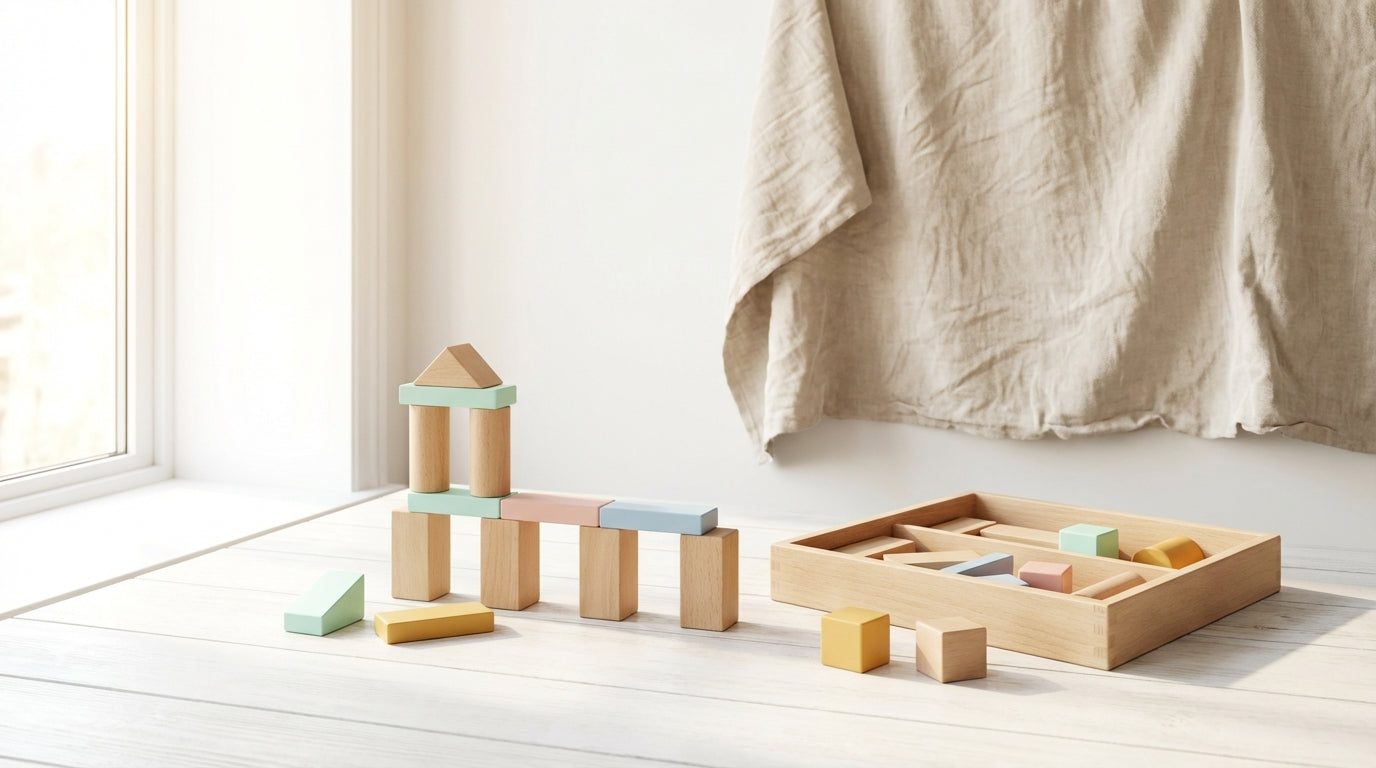
Building is thinking with your hands – and at the end there's something you can hold. Whether it's connecting systems, magnetic or wooden blocks: what matters is that your child can build something sturdy, but also has to tinker a bit. What it supports: spatial thinking, a feel for stability, perseverance.
If you're in a “building phase” right now, a dedicated overview helps enormously. Construction toys for ages 5+: building, tinkering, learning
4) Creative toys (drawing, crafting, making)
Being creative strengthens fine motor skills, concentration and the feeling: “I can do this.” Look for materials that fit well in children's hands (thick pencils, simple scissors, larger beads). What it supports: hand-eye coordination, planning, self-efficacy.
For more ideas from the craft drawer, here's a fresh supply. Creative toys for ages 5+: ideas for imaginative play
5) Role play & “let's pretend”
Role play is language training, social training and understanding the world all in one. Shop, doctor, building site, restaurant: your child practises changing perspectives, rules and feelings – and you get served coffee on the side (usually imaginary, but hey).
6) Experimenting – but age-appropriate
Good experiments for five-year-olds are safe, manageable and leave plenty for them to do themselves. It's less about the big bang and more about observing, guessing and comparing. Look for clear instructions, no hazardous substances, and no parts that will start a new life under the sofa.
7) Active toys with a “task”
Movement plus small goals (throwing, hitting a target, balancing) supports body awareness and concentration. What it supports: coordination, judging strength, following rules. And yes: afterwards, some children sleep… let's say… a little more convincingly.
How to choose learning toys: 9 questions that really help
With these questions, you'll buy fewer “dust collectors with good intentions”. Going through them quickly once is usually enough.
- Can my child get started quickly? Too much set-up eats motivation.
- Are there short moments of success? “I did it!” keeps attention glued.
- Does it grow with them? Several difficulty levels or open-ended play options are great.
- Are the instructions easy to understand? Ideally with pictures and just a few steps.
- How sturdy does it feel? Five-year-olds test durability… by accident.
- Does it suit their personality? Some love competition, others prefer playing together.
- How loud is it? An honest question. A very honest question.
- How much space does it need? Big sets are wonderful – as long as they don't permanently occupy the hallway.
- Do I want to play it too? If you groan inwardly, it rarely becomes a favourite.
Practical tip: “Rotation” works wonders: put out only 6–8 toys at a time and swap them every 1–2 weeks.
Safety & quality: what to look for in toys for ages 5+
You can recognise safe toys by their labelling, warnings and good condition. According to the German Federal Environment Ministry (BMUKN), the EU Toy Safety Directive 2009/48/EC sets out basic safety requirements, including labelling and chemical requirements. Safe toys (BMUKN)
Safety note: Check regularly for loose parts, cracks, chipping paint and sharp edges – especially after drops.
DIN EN 71 is an important series of standards for toy safety in Europe. Among other things, DIN describes requirements for mechanical/physical properties and flammability, as well as testing for the migration of certain elements (DIN EN 71-3). DIN: Requirements for safe toys
CE is not a quality seal, but a mandatory marking by the manufacturer. For you, that still means: take a close look, read the warnings, check the condition, and be especially strict with second-hand items (missing parts aren't “patina”).
How to smuggle “learning toys” into everyday life (without it smelling like learning)
The trick is: less programme, more opportunity. A few everyday ideas that don't sound like a timetable:
- 5-minute start: “Just one round.” Whoever wants to carries on.
- Explainer role: Your child explains the rules – you only ask follow-up questions.
- Treat mistakes kindly: “Interesting. What happens if we do it differently?”
- Play cooperatively: Work together against a challenge instead of against each other.
- Ritual instead of quantity: One regular game night a week is often worth more than ten new things.
For broad guidance by play ideas, you'll find the overview here. The best toys for ages 5+: a guide for parents
How we choose: everyday test, materials & honest criteria
Good toys have to stand up to real family life – not just look good in a photo. For us (Ulli & Flo), it's nothing lofty, more like: Does it fit in children's hands? Does it hold up? Can you understand it without drama? And: Is it still fun after day 3?
A family business from Hamburg tends to be pragmatic – and so are we. We've been doing this for 66 years and know that children are ruthlessly honest. Anything that wobbles, annoys or breaks quickly gets sorted out. We prefer solid, clear and child-friendly over “lots of glitter, little play”.
Transparency about safety means we talk about materials, labelling and testing. When parents ask about standards, warnings or surfaces, that isn't mistrust – it's care. And that, hand on heart, is rather endearing.
FAQ about toys for 5-year-olds
Which toys make the most sense for 5-year-olds?
The most sensible toys are those that get your child active: thinking, building, storytelling or applying rules. Simple board games, construction toys, creative sets and logic games with increasing difficulty work especially well. What matters is that your child finds solutions themselves – not just pushes buttons.
How can I recognise educational toys for 5-year-olds?
A toy is educational when it practises skills and doesn't just keep your child busy. Look for understandable rules, several difficulty levels, open-ended play options and short moments of success. If your child can explain to you what they're doing and why, the right thing is usually happening during play.
How many toys does a 5-year-old really need?
Less is often more when the selection is varied and you swap things out now and then. A few good games, something to build with and something creative are plenty for many children. Too much at once tends to overwhelm – and then even the most wonderful game ends up on the shelf “for later”.
Are digital learning games recommended for 5-year-olds?
Digital games can complement, but not replace, playing with materials and with people. At this age in particular, building, role play, movement and playing together are important learning spaces. If digital, then short, accompanied, and in a way that lets you talk about it afterwards (otherwise it fizzles out quickly).
What's important for the safety of toys for ages 5+?
What matters are labelling, warnings and flawless condition with no loose or sharp parts. According to the BMUKN, the EU Toy Safety Directive regulates basic safety requirements, including labelling and chemical requirements. A regular check for damage also helps – especially with frequently used items.
What do you give a 5-year-old who “already has everything”?
Open-ended play ideas are best: things that allow many variations. Construction toys, creative materials or a good game with flexible rules are often used for longer than a single themed item. A practical note: make sure it's ready to go quickly – otherwise it stays at the unwrapping stage.
If you'd like to browse by age now, here's a handy overview. Take a look at Toys for ages 5+ – and if you're unsure: one good, versatile item beats five “meh” ideas.