How to Clean a Teether: Safe, Hygienic & Right for the Material in Everyday Life
At a glance
- Cleaning a teether: wash briefly with something mild, rinse thoroughly, dry completely.
- Dishwasher, boiling & steam only if the manufacturer allows it.
- Wood and natural rubber don't like long soaks or heat.
- Before every use: a 10-second check for cracks, edges and loose parts.
- On the go, a cloth + a box help: clean in, dirty out, kept separate.

The best way to clean a teether is briefly, mildly and in a way that suits the material. That keeps it hygienic without ruining the material by overdoing it. Let's be honest: a teether is like a little boomerang – it drops on the floor, and zip, it's back in the mouth. In this guide you'll get an everyday routine, a material guide (wood, silicone, natural rubber), clear stop signs for “please replace” and a few tricks for when you're out and about. Or, as we say in northern Germany: tidy, but no fuss.

Ulli & Flo
Owners of bieco · Hamburg · parents themselves
We've learned that a teether hits the floor faster than you can say “Moin”. With a short routine it stays clean – and you don't have to make a big deal of it every time. Feel free to browse our teether collection.
Why proper cleaning matters
With a teether, hygiene and protecting the material go hand in hand. A teether is a classic “mouth toy”: it's held in the mouth for a long time, likes to fall on the floor and then goes right back in. If you clean too aggressively, the surface can suffer; if you clean too casually, dirt stays behind – both are unnecessary. The happy medium: clean regularly, stay gentle, dry well.
The EU Toy Safety Directive sets out basic safety requirements for toys. According to EUR-Lex, Directive 2009/48/EC applies to toys across the EU and defines safety requirements that manufacturers must follow (EUR-Lex: 2009/48/EC).
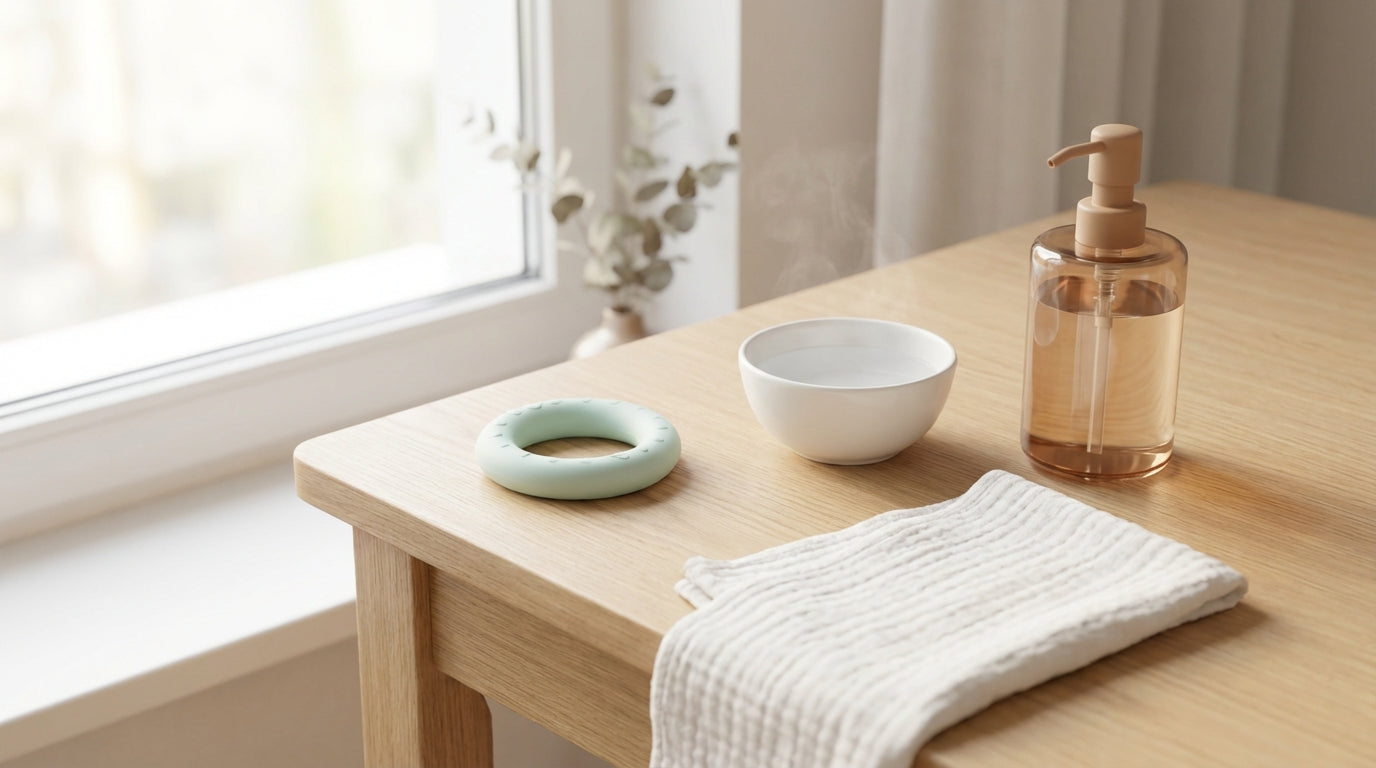
Cleaning a teether: the quick step-by-step routine
A good routine takes two minutes – and still fits into real days. Here's how to do it without having to reorganize your whole household:

- Wash your hands. Quick but worthwhile: otherwise you clean the teether and immediately put everything back on it.
- Remove coarse dirt. Rinse with lukewarm water or wipe with a clean, damp cloth.
- Clean mildly. One drop of mild soap is enough; then rinse thoroughly or wipe again with a soap-free cloth.
- Let it dry completely. Air drying is often the best choice – especially for crevices, nubs and mixed materials.
- 10-second check. Cracks, sticky spots, loose parts or sharp edges? Then it's time for a “pause” or a “goodbye”.
Practical tip: Keep a small “teether cloth” at the changing table. Wipe the teether with it once a day while it's damp, let it dry in the evening – done.
Disinfectants are rarely necessary and can damage materials. If you want it “extra clean”, thorough rinsing and complete drying is often the most material-friendly option – and it's one you'll actually keep up in everyday life.
Which cleaning method suits which material?
The material determines the care – not the setting on your dishwasher. And yes, that can be annoying at times. But it saves you sticky surfaces, cracks and that “why does this smell funny now?” feeling.

Wood (e.g. beech)
Wood likes it damp, but not soaked. Many wooden teethers (or teethers with wooden parts) are cleaned with a damp cloth and mild soap and then air-dried. For a Bieco wood/silicone teether, for example, the care instructions read: “Clean with a damp cloth and mild soap. Do not immerse in water. Air dry.” (product page)
- Please don't: soak for a long time, boil, or put in the dishwasher (unless expressly permitted).
- Why: Too much water can make wood swell; fine cracks are then hard to keep clean.
Silicone
Silicone is often easy to care for, but not automatically dishwasher-safe. Many silicone teethers can be cleaned with warm water and mild soap. Whether the dishwasher is OK depends on the specific product. For mixed materials (e.g. silicone + wood), the more cautious wood rule usually applies: wipe instead of immersing (see above).
- Watch out for: Soap residue in nubs and textured areas – rinse thoroughly or wipe again with a soap-free cloth.
- Warning sign: Cracks, a sticky surface or a clear change in the material – then replace it.
Natural rubber
Natural rubber is more sensitive to heat, light and long soaks in water. Many natural rubber teethers are cleaned with warm water and then dried well; strong heat (e.g. boiling or steam) is often not recommended unless the manufacturer expressly allows it.
- Please don't: boil, put in the dishwasher, or leave in bright sun (unless expressly permitted).
- Storage: dry and preferably shaded, so the material doesn't age unnecessarily fast.
Definition: A natural rubber teether is a teether made of natural latex and needs mild cleaning without strong heat.
Can a teether go in the dishwasher?
A teether may only go in the dishwasher if the manufacturer clearly allows it. The reason is simple: dishwashers combine heat, long wash times and detergent tablets – which is too much for some materials (and glued joints). With wooden parts, the dishwasher is especially often a bad idea, because wood can swell or crack.

Safety note: If a teether feels sticky after cleaning, shows cracks or smells “odd”: stop using it and replace it.
If you'd still like to do it “properly, just once”: go for manual and thorough. Warm water, mild soap, rinsing well and letting it dry completely is the safe bet for many teethers.
How to disinfect without damaging the material
The gentlest “extra hygiene” is often: clean thoroughly and dry completely. Many parents reach for strong products with the best intentions – but especially with mouth toys, the material underneath can suffer. If you want to disinfect, always follow the manufacturer's instructions first (because mixed materials, colors and surfaces can react differently).
Definition: Disinfecting means reducing germs; cleaning mainly removes dirt and saliva residue mechanically.
Practical tip: Do it like in a pacifier emergency: first get it visibly clean, then dry it well. “Wet into the box” is the fastest way to a musty smell.
If you're unsure, “mild + dry” is usually the best decision. It sounds unspectacular – but it's exactly the kind of solution that works reliably in family life.
How often should you clean a teether?
Usually a quick clean daily is enough – and right away after a fall or visible dirt. A fixed number for every family would be nonsense, because use and surroundings vary a lot. This rule of thumb has proven itself, though:
- Daily: clean briefly once and let it dry.
- Immediately: after it's been on the ground outside, after contact with food, or when a sibling or the dog has “helped”.
- Before first use: clean once to remove production and transport dust.
Teether safety: what to check before every use
The most important safety check takes 10 seconds: look, feel, gently pull. Babies have surprising stamina – and teeth (or gums) are in constant use during this phase anyway. Take a quick look:

- Visual check: cracks, breaks, chipped pieces, discoloration, sticky spots?
- Touch test: rough edges, swollen wood, sharp transitions?
- Gentle pull test: are connections firm (e.g. ring + elements), with nothing wobbling?
Standards help – but they don't replace a parent's eye. According to the European Commission, the Toy Safety Directive 2009/48/EC describes the basic safety requirements for toys in the EU (EU Commission: Toy Safety).
The EN 71 series of standards is often used as a technical benchmark for toy safety. One part of it is EN 71-3, for example, which deals with the migration of certain elements (EN 71-3 (text version)).
Cleaning on the go: diaper bag, playground & “oops” moments
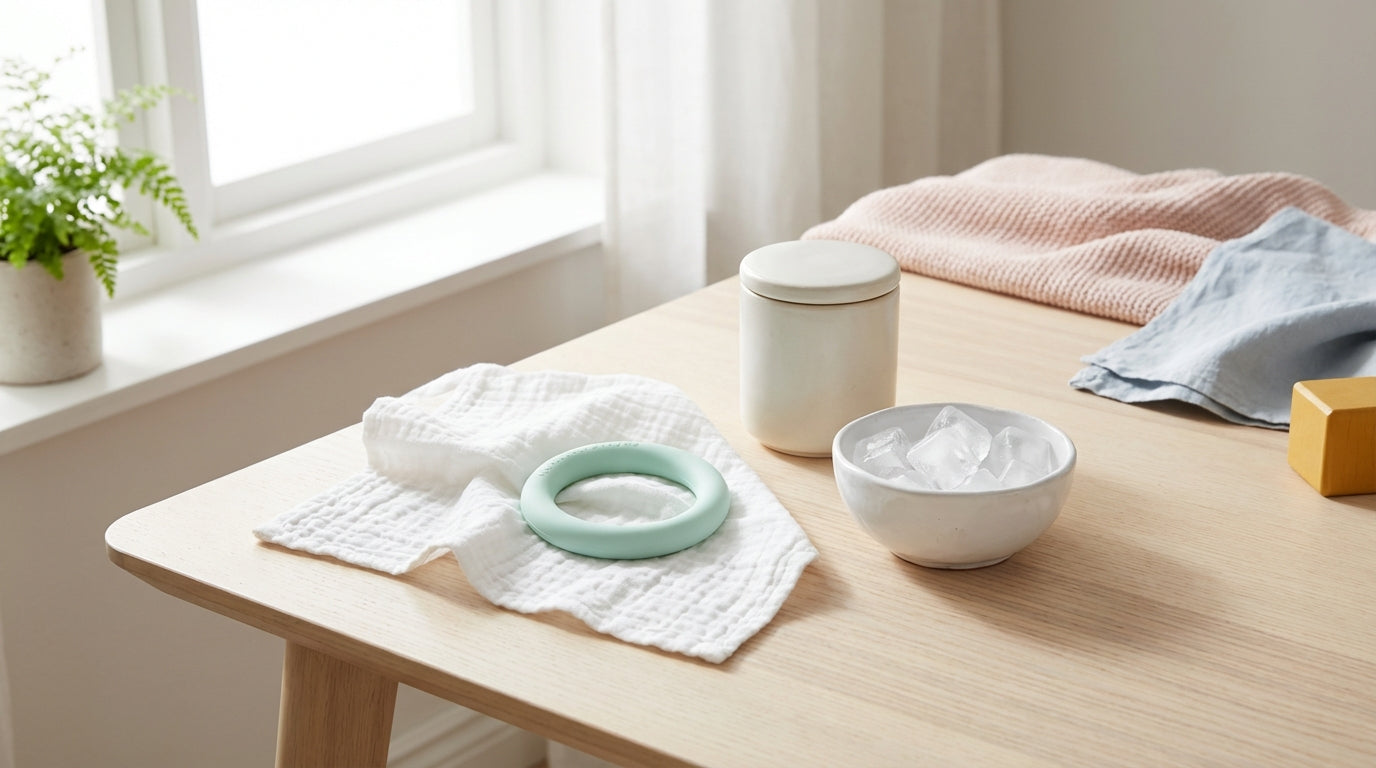
On the go, the best hygiene solution is keeping clean and dirty separate. You don't need to stand at the playground with hot water (who has that with them?). But you can stop the teether from starting a new life among cookie crumbs and loose change.
- 2-box trick: One small tin or bag for “clean”, one for “dirty” – that keeps things organized.
- Damp cloth (fragrance-free): Wipe off coarse dirt, then clean properly at home.
- At home first: Clean briefly, then let it dry – don't put it back in the bag wet.
When should you replace a teether?
Replacing isn't a defeat – it's just normal baby logistics. Teethers are everyday items that wear out. If any of the following applies, “out it goes” is usually the best and safest decision:
- Cracks, breaks or deep nicks (dirt settles in there).
- Sticky surface or a clear change in the material.
- Strong smell that stays after cleaning.
- Loose parts or wobbly connections.
A word on testing, materials – and why we're so picky
We've been making baby toys for 66 years – you automatically become honestly pragmatic. Bieco is a family business from Hamburg, and Ulli & Flo write here as parents for parents: clear guidance rather than “it'll be fine somehow”. Depending on the item, you'll find transparent information on materials, warnings and testing for our products – and your quick visual check is still the best everyday protection.
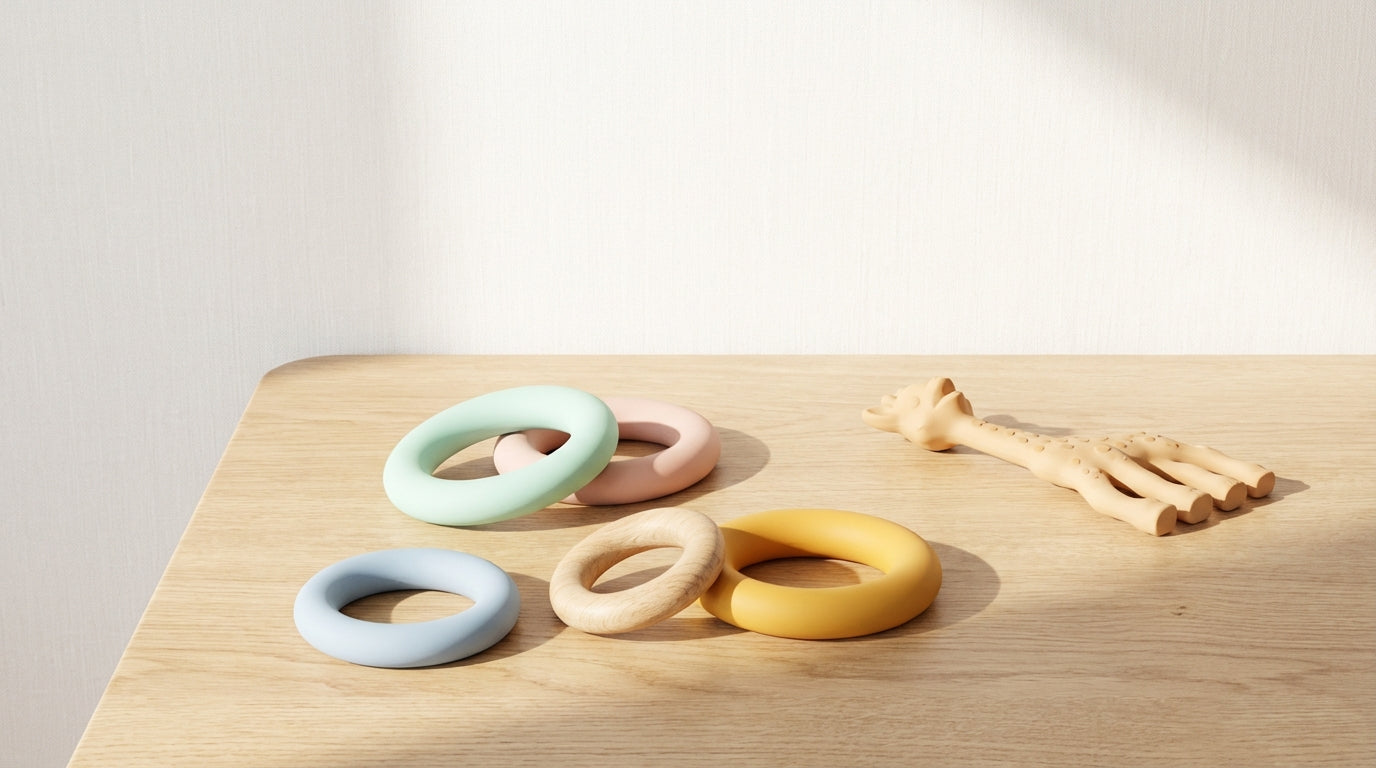
If you'd like to keep browsing: our hub has a range of shapes and materials. Take a look at our teethers – and if you'd like to read up, these guides fit well too: Wood, silicone or natural rubber teether? The big comparison, Cooling teethers for babies: benefits, risks & tips and From what age does a teether make sense? Materials, care & cooling tips.
FAQ
What's the best way to clean a teether?
It's best to clean it briefly with lukewarm water and mild soap and let it dry completely. With wooden parts, usually just wipe it and don't immerse it. The manufacturer's care instructions are what count, because mixed materials (e.g. wood + silicone) react differently.
How often should I clean a teether?
Normally once a day is enough – and right away after it falls or gets visibly dirty. If your baby is teething a lot and the teether is a constant guest in the mouth, a mini routine helps: clean in the evening, let it dry overnight, do a quick visual check in the morning.
Can a teether go in the dishwasher?
Only if the manufacturer expressly allows it. A dishwasher means heat, long water exposure and detergent – that can make wood swell and cause material stress on some surfaces. With pure silicone it may be possible depending on the product; what's certain: manufacturer's instructions first, then the machine.
How can I disinfect a teether without damaging the material?
The most material-friendly option is usually thorough cleaning and complete drying. If you also want to disinfect, follow the manufacturer's instructions, because not every material (and not every surface) tolerates strong products or heat. If in doubt, stay gentle.
Can I boil or steam-sterilize a natural rubber teether?
Only if the manufacturer expressly allows it – with natural rubber, heat is often avoided. Strong heat can make the material age faster or change it. What often works well: rinse with warm water, clean mildly, dry well and store dry and shaded.
How can I tell that a teether is no longer safe?
Cracks, sticky spots, a strong smell or loose parts are clear stop signs. Dirt can then settle in, or parts could come loose. When in doubt with mouth toys: better to replace it than to hope for “a few more days”.
Finally, stay relaxed: you don't have to be perfect – just regular and attentive. If you stick with the short routine, you're already well ahead in everyday life.