
Bead Maze
Sort by
8 products


recently viewed
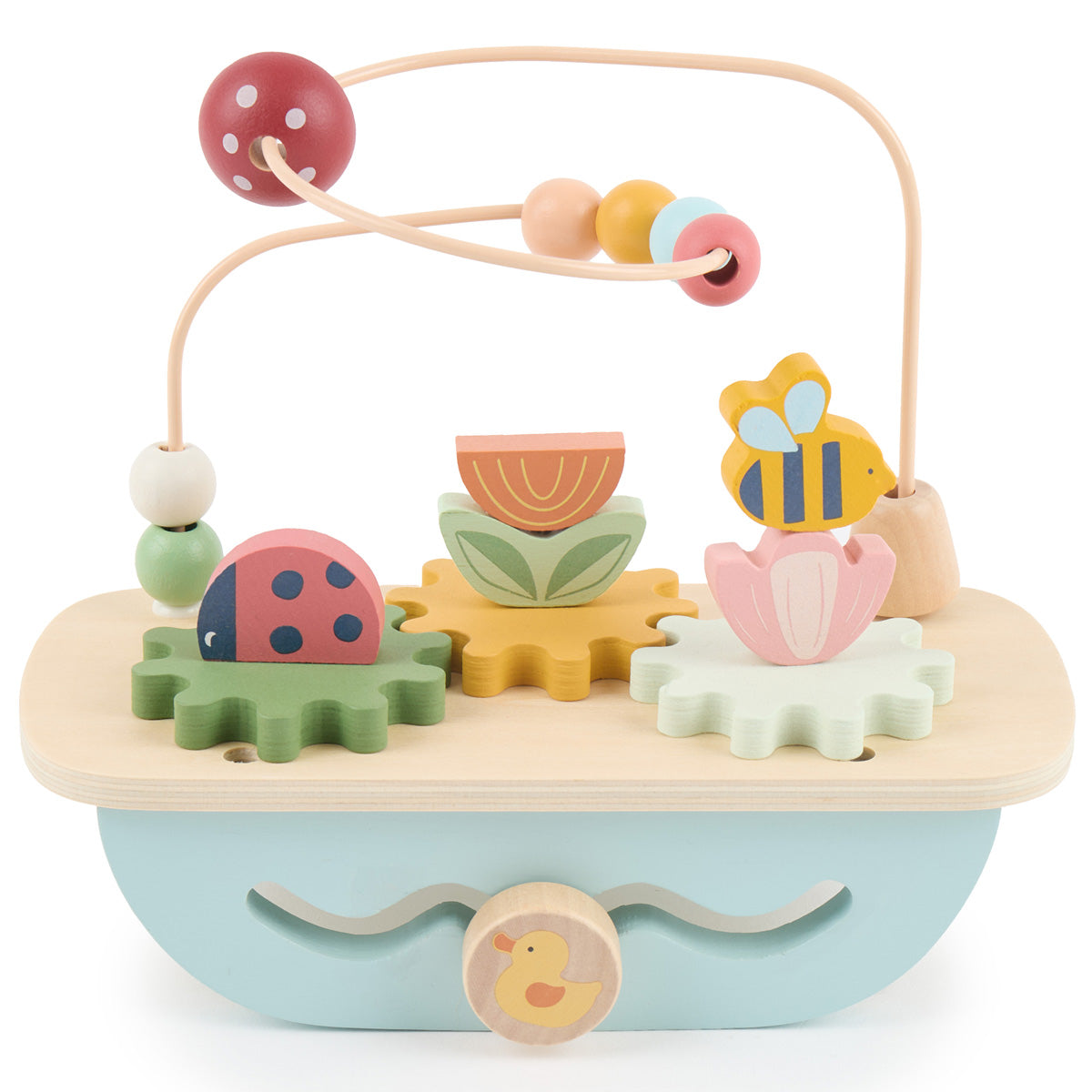
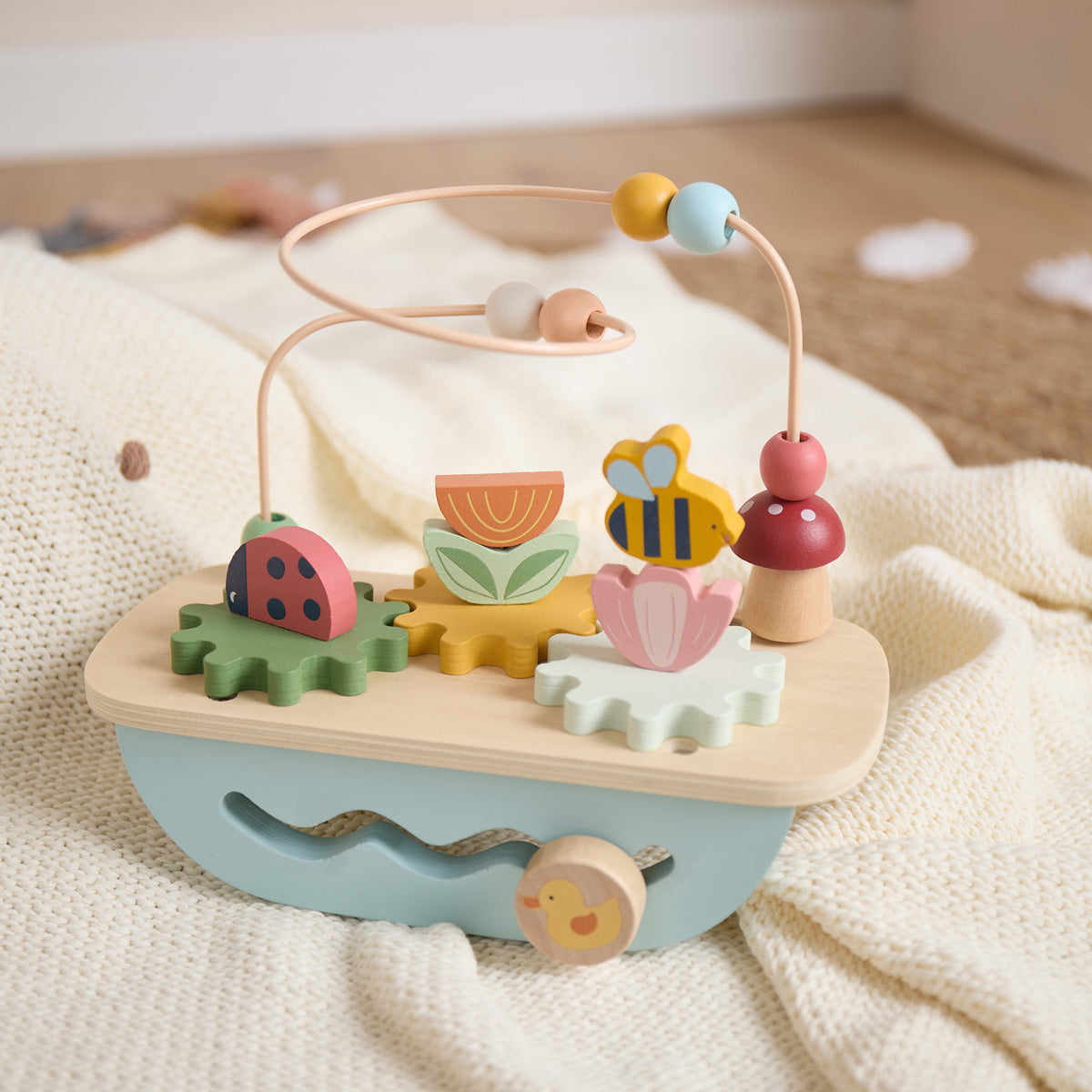
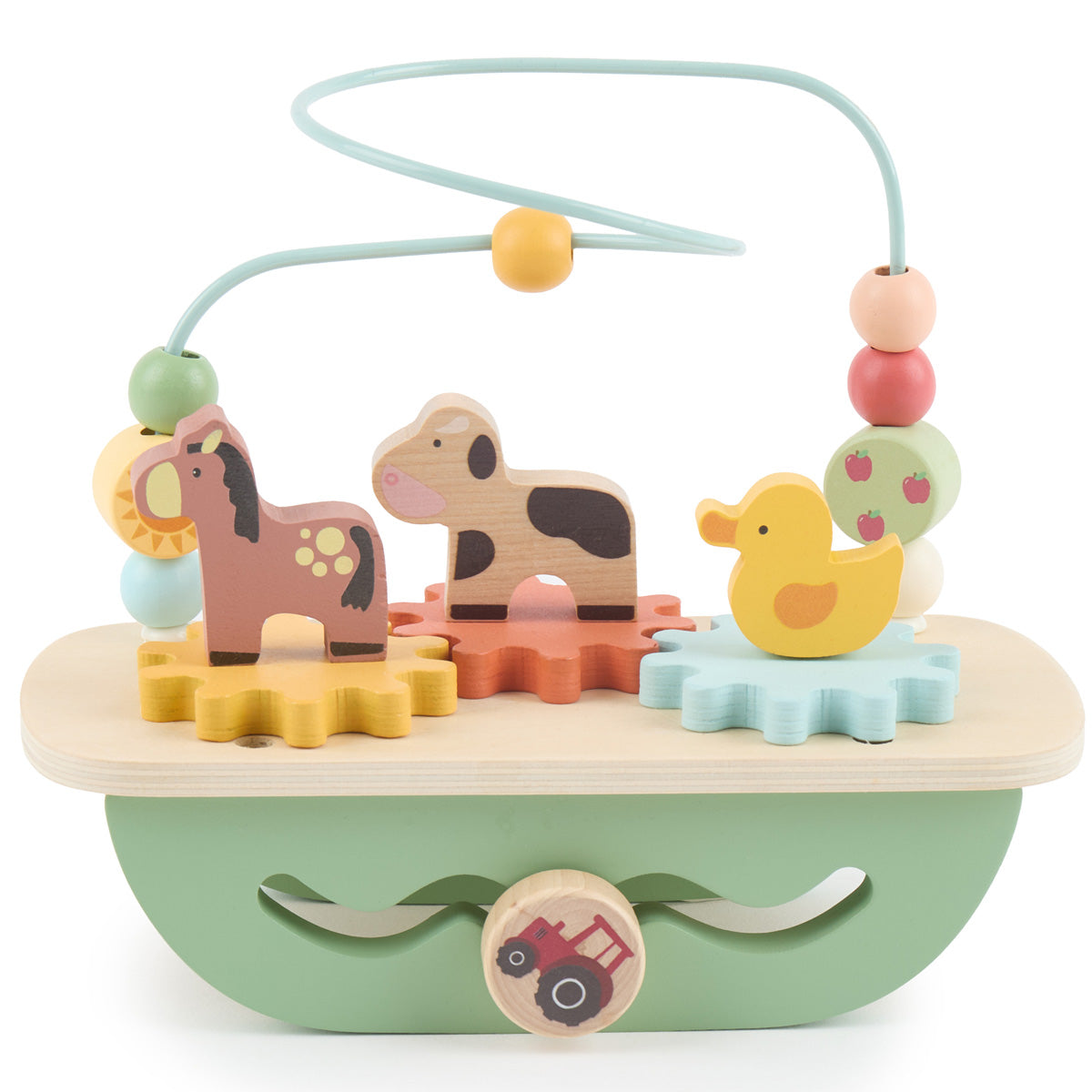
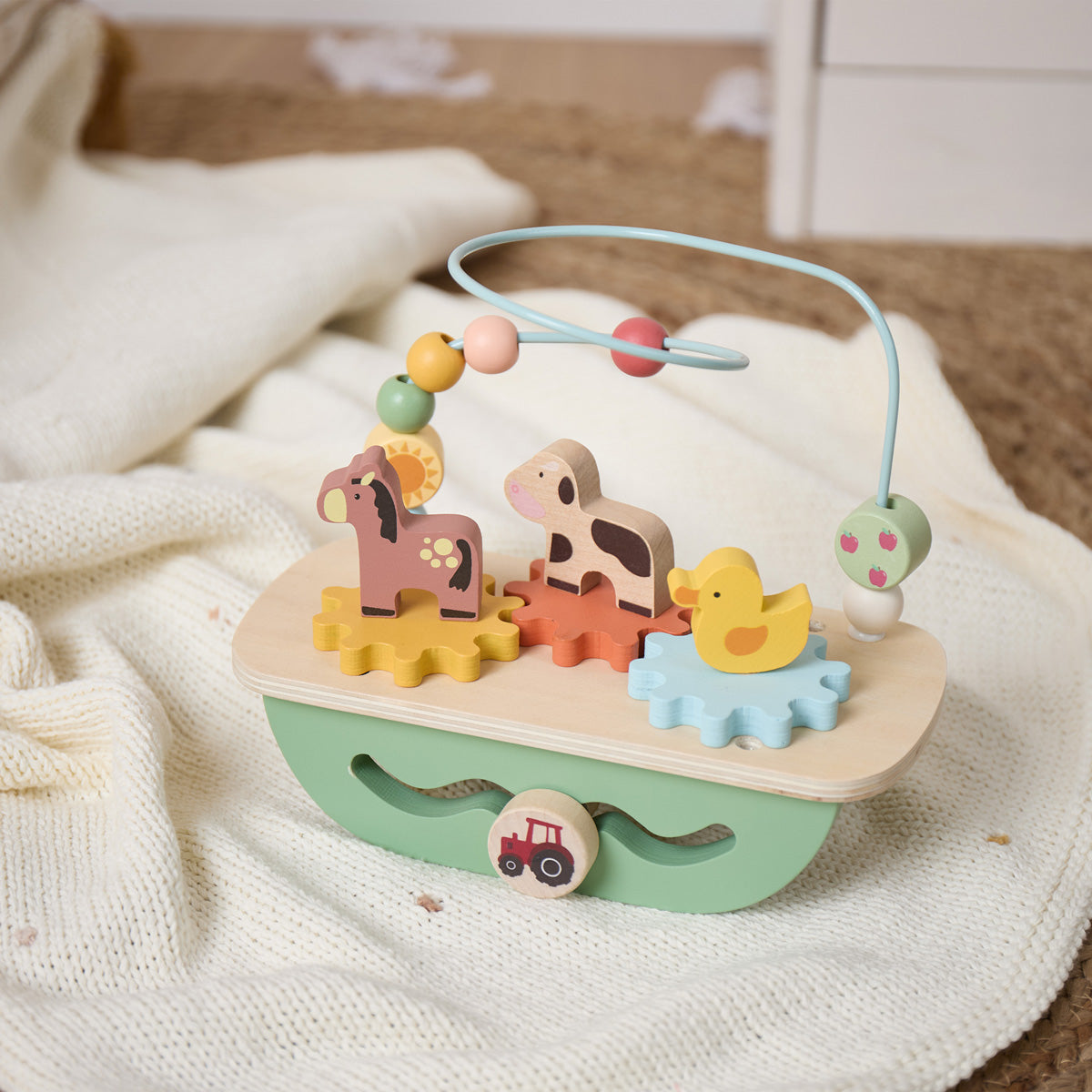
A motor skills loop is a grasping and sliding toy where children guide beads along curved wire tracks. It is a particularly good fit when little hands want to “do” – not just look. In short: once your child can grasp with purpose and no longer tips over while sitting, a motor skills loop often becomes really interesting. And when it comes to safety, a quick rule of thumb: go for sturdy, cleanly made and free of loose parts – then things stay relaxed, even if the toy ends up in their mouth now and then.
As of: 2026-02
Quick answer in 30 seconds: Check the age recommendation, stability and smooth edges – then the motor skills loop is a calm classic for home.
- If your child can grasp with purpose, it is usually worth starting. The most reliable answer to “from what age” is the age recommendation.
- Sturdy beats “more features” – especially at the beginning. Wobbling annoys children (and adults) faster than you might think.
- Wood often looks calmer in a room and feels pleasant in the hand. Smooth edges and firmly seated elements are what matter.
- Small fits on a table, large belongs in the play corner. Choose the size that can really have a permanent spot in your home.
The key points at a glance
- The age recommendation is the best compass for “from what age”. It takes into account how the toy is played with, its size and possible small parts.
- A wooden motor skills loop often stands more stably and “lives” longer. Look at weight, non-slip feet and clean workmanship.
- Cubes & 7-in-1 play centres are worthwhile if your child loves variety. For very young children, “too much at once” can be overwhelming.
- Second-hand is fine as long as nothing splinters, wobbles or flakes. If the wire is rusty or the paint is chipping: better to leave it.
- If something smells strongly: air it out first, then let your child play. According to the German Environment Agency, indoor air is influenced by products and materials (UBA: VOCs indoors).
How to choose in 30 seconds: the little buying checklist
The quickest way to choose is to answer three questions: where will it stand, how old is your child (or how do they play), and how much “action” should it offer. If you are unsure, go for sturdy & simple rather than XXL & overloaded.
- Space: table/shelf → small motor skills loop or tabletop motor skills loop; play corner → large motor skills loop.
- Play style: “I like threading” → classic loop; “I want to touch everything” → motor skills loop cube / activity cube motor skills loop / “7 in 1”.
- Everyday life: lots of tidying up → compact; siblings/playdates → larger, but really sturdy.
View motor skills loops now – and if the collection is empty right now: save it for later and come back (or browse the alternatives below).
Motor skills loop: from what age? (And why children don’t play by the calendar)
A motor skills loop makes sense when your child is keen on purposeful grasping and sliding. What matters is less “from 6 months” or “from 1 year” and more your child’s development. According to BZgA/Kindergesundheit-Info, grasping and the coordination of eye and arm movements become significantly more refined during the first year of life (kindergesundheit-info.de: Hand and finger motor skills). That is exactly where a motor skills loop comes in: grasp, slide, repeat – without it feeling like “practice”.
Because you shouldn’t have to open three more tabs from this hub page: we have moved the detailed age question (including motor skills loop from 6 months, motor skills loop 6 months, motor skills loop from 1 year, motor skills loop age recommendation) into our guide: What is a motor skills loop? Benefits, function & tips. For everyday life, this applies: read the age recommendation, observe your child, done.
Wood, design & themes: pastel, pink, safari or farm?
A wooden motor skills loop is often the relaxed choice because it stands stably and feels “warm”. Wood is not automatically better – but it is often calmer, sturdier and suitable for the living room. If you are searching for wooden motor skills loop, wooden toy motor skills loop or eco-friendly wooden motor skills loop: an FSC label can be a good indicator; you can find information directly at FSC.
And yes: design is not just decoration. Pastel or pink can simply look “quieter” in a nursery than neon. Whether pastel motor skills loop, pink motor skills loop or “for motor skills loop for girls” – choose what you like. Children play with everything anyway. With themes like safari motor skills loop, farm motor skills loop, “farm”, “garden” or “7 in 1”, the trick is: the theme may be fun, but the workmanship has to be right.
Small, large, cube, wall: which shape really suits you?
The best motor skills loop is the one that isn’t constantly in your way – and is still quick to reach. If you have little space, “small & sturdy” almost always wins. A small motor skills loop fits nicely on a table, a large motor skills loop belongs more in the play corner. A wooden cube with motor skills loop (or activity cube motor skills loop) is practical if you want several play ideas in a single piece.
On wall-mounted motor skills loops: that is a nice idea for the nursery because nothing gets scattered around. Wall models are practical if you want to save floor space. Pay particular attention here to secure mounting and to making sure no parts come loose.
Pros & cons: cube, 7-in-1 play centre, activity walker – no fuss
More features can be great – or simply “too much” at once. The younger the child, the better clear, simple play ideas work.
- Tabletop motor skills loop: Pros: quick to set up, good for playing together. Cons: slides around if the table wobbles.
- Motor skills loop cube / wooden cube with motor skills loop: Pros: several sides, stays exciting for a long time. Cons: can be overwhelming at first.
- Motor skills loop 7 in 1 / “garden” play centre: Pros: lots of variety in a small footprint. Cons: more parts/details = more to check.
- Motor skills loop activity walker (push walker with loop): Pros: motor skills + pushing in one. Cons: only suitable if your child can already stand securely.
A takeaway you’re welcome to quote: You don’t “put on” a motor skills loop – you set it down, and your child playfully practises hand-eye coordination.
One more takeaway: A motor skills loop cube bundles several play ideas into one block – practical if you don’t want ten separate pieces in the living room.
Buying second-hand: when a “bargain” is really one
A large second-hand motor skills loop can be a great solution – as long as it is truly intact. With splinters, rust or flaking paint, the deal is off immediately. Checklist for a quick look: Is the wire firmly set in the wood? Are the beads secure? No sharp edges? Is the paint not flaking? And does the piece smell neutral (or does it need to air out first)?
Safety & “free of harmful substances”: what you can realistically check
“Free of harmful substances” is a big phrase – but in everyday life you can keep the risk very low. Clean workmanship, neutral smell and appropriate age information are the most important basics. When buying toys, the Verbraucherzentrale (German consumer advice centre) recommends, among other things, good workmanship and names the toy standard (e.g. DIN EN 71-3) as a useful indicator for treated wooden toys (Verbraucherzentrale: Toys without harmful substances).
If you want to dig deeper: the German Federal Institute for Risk Assessment (BfR) assesses substances in toys (e.g. phthalate plasticisers, PAHs, fragrances) and supports limit-value approaches at EU level (BfR: Health assessment of toys). This is no reason to panic – rather a good reminder not to buy just “anything”.
And one more practical point for home: according to the German Environment Agency, products and materials can release VOCs into indoor air; ventilating generally lowers indoor concentrations (UBA: Volatile organic compounds). That means: letting new toys air out briefly is often a good idea.
“Test winners” & brands: orientation yes – but please without tunnel vision
A general motor skills loop test winner only exists if a specific test compares specific models. For orientation, what matters is: what exactly was tested – safety, harmful substances, workmanship? For toy tests, Stiftung Warentest describes, for example, tests based on DIN EN 71 (including mechanical safety/flammability) and analyses for harmful substances (Stiftung Warentest: How toys are tested).
On the search terms many parents use: Eichhorn motor skills loop, Little Dutch motor skills loop, Hape motor skills loop, Everearth motor skills loop, Kindsgut motor skills loop, Beeboo motor skills loop, Playland motor skills loop – these are typical brand and model directions people search for online. Our tip stays brand-independent: workmanship, stability and age recommendation matter more than the name. (And yes: places to search such as motor skills loop mytoys, motor skills loop Müller, motor skills loop Toys R Us, babywalz motor skills loop or “Amazon” also come up – in the end, the product is what counts.)
What will you find at BIECO – and what works as an alternative?
BIECO is a family business from Hamburg – for 66 years – and we love play ideas that work in everyday life. Our focus is on calm design and toys that children really want to touch. If there are currently no products in this collection: no stress – just take a look at our related categories and come back to the motor skills loop later.
- Wooden toys – if you are looking for the warm wooden look.
- Wooden puzzles – for children who like to “solve” rather than just slide.
- Rattles and teething rings – if your baby still grasps more than threads.
- Play arches – for the first grasping moments on the floor.
- Push walkers or Pull-along and push toys – if your child prefers to be “on the move”.
A definition that is easy to pass on: A wooden motor skills loop is a sturdy toy that is all about repeating and trying things out – entirely without batteries.
FAQ
What is a motor skills loop?
A motor skills loop is a toy where children slide beads or elements along curved wires. It encourages calm, focused play with hands and eyes. You can find a detailed explanation (with examples and tips) in our guide: What is a motor skills loop? Benefits, function & tips.
From what age is a motor skills loop suitable?
That depends on the model and on your child – which is why the age recommendation on the product is the best guide. If your child can grasp with purpose, getting started often works well. You can find the detailed breakdown of “from 6 months” and “from 1 year” in the guide: this way.
Motor skills loop: what does it promote?
It mainly promotes fine motor skills, hand-eye coordination and concentration. Sliding beads around curves is like a mini puzzle for the fingers. According to kindergesundheit-info.de, the interplay of eyes and hands becomes particularly refined in the 2nd year of life (BZgA/Kindergesundheit-Info).
Is a motor skills loop worthwhile or just decoration?
It is worthwhile if your child likes working with their hands and enjoys repetition. It is a calm toy that needs no screen and no batteries. If your child is more of a “run rather than thread” type, push or ride-on vehicles are often the better addition: Ride-on vehicles.
Large or small motor skills loop – which is better?
Better is the size that can really have a permanent spot in your home and isn’t constantly put away. Small is practical, large is great – but only if it stands stably. Small is often enough to start with; a large motor skills loop is worthwhile if your child sticks with it for a long time or several children play together.
Can you buy a large motor skills loop second-hand?
Yes – if it is truly in good condition. No splinters, no rust, nothing wobbly, nothing flaking. Especially with toys that like to end up in the mouth, a critical look is worth it. If you are unsure: better to buy new or switch to another wooden toy alternative.
How can I recognise wooden toys with fewer harmful substances?
Look for clean workmanship, a neutral smell and clear labelling. For painted wood, a reference to DIN EN 71-3 is a useful marker. The Verbraucherzentrale recommends exactly that, among other things, and also advises paying attention to stability and suitable seals (Verbraucherzentrale).
Is there a motor skills loop test winner?
A “test winner” only exists within a specific test of specific models. What matters is whether safety and harmful substances were properly tested. For toy tests, Stiftung Warentest describes, for example, tests based on DIN EN 71 and various analyses for harmful substances (Stiftung Warentest).
About this page
This text was written by the BIECO editorial team – as a Hamburg family business with 66 years of experience and a passion for toys that work in everyday life. On safety and material topics, we deliberately rely on sources from authorities and testing institutes. For this we use, among others, consumer advice from the Verbraucherzentrale as well as assessments by the BfR on substances in toys (BfR).
If you want to buy a motor skills loop now: choose the one that suits your space and your child – not some perfect Instagram shelf. In the end, the toy that is happily picked up every day wins. And for gift-givers: in our gift ideas you will find calm classics that almost always go down well.
By Ulli & Flo · Owners & parents More about us ↓

About this page
Ulli & Flo
Owners of bieco · Hamburg · parents ourselves
We like motor skills loops because they're so wonderfully unfussy: put it down, child has a go, done. And if it gets stuck now and then, help out briefly, grin briefly, and off you go.