Diaper Backpack Test: How to Find the Best Model for Your Family
At a glance
- A diaper backpack test is most helpful when you check access, comfort and organization together.
- The best diaper backpack is the one you can operate with one hand.
- A wide opening, a wipeable lining and a wet compartment save your nerves.
- For longer days, back padding, a chest strap and a sturdy build with a low empty weight matter.
- Material details and transparent testing information give you guidance without panic.

The best way to test a diaper backpack is with a few simple everyday moves. That's exactly what we do here: you get clear criteria, a little “one-hand test”, a section on backpack styles (what suits whom?) and a short buying guide by budget and use. This is not a lab report – it's more the honest view of an experienced friend (or a relaxed grandpa) on what really matters out and about: the train platform, the playground, drizzle and a baby who wants to be picked up right now.

Ulli & Flo
Owners of bieco · Hamburg · parents themselves
We only truly understood diaper backpacks when we had to use them one-handed with a baby on our arm. These are exactly the everyday tests we share with you here. Feel free to browse our diaper bag collection.
Diaper Backpack Test: What Is Really a “Test”?
A test is only fair if the criteria and methods are clear. Many online lists are comparisons: manufacturer info, reviews, photos, a bit of editorial experience. That can be helpful – it's just not a lab. For you, that means: don't just look at a grade, but at whether it's clear how the backpack was checked for packing, carrying and cleaning.
In everyday parenting, a comparison is often more useful than a “test winner” seal. Because you don't want “1.7, good” – you want to know: “Can I reach the wipes without tipping everything out?” and “Does this thing dig in after 30 minutes?” That's exactly what this guide is about.
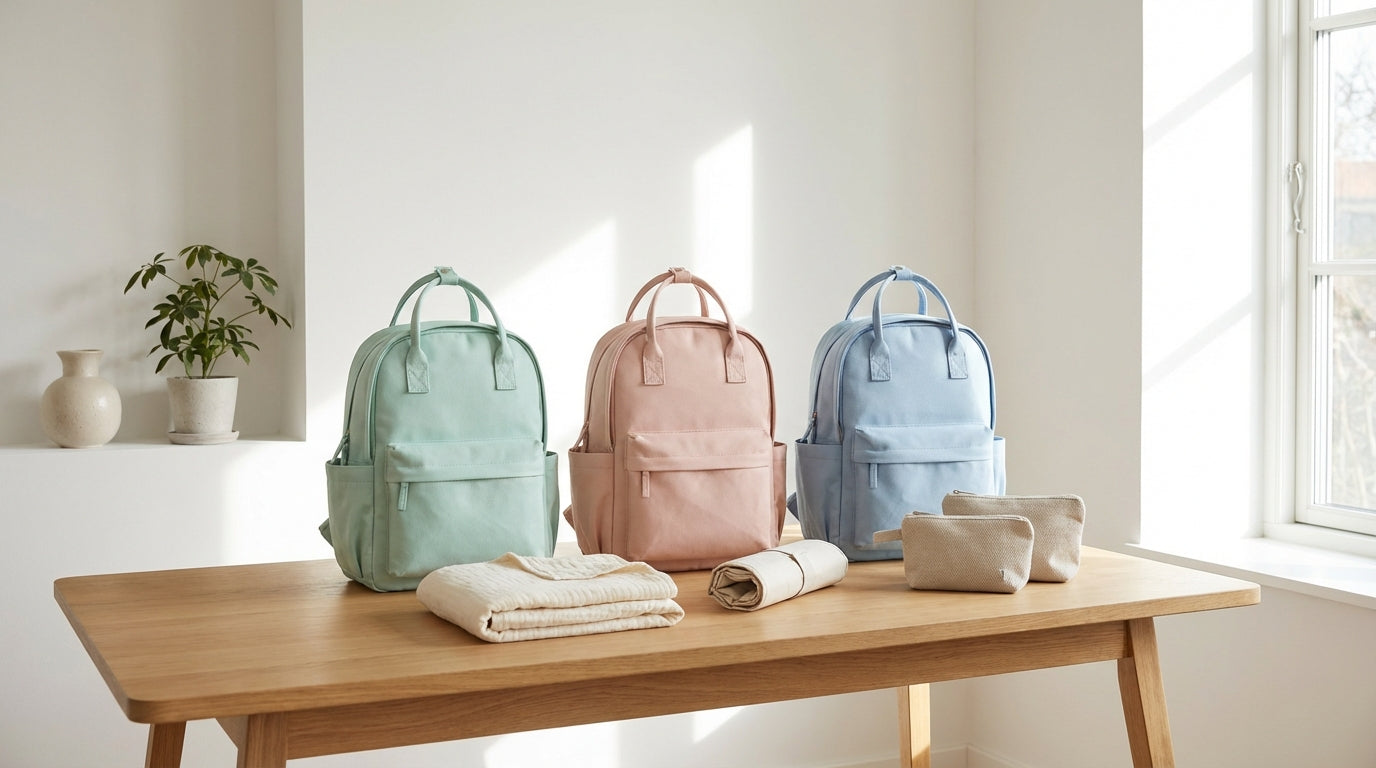
Definition: A diaper backpack is a backpack with changing organization for on the go. It typically comes with extras like a changing mat, insulated compartments, a wet compartment and an opening that's easy to use while standing.
Our Practical Method: How We Check Everyday Suitability
Everyday suitability shows within minutes – not only after weeks. We (Ulli & Flo, parents on the Bieco team) use a small routine for a quick check that you can do at home just the same: pack it once, carry it once, simulate chaos once.

- One-hand test: Open the zipper, pull out a wipe, grab a diaper – all with one hand.
- Stand test: Put the backpack down: does it tip over right away or does it more or less stay upright?
- Search test: Find a pacifier & a waste bag in 10 seconds – without dumping the contents onto the park bench.
- Carry test: Carry it for 10–15 minutes with realistic weight (a water bottle counts).
- Wipe test: Wipe the lining once with a damp cloth: does it come clean easily or stay sticky?
Practical tip: Bring a full water bottle and a small towel for testing. That simulates weight and volume much better than “empty in the store”.
The 10 Criteria That Really Matter in Everyday Life
If you only check ten things, make it these – everything else is extra.

- Opening & access: Wide-opening (doctor's bag / “fish mouth” style) or “tube”? The wider, the less digging.
- Organization: Fixed spots for diapers, cream, spare bodysuit, waste bags, pacifier.
- Changing mat: Included, wipeable, big enough – and quick to grab.
- Wet compartment: Separate and as watertight as possible for wet clothes or a burp cloth.
- Bottle pockets: Insulated is nice, but above all: easy to reach and big enough.
- Carrying comfort: Padded straps, breathable back, ideally a chest strap.
- Empty weight: The lighter, the better – you're already carrying a child (at least emotionally).
- Material & cleaning: Wipeable inside, sturdy outside, solid zippers.
- Stroller attachment: Holds securely without slipping or twisting.
- Valuables pocket: A back pocket for your phone and wallet is reassuring on buses & trains.
Models & Types: Which Style Suits Your Family?
There is no such thing as “the” diaper backpack – only styles with different strengths.

- Wide-opening (doctor's bag opening): Great overview, quick to find things. Good for “I need that NOW” moments.
- Classic backpack with top access: Usually lighter and uncomplicated, but depending on the cut, less visibility.
- Roll-top: Flexible volume, often weather-friendly. Reaching down can be annoying when you're looking for small items.
- Hybrid (backpack + tote): Handy if you sometimes want to carry it on one shoulder. Look for sturdy fastenings and make sure nothing dangles.
- Minimalist/compact: Great for short trips. On day trips it quickly turns into Tetris.
Comparisons from editorial lists can give you ideas – but always check against your own criteria. If you like looking at external overviews: ELTERN.de and the F.A.Z. Kaufkompass regularly list models and name typical pros and cons in practice.
ELTERN.de comparison: diaper backpacks at a glance
F.A.Z. Kaufkompass: diaper backpack comparison
Short Buying Guide: Budget, Use and “What's Really Worth It?”
The best diaper backpack is the one that fits your daily routine. Three pragmatic questions help more than 30 product photos:
- How long are you usually out? Short trip = access & order. Day trip = volume, carrying comfort, wet compartment.
- Do you carry a lot on your back? Then back padding, strap width and a chest strap matter more than “yet another extra pocket”.
- How “messy” does your daily life get? Daycare, playground, rain = a wipeable lining and a robust outer material pay off.
Budget tip: Invest first in carrying comfort and zippers. Extras like a USB port or ten mini pockets sound great, but they do little if the backpack digs in or constantly jams.
Practical tip: If you can't decide between two sizes: choose the one you can still carry comfortably when it's half full. Otherwise “more space” quickly becomes “more stuff”.
Material & Harmful Substances: What You Can Look For (Without Panic)
You don't have to study chemistry – but clear information is a good sign. Helpful are transparent material details (e.g. polyester, recycled PET) and understandable notes on testing. For textiles, “STANDARD 100 by OEKO-TEX” is a widely used testing system for harmful substances in textiles; according to OEKO-TEX, product class I is intended for babies and toddlers.
OEKO-TEX: STANDARD 100 (official information)
OEKO-TEX: Product classes (including class I for babies)
EU rules strictly limit certain phthalates in consumer products. According to the European Chemicals Agency (ECHA), several phthalates (including DEHP, DBP, DIBP, BBP) are restricted in many articles under REACH.
ECHA: Phthalates (REACH restrictions)
Safety note: When changing your baby, place the diaper backpack so that babies can't reach the straps. Attach it to the stroller only in a way that doesn't pull the stroller forward.
Transparency is a good sign – and questions are welcome. We're a family business from Hamburg, we've been doing this for 66 years, and we're more of a “tell it like it is” team: materials, care instructions and (where available) testing standards belong on the table for us.
Packing List: What Goes In (and What Can Stay at Home)?
A good diaper backpack isn't full – it's packed sensibly.
- Changing: Diapers, wipes, small tube of diaper rash cream, 2 waste bags.
- Spare clothes: Bodysuit, pants/leggings, socks, thin sweater, burp cloth.
- Food/drink: Bottle/cup, snack box, spoon if needed, bib.
- On the go: Tissues, plasters, sun/rain gear (depending on the weather).
- For you: Keys, phone, wallet in the back pocket.
Definition: A wet/dry compartment separates damp items from clean ones in the backpack. It's a (often coated) pocket so that wet clothes don't soak the rest or start to smell.
Matching Diaper Bags & Diaper Backpacks at Bieco
If you'd like a shortcut after reading: take a calm look at our overview. In the hub you'll find different options for being out and about – no rush, but with clear information.

FAQ
What is a diaper backpack test – and how do I recognize a trustworthy one?
A test is trustworthy when its criteria, methods and limits are clearly stated. Check whether access, carrying comfort, workmanship, cleaning and everyday handling are examined in a way you can follow. Pure best-of lists can inspire, but they don't replace a transparent assessment. The most helpful tests show how they reach their verdict.
Which is the best diaper backpack for everyday life in the city?
For the city, a lightweight backpack with quick access is usually best. A wide opening, an easy-to-reach wipes pocket and a back pocket for valuables are worth their weight in gold. If you use public transport a lot, also look for sturdy zippers and a backpack that doesn't tip over right away when you put it down.
How big should a diaper backpack be?
The right size depends on your typical outings. For short trips, a compact backpack with good organization is often enough. For day trips, more volume plus a wet compartment is worthwhile. What matters is that you can carry it comfortably even when it's full – otherwise “practical” quickly turns into “I never lug that around”.
Are insulated bottle pockets really necessary?
They're not necessary – but they're handy if you regularly take bottles along. What matters is whether you can reach the pockets easily and whether they're big enough. Some families get along just as well with a separate thermal case that fits flexibly into any backpack and isn't tied to one model.
What should I look for in terms of material and harmful substances?
Clear material details and understandable testing information are helpful. For textiles, STANDARD 100 by OEKO-TEX can offer guidance, as it tests the textile material for harmful substances; according to OEKO-TEX, product class I is intended for babies and toddlers. It's also worth a look at the care instructions and interior coating.
Diaper backpack or diaper bag – which is better?
Better is whatever fits your carrying routine. A backpack usually distributes weight more comfortably across both shoulders and leaves your hands free. A bag can score with quick access, but is more likely to slip off your shoulder. If you carry it often or walk a lot, the backpack is usually more relaxed.
Once you've found the right diaper backpack, a lot gets quieter on the go. Less rummaging, more free hands – and in parenting life, that's sometimes already a luxury. If you'd like to browse: in our diaper bag overview you'll find different solutions for changing on the go – with northern German calm, the way we've done it for 66 years.