Rocking Horse Care: How to Keep Your Rocking Animal Looking Lovely for Years
At a glance
- Rocking horse care: wipe with a damp cloth, use mild soap, let it dry thoroughly.
- Don't soak wood or fabric: no soaking, and don't leave wet cloths lying on it.
- 2-minute check: quickly inspect and tighten screws, rockers, handles and seams.
- Tackle stains right away: dab instead of scrubbing, then let it dry.
- Store it properly: dry, shady, away from radiators and strong sunlight.

Rocking horse care is simple: wipe it down, let it dry, and quickly check that everything is tight. Most of the time, that's really all it takes – and that's a good thing, because parents rarely have time on their hands. In this guide you'll get a practical routine for wood and fabric, small repair and first-aid tricks for stains and wobbling, and a storage checklist. It's all written so you can manage it between the lunchbox and the bedside – no special products and no DIY degree required.

Ulli & Flo
Owners of bieco · Hamburg · parents themselves
We've learned that a rocking animal doesn't have to look perfect – it just has to be safe and stable. With a small routine it stays lovely for a long time, without an extra cleaning day. Feel free to browse our rocking horse collection.
Rocking Horse Care: The Basic Routine in 2–5 Minutes
If you only do one thing: clean it briefly and let it dry completely. For many rocking horses and rocking animals, a damp cloth, mild soap and then air drying is enough – and that's exactly how it's described in the care instructions for BIECO products. For the wooden rocking horse you'll find these instructions right in the product details.

- Dust & crumbs: A dry, soft cloth or a soft brush (for fabric).
- Sticky spots: Lukewarm water + a touch of mild soap, wring the cloth out well.
- Finally: Wipe dry and let it air dry.
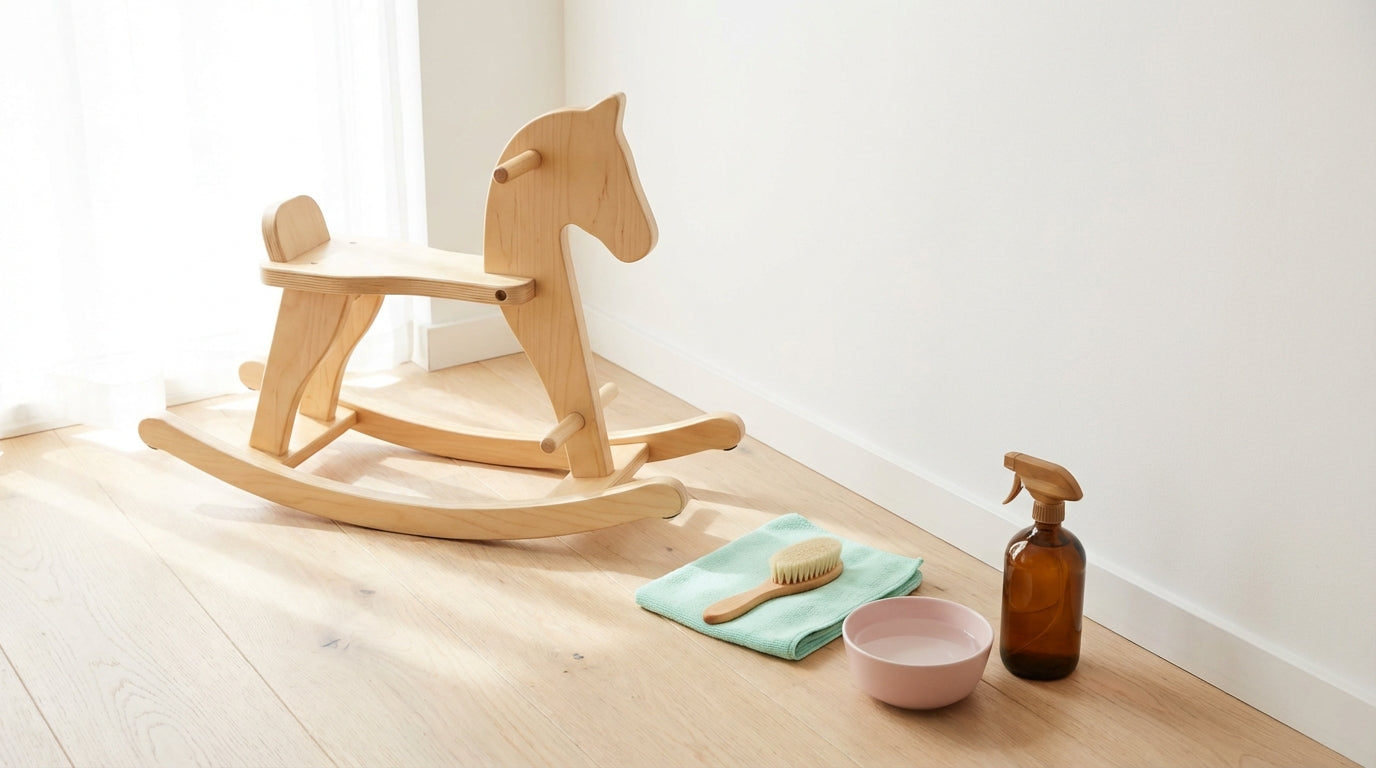
Practical tip: Keep a “light cleaning kit” in a little basket: soft cloth, mild soap, small towel. That way you can deal with stains right away – and not “when things calm down”.
Definition: “Air drying” means letting something dry completely without additional heat. It's easy to do in everyday life and is gentle on materials, joints and surfaces.
Wooden Rocking Horse Care: What Wood Likes (and What It Resents)
Wood likes to be clean, but not wet and not cleaned harshly. A wooden rocking horse is sturdy, but still: don't soak it, don't use aggressive cleaners, and don't let wet cloths “move in” on top of it. If you wipe gently and dry well, the surface stays beautiful for longer – and the joints aren't put under unnecessary stress.

- Clean gently: Damp cloth, mild soap, then wipe dry.
- No lasting dampness: Don't leave a wet cloth lying on it, not even “just for a moment”.
- No harsh products: Scouring cream, solvents or strong cleaners can damage surfaces.
Safety note: If you find splinters, sharp edges or cracks: stop using it until the problem is fixed.
Plush, Corduroy & Co.: Cleaning Fabric Parts Without Soaking Everything
With fabric, the rule is: clean the surface, dab, and let it dry well. Many rocking animals have a wooden frame with plush or corduroy on top – and getting the whole thing wet is rarely a good idea. The BIECO care instructions for these models also recommend cleaning with a damp cloth and mild soap, followed by air drying, for example for the Ginger rocking animal.
- Crumbs & dust: Soft brush or vacuum cleaner on a low setting with an upholstery attachment.
- Stains: Dab from the outside in with a slightly damp cloth (don't rub).
- Odors: Let it air out dry, ideally in a well-ventilated room.
Definition: A “rocking animal” is a toy with a rocking frame for rhythmic movement. For families that means it gets handled a lot, moved around and occasionally “re-parked” – so care should be quick.
Stability & Safety: The 2-Minute Check (Really Worth It)
A quick check prevents wobbling, squeaking and unnecessary follow-up damage. Rocking horses get rocked, turned, pushed – and sometimes used as a parking spot for stuffed animals. Every few weeks (or after transport or a move), take two minutes:

- Screws & connections: Is everything tight, nothing rattling?
- Rockers/rocking frame: Does it stand level without tipping?
- Handles & footrests: Firm, with no play, no cracks?
- Fabric/seams (if applicable): Seams intact, nothing coming loose?
EN 71 is a series of standards that describes requirements for toy safety. For you, it's mainly a reminder: the manufacturer's information, warnings and age recommendations are not decoration, but help you use the toy safely.
According to the BMUKN, the Toy Safety Directive 2009/48/EC sets out requirements for toys in the EU. According to the BMUKN, it is implemented in Germany through the 2nd ProdSV and covers, among other things, technical and chemical requirements.
Practical tip: Do the 2-minute check whenever you're vacuuming anyway. Then it's one motion – not one more chore.
Scratches, Stains, Sticky Residue: First Aid Without the Drama
What matters is less how it looks and more that nothing becomes sharp, loose or unstable. Scratches and dings are simply part of life with children's room furniture and toys. For stains and sticky residue, the same approach usually works: react quickly, stay gentle, let it dry well.
- Fresh stains: Remove with a damp cloth + mild soap, then rub dry.
- Cocoa & co. (dried on): Dampen first, let it sit briefly, then carefully wipe it off.
- Sticker residue: Dampen with warm water and loosen gently, don't scrape with sharp edges.
- Rough spots: Stop using it and check whether something has come loose or an edge has become sharp.
If you're unsure: follow the manufacturer's care instructions. That sounds boring, but when in doubt it's the quickest shortcut.
DIY: Small Repairs Many Families Can Do Themselves
Many “wobble problems” are simply loose connections and are quickly solved. You rarely need more than a suitable screwdriver and a clear head (coffee helps, but isn't required). Important: always check first, then let your child rock.
1) When the rocking horse wobbles
Wobbling often comes from loosened screws or an uneven floor. Here's how to go about it:
- Check its stance: Put it on a level floor and see whether it tips.
- Tighten the screws: Tighten all those you can easily reach – not “with brute force all the way to Hamburg”, but firmly and in a controlled way.
- Look at the connections: Are there cracks, worn-out holes or parts that no longer fit neatly? Then it's better to stop and check the manufacturer's instructions.
2) When something squeaks
Squeaking is often friction at the connections and a sign of movement. First check whether play has developed anywhere and tighten the connections. If the noise remains, see whether something is rubbing or sitting crooked – and whether protective felt on the bottom might help.
3) When the surface feels “sticky”
Stickiness usually comes from residue (juice, cleaner, cream on hands). Wipe again with lukewarm water and mild soap, then with a clean, well-wrung-out cloth, and finally rub it dry. Often it's really just a film that needs to go.
Safety note: If parts are damaged, cracks become visible or something no longer seems stable: don't keep “trying it out”, stop using it.
Storing It Properly: How the Rocking Animal Stays Relaxed (Even After Months)
Dry, shady and away from direct heating air is best for wood and fabric. When the rocking horse is taking a break – at the grandparents', in the guest room, or because your child currently prefers driving diggers – this little checklist helps:
- Clean it first: Quickly remove crumbs and stains, let everything dry completely.
- Store it dry: No damp basement corners or permanently clammy rooms.
- No strong sun: It can change the look of surfaces and fabrics.
- Away from the radiator: Constant warmth is unnecessary stress for many materials.
- Don't wrap it airtight: Better protected from dust, but with a little room to “breathe”.
How to Recognize “Good Information” (and Why It's Reassuring)
Clear care and safety instructions save you guesswork in everyday life. With toys, look for understandable information on age, use and warnings. The Verbraucherzentrale NRW (consumer advice center) advises, among other things, paying attention to warnings and age recommendations; manufacturers must also mark their products with the CE mark and provide their name and address.
At BIECO, you'll usually find concrete care instructions and safety information in the product details. And since we've been around for 66 years as a family business from Hamburg, we'd rather be too clear than too flowery with this kind of information.
Time to Browse: Models & Information in One Place
When the material and care suit you, the rocking animal stays happy for longer. In the rocking horse overview you'll find various models; the respective product details list the material, recommended age and care instructions. And if you're still working out what suits which age: Rocking horse: From what age and for which age is it suitable? helps you sort it out.

FAQ
Can I oil a wooden rocking horse?
Only if the manufacturer expressly recommends it. On many models, the surfaces are finished so that wiping with a damp cloth and mild soap is enough. Oil can change surfaces and has to suit the material. If you're still considering it: read the manufacturer's instructions first and test it on an inconspicuous spot.
How often should I tighten the screws?
A quick check every few weeks is a good rhythm that works in everyday life. It's also worth tightening after transport, a move, or when there's been a lot of rocking. What matters isn't “constantly”, but regularly: Is everything tight, does nothing wobble, are handles and footrests stable?
Which cleaners are off-limits?
Aggressive cleaners and abrasives are usually not a good idea. Strong products can damage surfaces or leave residue that later feels sticky again. In many care instructions, mild soap in lukewarm water is enough. If you're unsure: start mild and work carefully.
What should I do if the rocking horse squeaks?
First check whether something is loose, then tighten it. Squeaking often comes from movement at the connections. Tighten the screws in a controlled way and see whether something sits crooked or rubs. If the noise stays and you can't find the cause: stop using it for a while and check the manufacturer's instructions.
How do I remove stains from fabric (plush/corduroy) most gently?
Dabbing instead of rubbing is the most nerve-friendly method. Take a slightly damp cloth with mild soap and work from the outside in. Then soak up moisture with a dry cloth and let it air dry well. That way the fabric usually stays nicer than if you scrub “with gusto”.
What does EN 71 mean for me as a family, in short?
EN 71 stands for toy safety requirements and helps you put things in context. The series of standards is linked to the EU Toy Safety Directive; according to DIN, harmonized standards can support conformity. If you'd like to read more: DIN explains DIN EN 71-3 in an easy-to-understand way.
Conclusion
With a damp cloth, mild cleaner and the 2-minute check, a lot stays in good shape for years. And if you're looking for a model that suits your everyday life: in the rocking horse overview you can compare materials and care instructions directly. Then the rocking is more relaxed – for your child, the floor and parental nerves.