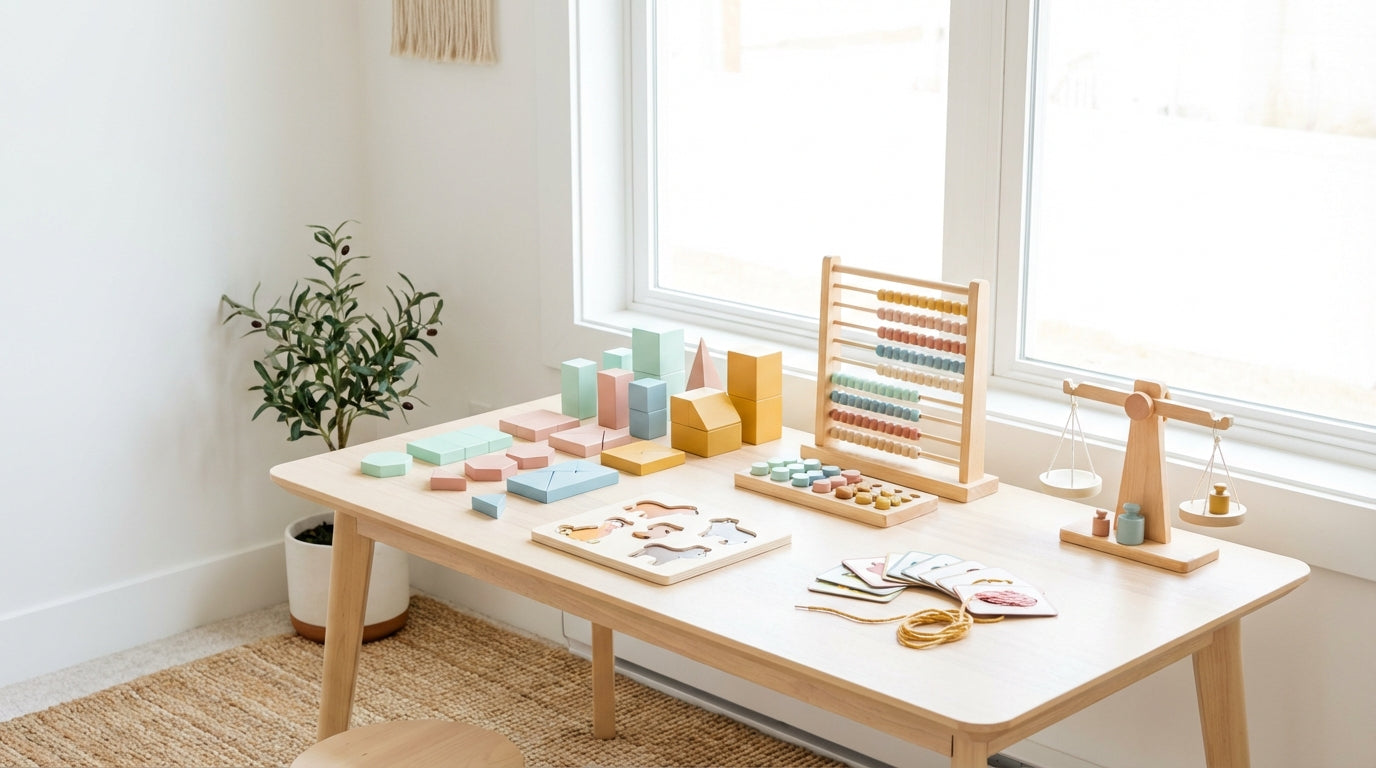
Construction Toys for Ages 3+: Boost Motor Skills with Building Ideas
At a glance
- Construction toys for ages 3+ support motor skills when kids get to grab, connect and build a lot.
- At 3, what counts is easy-to-grip pieces, quick wins and free building.
- Farm and car play ideas combine wonderfully with building pieces.
- Safety: take age recommendations, warning labels and clean workmanship seriously.
- 10-minute routines in everyday life beat the perfect “play hour”.

Construction toys for ages 3+ support motor skills best when kids can grab, connect, twist and try again and again. You don’t need an educational program or a craft exam for this – just material that small hands can grip well, and a few play ideas that don’t immediately smell like “performance”. In this guide you’ll find a simple selection guide, concrete building and role-play ideas (farm, cars, ramps) and a small safety checklist, so you can stay relaxed when the living room turns into a “construction site” once again.

Ulli & Flo
Owners of bieco · Hamburg · parents themselves
We love building games that start without much setup and still last a long time. At 3 especially, small wins help – and the rest often follows on its own. Feel free to browse our collection Toys for Ages 3+.
In everyday life, motor skills means moving the body and using the hands skillfully. According to the WHO, children aged 3–4 should be active for at least 180 minutes in total each day, including at least 60 minutes of moderate to vigorous play. (WHO) That’s not an order to entertain non-stop – more of a friendly nudge: lots of small moments of movement and play spread throughout the day.
What is typical at age 3 (and why it matters for building)?
By age 3, many children can already build with purpose, but their patience depends on the day. Sometimes they stack with focus for 20 minutes, sometimes it’s over after two pieces because the teddy “urgently” needs an ambulance. That’s normal – and exactly why material that allows quick wins and doesn’t only work with strict instructions is a good choice.

Also typical: children test limits – their own and those of the material. They press harder, knock things over more readily and see what happens. For you, that means: choose sturdy and grippy rather than delicate and “just pretty”. And if your child shouts “I can’t do it!” after three minutes: that’s often not the end, but the beginning of “I’ll try again”.
Which types of toys support motor skills in children aged 3 and up?
Toys that support motor skills bring hands, eyes and body together in a meaningful way. According to kindergesundheit-info.de (BZgA), children develop their hand and finger motor skills at their own pace; you can support this with a variety of materials such as modeling clay, sand, water, chunky pens or finger paints. (kindergesundheit-info.de)
Fine motor skills are small, precise movements of the hands and fingers. In practice that means: grasping, twisting, connecting, threading, pinching – things that later also help with drawing, cutting or getting dressed.
Gross motor skills are large movements using the trunk, arms and legs. These include running, jumping, climbing, balancing or rolling – and yes, that’s often the part that helps with winding down in the evening.
- Connecting and sorting games: matching shapes, putting them in, taking them out again – simple, but great for hand-eye coordination.
- Kneading, squishing, playing in sand: strengthens hands and fingers without feeling like “practice”.
- Threading & screwing: trains patience, control of force and working with both hands.
- Building & constructing: planning, stabilizing, experimenting, improving – the whole package.
- Movement toys: balancing, rolling, small obstacle courses – for body awareness and coordination.
Practical tip: If your child gets frustrated quickly: build something “on purpose” crooked. Then your child gets to rescue you – and is more likely to stick with it.
Construction toys for ages 3+: what they really offer (and what they don’t)
Good construction toys for ages 3+ invite repetition, not just showing off. Three-year-olds are often surprisingly persistent when the material “cooperates”: pieces are easy to grip, connections aren’t too stiff, and there are enough small wins between the failed attempts.

Construction toys are toys for building, connecting and changing pieces. The benefit is very tangible: children practice spatial thinking, hand-eye coordination and controlling their strength – “too hard” and “too loose” show up immediately.
It doesn’t offer much if it’s only “right” when following instructions. At 3, many children prefer to build by feel: a tower today, a garage tomorrow, a “dino hotel” the day after. That isn’t chaos, that’s learning in the wild.
How to choose age-appropriately: 3 years is not “small” – but not “big” either
At 3, a lot already works, but the range is huge. According to kindergesundheit-info.de, children develop motor skills at very different paces; what matters is a variety of opportunities to move and experience. (kindergesundheit-info.de)
These selection rules are practical for everyday life (and easy on your nerves):
- Grip before mini pieces: pieces should fit well in small hands and not slip away immediately.
- Fewer, but better: better one set that gets used often than five that just tip over and rattle.
- Free play beats “building it perfectly”: three-year-olds like to build “by feel” – and that’s completely fine.
- Think about tidying up: a box with a lid isn’t décor, it’s your evening peace.
- Let it grow with your child: it’s great if you can add more pieces and ideas later.
If you’re unsure: pick up the toy and try it yourself. If you’re already cursing the first time you connect pieces, your child probably won’t suddenly turn into a Zen master.
Play ideas with construction toys for ages 3+: 10 minutes is plenty
The best building games start small and are then allowed to grow on their own. You get things going, your child takes over – and you don’t have to be the entertainer all day. Here are a few ideas that are quick to set up and still turn into “real play”.

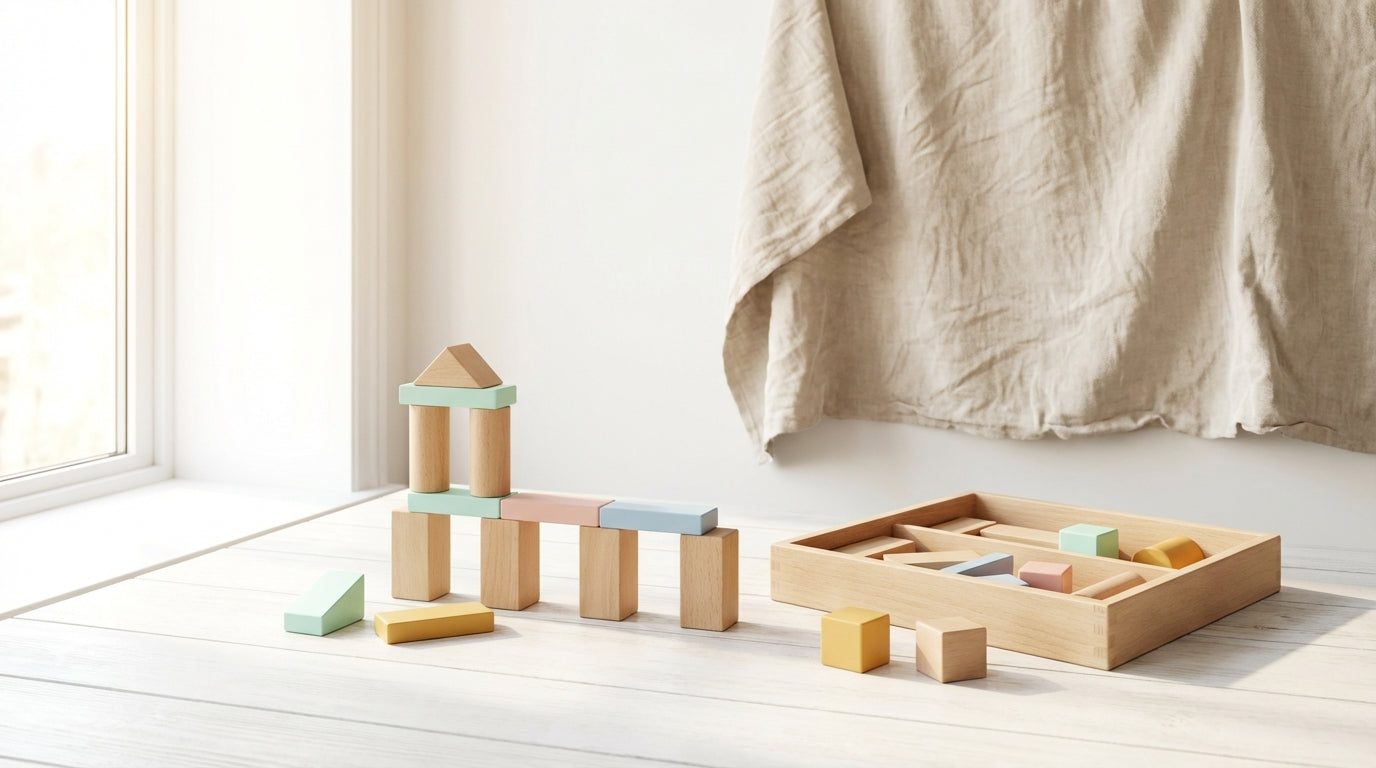
- The 3-piece tower: lay out just three building pieces – goal: “as tall as possible”. Afterwards, rebuilding is allowed.
- Bridge over the sofa canyon: two cushions as “banks”, build a bridge in between and test whether a car can drive across.
- Sorting construction site: sort by color/size and make “material piles” that get built with later.
- Rescue station: build a small “garage” that a vehicle fits into (or an animal that needs to be “rescued”).
Practical tip: Set a timer for 10 minutes. If play keeps going afterwards: great. If not: also great. You’ve won either way.
Farm toys for ages 3: support motor skills with role play + building
Farm play supports motor skills especially well, because grabbing and building happen automatically. Animals get moved, fences get connected, paths get built – and along the way stories emerge that often hold children’s attention longer than “now build exactly this”. (The cow has the day off today. That’s just how it is.)
Here’s how to combine farm toys with construction toys for ages 3+:
- Barn building: build simple shelters or stalls – trains stability and planning.
- Fences & enclosures: connecting, aligning, rebuilding – top-notch for fine motor skills.
- Feed road: build a small ramp or chute and let “deliveries” roll down.
- Sorting game: sort animals by size/color (without pressure, more on the side).
If you’d like a quick overview, take a look at our hub. There you’ll find age-appropriate ideas and can browse at your leisure: Toys for Ages 3+.
Car toys for 3-year-olds: pushing, rolling, ramps – perfect for little tinkerers
Car toys become great for motor skills when kids get to build and test along with them. Just “the car drives” is nice. But “the car drives down a ramp you built yourself” is suddenly an experiment, fine motor practice and movement all in one.
Three simple play ideas (without craft stress):
- Ramp test: build the ramp steeper/flatter, let the car roll, compare.
- Parking garage: build two levels (e.g. “workshop downstairs, parking lot upstairs”).
- Road building: lay out curves, build bridges, set up a “construction site” with barriers.
Along the way, this trains control of force, working with both hands and spatial thinking. And if the car keeps flying out of the curve: welcome to real life – you just make improvements.
On the go, small building and car games are often a big hit. If you’re looking for ideas: Toys for vacation for ages 3+: well entertained on the go.
Safety & quality: what to look for in motor skills toys for ages 3+
Relaxed play starts with clean workmanship and clear labeling. In Europe, the Toy Safety Directive 2009/48/EC sets out essential safety requirements as well as warnings, for example regarding suitability for children under 36 months. (EUR-Lex)
The DIN EN 71 series of standards describes tests for toys, e.g. mechanical properties. According to DIN, the DIN EN 71 series is expected to be revised in the course of new EU requirements. (DIN)
Safety note: Pay attention to age recommendations and warning labels. Toys that are unsuitable for children under 36 months must be labeled accordingly (e.g. because of small parts that can be swallowed). (EU Toy Safety Directive)
You can do this mini checklist at home without a lab:
- Edges & splinters: does something feel rough? Then better leave it.
- Stability: can it withstand a few “not exactly gentle” attempts?
- Cleaning: can you wipe it down when it gets sticky?
- Piece size: be especially attentive with small parts – play together at first, especially in the beginning.
And yes: “under supervision” really means being there at the start. Not out of panic – more like when cooking: you stand beside them until it’s clear that nobody is putting the noodles into the electrical outlet. Children are explorers. Without an ethics committee.
What we pay attention to at Bieco (so you don’t have to check everything yourself)
We are a family business from Hamburg and have been doing this for 66 years. And honestly: we know that parents don’t have time to google every detail three times – they want clear information that makes sense even while someone is calling “Mommmyyy!” in the background.
It’s important to us that materials, workmanship and age information are transparent. What you can generally expect from toys: clear labeling, comprehensible instructions and workmanship that stands up to children’s hands – because toys aren’t petted, they’re played with.
How to bring motor skills play into everyday life (without much fuss)
Supporting motor skills works best in small bites spread throughout the day. A bit of building after breakfast, a short obstacle course in the afternoon, two more minutes of sorting in the evening: that’s often more realistic than the one perfect “play hour” that then falls through anyway.

Three routines that work in everyday life:
- “Box out, box in”: build for 10 minutes, then tidy up together. All’s well that ends well, and your nerves stay intact.
- Alternate between fine & gross: first connecting/screwing, then rolling/jumping – often a good fit for children’s energy.
- Two options are enough: “Barn or ramp?” More choice rarely makes it better.
When it’s just not working: taking a break is a strategy too. Children don’t learn in a straight line. Sometimes little happens on Tuesday – and suddenly everything happens on Thursday.
A small progress ladder: from “3” toward “4” (without pressure)
Over time, many children want more pieces, more height and more “real” tasks. You don’t need to speed anything up – but you can adapt the play so that it grows along with your child and doesn’t get boring after two weeks.
- Start (more like 3): a few large pieces, short building goals, lots of free experimenting.
- Intermediate step: small challenges (“Build a bridge that holds”), more sorting, first simple rules.
- Toward 4: longer projects over several days, more role-play “assignments” (“Build a garage for 3 cars”).
The nice thing: you often don’t need more toys for this, just different tasks. And sometimes a cardboard box as a “tunnel” is enough to make the construction site exciting again.
FAQ
Which construction toys for ages 3+ make sense without being overwhelming?
Material that is easy to grip and allows quick wins makes sense. Make sure the connections aren’t too stiff and that your child is free to build as they like. If a set is sturdy and easy to put away, it will be used much more often in everyday life than something “complicated, but stylish”.
Which types of toys especially support motor skills in children aged 3 and up?
Games that combine grabbing, connecting, twisting, sorting and movement are especially helpful. For fine motor skills, connecting games, modeling clay, threading and building are popular; for gross motor skills, balancing, jumping and climbing. According to kindergesundheit-info.de (BZgA), a variety of materials such as sand, water or finger paints also help. (kindergesundheit-info.de)
Are farm toys for ages 3+ good for motor skills?
Yes, because children automatically grab, move, connect and build while playing. Setting up fences, sorting animals, laying out paths or building a barn trains hand-eye coordination and finger dexterity. On top of that comes role play, which often holds attention longer because there’s a story – and not just “build this now”.
Which car toys for 3-year-olds suit motor skills support?
Car toys fit especially well when they’re combined with ramps, roads or parking spots. Pushing and rolling trains coordination, and when building ramps or bridges, your child practices control of force and spatial thinking. Small experiments (“Which ramp is faster?”) are often more exciting than any ready-made parking garage.
How can I recognize safe toys for ages 3+?
Look for clear age information, warning labels and clean workmanship without sharp edges. In the EU, the Toy Safety Directive 2009/48/EC regulates, among other things, warnings such as “Not suitable for children under 3 years” for certain risks (e.g. small parts). (EUR-Lex)
How often should 3-year-olds be “motor-active”?
Ideally every day, spread across many small moments. According to the WHO, children aged 3–4 should be active for at least 180 minutes per day, including at least 60 minutes of moderate to vigorous play. (WHO) That works just as well indoors as outdoors.
If you now feel like putting this into practice: start small and stay flexible. In the hub Toys for Ages 3+ you’ll find fitting ideas – and if you’re looking for a gift, this overview will help too: Toys & gift ideas for 3-year-olds: recommendations for parents. A few good pieces, a bit of space – and then it’s time to build.