Kids' Dishware: Porcelain, Melamine or Stainless Steel? A Comparison
At a glance
- Kids' dishware: for hot meals, porcelain or stainless steel is usually the easiest choice.
- Melamine is light and unbreakable, but not for hot food or the microwave.
- A dishwasher-safe, smooth surface and a stable base save your nerves every day.
- For on the go, stainless steel is often the sturdiest "buy once, use for a long time" option.
- Cracks, chips or heavy scratches: replace it, done.

The best kids' dishware is the kind that fits your meals: hot, cold or both. For hot food, porcelain and stainless steel are usually the more relaxed choice, while melamine is handy for cold or lukewarm snacks. In this guide you'll find a clear comparison, care and safety tips (without the panic), a little age guidance and a checklist, so that in the end you don't just sort plates, but gain a bit of peace of mind, too.

Ulli & Flo
Owners of bieco · Hamburg · parents themselves
We've learned that when it comes to kids' dishware, the winner isn't the prettiest set, but the one that quietly does its job every day. And quiet is almost a luxury with kids. Feel free to browse our children's cutlery collection.
Which materials are available for kids' dishware?
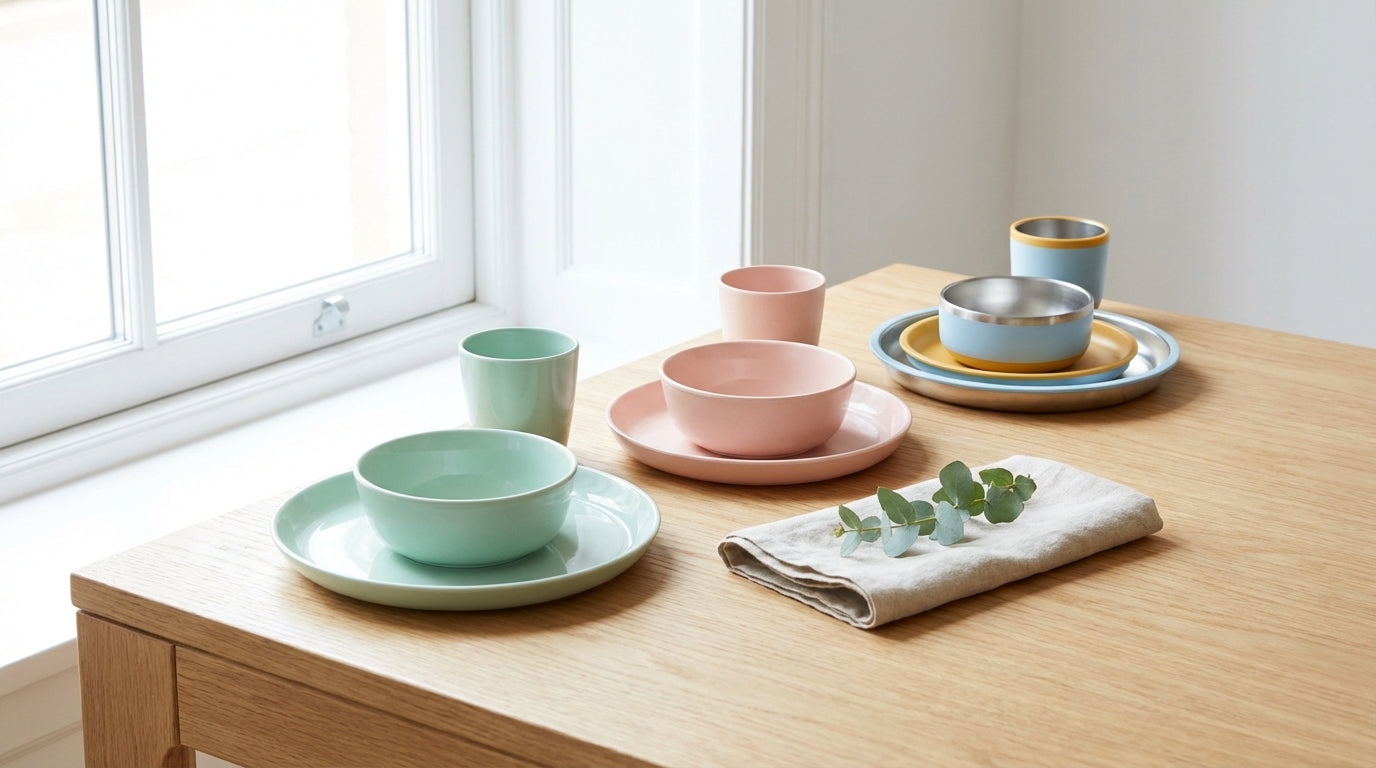
The three classics are porcelain, melamine and stainless steel – and each has its strengths. There's also silicone, plastic and composite materials, but the most common "everyday candidates" are these three (and yes: they also hit the kitchen floor most often).

Kids' dishware is tableware in a child-friendly size that makes eating independently easier. In practice, that means smaller portions, easy-to-grip shapes, often a higher rim and sometimes a non-slip base.
Food contact materials are items that come into contact with food or drinks. These include plates, cups and cutlery; EFSA provides an overview of non-plastic food contact materials. (EFSA)
Porcelain: "just like the grown-ups" – beautiful, heat-friendly, but not indestructible
Porcelain is pleasant for hot meals and feels familiar. Many kids love the "real dishes" feeling: the weight, the sound, the temperature – just like Mom, Dad or Grandma. For the transition from baby dishware to the family table, this can work really well.

- Pro: pleasant with hot food, neutral in taste, often dishwasher-safe.
- Con: can break, especially when dropped or hit on the edge.
- Everyday use: ideal at the table; on the sofa or in the garden only if you're feeling very brave today.
Safety note: The German Federal Institute for Risk Assessment (BfR) points out that heavy metals such as lead or cadmium can migrate from ceramic glazes into food, especially with poor-quality or damaged items; if you see damage, it's better to replace the piece. (BfR)
With porcelain, pay special attention to a smooth, intact surface without chips. In family life, a small crack is rarely "just cosmetic" – it tends to get bigger, right when you have no time.
If porcelain suits you, here's a selection, neatly sorted. You can browse our porcelain kids' dishware category.
Melamine: light and unbreakable – but please not hot and not in the microwave
Melamine is practical for cold and lukewarm food, but has clear heat limits. It's light, often survives drops and works well for snacks, fruit or bread. For anything that's properly steaming, though, it's not the first choice.

Melamine dishware is not recommended for hot food or drinks. According to the German Federal Institute for Risk Assessment, melamine-formaldehyde resin should not be used with hot food and should not be heated in the microwave. (BfR)
- Pro: light, unbreakable, great for on the go and picnics.
- Con: not for hot food; the microwave is not a good idea (BfR).
- Care: take scratches seriously; the BfR advises replacing heavily scratched melamine dishware. (BfR)
Practical tip: Set yourself a simple kitchen rule: "Melamine only for cold/lukewarm." Then nobody has to play a temperature guessing game at the pot lid.
If melamine suits your snack rounds, you'll find matching sets here. Take a look at the melamine kids' dishware category.
Stainless steel: sturdy, long-lasting, unfussy (very northern German, after all)
Stainless steel is often the best choice if you want peace and quiet for as long as possible. It handles drops well, is practical on the go and makes little drama. Especially in the "I do it myself!" phase this is nice, because the dishes don't get offended at every little mishap.
- Pro: very sturdy, long-lasting, great on the go, usually dishwasher-safe.
- Con: feels cooler to the touch; with hot food, stainless steel can get warm, too.
- Everyday use: great for the daycare backpack, picnics, camping and everything that falls under "it'll fall down sometimes."
With stainless steel, look for rounded edges and a stable shape. That sounds minor, but in everyday life it makes the difference between "works great" and "pokes/rattles/annoys."
Dishwasher, microwave, hot food: what works with what?
The questions of temperature and care often matter more than the design. After all, the prettiest set is no use if you ponder every evening whether it's allowed in the microwave or whether the dishwasher will "warp" it.
- Microwave: According to the BfR, melamine should not be used for heating in the microwave. (BfR)
- Hot food: For very hot meals, porcelain or stainless steel is often the more relaxed choice.
- Dishwasher: The manufacturer's instructions are what count; when in doubt, load it on the top rack and skip harsh scouring agents.
Practical tip: When you introduce new kids' dishware, quickly mark the underside with a permanent marker: "cold" or "warm" (on the bottom). Nobody sees it, everybody benefits.
Which kids' dishware for which age? (Guidance, not dogma)
The best kids' dishware is the kind that suits the developmental stage and your daily routine. Kids aren't machines with an update schedule – but a little guidance helps when you're googling plates at half past ten at night.
- When you're just starting solids: Small portions, shapes that are easy to hold and simple cleaning are what matter.
- When there's lots of practice ("I eat by myself"): A plate with a slightly raised rim and a non-slip base saves you wiping time.
- When it should be "just like the grown-ups": Porcelain can be a lovely next step once things calm down at the table.
- When you're out and about a lot: Stainless steel is usually the sturdy companion that doesn't give up right away.
And if you're also wondering which cutlery makes sense right now: you're not alone. Here's the overview of children's cutlery – it's often the missing piece when the food is delicious but doesn't quite make it to the mouth.
Quick comparison: porcelain vs. melamine vs. stainless steel
If you want to decide quickly: hot = porcelain/stainless steel, on the go = stainless steel, snacks = melamine. Here's the compact overview:

| Material | Strengths | Weaknesses | Typically practical for |
|---|---|---|---|
| Porcelain | high-quality feel, pleasant with hot food | prone to breaking | table meals, "just like the grown-ups" |
| Melamine | light, unbreakable | not for hot food; not for heating in the microwave (BfR) | cold/lukewarm snacks, on the go |
| Stainless steel | very sturdy, long-lasting | feel/look not everyone's taste | daycare, travel, everyday life with "drop tests" |
What to look for in kids' dishware? A checklist from real life
You can recognize good kids' dishware by its shape, stability and care – not by the cutest animal motif. Here's the short list that really counts in everyday life:
- Temperature suitability: Does the material fit your meals? For melamine: not hot, not in the microwave (BfR). (BfR)
- Stability: A wide base or non-slip ring is worth its weight in gold.
- Rim & depth: A slightly raised rim helps with spooning and reduces "food on tour."
- Surface: Smooth, without cracks, without sharp edges; replace if damaged.
- Cleaning: Dishwasher suitability and uncomplicated shapes (few grooves) save time.
How we choose at bieco (without the fuss)
With kids' dishware, we first look at everyday practicality, material clarity and clean workmanship. We're a family business from Hamburg and have been doing this for 66 years – and honestly: you notice it less in big words and more in the small details that don't get on your nerves in everyday life.
For us, material transparency means clear information and no surprises in the fine print. If something isn't meant for hot food or the microwave, that should be easy to understand – so you don't have to guess while someone is shouting "Hungryyy!"
FAQ
Is melamine harmful to health?
Melamine is mainly an issue when it gets hot. According to the BfR, dishware made of melamine-formaldehyde resin should not be used with hot food or drinks and should not be heated in the microwave. For cold or lukewarm food it's often used in everyday life – what matters are the care instructions and the condition of the dishware. (BfR)
Which kids' dishware is best for hot food?
For hot food, porcelain or stainless steel is usually the easiest choice. Porcelain feels "like the grown-ups'" and is pleasant at the table. Stainless steel is sturdy and takes a lot, even when it falls. In the end, what matters is what happens more often at your place: relaxed eating or acrobatic eating.
Can melamine kids' dishware go in the microwave?
According to the BfR, melamine is not recommended for heating in the microwave. The BfR advises against using melamine-formaldehyde resin in the microwave, because at higher temperatures substances can migrate into food. If you reheat food regularly, porcelain or other suitable materials are usually less stressful. (BfR)
Which is better: kids' dishware in porcelain or stainless steel?
Porcelain is "like at home at the family table," stainless steel is "built to last." Porcelain scores with hot meals and a familiar eating feel, but is more fragile. Stainless steel is long-lasting and ideal for on the go or wild phases. Many families do well with this combination: porcelain at the table, stainless steel for daycare and outings.
How do I know when kids' dishware should be replaced?
If you can see cracks, chips or heavy scratches, replacing it is the safe shortcut. For ceramics, the BfR points to possible migration of substances from glazes, especially with damaged items. For melamine, the BfR advises replacing heavily scratched dishware. In short: if you're already eyeing it skeptically while doing the dishes, it's usually time. (BfR)
Bottom line: choose the material that fits your actual daily life – not your ideal daily life. If you'd like to take a calm look at plates, you'll find an overview at children's plates and, for the right companions at the table, at children's cutlery. And if tomato sauce happens again at 6:07 p.m. today: you're in very good company.