
Bibs for Babies
Fabric bib sets, pullover bibs and disposable bibs
Sort by
11 products




recently viewed
Bibs are small everyday helpers that protect clothing during meals and drooling. And yes: that's no small thing when the first porridge turns into more of a “wall decoration.” For you, that means very practically: pull it on, let the mess happen, done. Whether it's baby bibs for milk mishaps, baby bibs for daycare or silicone bibs for the big messy phase – what matters is that it goes on quickly and is easy to clean. Don’t worry: at the beginning, three bibs a day easily get used up.
A bib is a fabric or silicone piece worn on the front of the upper body. It catches drool, milk and food before it ends up on the bodysuit or sweater. And: depending on the material, it absorbs (fabric) or can be wiped clean (silicone) – both have their place.
The key points at a glance
- To start with, 6–10 bibs are often a relaxed stock.
- Pull-over bibs go over the head – no Velcro, no fiddling.
- Bibs with a catch pocket are real crumb savers for solid foods.
- For solid foods: no earlier than the start of the 5th month, no later than the start of the 7th month (BfR).
- If you look out for textile labels: OEKO-TEX STANDARD 100 tests for over 1,000 harmful substances.
Which bib suits your daily routine?
The best bib is the one you actually use – every day. For bottle feeding and teething, soft fabric baby bibs are often the most comfortable. When you start with purées, silicone bibs are practical because they are wipeable and often have a pocket. And if your child “argues away” Velcro fasteners, pull-over bibs are worth their weight in gold.
You simply pull a pull-over bib over the head – no fastener stress. This is especially nice when mornings need to be quick or the baby is currently practicing “Getting dressed? Nope.” (And yes: some children train this very consistently.)
A silicone bib with a pocket collects food before it lands in the lap. That sounds trivial at first, but it often saves a change of clothes on the go. Especially with finger food, it's the kind of thing where you ask, “Why didn't we buy this sooner?”
Fabric, silicone or pull-over – a little cheat sheet
Material and fastener decide whether you love it or curse it. So that you don't have to exchange ten times, here is the quick overview – without technical jargon.
Mini cheat sheet: Which type fits when?
- When there's lots of drool: choose a terry cloth bib (highly absorbent, soft).
- When solid foods begin: choose a silicone bib with a catch pocket (wipe instead of wash).
- When fasteners keep coming undone: choose a pull-over bib / bib with a head opening.
- When you're out and about a lot: pack a wipeable bib – plus a spare.
Pros & Cons: What are the different bib types good for?
With two or three types, you're prepared for almost everything. You don't have to find “the one perfect type” – it's more about putting together a small team.
- Terry cloth bibs
ul>
li>Pro: absorbent with drool & milk mishaps - Pro: soft on the neck, often comfortable for baby bibs
- Con: with purées it can soak “through” faster – depending on thickness
From what age does a baby need a bib – and what does solid food have to do with it?
A bib is often worthwhile from birth – at the latest once solid foods begin. Many people use a baby bib at the beginning mostly against spit-up and drool. With solid foods, it then becomes mandatory: according to the National Breastfeeding Committee at the BfR, solid foods should start no earlier than the start of the 5th month and no later than the start of the 7th month. kindergesundheit-info.de (BIÖG) words it similarly: the menu can be expanded no earlier than after the completed 4th month and no later than the start of the 7th month.
If you want to explore the topic calmly and with examples: explained in detail in our guide Finding the best bib: materials, silicone, fabric & sleeve bibs compared.
Cleaning & safety: short, practical, no panic
The most reliable approach is a quick look at the label – the rest is everyday life. Fabric bibs usually go in the wash, while silicone is often spruced up again with warm water and dish soap. For stains, it often helps to rinse with cold water first, then wash. (And yes, carrot sometimes stays behind “as a souvenir” anyway.)
If you want to watch out for harmful substances, you can follow recognized textile labels. The consumer advice center names, for example, GOTS and OEKO-TEX STANDARD 100 as labels you can use as a guide for textiles (depending on the label's focus) (Verbraucherzentrale). And OEKO-TEX itself states that with OEKO-TEX STANDARD 100 all components of an article are tested against a list of over 1,000 harmful substances, and limit values are updated at least annually.
For materials that come into contact with food, there are clear basic rules in the EU. The Regulation (EC) No. 1935/2004 describes the framework for materials that come into contact with food. For plastics, Regulation (EU) No. 10/2011 specifies, among other things, requirements and migration limits for substances from plastic materials.
Disposable bibs: practical – and how to use them a bit more smartly?
Disposable bibs are okay for on the go when things really have to be quick. In everyday life at home, washable fabric bibs or wipeable silicone bibs are usually the more relaxed (and often longer-lasting) solution. If you use disposable ones: only take as many as necessary – and additionally pack a wipeable bib as “Plan B.”
Gift idea: bibs with a name & personalized – sweet, but let's be honest
A bib with a name is a practical gift because nothing gets mixed up. Especially at daycare, a “bib with a name” (yes, exactly that) can save the day – and as a baby bib in the backpack, it's quickly matched back to its owner. Just one important note: not every range offers ready-made personalization. If you're searching for “personalized bibs,” it's best to check whether the desired brand actually offers it as a ready-made product – or whether DIY (e.g. a fabric pen) works for you.
DIY fans, listen up: if you want to paint a bib, we've collected ideas. Short & sweet here – in detail in the guide Painting bibs: creative DIY ideas for a personal gift.
What will you find at BIECO?
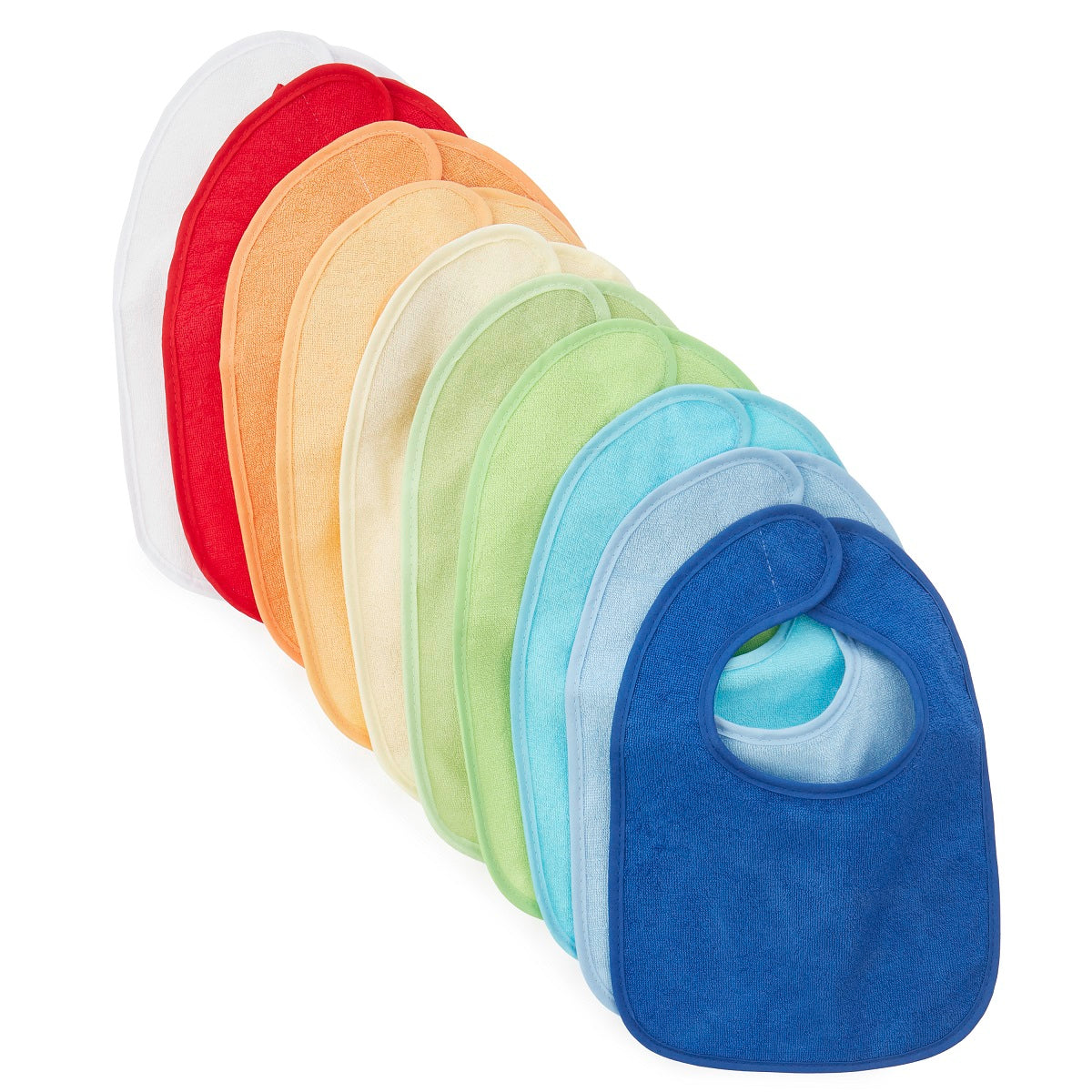
At BIECO you'll find bib sets that tame the laundry mountain. BIECO is a family business from Hamburg – for 66 years – and we like to design products starting from everyday life: better a reserve in the closet than drama at the breakfast table. In this collection you'll find, among other things, sets and pull-over bibs – for example the Set of 10 Bibs Rainbow, the Set of 10 Bibs Unicorn or the Set of 6 Pull-Over Bibs Rainbow. For on the go, there are also disposable options such as 30 Disposable Bibs Safari.
Sleeve bibs are like a little “eating shirt” – just easier to wash. If you want more “coverage” while eating: feel free to also check out our subcategory Sleeve bibs – they're often the most relaxed solution for crafting, finger food and “I'll eat by myself!”
And if you'd like to fully equip yourselves around the topic of feeding: in Food & Drink you'll find suitable companions for family life. For small gifts (also for grandparents who “just quickly” want to give something), it's also worth taking a look at Gift Ideas.
FAQ: short answers for tired eyes
From what age does a baby need a bib?
Many babies benefit from a soft bib from birth. Spit-up, milk and later drool are the classics. With solid foods, it then becomes truly relevant: according to the BfR, the start is between the beginning of the 5th and the beginning of the 7th month. Explained in detail in our guide: Finding the best bib.
How many bibs does a baby need?
With 6–10 bibs, you're often well set up for everyday life. If there's a lot of spitting up or you don't wash daily, it's fine to have more. Sets are practical for this because you don't constantly have to buy more. Explained in detail in our guide: From what age, for how long, how many bibs?.
Which material is best for baby bibs?
For drool, fabric (e.g. terry cloth) is great; for purées, silicone is super. Fabric absorbs, silicone can be wiped clean quickly – both have their place. If you only want one, choose the one you're most likely to actually wash or wipe. More details in the guide: Materials compared.
Which bib is good for daycare or on the go?
For on the go, wipeable silicone bibs or compact fabric bibs are practical. Silicone is clean in no time, fabric is light and fits in any bag. For daycare, a bib with a name often helps so that nothing goes missing. When things need to be quick, pull-over bibs are also great because there's no fastener to look for.
How do you clean bibs properly?
Fabric bibs usually go in the washing machine, while silicone is often simply wiped clean. It's best to take a quick look at the care label – that's more honest than any rule of thumb. For heavy stains, it helps to rinse with cold water first, then wash. If it ever gets smelly: better to wash once more than to debate it for long.
What is a pull-over bib (bib with a head opening)?
You simply pull a pull-over bib over the head – no Velcro or ties. That saves time and nerves, especially with fidgety children. The only important thing is that the neckline fits comfortably. If you like the principle: the Set of 6 Pull-Over Bibs is a practical everyday solution.
What is a bib with a catch pocket good for?
The catch pocket collects falling food before it lands in the lap. This is especially helpful with solid foods, finger food and “I'll do it myself!” Especially on the go, it often saves a change of clothes. If you have lots of purée action, silicone bibs with a pocket are usually the most stress-free choice.
Are bibs with names or personalized bibs worthwhile?
A bib with a name is practical in everyday life and popular as a gift. It helps prevent mix-ups at daycare and is a nice “Welcome, baby!” gift. If you're searching for “personalized bibs,” quickly check whether you want to buy a ready-made product or would rather label it yourself. You'll find DIY ideas here: Painting bibs.
About this page
This guide was created by the BIECO editorial team in Hamburg. We are a family business (for 66 years) and we write the way we ourselves would want it: short, practical, no panic. For hard facts, we use, among others, government and consumer sources – for example BfR and kindergesundheit-info.de on solid foods, as well as Verbraucherzentrale and OEKO-TEX on textile labels. That way you can choose with ease and get back to the table faster.
In closing: better two good bib types than twenty “so-so” ones
If you have fabric for drool and silicone for purées, you're already very well set. Add a few pull-over bibs for when things need to be quick – and you'll have everyday life pretty well under control. Browse through the sets, pack a small reserve in the diaper bag, and then: bon appétit. The rest is practice (and laundry detergent).
By Ulli & Flo · Owners & parents More about us ↓

About this page
Ulli & Flo
Owners of bieco · Hamburg · parents ourselves
We've learnt that a good bib doesn't have to be perfect – but it does have to be quick. And please make it one you can still manage at 6:30 in the morning, half asleep.