
Bath Toys for Kids
Sort by
1 product
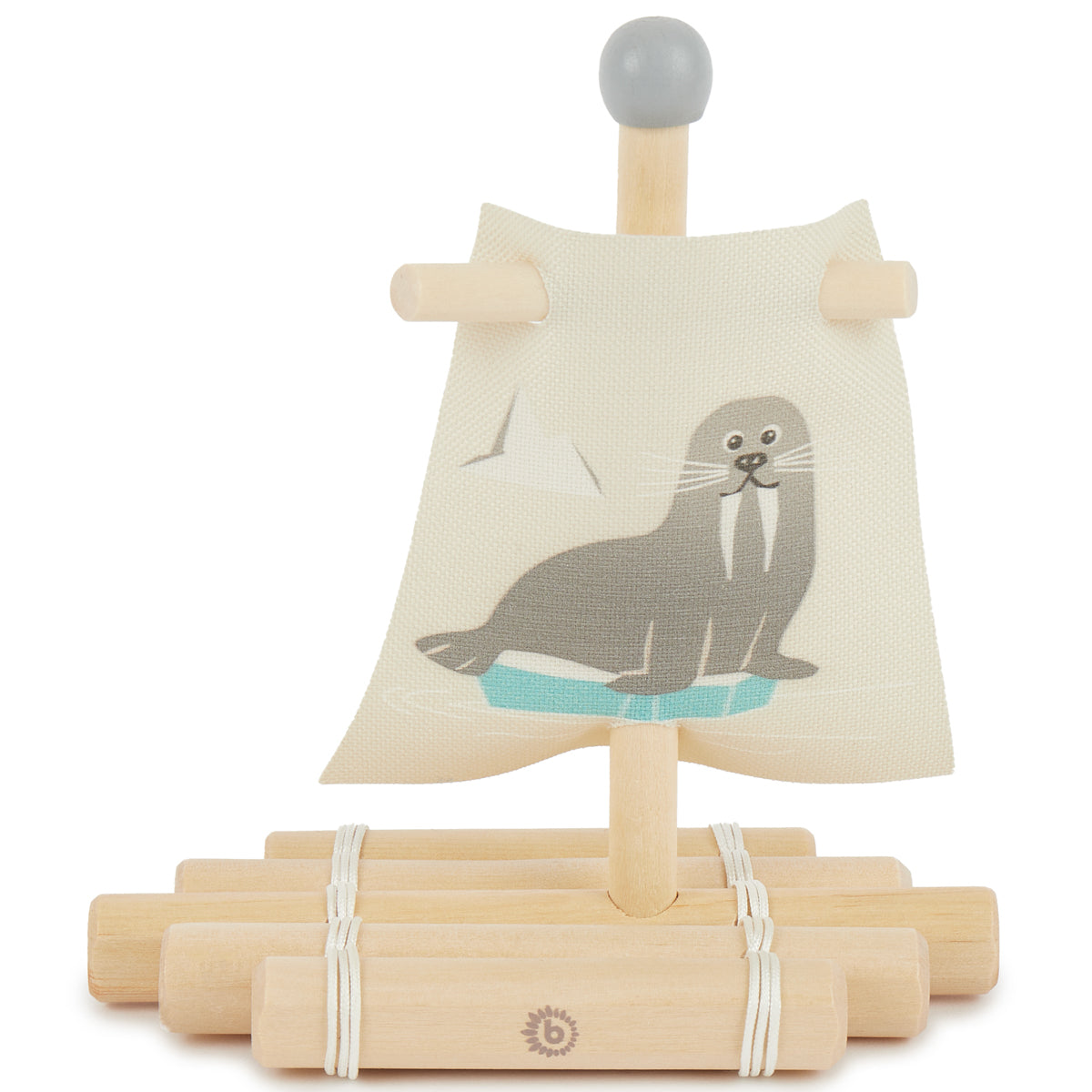
zuletzt angesehen
Bath toys for children are bathtub toys that make active play in the water possible. So not just “squeak,” but pouring, stacking, sorting, pretend play – and ideally in a way that doesn’t turn into a mold saga. For the big overview (all ages, all types), head this way: Bath toys.
Quick answer for you (and for tired evening brains):
- Choose by age: from 1 year simple pouring, from 2 years combining, from 3 years more pretend play.
- Keep hygiene in mind: ideally “no hole”/easy to dry + let it drip-dry afterwards.
- Safety is non-negotiable: always supervise children in the tub – even with very little water.
Definition (quote-worthy): Bath toys for children means water toys for the bathtub that kids can operate themselves – for scooping, building, and making up stories.
Choosing in 30 seconds: What works for 1, 2, or 3 years?
The best bath toys for children are the ones your child understands right away. If it works in the tub, it works in their head too: “I can do this myself.” And yes – sometimes that’s the difference between relaxed hair washing and negotiations worthy of a coalition committee.
Bath toys from 1 year can be wonderfully simple. A cup for pouring or scooping is often more than enough, because repetition is the whole game at this age. For little ones, what matters is: easy to grip, no tiny parts, and quick to dry again after bath time.
Bath toys from 2 years thrive on “more possibilities.” Now plug-in and stacking ideas are fun, because children start to combine: “That fits in there – and that floats away – and I’ll get it back.” This is exactly where “water toys for the bathtub” often become a little keep-them-busy trick for the evening routine.
Bath toys from 3 years often turn into pretend play. Figures, boats, “rescue mission” – as long as there’s a story. If you’re keeping hygiene in mind, closed pieces or toys without holes are often more relaxing, because less water collects inside.
Materials & “BPA-free / phthalate-free”: what does that mean in everyday life?
If you want to “sleep easy” when it comes to bath toys for children: read the material details and look for clear information. “BPA-free” is a common parent topic, especially with plastics, and “phthalate-free” is closely linked to plasticizers – particularly in soft PVC products.
Phthalates are classic plasticizers – and they can migrate out of soft PVC. The German Environment Agency explains that phthalates are mainly used as plasticizers in soft PVC and are not permanently bound. (German Environment Agency)
In the EU, certain phthalates are strictly restricted in toys and baby products. Under REACH (Annex XVII, Entry 51), a limit of 0.1% applies, among others, to DEHP/DBP/BBP/DIBP in plasticized material for toys and childcare articles. (EUR-Lex, REACH)
Silicone bath toys are often popular because they’re soft and easy to rinse clean. Whether silicone, PP, or other plastics: in the end, the most reliable thing is checking the product information and care instructions – and whether water can “hide” anywhere.
Mini definition (quote-worthy): Silicone bath toys are soft water toys that feel grippy and can usually be rinsed off quickly after bath time.
Avoid mold: toys without holes, proper drying, smart storage
You’re most likely to prevent mold in bath toys if nothing stays wet inside for long periods. The classic example is squirting toys with a hole: super fun – until water collects inside. So if you want “squirting toys,” the question “with or without a hole?” isn’t a small detail, it’s a hygiene question.
Toys without holes are often the most relaxed “rubber duck alternative.” You have fewer inner cavities, less leftover water, fewer surprises. And if there are hollow areas: empty them after bath time, shake them out, and let them dry openly.
Storage makes the difference – not just cleaning. A net or basket (i.e., bath toy storage) ensures air can circulate. Anything that doesn’t live in a puddle is practical. And if you’re already bringing order to the kids’ room: in our collection Storage you’ll find suitable ideas beyond the bathtub, too.
If you’d like to go deeper: we keep it very practical in our guide. You’ll find the detailed version (with step-by-step instructions) here: Cleaning bath toys & bathtub toys: the ultimate guide against mold.
Safety in the tub: short, clear, without alarmism
Bathtub toys for children are great – but bath time always requires supervision. Kindergesundheit-info.de (BZgA) states that babies and toddlers can drown even in water that’s only 10 cm deep. (kindergesundheit-info.de)
The best water temperature is “body-warm.” According to kindergesundheit-info.de, that means a maximum of 36–37°C; as a precaution, they also mention limiting the hot water temperature at the boiler to a maximum of 50°C. (kindergesundheit-info.de)
For “aquatic toys,” there’s a clear warning notice in the EU. The Toy Safety Directive 2009/48/EC states: use only in water in which the child can stand, and under supervision. (EUR-Lex)
BIECO & this collection: what you can specifically expect here
This page is intentionally a collection – here you can browse and choose directly. This text is simply meant to quickly guide you to the right filters in your head: age, material, “no hole” vs. squirting fun, and how to get everything dry again after bath time.
BIECO is a family business from Hamburg – and we design toys for real everyday life. For 66 years, we’ve focused on making things that fit well in small hands and don’t make the evening routine more complicated. Our style is more calm (Scandi, no loudness) – because there’s already enough going on in the bathroom.
If you’re shopping for a gift, simple classics help the most. For “I don’t know the exact age,” pouring and scooping ideas are often a safe bet, because they don’t quickly feel “too babyish.” Feel free to take a look at Gift ideas – and if your child is generally doing a lot “with their hands” right now: Wooden puzzles are often the perfect complement outside the tub.
Comparison: which water toys for the bathtub are easiest to care for?
The easiest-to-care-for toys are usually the ones that dry quickly and have few hollow spaces. So you don’t only realize what annoys you after two weeks, here’s an honest mini comparison:
FAQ about bath toys for children
Which bath toys are good from 1 year?
From 1 year, pouring and scooping ideas are usually the best start. Simple cups or little jugs work for a long time because children love repetition. Look for large, easy-to-grip pieces and make sure the toy can dry well after bath time – that helps keep things more hygienic.
What’s better: squirting toys with a hole or toys without holes?
Toys without holes are often more hygienic because less water remains inside. Squirting toys are of course great fun – but then it’s worth emptying and drying them consistently. If you want to avoid mold, “no hole” is the relaxed standard for everyday bath time.
How can I prevent mold in bath toys?
You prevent mold mainly by drying and airy storage. After bath time: shake out, let drip-dry, don’t store in a puddle. A net or basket helps because air can circulate. For a thorough routine, we’ve linked our guide: Cleaning bathtub toys.
What water temperature is okay for bathing children?
Body-warm is the safe classic: max. 36–37°C. That’s exactly what kindergesundheit-info.de (BZgA) recommends – slightly cooler rather than too warm. (kindergesundheit-info.de) A bath thermometer makes it easy, and the forearm test is still a good plan B.
If you’d like even broader inspiration, here’s the big overview. In Bath toys you’ll find the complete category – and then you can calmly “fish out” the right pieces for your tub in this “Bath toys for children” collection.
Von Ulli & Flo · Inhaber & Eltern Mehr über uns ↓

Über diese Seite
Ulli & Flo
Inhaber von bieco · Hamburg · selbst Eltern
Wir wählen unsere Produkte nach Kriterien aus, die im Alltag wirklich zählen: sichere Materialien, einfache Pflege und eine Passform, die Kinder mitmacht.