Why Are Dolls Important for Children? 9 Reasons & Age Tips
At a Glance
- Why are dolls important for children? They help kids practice feelings, language and everyday life through play.
- Doll vs. stuffed animal: Both can support role play and comfort – often the child decides.
- When it makes sense: As early as toddlerhood, once imitating and “pretend play” begin.
- Less is more: 2–3 accessories are usually plenty, and rotation works wonders.
- Look for age suitability, small parts, firmly attached parts and seams, and materials you can easily trace.

Dolls are important for children because in play they practice relationships – and feelings, language and independence grow along the way. That sounds like a big educational textbook, but in real life it happens in tiny moments: putting a plaster on, tucking “baby” in, rolling the doll stroller down the hallway. Here you'll find everyday reasons, age tips, the doll vs. stuffed animal comparison and a few safety habits that will save your nerves. Ulli & Flo (yes, we're parents too) write this the way we'd tell it at the kitchen table: practical, friendly, no finger-wagging.

Ulli & Flo
Owners of bieco · Hamburg · parents themselves
We see it again and again: with a doll or stuffed animal, children often show their feelings far more clearly than in conversation. When we don't rush to “correct” them, things at home usually feel noticeably more relaxed. Feel free to browse our Dolls collection.
Why Are Dolls Important for Children?
Dolls are important because children can safely act out social situations with them. In role play they try out what they see in everyday life: caring, boundaries, arguments and making up. According to the American Academy of Pediatrics, play supports children's social, emotional, language and cognitive development (American Academy of Pediatrics).
A doll is a “practice partner” that doesn't judge and doesn't talk back. That's exactly why many children dare to tackle topics that still feel big and wobbly in real life: “I'm angry,” “I'm scared,” “I want to do it myself.” And if the doll ends up upside down in bed – well. It happens in the best families.
Role play means children take on roles and test out everyday life without risk. The benefit is simple: they can try out routines and feelings without real consequences attached.
Are Dolls Good for Children?
Yes: dolls are good for children because they allow free role play. This free play is often exactly what's missing in family life: a place where everything is allowed out, without anyone calling “right” or “wrong.” And quite incidentally, your child practices language (“You're sick now”), sequences (“first brush teeth”) and social rules (“you go first”).
Doll play becomes especially valuable when adults don't constantly direct. You don't have to join in like it's a stage play. Often it's enough to be there, listen, and now and then drop a sentence that keeps the play open.
Practical tip: If your child plays in a way that seems “odd” (lots of scolding, lots of crying): don't correct right away. Instead, ask: “What happened to the baby?” Often that's when the real knot comes out.
How Important Are Dolls for Children – and What Do They Learn?
Dolls are important because children sort out and express experiences through play. Children see something, store it, and act it out. According to UNICEF, play can help children process and express feelings when they still lack the words (UNICEF).

There's often more everyday life in doll play than we adults realize. A child who comforts “baby” isn't just practicing being nice – they're also practicing how comfort sounds, how closeness works, and how to wait until someone calms down again. And sometimes they also practice how to say “no.” That's just as valuable.
At What Age Do Dolls Make Sense?
Dolls often make sense once children start to imitate and “pretend.” This can begin very simply in toddlerhood: hugging the doll, putting it to bed, saying “Good morning.” What matters is less a fixed age and more whether your child enjoys imitating, small rituals and “I do it like the grown-ups.”

For younger children, simple, sturdy details usually matter more than “realistic.” Many children don't need ten features at the start, just something that fits nicely in their arms and doesn't cause drama when it has to come along to the kitchen.
If your child puts a lot in their mouth, large, firm parts matter most. Then keep it simple, easy to grip, and free of tiny bits.
If your child loves to care for others, clear routines are exciting (feeding, sleeping). This is often the moment when baby dolls and accessories “make sense.”
If your child loves inventing stories, figures and accessories for open-ended play are great. Whole worlds appear – even without much realism.
Doll vs. Stuffed Animal: Which Is Better?
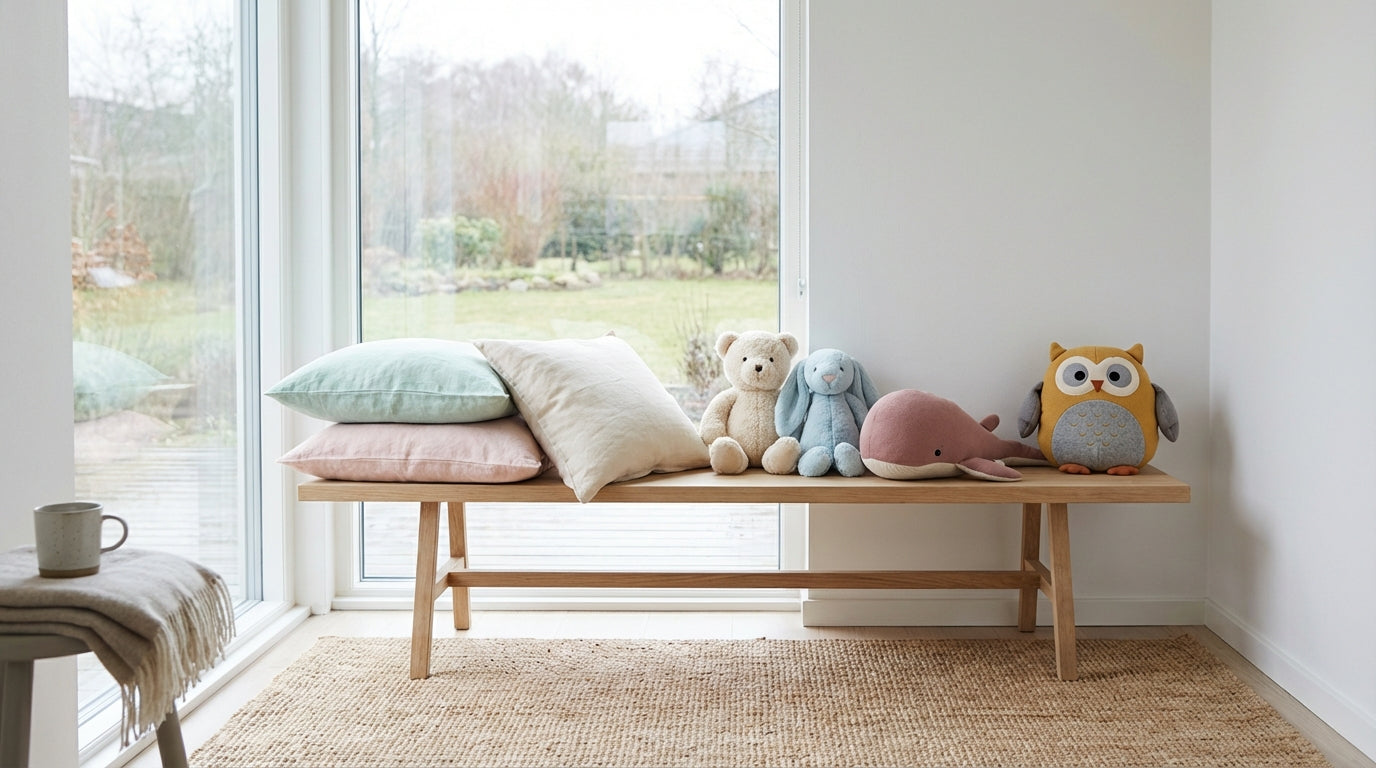
Neither: dolls and stuffed animals can both support relationship play and comfort. Many children don't start with the doll, but with the stuffed animal: it rides in the doll stroller, gets tea, gets bandaged up. At its core it's the same principle: a “counterpart” with whom children practice relationships.
A transitional object is a familiar item that provides security during separations. The everyday benefit: daycare, Grandma's house and new places get easier because something familiar comes along.
The practical difference is often: stuffed animals are “always along,” dolls are more “playtime.” But that's not a rule either. Some children carry their doll everywhere, others let it live in the nursery – like a cat that doesn't like being told where to be.
9 Everyday Reasons Why Dolls Are Important for Children
Dolls help sort out feelings: “What actually happened today?” After a day at daycare, sometimes there's no report, but a little theater piece with a doll. When “baby” scolds or cries, it's often an echo of the day – and your child finds a way to express it.
They promote language, because children constantly narrate and negotiate in play. “You're sick now,” “I'll get the doctor,” “First brush teeth” – these are small dialogues that train vocabulary and sentence structure quite incidentally.
They strengthen empathy, because caring becomes tangible in play. Tucking in, feeding, comforting: children experience what “looking after someone” feels like. It's not a chore, but an “I can do this” moment.
They practice independence through mini everyday life: dressing, undressing, tidying up. When your child puts the jacket on the doll, they practice movement sequences – and often the thought follows later: “I can do that too.”
They provide security, because rituals can be replayed. Bedtime routine, doctor's visit, new babysitter – with the doll you can play it through once beforehand. That makes the unknown smaller.
They promote fine motor skills – without it feeling like practice. Velcro, big buttons or bows on doll clothes are small finger challenges that children happily repeat.
They support conflict learning: sharing, waiting, “you go first.” Two children, one doll stroller – diplomacy is called for. And yes, sometimes a short storm too. Both are part of it.
They are there for all children, not just “for girls.” Caring, imagination and role play are human – period. People who are good with others later have often played a lot early on.
They make movement easier: with a doll stroller, every hallway becomes a racetrack. Especially on rainy days that's worth its weight in gold. And according to the WHO, young children should sit less and play actively more (World Health Organization).
Which Types of Dolls Suit Which Kind of Play?
The best doll is the one that fits your child's play – not the catalog. A few rough guidelines still help so the thing doesn't end up as a pillow after three days (though: that's a career too).
Fabric dolls are often “cuddly plus role play” in one. Handy for children who seek lots of closeness or like to take their play along everywhere.
Baby dolls fit when your child loves caring rituals. Feeding, changing, putting to sleep – these are clear routines that give children security.
Hand puppets are great for language and little dialogues. Some children find it easier to speak “through” a character – especially in new situations.
Wooden dolls and accessories invite open, calm play. Less “realistic,” more imagination – whole worlds often emerge.
Very realistic dolls are a matter of taste. Some children love them, others find them eerie. Both are perfectly okay.
If you want to browse, start relaxed with an overview. In the dolls overview you'll find different varieties, and Wooden Dolls & Accessories lean more toward open-ended play. If you like a very realistic look, check out Reborn Dolls.
Doll Accessories: What Really Makes Sense (And What Doesn't)
Doll accessories make sense when they deepen play – not when they just lie around. You don't need half a dollhouse furniture warehouse. Three things are often enough to get play going:
A stroller or carrier brings movement into play. And suddenly the way to the kitchen is an expedition. If you'd like to dive deeper into the topic: Doll Strollers: Age Recommendations, Safety and Buying Guide.
Doll clothes are motor-skills training when they're easy to grip. Velcro and big buttons are often more rewarding for small hands than mini zippers. Browse here: Doll Clothes.
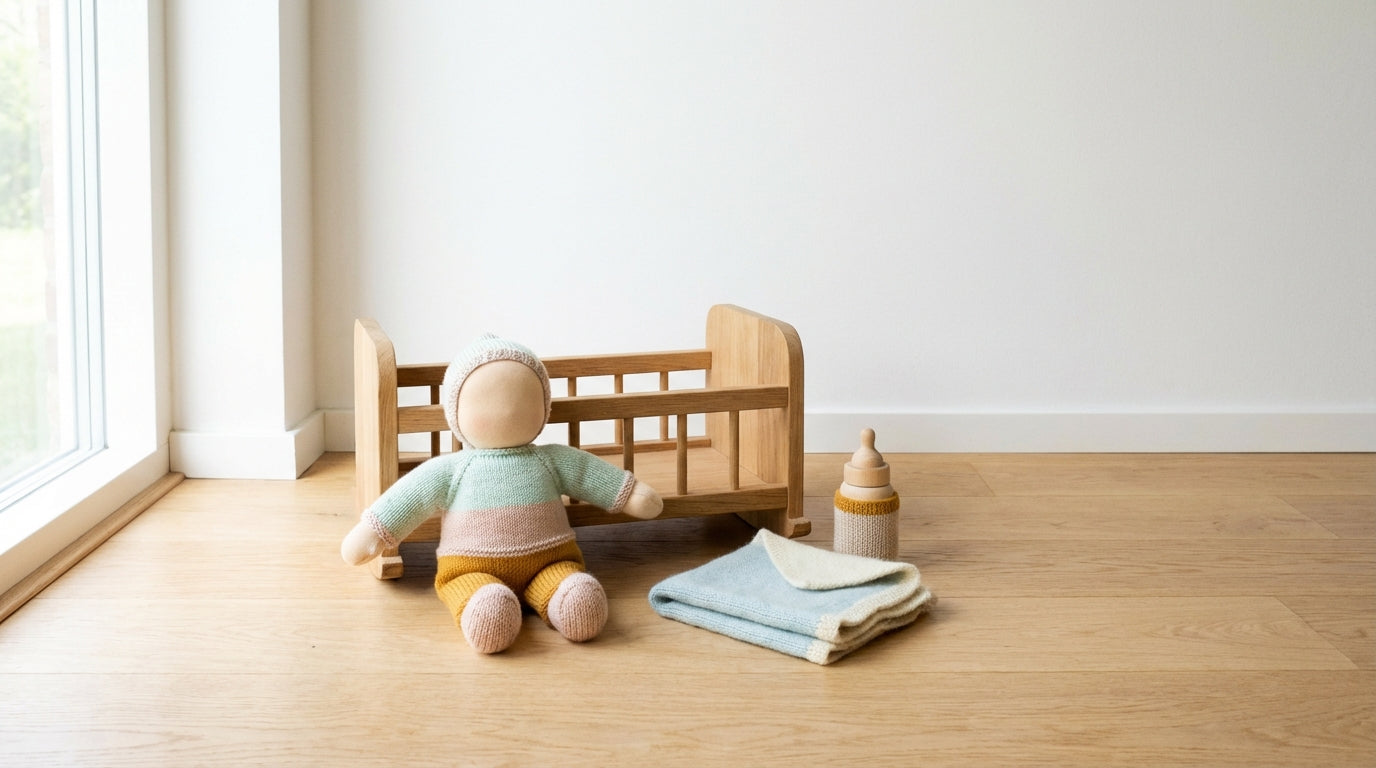
A bed or cradle brings rituals into play. Tucking in, saying good night, lights out – children practice routines they know themselves.
If you're asking yourself “What does the doll really need?” – you're not alone. You'll find a practical overview here: Doll Accessories & Doll Furniture: What Does the Doll Really Need? or directly in the collection Doll Accessories.
Practical tip: Accessory rotation works wonders: put out only 2–3 pieces and store the rest in a box. Swap after two weeks – suddenly everything feels “new” again.
Safety & Materials for Dolls and Accessories
Safe doll play starts with age-appropriate toys and firmly attached parts. Especially with younger children, swallowable small parts (buttons, mini accessories) are the classic that causes stress. Check the age recommendation and whether parts sit firmly and seams hold up well.

Safety note: When siblings of different ages play together: always store accessories with small parts out of reach of the little ones after playtime.
A good everyday check is: pull, twist, smell, feel – before your children do. If something comes loose, there are sharp edges, or a part smells strongly and unpleasantly, it's better to set it aside. That's no drama, that's parenting: be strict for a moment, and sit more calmly later.
We like to be transparent about this, because parents need clarity. Bieco is a family business from Hamburg, and we've been doing this for 66 years – in customer conversations and parent feedback you hear pretty reliably what really annoys in everyday life (and what helps). That's why, with our toys, we focus on traceable information about materials and testing rather than big fanfare.
Cleaning & Care: How to Keep Dolls and Stuffed Animals Everyday-Ready
The best care is the kind that realistically fits into your day. After all, dolls and stuffed animals experience everything: apple juice, sand, “I accidentally took her into the shower.” What makes sense:
Follow the care instructions on the product and start gently. If you're unsure, test cleaning on an inconspicuous spot first.
Wipe the surface regularly if the material allows it. In everyday life that's often enough, without needing a big laundry day.
Store accessories separately so nothing gets “musty.” A box with a lid is great, but only if everything is dry.
How to Support Role Play Without Steering It
What helps most: time, a bit of space and a sentence that opens up the play. You don't have to join in like it's a stage play. Three small prompts are often enough:

Observe instead of judging. “Aha, the baby is tired today.” (Sometimes that's all it takes.)
Ask open questions and then bear with it taking a while. “What does the baby need now?” – and then wait.
Offer everyday materials instead of buying extra play stuff. An old cloth as a blanket, a clean tin as a “porridge” pot, a cardboard box as a bed.
And if you don't have the capacity right now: that's okay too. Free play often works wonderfully when you're simply within earshot – and now and then hum a “Mhm” in the right direction.
FAQ
Are dolls only for girls?
No, dolls are for all children. Caring, imagination and role play aren't a question of “boys or girls,” but of interest. Many children love playing everyday life: comforting, feeding, being out and about. If you model it in a relaxed way, it's usually accepted in a relaxed way too.
Which doll is right for 1-year-olds?
For many 1-year-olds, a simple, easy-to-grip doll without small parts is a good fit. What matters is that it's sturdy and pleasant to touch. At that age it's often about hugging, carrying around and imitating – not about mini accessories or complicated features.
When does doll play start to make sense?
Doll play makes sense once children start to imitate everyday life. In toddlerhood this can be very simple: putting the doll to bed, saying “Good night,” giving a little kiss. What matters isn't a fixed age, but whether your child shows interest in rituals and acting things out.
Are stuffed animals educationally valuable?
Yes, stuffed animals can support comfort and role play. Many children use them as companions in separation situations and as a “counterpart” in play. Stuffed animals are often cared for just like dolls – including feeding, tucking in and comforting.
How much doll accessories do you really need?
Usually 2–3 accessories that extend the play are enough. Clothes, a place to sleep or a stroller are often plenty. Too many accessories can even slow things down, because children then sort rather than play. It's better to choose selectively and rotate now and then.
How do I support role play without “correcting” my child?
Best with open questions and little judgment. Phrases like “What happens next?” or “What does the baby need?” give direction without steering. If your child acts out something that seems odd to you, listen first – there's often an experience behind it that is being processed.
Bottom line: dolls (and stuffed animals) are valuable because children get to practice being human with them. If you'd like to look around further, at Bieco you'll find everything about dolls as well as matching doll accessories – nice and relaxed, without having to reinvent the nursery.