Sleeping Bag with Sleeves: Features, Long Sleeves, Legs & Swaddle Explained
At a glance
- A sleeping bag with sleeves keeps little arms warm without blankets slipping out of place.
- Long sleeves can save you a layer – what matters is the total warmth (not “more is better”).
- With legs/feet is practical for mobile children, as long as the fit is right.
- Swaddle can be soothing in the first months, but it must be done correctly and never too tight.
- Check the neck: pleasantly warm, not sweaty (BAG Mehr Sicherheit für Kinder).

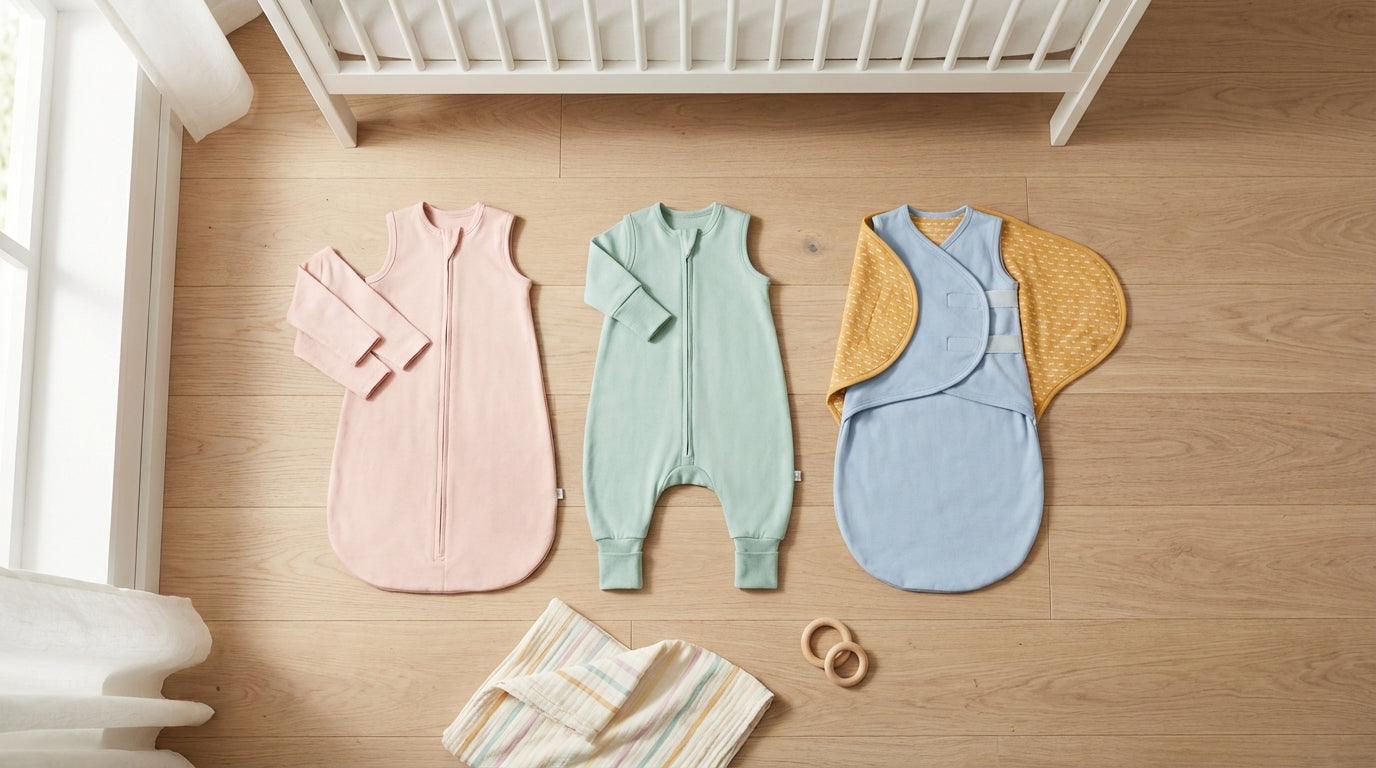
A sleeping bag with sleeves is a simple solution when your baby gets cold arms at night but you don’t want a blanket in the crib. In this guide we look at the typical “extras”: sleeves, long sleeves, legs/feet and swaddle. You’ll get a clear decision aid on what to look for in fit, warmth and workmanship – and what really counts in everyday family life (including those nights when everything goes differently anyway). We at BIECO are a family business from Hamburg, we’ve been doing this for 66 years – and yes, when it comes to safety and details, we like to be a little bit pernickety, the northern German way.

Ulli & Flo
Owners of bieco · Hamburg · parents themselves
We’ve noticed ourselves: it’s often the small details (sleeves, fit at the neck, zipper) that make a night much calmer. And if it still gets bumpy – welcome to the club. Feel free to browse our sleeping bag collection.
Why “features” on a baby sleeping bag at all?
Features only make sense if they solve a specific night-time problem. Cold arms, lots of kicking, a child who already pulls up to stand like a little early riser on a mission – there are different cuts for all of that. And sometimes the best feature is simply: “fits well and doesn’t get in the way”.
Definition (quotable): A baby sleeping bag is a closed sleepwear item that can replace loose blankets and sits securely on the upper body when it is the right size.
Definition (quotable): A swaddle sleeping bag is a sleeping bag that limits arm movement, while there must still be room to move around the hips and legs.
One important principle comes up again and again: The sleeping bag should fit snugly at the top and leave enough room at the bottom. This is exactly how the DGKJ (German Society for Pediatrics and Adolescent Medicine) describes it in its parent information on safe baby sleep (see DGKJ: Safe Sleep).
If you’d like to start with the basics first (size, warmth, materials): you’ll find an overview in the sleeping bag section, and for warmth, Sleeping bag TOG & temperature can help.
Sleeping bag with sleeves: benefits & what to look for
A sleeping bag with sleeves keeps arms warm without extra blankets. This is especially handy if your baby cools down quickly on top or you don’t want to keep adjusting “just one more layer” at night.

What sleeves can change in everyday life:
- Warmth in the arms: Fewer “cold forearm” surprises during the nightly check.
- Fewer layers: Sometimes a bodysuit is enough instead of a bodysuit plus an extra jacket or layer.
- Movement: Depending on the cut, it can feel a little less free – every child notices this differently.
What you should pragmatically look out for:
- Neckline: Your baby’s head must not be able to slip through, but nothing should press either.
- Sleeve finish/armhole: Not cutting in, but also not so wide that your child can “slip inside”.
- Zipper details: A clean finish at the chin (chin guard) saves nighttime fidgeting.
Practical tip: If you’re unsure whether sleeves are too warm: try it for one night and feel the neck – not the hands or feet.
For checking temperature, there’s a wonderfully simple trick: The neck between the shoulder blades is the best “thermometer spot”. According to the BAG Mehr Sicherheit für Kinder, it should feel pleasantly warm there – not sweaty and not cold.
Long-sleeved baby sleeping bag: when it makes sense (and when it doesn’t)
A long-sleeved baby sleeping bag is helpful when the room is cool and you want to cut down on layers. Long sleeves can make the evening more relaxed because less “mixing and matching” is needed – especially in old-building winters or during the transitional seasons.
What remains important: Long sleeves don’t replace keeping an eye on total warmth. A warm long-sleeved sleeping bag plus thick pajamas can quickly be too much. Among other things, the DGKJ stresses in its recommendations on safe sleep a rather cool bedroom and avoiding overheating (see DGKJ: Safe Sleep).
Typical situations in which long sleeves are practical:
- Cool nights: When the temperature drops significantly overnight.
- Drafty corners: The nursery has “character” (and sometimes that character is chilly).
- Babies who push up their sleeves: Some really manage it. A talent you don’t need at night.
Safety note: Regularly check fit and condition: neckline, seams, buttons and zipper should be intact and fit properly (BAG Mehr Sicherheit für Kinder).
Sleeping bag with legs or feet: for mobile children – with a focus on fit
A sleeping bag with legs is mainly interesting for mobile babies and toddlers. If your child already stands up in the crib, spins around like a rotisserie chicken or wants to march off first thing in the morning, more freedom of movement can be worth its weight in gold.

Typical benefits:
- More freedom of movement: Turning, crawling, standing up – it all gets easier.
- Less “riding up”: With a good fit, the top tends to stay where it belongs.
- Practical in the morning: Your child can often stand more easily without “disappearing” into the fabric.
And the honest points to keep in mind:
- Fit is everything: Too big can slip, too small can constrict.
- Warmth in feet/legs: Depending on the model, you’ll need socks, foot parts or deliberately less – depending on room temperature.
If you’d like to look at the variants in peace: in the sleeping bags with feet overview you can see the direction, and the guide Sleeping bag with feet: benefits, variants & what to look for goes deeper.
Swaddle sleeping bag: what it can do – and when it’s better to skip it
A swaddle sleeping bag can help in the first months when restless arm movements keep waking your baby. Many babies startle because of the Moro reflex – and just like that, everyone is awake again. Swaddling can then be briefly soothing, if it’s done correctly.
At the same time: Not too tight, not too long, and keep an eye on development. In its information on safe sleep, the DGKJ warns against wrapping babies tightly for sleep, because they should be able to move (see DGKJ: Safe Sleep).
What to look for in a swaddle sleeping bag:
- Hips/legs: There must be enough room at the bottom so legs and hips can move.
- Arms: Limiting yes, “rock hard” no – it should be gentle.
- Warmth: Swaddling quickly feels warm; the neck check helps (BAG).
Practical tip: If your baby sleeps worse in a swaddle sleeping bag: try one night without. Sometimes “more freedom” is exactly what’s called for right now.
And quite honestly: Some babies love being swaddled, others simply think it’s silly. That’s not a “you’re doing something wrong” thing, that’s personality. (It shows up early. Very early.)
Material, workmanship, standards: what we look at as parents (and from experience)
A sleeping bag is only as good as its details: fit, seams, zipper and breathable material. At BIECO we’ve traditionally been attentive here – for 66 years and as a family business from Hamburg. Not because we like drama, but because children at night have no desire for scratchy, pinching or broken.

These points are especially important in everyday life:
- Breathable fabrics: The BAG Mehr Sicherheit für Kinder names breathable materials such as cotton as a guideline (see BAG product guide).
- Zipper with chin protection: So there’s no constant “poke-poke” at the neck at night.
- 2-way zipper: Handy for diaper changes, because you don’t have to open everything completely (if available, this is a real parent bonus).
- Regular check: Check fit and wear (seams, closures) – which is exactly what the BAG recommends, too.
And yes, there’s also a standard that is often mentioned: DIN EN 16781 describes safety requirements and test methods for children’s sleeping bags. You can view the description of the standard at DIN Media (DIN EN 16781). For you as a family, this mainly means: look for transparent information on workmanship, materials and safety details – not just pretty patterns.
If you’re unsure about fabric (cotton, muslin & co.): in Sleeping bag materials you’ll find an overview, and in the guide Sleeping bag materials compared we go through it calmly.
Care & everyday life: washing, drying, buying a spare – without the drama
Good care is simple: read the label, wash gently, close the fasteners. That sounds trivial, but it saves nerves and extends lifespan – especially with sleeping bags that feel like they’re in use every single night.

- Before washing: Close zippers so nothing gets caught.
- Dry gently: If possible, air dry – it’s often kinder to the fabric and shape.
- Check regularly: After washing, quickly check seams and closures (the BAG recommends regular inspection).
And for the reality of spit-up, milk and “I’ve got something here”: A second sleeping bag isn’t a luxury, it’s sleep hygiene for parents. When one is in the wash, nobody has to improvise at night.
Mini checklist: how to choose the right feature
The best feature is the one that lets your child sleep peacefully – without compromising on safety. Here’s the decision aid that still makes sense at 3:17 a.m.:
- Arms get cold: Try a sleeping bag with sleeves; the neck check helps you judge warmth (BAG).
- Room is cool, you want fewer layers: A long-sleeved baby sleeping bag may fit; keep total warmth in view (DGKJ).
- Child is very mobile: A sleeping bag with legs/feet can be more practical – choose the fit especially carefully.
- Very restless arms in the first months: Swaddle sleeping bag with care and not too tight; hips/legs must stay mobile (DGKJ).
If you like the safety basics as a list: Safe baby sleep: checklist for choosing the right baby sleeping bag is a good addition.
FAQ
Are sleeves in a sleeping bag safe?
Yes, if fit and condition are right and nothing slips. Look for a secure neckline (the head must not slip through) and make sure the armholes are neither too wide nor too tight. According to the BAG Mehr Sicherheit für Kinder, you should regularly check the sleeping bag and fasteners for fit and wear.
What should my baby wear under a sleeping bag with sleeves?
As little as necessary, as much as necessary – the neck check decides. Instead of following a fixed formula, check at the neck between the shoulder blades whether your baby feels pleasantly warm; this is what the BAG Mehr Sicherheit für Kinder recommends. Hands and feet are often cooler and less telling.
Is a sleeping bag with sleeves suitable for newborns?
Yes, if the sleeping bag fits well and the warmth suits the room temperature. According to the DGKJ, a sleeping bag with a snug-fitting upper part and enough room in the leg section is recommended (see the DGKJ parent information). Also make sure your baby’s head cannot slip through the neckline.
What is the difference between a long-sleeved baby sleeping bag and a sleeping bag with sleeves?
Long-sleeved usually means fully covered arms; sleeves can vary depending on the model. What matters isn’t the wording, but how warm it gets overall and whether your child can move well. Check the temperature at the neck (BAG) and adjust the clothing underneath accordingly.
From what age does a sleeping bag with legs make sense?
Often when children are very mobile and kick a lot or stand up at night. Leg or foot variants give freedom of movement without the sleeping bag riding up so easily. Fit remains important: not too big (risk of slipping), not too small (constricting). Keep warmth in feet/legs in mind.
Is a swaddle sleeping bag safe?
It can be safe if used correctly and not too tight. The DGKJ advises against wrapping babies tightly for sleep, because they should be able to move. So make sure there is freedom of movement in the hip and leg area, and stop swaddling when your child shows significantly more mobility.
Conclusion: Choose features based on need – not on “must-have”. A sleeping bag with sleeves or long sleeves can ease cool nights, legs/feet are often great for mobile children, and swaddling is a careful helper for the very early months. If you’d like to look around, feel free to start in the sleeping bag section – and if the night gets long again: sadly, that’s very normal. You’re doing a great job.