Cleaning a Puzzle Play Mat: How to Care for an EVA Mat and Remove Stains
At a Glance
- Cleaning a puzzle play mat: lukewarm water, mild soap, then dry it completely.
- Cleaning an EVA puzzle mat means wiping it damp – not soaking it.
- Everyday play mat cleaning: crumbs off, one quick wipe, done.
- Stains: lift off first, then gently clean and wipe again with clear water.
- What to avoid: steam, chlorine, solvents, direct sun and heat.

The safest way to clean a puzzle play mat is with a damp cloth, mild soap and plenty of fresh air for drying. It's the relaxed solution for family life: quick enough to fit between dinner and brushing teeth, yet gentle on the surface. Here you'll find a short guide, a weekly routine, stain help (milk, juice, play dough, felt-tip pen) and a clear list of what you're better off skipping – so the mat doesn't get “cared to death”.

Ulli & Flo
Owners of bieco · Hamburg · parents themselves
We've learned that a play mat stays beautiful longest when you wipe it gently and regularly and really let it dry. That saves your nerves – and usually a few evening arguments, too. Feel free to browse our puzzle mat collection.
Quick Guide: Clean in 5 Minutes (Time & Materials)
For a quick clean, all you usually need is water, mild soap and two cloths. You rarely need more in everyday life – and honestly: the fewer bottles on the cleaning cart, the fewer things that can tip over.
- Time: 3–5 minutes for a quick once-over, 10–20 minutes for the weekly round (plus drying time).
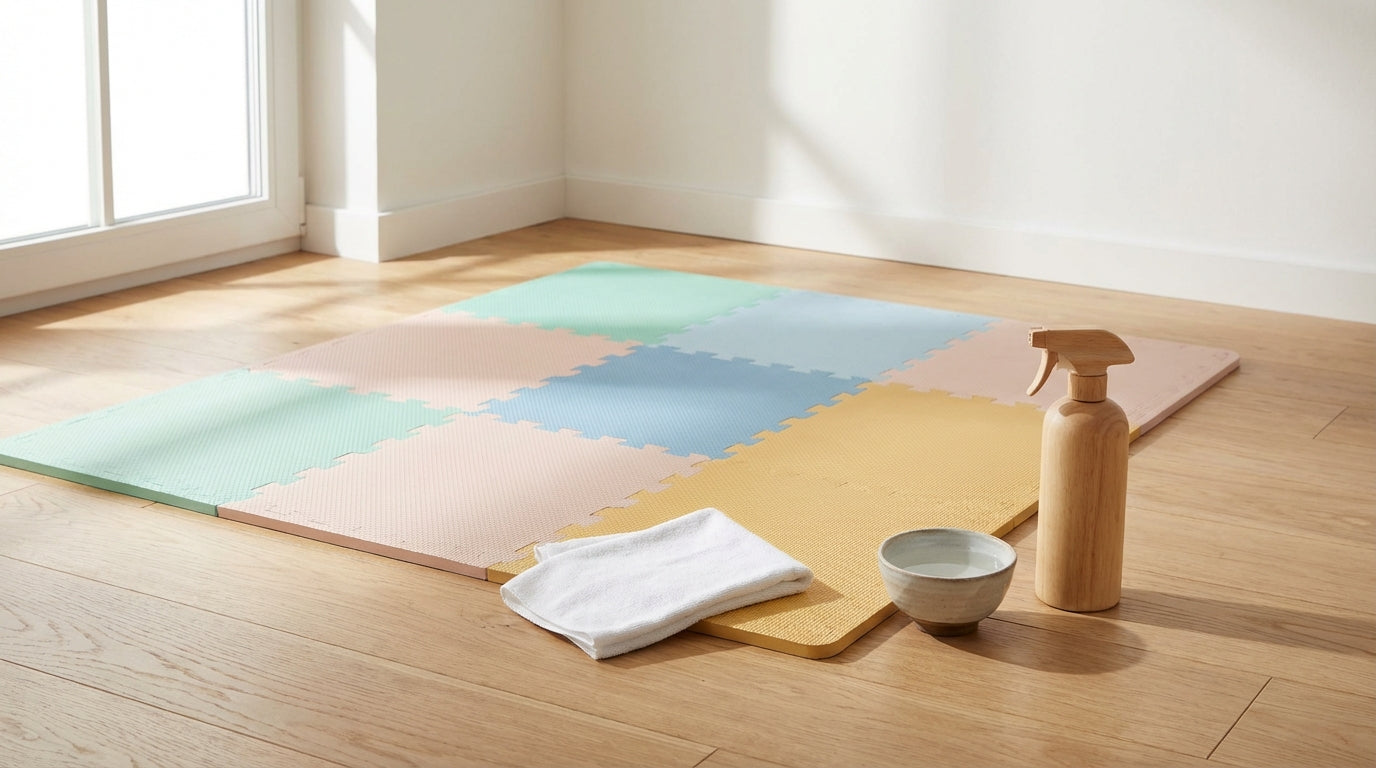
- You'll need: a vacuum cleaner without a rotating brush or a hand brush, lukewarm water, mild soap/pH-neutral cleaner, 1 damp cloth, 1 dry cloth.
- How it works: crumbs off → wipe damp (wring the cloth out well) → wipe again with a clean cloth → let dry completely.
Why Regular Cleaning Really Pays Off
If you wipe often and briefly, you'll rarely need a “full overhaul”. Everything ends up on a play mat: crumbs, apple juice, mud, dog paws – and sometimes things you'd rather not think about too long. A small routine keeps the surface looking nicer and means fewer “crumb ecosystems” form in the seams.
A puzzle mat is a play floor made of interlocking foam pieces. The interlocking edges are super practical – but that's exactly where dirt likes to hide. That's why wiping underneath now and then simply belongs to the routine.
Understanding the Material: EVA, Foam & Why “No Bathing” Matters
Many mats are made of EVA foam: wipeable, but not made for soaking. EVA stands for ethylene-vinyl acetate and is a lightweight, cushioning plastic foam that is usually easy to clean damp in everyday life. But if water stays in the edges and seams, it can get unpleasant – especially while drying.
Cleaning a foam mat means: little water, little chemistry, lots of patience while drying. That's not an “eco vow”, just simple material care: too wet, too hot or too harsh makes surfaces dull or sticky faster.
Safety note: Let the mat dry completely after wiping before your child plays on it again – especially when crawling and sliding.
Everyday Play Mat Cleaning: The 5-Minute Routine
What works in everyday life: crumbs off first, then wipe damp, then dry. It's the northern German way: short, thorough enough, no drama.
- Crumbs off: Vacuum on a low setting (without a rotating brush) or use a hand brush.
- Cleaning water: Lukewarm water + a small drop of mild soap.
- Wipe, don't soak: Wring the cloth out well and wipe over the mat in strips.
- Wipe again with clear water: Use a slightly damp cloth (water only) to remove soap residue.
- Dry: Rub dry with a dry cloth, or ventilate well and wait.
Disinfecting is usually unnecessary in everyday life and often more of a burden than a help. According to the German Environment Agency (Umweltbundesamt), disinfectants are generally not required in private households; the UBA, BfR and RKI share this assessment, see Hygiene tips for everyday life (in German).
Practical tip: A small spray bottle with water + a tiny drop of mild soap saves your nerves. Spray once, wipe once – done.
Weekly Deep Clean: Take It Apart, Wipe Underneath, Done
Taking the mat apart briefly once a week keeps dirt from “settling in” to the seams. It sounds like more work, but it's often quicker than scrubbing later. And yes: crumbs travel. They have legs. (Or so it feels.)
- Loosen the mat: Start at one corner, piece by piece, and don't yank.
- The floor underneath: Vacuum and – if needed – wipe damp.
- Pieces individually: Wipe edges and tabs with a well-wrung cloth.
- Dry completely: Lay the pieces out separately and only puzzle them back together once dry.
If you reassemble the mat too early, moisture stays exactly where you don't want it. So it's better to air it out once more – it's the cheapest “care” there is.
Removing Stains: By Stain Type (With a Mini Plan)
For stains, the rule is: lift off first, then clean gently, then wipe again with clear water. That way you avoid just spreading the stain or leaving sticky residue behind.

Milk, Yogurt, Porridge
Anything milky quickly turns musty if it dries in the seams. Remove leftovers right away with a damp cloth, wipe again with mild soap and go over it once with clear water. If something ran into the interlocking edges: take the mat apart briefly, wipe the edges and let everything dry well.
Juice, Soda, Ice Cream (Everything Sticks)
Loosen with water first, then use a minimal amount of soap against the sticky film. First wipe with lukewarm water, then again with a drop of mild soap. Finish by wiping with clear water so no streaky spots remain – otherwise the next dust gathers there as if by magic.
Play Dough
Play dough is easier to lift off once it no longer smears. Let it dry briefly, lift it off carefully (for example with a fingernail or a soft edge) and then wipe damp. Please don't “help along” with solvents – they can damage the surface.
Felt-Tip Pen, Ballpoint Pen, Wax Crayon
With pens, always test on an inconspicuous corner first. Start with mild soap and patience, not the “chemical sledgehammer”. Don't rub like crazy; dab or stroke gently instead. If the mat is printed, aggressive products can damage the print and the surface – so it's better to be careful and go step by step.
Greasy Hands, Sunscreen, Cream
Greasy films need a little soap, otherwise they stay slippery. Wipe with lukewarm water and a drop of mild cleaner, then wipe again with clear water. If it stays slippery: go over it once more with clear water and dry thoroughly.
Practical tip: With stains, “twice gently” often works better than “once brutally”. Your mat remembers both.
Disinfecting a Puzzle Mat: When It Makes Sense – and How to Do It Smartly
In a normal household, cleaning is enough; disinfecting is usually not necessary. According to the German Environment Agency (Umweltbundesamt), disinfectants are generally not required in private households; the UBA, BfR and RKI share this assessment, see UBA hygiene tips (in German).
If there's a specific reason, disinfect in a targeted way and follow the instructions. What matters is that you use a product suitable for the surface and observe the contact time. Afterwards, surfaces that children might touch or put in their mouths should be cleaned in a material-friendly way and dried completely.
What You Should Avoid (So the Mat Doesn't Suffer)
Most damage comes from heat, aggressive cleaners and too much water. Most of it doesn't happen “because of kids”, but because we adults mean too well.
- Steam cleaners: Heat + moisture can stress surfaces and warp edges.
- Chlorine/bleaching cleaners: Can attack colors and the surface.
- Solvents (e.g. acetone, thinner): Risk of sticky or dull spots.
- Soaking/bathtub: Water likes to stay trapped in seams and edges.
- Direct sun/radiators/hair dryer: Heat can promote warping and discoloration.
Odor, Discoloration, Sun: How to Keep the Mat Looking Good Longer
A slight new-product smell usually fades with time and fresh air. At the beginning, feel free to lay out the pieces individually and ventilate well. If the smell turns “musty” later, there's often residual moisture or dirt hiding in the seams – then taking it apart, cleaning and drying completely helps.
Long periods of direct sun are simply too much for many materials. If one area always gets sun, turn the mat occasionally or place it so it doesn't “sizzle” every day. It's not rocket science – more of a grandfather's rule like: “Not everything has to go in the sun just because it's there.”
Storage & Everyday Tricks: Less Warping
Storing it flat and stacking it dry is half the battle against waves and stressed edges. When you put the mat away (guests are coming, the living room should look “grown-up” again), it's best to do so clean and dry.
- Before stacking: Wipe briefly and let dry so nothing gets “trapped inside”.
- Flat instead of rolled: If possible, store flat – this reduces warping.
- Not under heavy furniture: Constant weight can cause dents.
- Transport: Put the pieces in a bag/box so the interlocking edges don't bend.
Sustainability & Disposal: What You Can Realistically Do
The most sustainable approach: use it for a long time, care for it well and pass it on sensibly. If the mat is still in good shape, the next household (or a friend's daycare corner) is often happy to have it. As for disposal: plastic foam generally does not belong in organic waste – and “just anywhere” is of course not a solution either.
How you dispose of it depends on your municipality and local waste separation rules. If in doubt, check with your local waste management service whether there are guidelines for plastic foam (residual waste, recycling center or similar). It's not glamorous, but it's correct.
Bieco Tip From 66 Years of Family Life (Hamburg Edition)
Cleaning gently isn't “less thorough”, it's often simply smarter. We're a family business from Hamburg and have been doing this for 66 years – and honestly: kids' things have to work in everyday life. Our best experience is the boring one: wipe briefly and regularly, let it dry well, no harsh cleaners. That keeps both your nerves and the material together longer.
Transparency about safety also means: gentle rather than “throwing everything at it”. If you want to know in general what institutions look at when it comes to toys, the German Federal Institute for Risk Assessment (BfR) overview on the health assessment of toys (in German) is a solid, sober source.
Do & Don't: Mini Checklist to Save
With this list, you're on the safe side when caring for your puzzle mat. Don't print it out – just read it when your child is finally asleep.
| Do | Don't |
|---|---|
| Remove crumbs regularly | “Scrub” with a rotating brush |
| Wipe damp (wring the cloth out well) | Soak / bathtub |
| Mild soap, then wipe again with clear water | Chlorine, aggressive cleaners, solvents |
| Let dry completely | Radiators, hair dryer, direct sun for drying |
| Take apart weekly and wipe underneath | Stack wet or assemble while damp |
FAQ
How often should I clean a puzzle play mat?
Wipe it quickly whenever something is sticky or crumbly, and do a deeper clean once a week. In everyday life, wiping damp with mild soap is usually enough. Once a week, take it apart, vacuum/wipe underneath, wipe the edges and let everything dry – this keeps the seams clean and the mat looking nice longer.
Can I clean an EVA puzzle mat without it getting sticky?
Yes: use little cleaner and always wipe again with clear water. Stickiness often comes from too much soap or cleaner residue. Use just one drop of mild cleaner, then wipe with clear water and let the pieces dry completely before you snap them back together.
Can I disinfect a puzzle mat?
Yes, but in a normal household it's usually not necessary. According to the German Environment Agency, disinfectants are generally not required in private households; the UBA, BfR and RKI share this assessment. If there's a specific reason, disinfect in a targeted way following the instructions and make sure everything dries well afterwards.
How do I clean or disinfect a puzzle mat if my child puts everything in their mouth?
Then “clean gently and avoid residue” is especially important. Wipe with lukewarm water and mild soap, then wipe again with clear water and let it dry completely. That leaves as little residue as possible on the surface. In everyday life, thorough cleaning usually makes more sense than frequent disinfecting.
Can the puzzle mat go in the sun?
Short periods are usually fine, but constant direct sun is not a good idea. Longer direct sunlight can make materials age faster and promote discoloration. If the mat lies by a window, it helps to turn or move it occasionally so the same spot isn't always “grilled”.
Can I disinfect a puzzle mat if it was once “really gross”?
With visible dirt, clean first, and only then think about disinfecting. Remove dirt with a mild cleaner, wipe again with clear water and let everything dry. If you want to disinfect afterwards, use a suitable product according to the instructions and observe the contact time. Important: never mix aggressive cleaners.
Can I use a puzzle mat outdoors, and how do I clean it then?
For short outdoor use, sweeping off and wiping damp is usually enough. Outdoors, more sand and dirt collect, so it's better to remove it dry first, then wipe damp. Afterwards, let it dry completely and don't stack it wet. For permanent outdoor use, it depends on the manufacturer's information on weather resistance.
If you clean your puzzle mat gently and regularly and let it dry well, it will stay a cozy playground for a long time. And if you realize while rearranging that you need more or less floor space: in our puzzle mat overview you'll find different options for the nursery.
You'll find more guidance in our advice articles about play mats. Good follow-up reads include Puzzle Mats for Babies & Children: Guide, Pros & Cons and Puzzle Mats in XXL & Different Shapes: Which Size Fits?.