Gift for a 3-Year-Old Boy: Ideas for Boys Aged 2 to 13
At a glance
- Gift for a 3-year-old boy: ideally something that lets him start playing right away.
- Ages 2–5: stacking, sorting, role play and movement are often big hits.
- Ages 6–10: building, puzzling and being out and about, with plenty of “I can do it myself!” moments.
- Ages 11–13: not babyish, but not “too grown-up” either, so think creative or a bit tricky.
- Check: age recommendation, warnings, material details and sturdy construction.

A gift for a 3-year-old boy works best when he understands it straight away. Unwrap, touch, get going, without someone having to spend half an hour explaining which end is up. In this guide you'll find age-appropriate ideas for ages 2 to 13, plus a few small everyday tricks to help you avoid misses. And yes, it's all been thought through with real family life in mind: crumbs on the carpet, little time and the wish for “please, let's keep it relaxed.”

Ulli & Flo
Owners of bieco · Hamburg · parents themselves
We know how it is: you want to give something lovely, and please without a miss. These ideas are meant to actually get used in real family life. Feel free to browse our Gifts for Boys collection.
How we choose: 5 criteria that really help in everyday life
A good gift has to fit into real family life, not into a brochure. To help you get to a “Yes, exactly that!” faster, we look at five things: age recommendation (so it neither overwhelms nor underwhelms), a start to play without much explanation, sturdy construction, material transparency and play value that lasts longer than a weekend. And because we at bieco have been accompanying toys for 66 years (a family business from Hamburg, slightly stubborn in the northern German way), we also look at whether something is still happily picked up months later.

Definition (quotable): An age recommendation is the manufacturer's statement of which developmental level a toy is designed for, not just a calendar age.
Gift for a 2-year-old boy: short, sturdy, instantly understandable
At 2 years old, repetition, grasping and “again!” matter more than rules. At this age, children push, stack, sort, and then knock everything over again with great devotion. That's not “mischief,” that's learning with hands and feet.
- Stacking & sorting: Large building pieces, simple shapes, not many tiny bits.
- Pushing & pulling: Things that come along while walking and don't fall apart right away.
- Role play light: Simple figures or animals that are welcome to “live” everywhere with him.
Safety note: For children under 36 months, warnings and risks are regulated particularly strictly; this is set out in the EU Toy Safety Directive (according to EUR-Lex, Directive 2009/48/EC).
Definition (everyday use): A motor skills toy supports grasping, inserting, stacking and coordination without children experiencing it as “practice.”
Gift for a 3-year-old boy: the golden middle of imagination & skill
A gift for a 3-year-old boy can already do a bit more, but without frustration. At three, there's often a little leap: language, imagination and independence grow. At the same time, patience and fine motor skills are still developing. That's why things that allow many ways to play work especially well, instead of just “one right solution.”
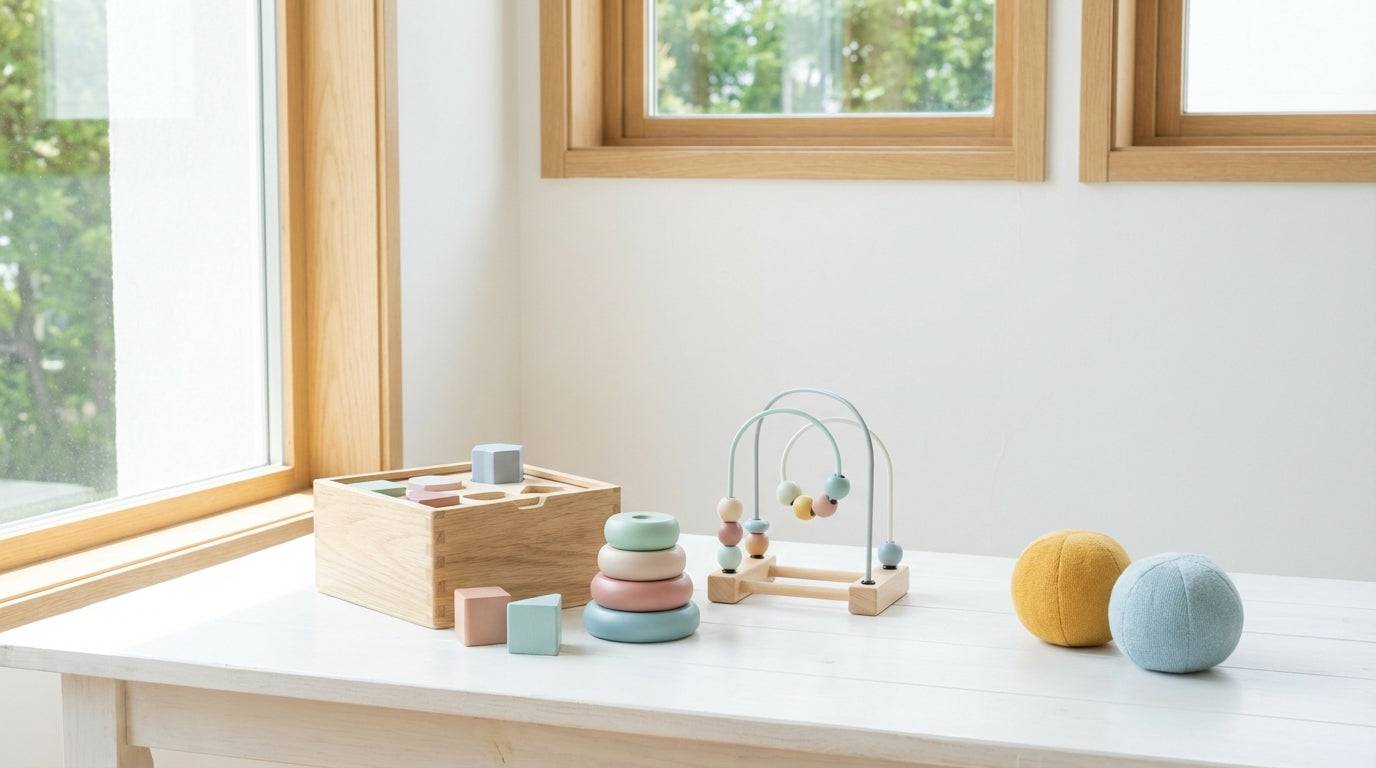
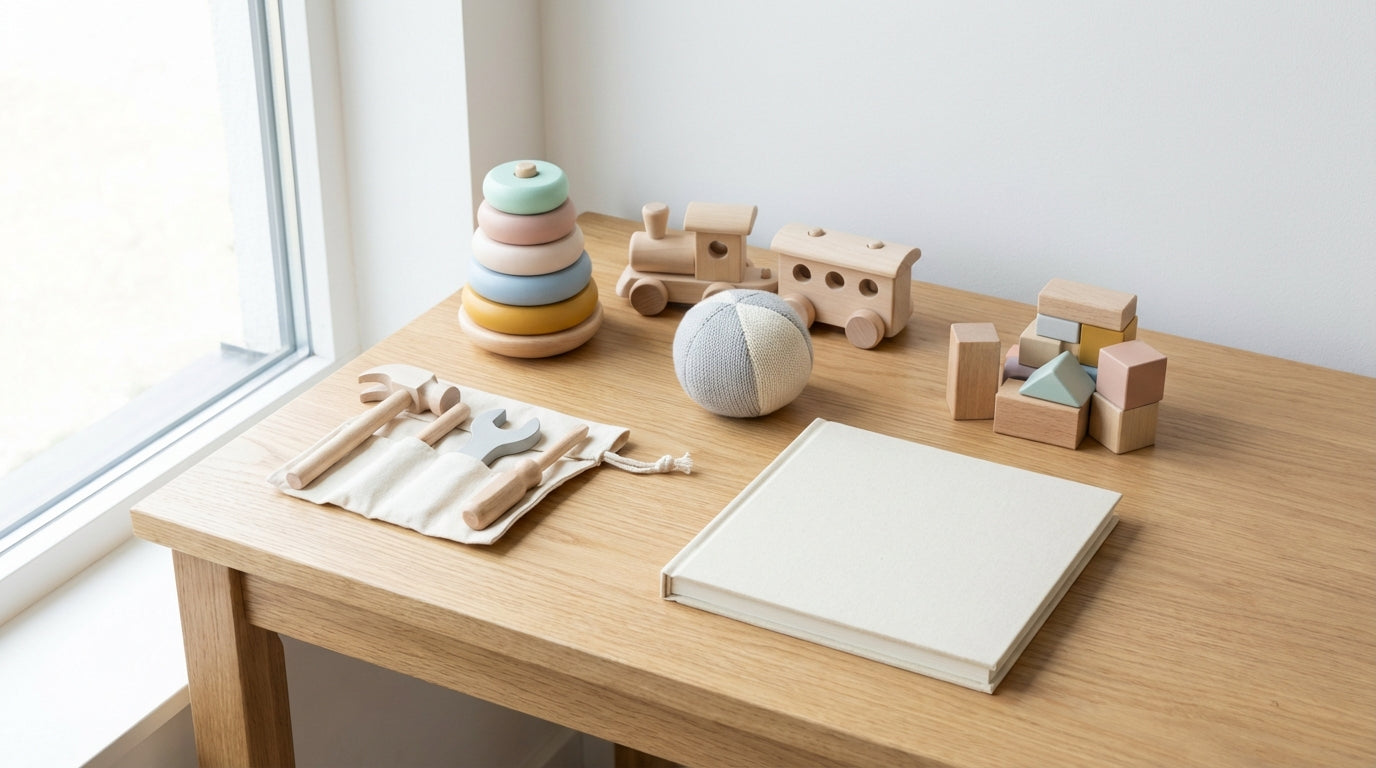
- Open-ended play: Stacking and building toys that are a garage today and a zoo tomorrow.
- Calm classics: Wooden toys that feel good in the hand and don't get “used up” quickly.
- Indoor movement: Balancing, rolling, little obstacle courses, a friendly way to channel energy.
An easy hit is a toy that can be reinvented every day. A wooden rainbow is exactly that kind of piece: sometimes a tunnel, sometimes a bridge, sometimes a “house for all the animals.” If you'd like a concrete example: the Blue Rainbow FSC® is simple, sturdy and often gets played with for a surprisingly long time.
Practical tip: Don't ask the parents “What do you wish for?” Ask instead: “What is he playing with every day right now?” That saves three rounds of pondering.
Definition (quotable): Open-ended toys have no fixed play instructions; children decide for themselves what it should be today.
Gift for a 4-year-old boy: role play meets “I can do it!”
At 4 years old, many children want to be taken seriously, and still play wildly. They build little worlds, tell stories and try out rules. So the gift can certainly have a theme, but it shouldn't be too narrow. Otherwise it's “played out” after two days.
- Role play: Figures, animals, simple sets that spark stories.
- Building: Larger building pieces that are allowed to be used for other purposes, too.
- Creative: Drawing, modelling, crafting, ideally with a manageable chaos factor.
If you're unsure, choose something that works both alone and together. Four-year-olds are sometimes team players and sometimes “I'll do it myself” artists, depending on their mood of the day and the state of the biscuit supply.
For browsing without guessing the age: In Toys for 3-Year-Olds you'll find plenty that still fits well at 4, because it doesn't become “too easy” right away.
Gift for a 5-year-old boy (outdoors & birthday): get outside, but without stress
An outdoor gift for a 5-year-old boy doesn't have to be huge, it just has to lure him outside. Many five-year-olds love movement, small tasks and “missions.” That works even without a garden: a courtyard, park, playground or forest path is perfectly enough.
- Movement: Ball games, throwing games, simple obstacle course ideas.
- Discovering: Nature scavenger tasks (“Find 3 pinecones, 1 smooth stone…”).
- Party savers: Things you can use with friends right away.
Practical tip: Add a “first mission” (one sentence on a card). Then it gets used today, not only when things finally calm down someday.
A little trick for birthdays: When lots of guests are coming, gifts that don't scatter another 200 individual pieces across the floor are a good choice. The parents will thank you quietly, and very much.
Gift for a 6- & 7-year-old boy: building, puzzling, feeling proud
At 6–7 years old, “I'll give it a try” slowly turns into “I can do this.” Many children like tasks with a beginning and an end: building, sorting, following a plan, or deliberately going against the plan (that's an art, too). At the same time, imagination remains important.
- Building & constructing: Things with several levels of difficulty.
- Games with rules: Short, clear, little text, quickly explained.
- Movement: Coordination and body awareness, without performance pressure.
The 2-minute check helps surprisingly often: Can the child get started after two minutes, and still be going after twenty? Then it usually fits, whether it's called “gift for a 6-year-old boy” or “gift for a 7-year-old boy.”
If you're looking for something timeless: In the Wooden Toys category you'll find many ideas that aren't “done” after one season.
Gift for an 8- to 10-year-old boy: projects, tinkering, real interests
8–10-year-olds often want a gift that fits their very own “thing.” Football, animals, building, puzzles, drawing, music: interests become clearer. And yes, they can also change quickly. That's not fickleness, that's development.
- Project gifts: Things that stay fun over several days.
- Puzzling & thinking: Riddles, brain games, building challenges.
- Showable: Something he can present at the end (“Look at this!”).
When it comes to safety, it's now less about swallowing and more about clear information. The EU Toy Safety Directive 2009/48/EC is the central basis for toy safety in the EU (according to the European Commission).
A mini experience from our family life: At this age, gifts work especially well when they allow a “next step,” so not just building once, but rebuilding, expanding, improving. Then the piece doesn't just sit on the shelf gathering dust in a northern German way.
Gift for an 11- to 13-year-old boy: not babyish, but not “too grown-up” either
11–13 is the phase when “cool” often becomes more important than “cute.” Many boys want to be taken seriously, but at the same time still enjoy building, collecting, tinkering or creative projects. So the gift can certainly look more “grown-up,” without having to be technology costing several months' salary.
- Creative & DIY: Drawing, crafting, small building projects, design.
- Tricky: Puzzles, strategy, more demanding constructions.
- Practical for a hobby: Something that supports an interest without being embarrassing.
For 11-year-olds, it's often: quality over silliness. Something solid that doesn't look “babyish” is more likely to be used, and more likely to be shown to friends.
For 12-year-olds, a gift that supports independence helps. Things they can start on their own and “finish” fit well, especially as school and hobbies take up more room.
For 13-year-olds, it can be a little more challenging. Tricky projects or materials for their own hobby are often better than “yet another fun gadget” that disappears into a drawer after two days.
Quick quality check: Look at construction, material details and warnings. Substance restrictions for toys in the EU are summarised by ECHA, among others (according to the European Chemicals Agency).
Materials, testing & transparency: what you can look out for
Good gifts can often be recognised by clear information, not by loud promises. Practical features are clearly visible age recommendations, understandable warnings and traceable material information. With wood, a note about more responsible sourcing (e.g. FSC® on selected products) can be helpful, because it makes the material chain easier to follow.
If you see a “CE” mark, it's a starting point first, not a magic stamp. What matters is that warnings and age details are taken seriously and that the toy suits the developmental stage.
Safety note: For younger children, small parts, cords/ribbons and loose pieces are especially critical. Follow the age recommendation and warnings as regulated in the EU Toy Safety Directive (according to EUR-Lex).
How to make the right choice (without going round in circles)
The best gift isn't the most expensive one, but the one that fits the family. Three questions almost always help:

- How is the child playing right now? (Building, running, role play, drawing?)
- How much space is there? (Flat, children's room, garden?)
- How much “assembly” can the parents handle? (Some love crafting, others love sleep.)
And one more honest sentence from Hamburg: A gift can also be “simple” if it's well made. Sturdy, pleasant in the hand, clear instructions, no material surprises: in everyday life that's often worth more than the most spectacular item in the box.
If you want a quick overview: Click your way through the Gifts for Boys hub. And if you're looking for something fairly spot-on for the 3-year-old corner, Toys for 3-Year-Olds helps you narrow it down.
FAQ
What do you give a boy for his 3rd birthday?
For a 3rd birthday, something that is playable right away and leaves room for imagination fits best. Open-ended toys (building, stacking, sorting), first simple games with rules or indoor movement ideas often work well. If you're unsure: choose something that starts on its own and, if needed, carries on together with adults.
Which gifts support motor skills?
Motor skills are supported above all by toys where children grasp, insert, stack or balance. Good options are things with different shapes and “mistakes that don't hurt,” meaning no frustration when something topples over. For younger children, pay particular attention to the age recommendation and make sure there are no unsuitable small parts.
What is a good gift for a 2-year-old boy?
A good gift for 2-year-olds is sturdy, big enough and instantly understandable. Stacking and sorting games, push or pull toys and simple figures often work reliably. The age recommendation is important, because for children under 36 months warnings and risks are regulated particularly strictly (according to EUR-Lex, Directive 2009/48/EC).
What really works as a gift for a 3-year-old boy?
A gift for a 3-year-old boy works well if it allows many play ideas and is easy to start. Stacking and building toys, open-ended toys or indoor movement ideas are often big hits. Ideally, the child can begin on his own, with adults joining in only “as needed.”
What are good birthday gifts for 5-year-old boys (including outdoors)?
For a 5th birthday, gifts that make movement and playing together possible are great. Outdoors doesn't have to be big: throwing games, ball ideas or small nature missions are often enough. A mini instruction (“first mission”) makes sure the gift gets used right away, not just someday.
Which gifts suit boys aged 11 to 13?
For 11–13-year-olds, gifts that don't seem babyish and are still fun are the right fit. Tricky projects, strategy, creative things or something practical for a hobby are good options. Look for quality, clean construction and clear material details; substance restrictions for toys in the EU are summarised by ECHA, among others.
And finally, nice and relaxed: If you're now thinking “Okay, got it, I just want to find something suitable quickly,” then have a browse through Gifts for Boys. And for timeless classics for building and stacking, it's worth a look at Wooden Toys, which is often just right when you don't want to guess.