
Baby Walkers
Sort by
6 products
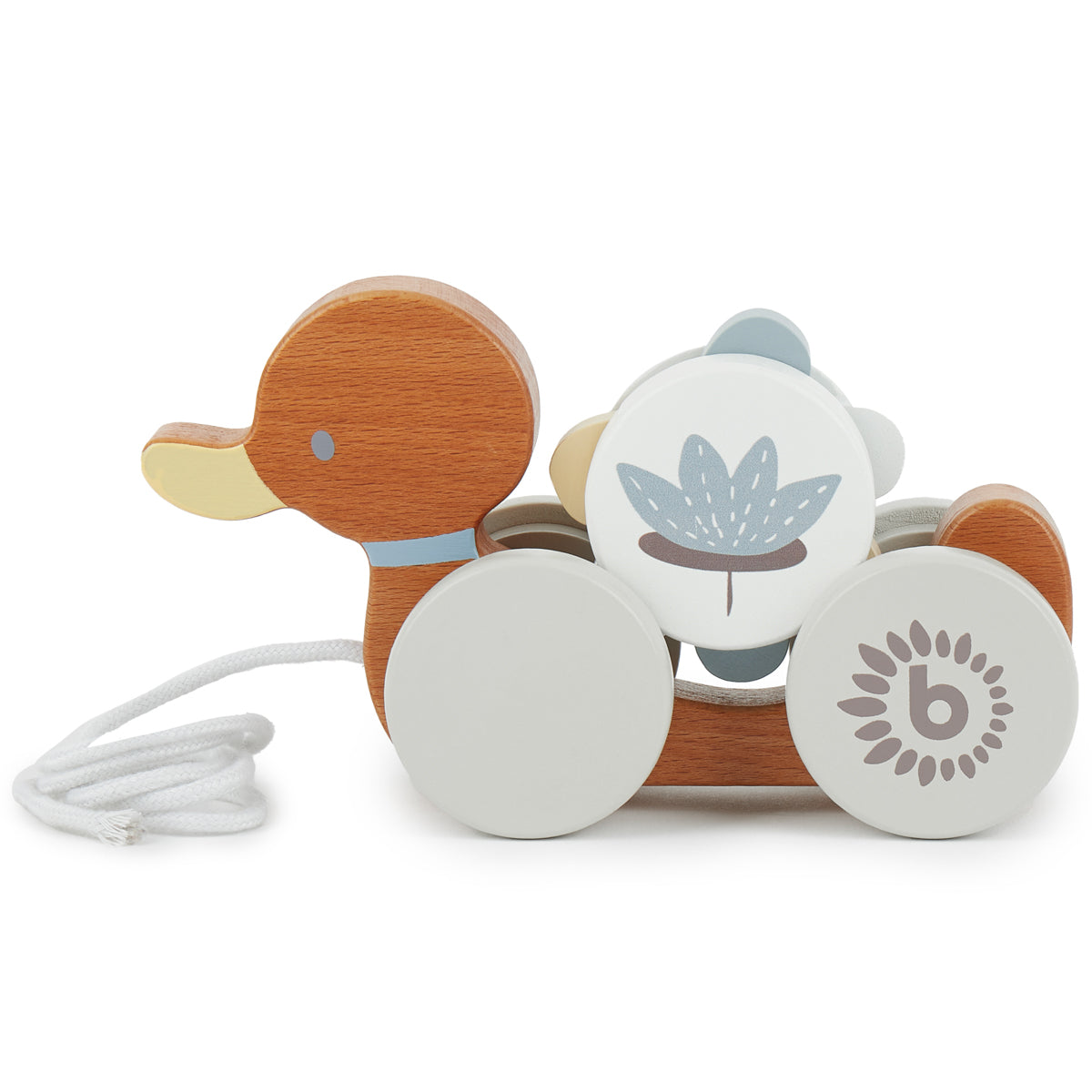
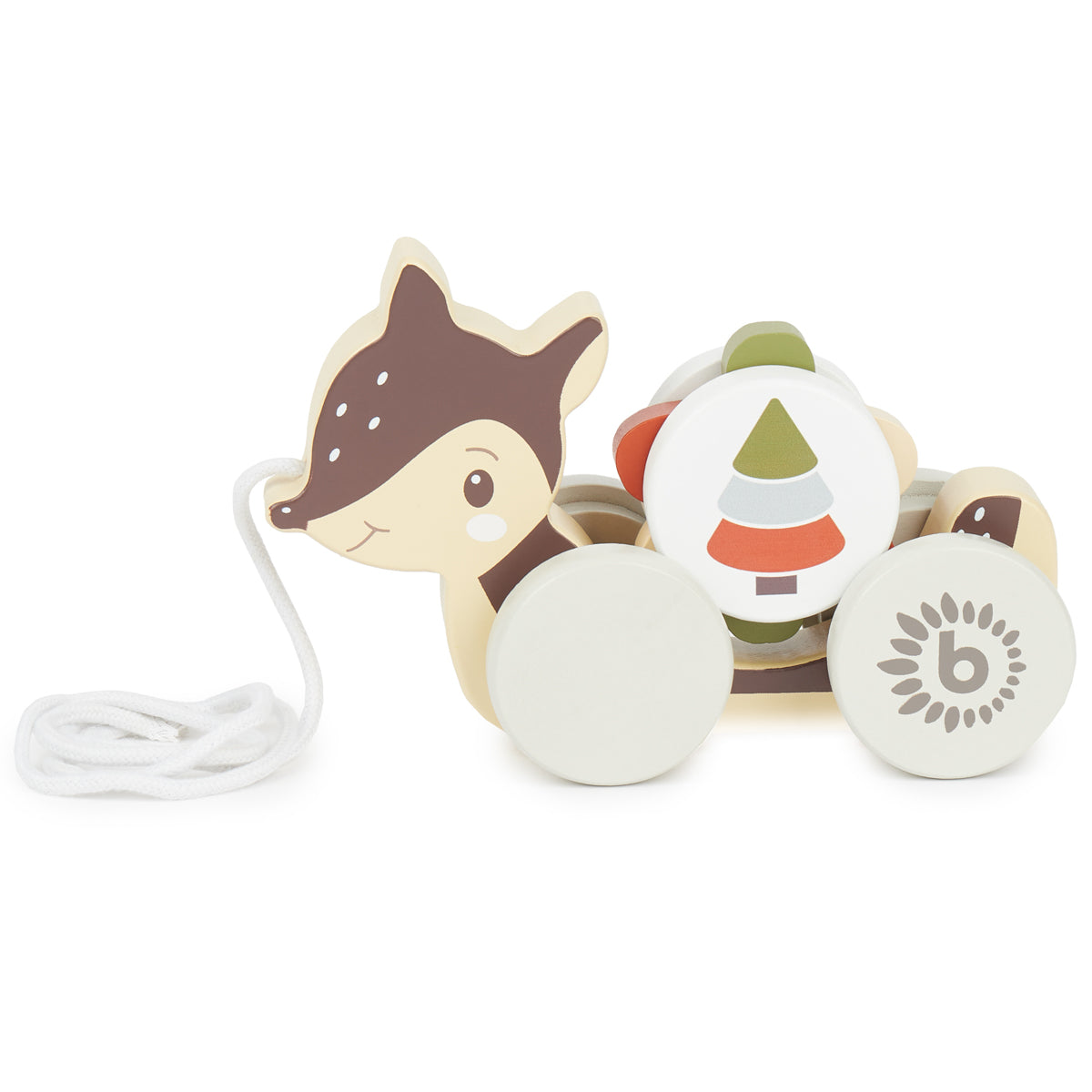

recently viewed
A push walker is a push toy that children hold on to while practicing their first steps. It's not a magic wand – but in everyday life it's often a little confidence booster on wheels when your child suddenly wants to pull up on everything. Whether you're looking for a wooden push walker, want to give a baby push walker as a gift, or are wondering: push walker baby from what age – here's a short, practical overview. And honestly: at the start it's often three steps, a proud grin, and then sitting back down. That's perfectly enough.
The key points at a glance
- Stability beats gimmicks: wide, sturdy, not wobbly.
- On smooth floors, a brake or rolling resistance helps against “zooming off”.
- The handle height is right when the elbows are slightly bent while pushing.
- Rubber wheels run more quietly and often slip less.
- Stairs & edges are off-limits – always use a push walker in a safe environment.
Mini snippet: push walker vs. sit-in baby walker – please don't mix them up
A push walker is pushed – a sit-in baby walker (walking aid) is “driven”. Sit-in walking aids, in which babies are placed, are advised against by BZgA/Kindergesundheit-info because of accident risks (e.g. falls down stairs) (kindergesundheit-info.de). A push walker is something different – still, the rule applies: start slowly, stay with your child, secure the surroundings.
Buying criteria in 5 points (the quick cheat sheet)
- Brake/rolling resistance: adjustable rather than “race car”. On parquet & tiles this is often the game changer.
- Wide base/track width: the wider, the steadier. A narrow walker can tip more easily in turns.
- Handle height: elbows slightly bent, shoulders relaxed. Then your child isn't pushing while “falling forward”.
- Wheels: rubber is quieter, often grippier, and gentler on the floor. Hard plastic can slip more easily on smooth floors.
- Tip test: press lightly from the side once – if it wobbles a lot, keep clicking. Sounds simple, but saves nerves.
Fabric, look, “girls” or “boys” – what really matters?
For “push walker for girls” or “push walker for boys”, in the end only taste decides. Kids can learn to walk just as well with a forest animal as with black-and-white – the main thing is that the walker is stable and rolls in a controlled way. So if you're looking for a wooden push walker for girls, a wooden push walker for boys, or simply a push walker for a boy: look at colors/motifs for the nursery – and at the technology for safe pushing.
Wood, activity, doll's pram: which version suits your everyday life?
A wooden push walker often feels steadier because it has more weight of its own. That's not a law of nature – but in everyday life it's often welcome when your child is just discovering how much momentum is in those little legs. An activity push walker is great if your child likes to “take a break” while standing and spin, push, or rattle things. And a doll's pram push walker often hits right in the heart: pushing, caring, packing up the teddy – and the role play is ready.
A learn-to-walk cart is basically just another name for a push walker. What matters less is the word on the packaging – but brake/rolling resistance, base, and calm rolling behavior.
Pros & cons – with no drama
A push walker can motivate, but it doesn't replace free floor time. Many families use it as a supplement: push a few laps, then crawl, climb, take a break again. If you google “is a push walker worthwhile” or “push walker yes or no”: it's rarely black and white. What matters is whether your child stands steadily, whether the walker rolls in a controlled way – and whether you accompany them calmly.
- Pro: Holding on, pulling upright, practicing a few safe steps.
- Pro: Transport play (blocks in, out, in again – a classic).
- Con: Too smooth-running = frustrating or wobbly, especially on smooth floors.
- Con: Tight spaces quickly turn practice into “furniture rodeo”.
Looking for Pinolino or Vertbaudet? How to find good alternatives
If you're looking at “Pinolino push walker” or “Vertbaudet push walker”: check the same safety basics for alternatives. Look for a brake or adjustable rolling resistance, a wide base (track width), and clean workmanship. And very important: push walkers are not the same as sit-in walkers/baby walkers – Stiftung Warentest, among others, explicitly warns against those (test.de).
Safety & standards: short, clear, no PDF marathon
In the EU, the Toy Safety Directive sets out basic safety requirements and warnings. If a toy is, for example, not suitable for children under 36 months, this must be labeled accordingly (EU legal text: Directive 2009/48/EC).
EN 71-3 is relevant when it comes to the migration of certain elements from materials. DIN describes test requirements for this and gives examples such as arsenic, lead, and mercury as well as other elements (DIN on EN 71-3).
Accident prevention often starts with small things: stair gates, clear paths, calm while practicing. The DGUV provides information on child safety and accident prevention, e.g. through the (free) app “Kindersicher! – Kinderunfälle vermeiden” (Child-Safe! – Preventing Child Accidents) (dguv.de).
What will you find at BIECO?
BIECO is a family business from Hamburg – at home with toys for 66 years. Our style is more “calm Scandi” than “loud fairground”. And with push walkers we pay particular attention to everyday-friendly details: standing stably, easy to grip, rolling in a controlled way. If you want to start browsing right away (without reading yourself stuck):
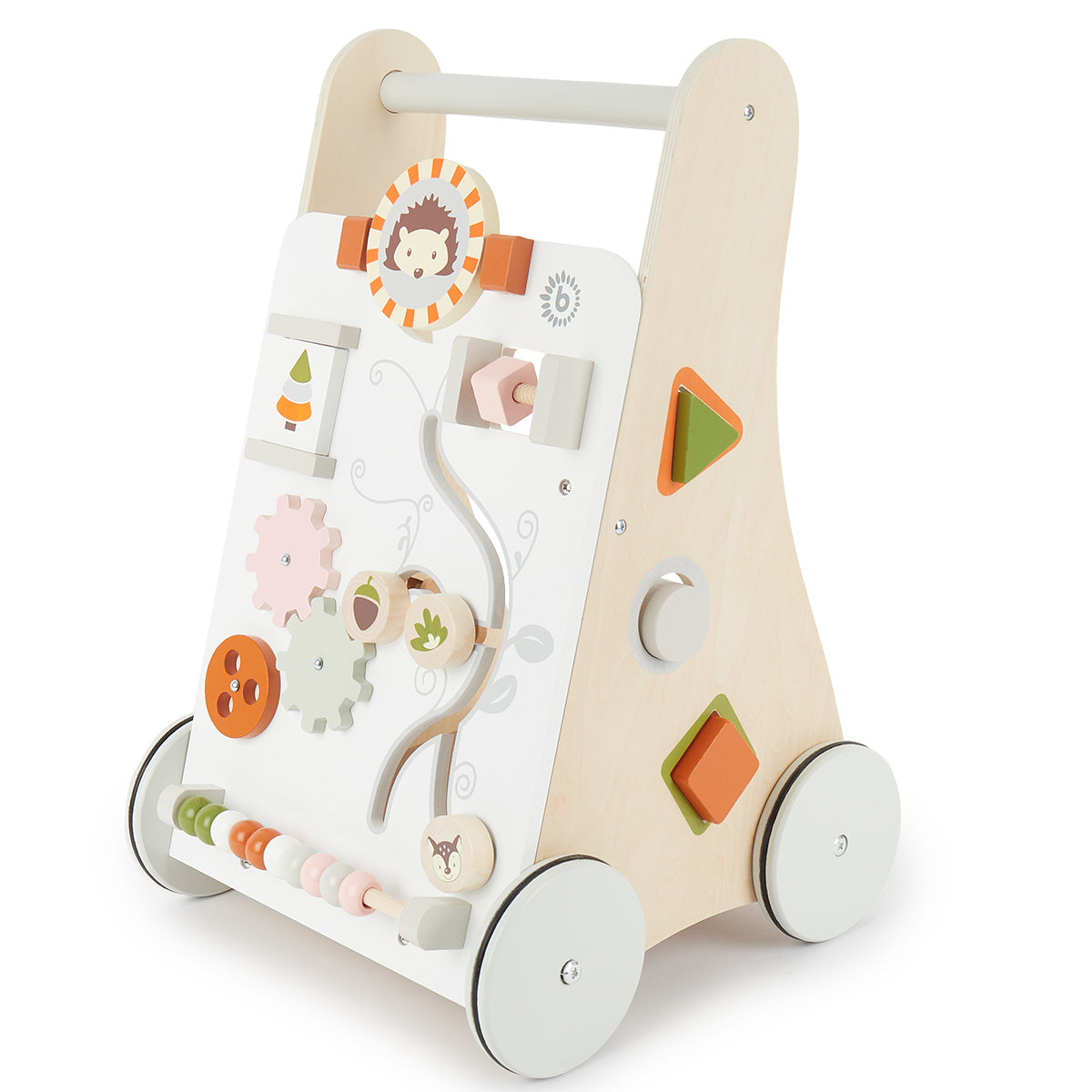
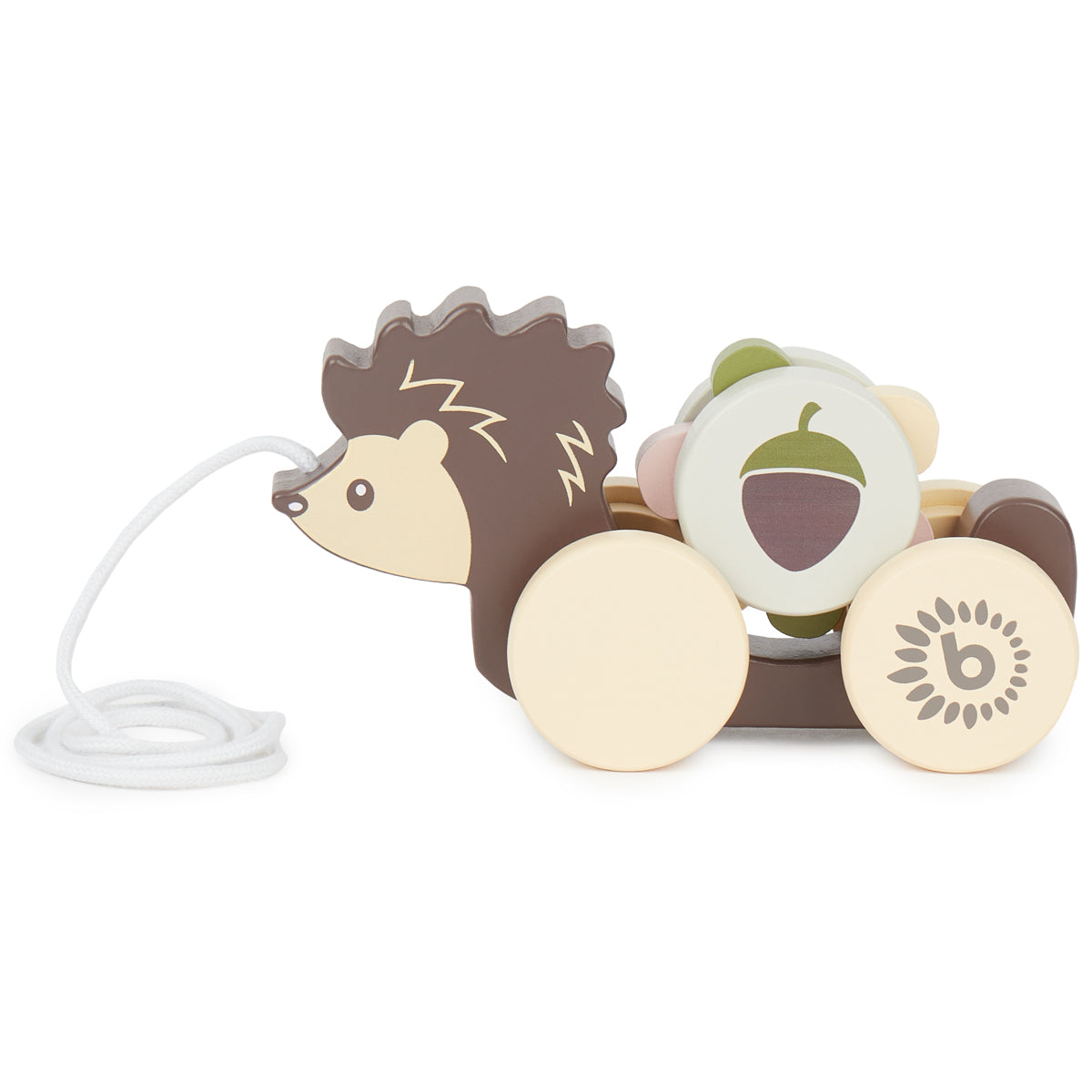
- Forest Animals Push Walker – if your living room may have a little “forest walk” feel.
- Black & White Push Walker – simple, high-contrast, goes with almost everything.
- Push Walker Box – handy when something should come along for the ride.
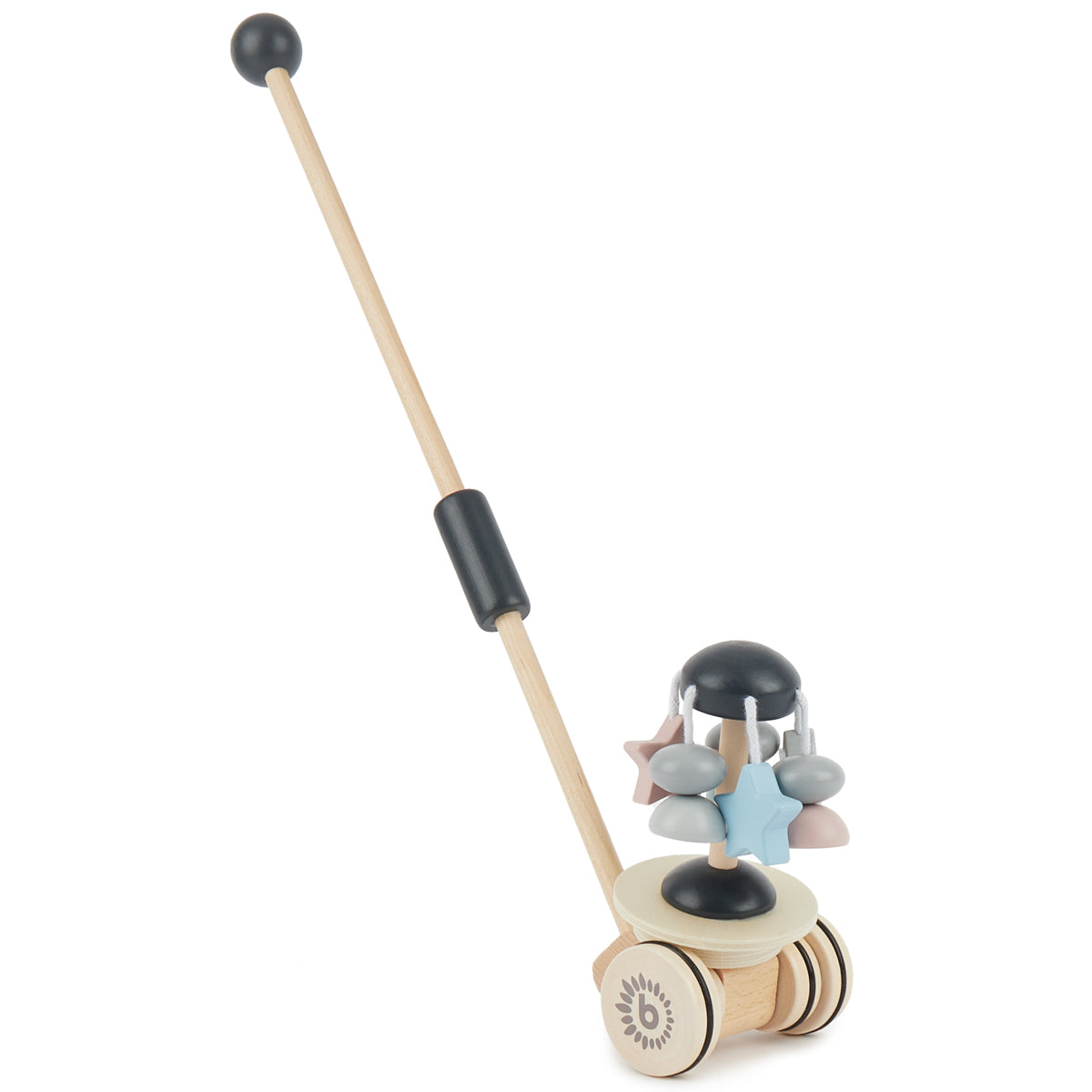
If your child prefers to sit and roll: ride-on vehicles are often the next step. Feel free to stop by Ride-On Scandi or browse the category Ride-On Vehicles. For younger siblings or as a gift to bring along, Pull-Along and Push Toys and Wooden Toys are always a welcome choice.
Wood fans, take note: there's a corner of its own for that. In Wooden Push Walkers you'll find a focus on wooden push walkers – without having to dig through the whole range.
FAQ: short & helpful (so you get to the product grid quickly)
From what age does a push walker make sense?
It usually makes sense once your child pulls up confidently and stands steadily. Then look for a brake/rolling resistance, a wide base, and a suitable handle height (elbows slightly bent). Start in a calm environment without stairs and edges. If you're unsure: better to test briefly and watch your child – that's often the best “rule”.
How worthwhile is a push walker?
It's worthwhile as a supplement – not as a shortcut to learning to walk. Children learn to walk mainly through free movement on the floor. A children's push walker can provide motivation if it's stable and doesn't roll away. If you notice your child just “hangs” on it or gets wobbly: take a break, have some water, keep playing.
Why are push walkers controversial?
The criticism is often about sit-in walkers/baby walkers – not push walkers. Sit-in walking aids are advised against by BZgA/Kindergesundheit-info because of accident risks such as falls down stairs (kindergesundheit-info.de). Stiftung Warentest also warns against such walking aids (test.de). A push walker is pushed – and still needs supervision.
What alternatives are there to a push walker?
Alternatives are free floor time, climbing, crawling, and push/pull toys. Many children also love a wooden walker cart (i.e. a simple push cart) without much “action” – or later a ride-on vehicle once they sit securely. For little explorers, pull-along animals are often a hit: pull, stop, pull again.
How long may a baby use a push walker?
Better short and supervised than long and “powering through”. If your child gets tired, stumbles, or just hangs on the handle, it's time for a break. Pay special attention to safe paths without stairs and trip edges – that's exactly where the nasty accidents happen. A few minutes here and there is often perfectly enough in everyday life.
Push walker for babies from what age – is there a fixed rule?
No – but “first stand, then push” is a good rule of thumb. If your child pulls up on their own, stands steadily, and holds on deliberately, a push walker may be a good fit. On smooth floors, a push walker with a brake or rolling resistance helps so the walker doesn't try to “escape”. And if it doesn't fit today: tomorrow is another day.
Wood or plastic – which is better?
Wood often seems sturdy, plastic often lighter – what matters is safe rolling behavior. A wooden walker can run more smoothly thanks to its weight, but it must be just as tip-resistant. Look for clean edges, sturdy construction, and appropriate labeling. If possible: let your child push it once and see whether they stay relaxed.
How can I recognize a “good” push walker in 10 seconds?
If it stands stably, rolls in a controlled way, and fits well in small hands. Do the tip test (press lightly from the side), check the handle height (elbows slightly bent), and look at the wheels (rubber is often quieter). And pragmatically: if you think “feels solid” when you pick it up – that's usually a good sign.
About this page
This collection description was written by the BIECO editorial team in Hamburg. We're a family business (for 66 years) and write the way we ourselves need it in everyday parenting life: short, practical, no panic. For safety basics we use reliable sources such as EU law (Toy Safety Directive 2009/48/EC) and expert information on child safety, e.g. from BZgA/Kindergesundheit-info and the DGUV. That gives you orientation – and you still get to the products quickly.
If you now simply want “a good one”: start with brake/rolling resistance and base. Click through our Push Walkers, if you love wood, take a look at Wooden Push Walkers – and choose the model that suits your floor and your space. The rest happens while pushing. And yes: the first free little step comes surprisingly often when nobody says “now walk!”
Related
By Ulli & Flo · Owners & parents More about us ↓

About this page
Ulli & Flo
Owners of bieco · Hamburg · parents ourselves
With baby walkers, we always keep two things in mind: smooth rolling and a stable stance, because little feet don't need any rush. And if it's just enough to hold on and look around for now: that's progress too.