Wooden or Plastic Learning Tower? A Material Comparison for Parents
At a glance
- Wooden learning tower: often heavier, steady stance, homey feel.
- Plastic: lightweight, quick to wipe clean, easy to move around.
- More important than the material: a tip-resistant design and non-slip feet.
- Kitchen or bathroom matter too: moisture, crumbs, cleaning stress.
- Transparency counts: clear information on surfaces and testing.

A wooden learning tower is usually the best choice if you want stability and that “it just stands there” calm. Plastic often suits you better if you're looking for something light and wipeable that constantly moves from room to room. In this guide you get an honest material comparison for the kitchen, bathroom and small living spaces – plus a practical checklist, so in the end you decide based on everyday life rather than gut feeling. And yes: we think consistently in terms of tomato sauce, wet hands and “Mommyyy, look!”.

Ulli & Flo
Owners of bieco · Hamburg · parents themselves
With learning towers we quickly learned: standing securely and being easy to clean beats any gut feeling about the material. If you find yourself brooding less afterwards, this article has done its job. Feel free to browse our learning tower collection.
What is a learning tower – and what is it used for?
A learning tower is a raised step stool for children with secured sides. It brings your child up to counter or table height, so they can join in when cooking, baking, brushing teeth or washing hands, without you having to rescue wobbly chairs.

A learning tower is a furniture piece for joining in: your child stands, you keep working. The goal is not to “park” them, but to involve them – in a way that doesn't leave you on constant alert whenever a foot moves.
A high chair is built for sitting, a learning tower for standing. If you see “learning tower high chair” somewhere, it's worth a closer look: these are two different uses, and the requirements for stability and enclosure are especially important when standing.
Practical tip: Place the learning tower so that you can stand right beside it. That way you can help without constantly twisting “around the furniture”.
Wooden learning tower: strengths, weaknesses and who it suits
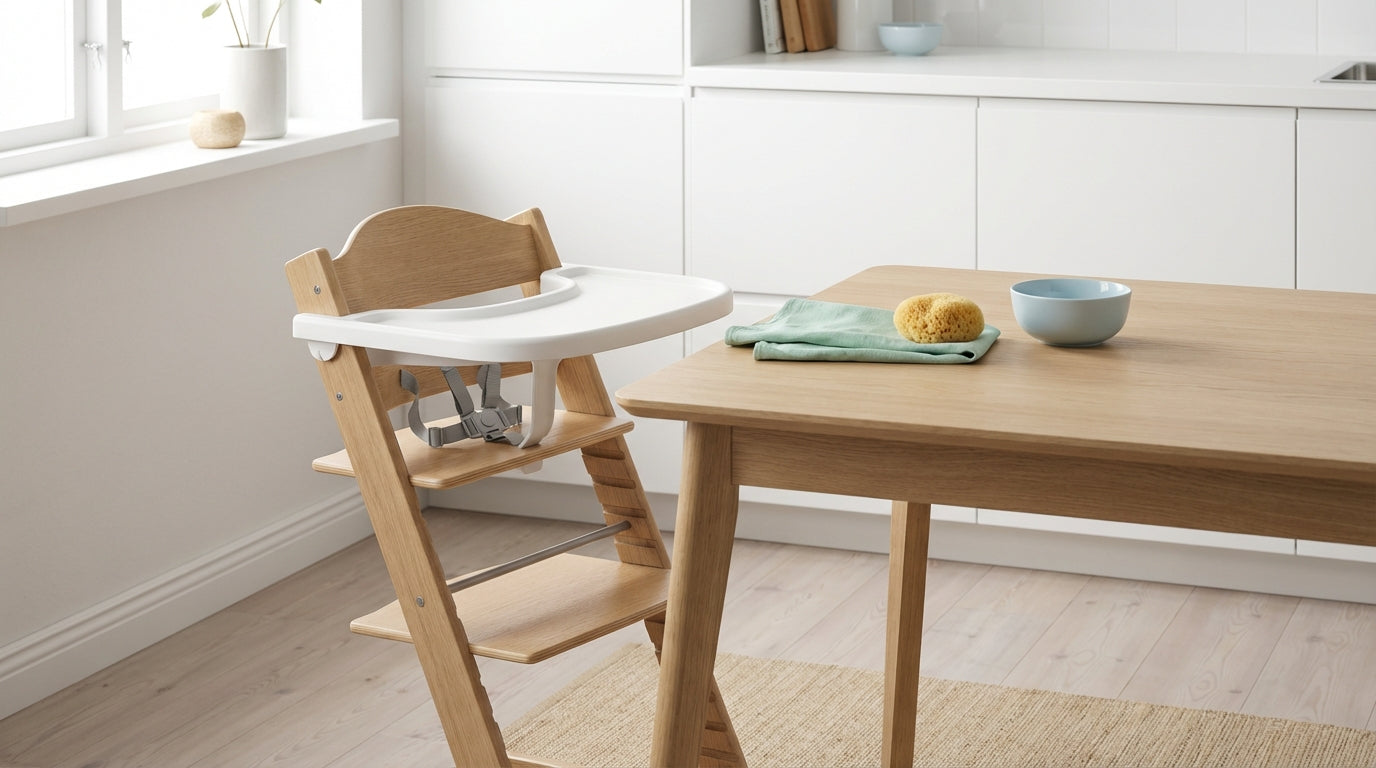
A wooden learning tower often feels more stable because many models have more weight of their own. That can be genuinely relaxing in everyday life: less sliding, less wandering, fewer “Whoa!” moments with every shift in weight.

- Stance & feel: Wood feels warm and more “furniture-like” – many people simply leave the tower standing.
- Weight: More weight can mean more stability, but sometimes turns moving it into a small workout.
- Surface: Sealed or lacquered, wood wipes clean well; untreated wood is more sensitive to moisture and stains.
- Look: Often fits nicely into open kitchens and looks less like a “toy”, more like “part of the furnishings”.
- Repairability: Small dings are often less dramatic with wood; depending on the surface, they can more easily be touched up.
A wooden learning tower is especially pleasant when it has a permanent spot. If the tower mostly stays in the kitchen, “carrying comfort” hardly matters – what counts is that it stands steadily and you don't have to keep repositioning it.
Plastic learning tower: strengths, weaknesses and typical places to use it
Plastic learning towers are often lighter and therefore quickly put away. That's handy if your kitchen is small or the tower shuttles between kitchen, bathroom and kids' room.

- Care: Smooth surfaces are usually quick to wipe – one pass and you're done.
- Weight: Easy to carry; depending on the design, though, “light” can also mean it slides more easily.
- Look: Often looks cleaner/more technical – can fit perfectly, you just have to like it.
- Scratches: Plastic can show scratches more visibly; that's cosmetic, not automatically a safety problem.
- Heat: Near the stove, keep your distance – regardless of the material.
Plastic is often the pragmatic choice if you move the tower frequently. If you live in a small apartment or have to put the tower away after cooking, you'll appreciate every kilo less – back and patience included.
Learning tower for the kitchen: what really matters about the material
In the kitchen, it's not the material alone that decides, but surface, stance and cleaning. Because this is where real life happens: crumbs, splashes, wet hands, clouds of flour and the classic “I'll just give it a quick stir!”.
- Moisture: If the tower often stands at the sink, a robust, easily wipeable surface is important.
- Slip behavior: Pay attention to how the feet hold on tiles, vinyl or parquet – anti-slip is worth its weight in gold.
- Edges & corners: Lots of edges = lots of crumb corners. The smoother, the faster you're done.
- Spot: Does it fit into “its” place without you playing Tetris every time?
Safety note: Place the learning tower well away from the stove, oven and hot pots. Heat sources are not playmates.
The best learning tower for the kitchen is the one you don't curse at when you're stressed. If you roll your eyes every time you clean or move it, it won't become a favorite piece of furniture – no matter how beautiful the material is.
Bathroom, kitchen, dining table: where does the learning tower really stand in your home?
The location often decides faster than any material debate. A learning tower that only stands in the bathroom “sometimes” needs different strengths than one in daily use at the sink.
In the bathroom (handwashing, brushing teeth)
In the bathroom, moisture and limited space are the main issues. Make sure the tower doesn't stand permanently in splash water and that you can put it away safely without it becoming a tripping hazard.
In the kitchen (chopping, stirring, washing up)
In the kitchen, steadiness counts because your child is constantly moving. Turning, leaning, “I'm just going to look in the pot” – that's normal. The tower should stay calm through all of it.
At the dining table (drawing, crafting, helping)
At the table, flexibility is often more important than maximum “kitchen toughness”. If the tower only serves as a standing spot for drawing here, a lighter model can make sense – as long as it stands securely.
Material & harmful substances: what you can realistically check
More important than “wood vs. plastic” is clear information on surfaces, paints and testing. Little hands quickly end up in mouths, and surfaces take a real beating in everyday life.
DIN EN 71-3 is a European standard for the migration of certain elements from toy materials. According to DIN, DIN EN 71-3 describes requirements and test methods for the migration of certain elements, e.g. lead or cadmium, from toy materials. (DIN Media)
Bisphenol A (BPA) is discussed in EU consumer protection particularly in connection with food contact. According to EFSA, the EU Commission decided in December 2024 to ban BPA in food contact materials. (EFSA)
Practical tip: Check the details: “What exactly is this surface?” Lacquered, sealed, coated – in everyday life that is often more decisive than the base material.
Quite pragmatically: choose the model whose material information you understand. “No information” rarely reassures – and parents, when in doubt, need clarity rather than guesswork.
Stability & construction: what really matters
The construction makes a learning tower safer than any material alone. A heavy tower can tip over if it's built badly – and a light one can stand securely if the base is right.
- Footprint: The wider and more thoughtfully designed the base, the steadier the tower stands.
- Side enclosure: Helps keep children from “drifting” sideways when they turn.
- Steps/entry: Good if your child can climb up and down independently without you having to lift them constantly.
- Slip resistance: Feet that suit the floor are important – especially on tiles.
- Workmanship: Clean edges, no splinters, no sharp transitions.
Safety note: Never leave your child unattended in the learning tower and only use it on level ground. Climbing is normal – but please no “I'll just grab the laundry quickly”.
Cleaning & care: how to keep the tower practical for everyday life
The best care routine is the one you actually do – quick and without special products. Let's be honest: if it's complicated, it only happens on Sundays. And Sundays are busy enough already.
Cleaning wood (sealed/lacquered)
For sealed wood, a slightly damp cloth is usually enough. It's important that no moisture sits for long – especially at edges and screw points. If your tower is oiled, follow the manufacturer's care instructions, because oiled surfaces react differently than lacquer.
Cleaning plastic
Plastic is often grateful: wipe, done. Make sure you get the crumbs out of grooves and transitions – that's where an entire lunch sandwich likes to collect in pieces.
Crumb strategy (for both materials)
A quick wipe once a day is better than a deep clean once a month. A small cloth in the kitchen drawer works wonders. Not romantic, but effective.
DIY vs. buying: weigh it honestly (without the crafting stress)
A DIY learning tower can be wonderful, but safety and stability then really have to be spot on. If you enjoy building and have experience with load-bearing constructions: great. If you get tired at the mere words “sorting screws”, a ready-made model is often the easier-on-the-nerves solution.
A learning tower is a load-bearing piece of furniture – not a decoration project. It has to withstand sideways movement, repeated climbing, and, when in doubt, a child who pushes off energetically. If you're planning DIY, allow time for proper sanding, safe edges and sturdy joints.
Decision guide: 10 questions that really help
If you answer these questions, the choice of material is usually clear. You don't have to write a doctoral thesis – you just want to peel potatoes in peace while someone “helps”.

- Where does the tower stand 80% of the time? Kitchen, bathroom or dining table?
- Does it have to be put away every day? Then weight and grip/handling matter.
- What is your floor like? Tiles are slipperier than carpet; feet and stance are crucial.
- How often does it get wet? Sink/bathroom = the surface has to withstand it.
- How wildly does your child climb? Then construction matters more than looks.
- How much space is there at the side? You want to be able to stand next to it without tying yourself in knots.
- How quickly do you want to clean? Smooth = faster, lots of corners = more crumb traps.
- What material information is available? Surface, coating, testing.
- Does it look good enough to be allowed to stay out? Sounds trivial, but saves nerves every day.
- How important is repairability to you? Wood often forgives more visually.
And yes: sometimes the best choice is the one you no longer argue about. Parental peace is a material too. Not standardized, but priceless.
Why we at BIECO pay so much attention to everyday life & transparency
We're a family business from Hamburg and like to think in a pragmatic, northern-German way. We've been doing this for 66 years – and Ulli & Flo write as parents for parents: we'd rather tell you clearly what to look out for than promise you the moon.
It's important to us that materials and workmanship are described in a way you can follow. Especially with children's furniture, transparency helps more than big words: which surface, which use, which care – so you know what you're putting in your kitchen.
FAQ
Is a wooden learning tower more stable than plastic?
A wooden learning tower often feels more stable because many models are heavier. What's decisive, though, is the construction: wide footprint, non-slip feet, side enclosure and clean workmanship. A well-built plastic tower can be just as practical for everyday life, as long as it stands securely.
Which material is better for a kitchen learning tower?
For the kitchen, what counts is: easy to clean and robust in daily use. Plastic is often very easy to wipe down. A wooden learning tower is great if the surface is well sealed – especially if it stands at the sink. Look at edges, grooves and whether you can get rid of crumbs quickly.
Can a learning tower replace a high chair?
Usually a learning tower doesn't fully replace a high chair, because it's meant for standing. At mealtimes, sitting is often more relaxed. If you're looking at a “learning tower high chair”, check carefully whether the model is really intended for both uses and what information the manufacturer provides.
How do I recognize good surfaces and harmless paints on wood?
Good indicators are clear information on the surface and verifiable testing. For surfaces close to children, DIN EN 71-3 is a well-known testing framework for the migration of certain elements; according to DIN, the standard describes requirements and test methods for this. (DIN Media)
Is plastic automatically “worse” just because it's plastic?
No, plastic isn't automatically bad – what matters is the material information and area of use. In consumer protection, BPA is discussed particularly in connection with food contact; according to EFSA, the EU Commission decided in December 2024 to ban BPA in food contact materials. (EFSA) For learning towers, what matters most is: stable construction and clear manufacturer information.
What should I do if I can't decide?
Decide based on the main place of use and how your nerves hold up when cleaning. If the tower stays in the kitchen: take the model that stands securely and is easy to clean. If it often has to be moved away: take the one you like to carry. For browsing, our Learning Tower Test & Comparison can also help.
Bottom line: the best material is the one that fits your everyday life. If you'd like to look at models, you'll find different variants in our learning tower selection – and in Buying a Learning Tower: What to Look For? Tips for Parents even more criteria to tick off. Then “wood or plastic?” quickly becomes “fits us”.