
Why Do Dogs Bury Toys in the Garden? Causes & Tips
At a glance
- Why do dogs bury toys in the garden? Often it's simply normal hiding for later.
- Typical reasons: instinct, too many toys, boredom, competition or insecurity.
- Everyday solutions: rotate toys, nose work, clear zones, allow a digging corner.
- Watch for warning signs: guarding, growling, snapping or frantic digging.
- Family tip: store kids' things and dog things separately, and things calm down.

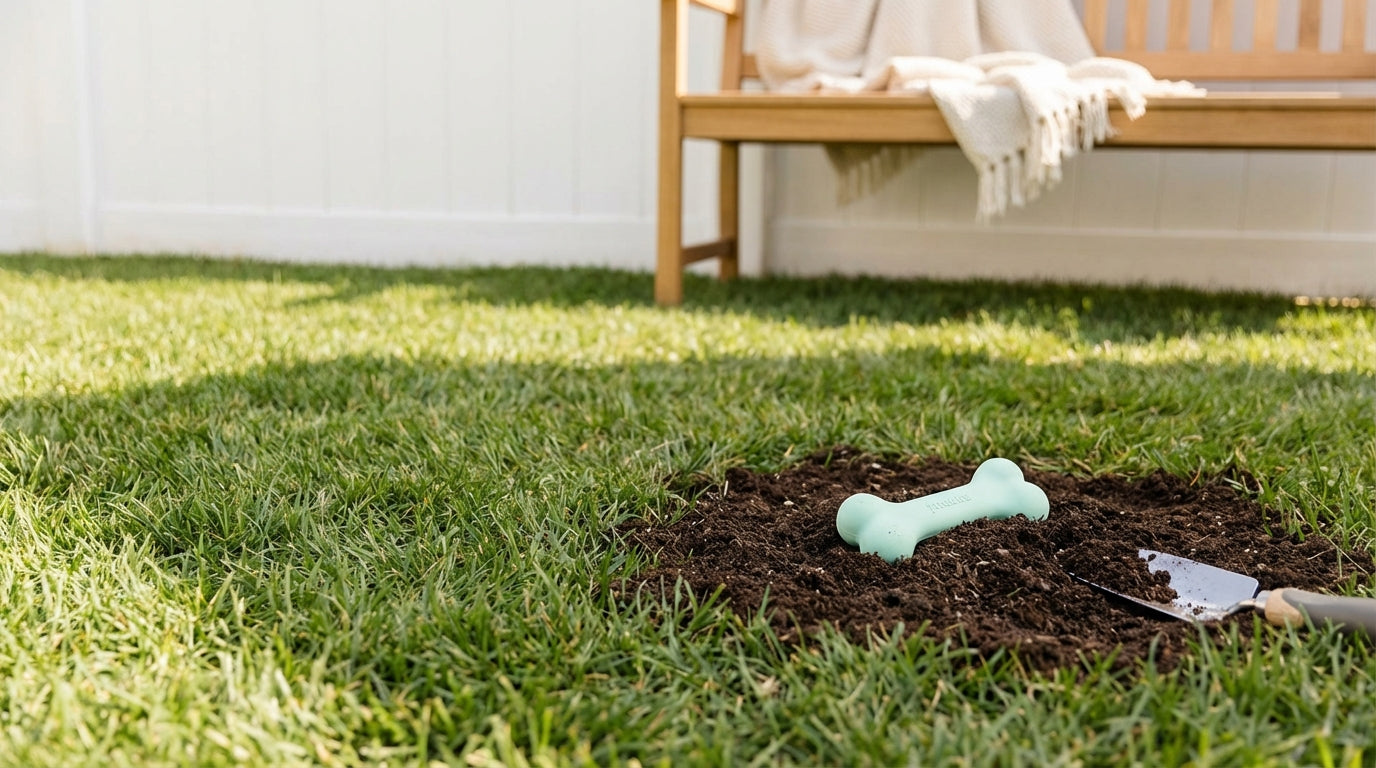
Dogs bury toys in the garden because hiding things “for later” can be completely normal behavior. To us it looks like garden vandalism; to the dog it's more like: “Securing the treasure, just in case the world ends tomorrow.” In this guide you'll find the most common causes, clear warning signs and practical solutions that work in family life – without you having to dig up the ball with a rake every evening.

Ulli & Flo
Owners of bieco · Hamburg · parents themselves
We know the scene: you turn around for a second and the favorite ball is “safely stored away.” With a digging corner and clear zones, most dogs settle down quickly. Feel free to browse our Outdoor Toys collection.
Why do dogs bury toys in the garden?
Burying is often “caching” – in other words, building small stashes. According to PetMD, this hiding behavior is described as “caching,” where dogs secure valuable things for later (PetMD). Especially popular are things that smell interesting or feel emotionally “important”: the favorite ball, chews, that one stuffed animal that has seen better days.
Caching means the dog hides objects in order to find them again later. It isn't defiance, and it isn't “he's trying to annoy me” – it's a strategy that is stronger in some dogs than in others. And yes: some of them seem to keep track of their hiding spots – or at least it looks that way.
Why does my dog bury his toys in the garden? The most common causes
Usually it's a mix of instinct, feelings and opportunity. Here are the classics – with small everyday hints on how to recognize them:

- Saving it “for later”: Your dog buries calmly, tamps down the spot and then walks away relaxed. This fits normal caching, as PetMD describes it (PetMD).
- Too many treasures at once: When toys are lying everywhere, some dogs start to “sort things out.” The American Kennel Club also mentions, in connection with hiding, that having fewer items available at the same time can help (AKC).
- Competition (dog, kids, visitors): More commotion = more need for a “safe stash.” Hill's names competition over resources as one possible trigger for hiding things (Hill's).
- Boredom or under-stimulation: Digging is an activity with instant payoff. As an approach against digging, the AKC mentions more activity and training (AKC).
- Stress or insecurity: Some dogs “tidy away” when they're nervous. Hill's lists anxiety/insecurity as a possible factor (Hill's).
- Heat (more relevant to digging than to burying): The AKC describes that dogs may dig to uncover cool soil (AKC).
Practical tip: If you can't see the trigger, jot down “When, what, who was there?” for 3 days. Patterns often jump right out at you.
Is burying toys a problem – or just being a dog?
It's usually harmless as long as your dog stays relaxed while doing it. A dog that buries calmly and digs things up again later is simply doing dog things. It becomes a concern when the behavior is linked to stress, constant digging or guarding – then it's worth taking a closer look.

Resource guarding means a dog defends an object or a place. PetMD describes that this can show up as growling, showing teeth or snapping when someone gets too close to the “treasure” (PetMD). That doesn't make him a “bad dog,” but it is a serious signal: management and training instead of arguing at the hole.
Safety note: If your dog growls, stiffens or snaps when you approach the digging spot: keep your distance, keep children away and work with a trainer who uses positive methods.
What to do if your dog digs in the lawn and buries toys?
You don't have to “make it go away” – you can redirect it cleverly. Especially in a family garden, this is often the least stressful route: a little management, a little activity, a few clear rules. Here is a plan that has proven itself.

1) Rotate toys instead of leaving everything outside
Fewer choices reduce the urge to “stockpile.” In connection with hiding, the AKC recommends, among other things, not leaving everything available all the time (AKC). In practice that means: 3–5 items are out, the rest disappear into a box and get swapped every few days.
Rotation means: a few toys are out, the rest come out later. It keeps toys exciting, reduces clutter and, as a bonus, is also a good “let's tidy up quickly” routine for kids.
2) Clear zones: dog treasures here, kids' things there
Separate storage prevents arguments and search missions. Kids' toys smell like family, sometimes stick with ice cream and are often a jackpot from a dog's point of view. If you keep things neatly separated, the chance that sand molds or toy diggers get “stockpiled” goes down.
A short tidy-up routine beats a perfect plan. Two minutes is enough: everything into one box, lid on, done. (And if it doesn't work out once in a while: welcome to real life.)
For family inspiration outdoors, our overview of outdoor play ideas fits right in. If you're getting the garden in order anyway, here are ideas for the kids: Outdoor Toys.
3) Set up an allowed digging corner (DIY)
A “yes zone” for digging is often more effective than scolding. As a tip against unwanted digging, the AKC mentions a dedicated digging spot (“digging pit”) (AKC). That takes the pressure off: your dog is allowed to dig – just where it doesn't hurt you.
How to build a digging corner in 30–60 minutes
You don't need a doggy engineering degree, just a clear spot. A simple digging corner can look like this:
- Choose a spot: Partial shade is often pleasant. Not right next to the kids' sandbox, or you'll have endless discussions.
- Mark the boundaries: For example with a wooden frame, lawn edging or a small bed area. What matters: it's clearly visible that “this is the area.”
- Fill it: Loose soil or sand (whichever suits your garden). What's important is that it's easy to dig in.
- Make the start attractive: Hide a few treats just under the surface or put a sturdy dog toy in, so your dog gets the idea.
- Redirect: If he starts somewhere else: calmly lead him over, let him dig there, and praise him.
Practical tip: At the beginning, mark the digging corner visibly (e.g. with a stone or a piece of wood). Dogs like clear “maps.”
4) More nose & brain – less constant ball play
Mental activity can noticeably reduce the urge to dig and hide. The AKC mentions mental stimulation and training as an approach to reduce digging out of boredom (AKC). And it works without much fuss:
- “3 cups” search game: Three upside-down cups, a treat under one – your dog gets to point it out.
- Mini training (3 minutes): Sit, down, hand touch, go to your blanket.
- Sniffing trail in the garden: Scatter a few crumbs in the grass and let your dog “work.”
5) In the heat: management instead of a lecture
If digging increases when it's warm, cooling down may be the motive. The AKC describes that dogs may dig to reach cool soil (AKC). In that case, shade, water and shorter garden times often help more than any “Stop that!”
Why do dogs bury toys in the garden and find them again?
Many dogs remember hiding spots through scent and landmarks. They use their nose, their surroundings and little “markers” like a flower bed edge, a tree or the patio. And yes, sometimes they look like a little pirate with an inner treasure map.
If your dog can't find something again, that's not automatically a problem. Some hiding spots are simply too good, or the rain has changed the spot. If your dog then gets frantic, it's better to redirect him into a search game than to keep winding him up.
What mistakes do we humans make most often?
Most slip-ups happen out of stress – not out of stupidity. Three typical stumbling blocks that I see in families all the time:
- Scolding right at the hole: This can increase stress or make digging even more exciting. Better: calmly interrupt, redirect, offer the digging corner.
- Taking everything away immediately: When “treasures disappear,” hiding can even increase. Better: swap (for a treat or another toy) and then manage the situation.
- Unclear rules: Sometimes he's allowed to dig, sometimes not – depending on mood. Dogs love clear lines (and so do we humans, by the way, we just don't admit it).
Family garden: how to keep it safe when kids are outside too
With children, dog behavior quickly turns into a safety and organization topic. Two things almost always help: clear zones (kids' area vs. dog area) and a simple routine (tidy up briefly, put toys away, give the dog an alternative). That means less competition – and less reason to hide or guard things.

A simple rule of thumb: kids stay away from dog hiding spots. If you notice that your dog finds certain spots “important,” turn them into a no-go zone for children. That's not dramatic, it's smart.
A few words from Hamburg (and why we take this so calmly)
We're a family business from Hamburg and know garden chaos pretty well. At bieco we've been making things for families for 66 years – and Ulli & Flo write as parents for parents: pragmatic, honest, no drama. It's important to us that things work outdoors for everyone: kids, dog, neighbors with sensitive lawns.
If you want to organize the garden more calmly for kids, sturdy play ideas and clear storage help. For warm days, you'll find inspiration in our Water Toys for the Garden collection, and for the little ones there are ideas at Outdoor Toys for Toddlers.
FAQ
Why do dogs bury toys in the garden?
Usually it's normal hiding behavior (“caching”) and no big deal. Dogs use it to secure valuable things for later or to hide things when there are too many. Common triggers are instinct, boredom, competition or insecurity. What matters is whether your dog stays relaxed while doing it or whether he guards the hiding spot.
Why do dogs bury toys in the garden and find them again?
Many dogs find hiding spots again through scent and landmarks. They remember places in the garden and use their nose. Sometimes it doesn't work because rain, the lawn mower or fresh soil have changed everything. If your dog then searches frantically, it's better to redirect him into a calm search game.
What should I do if my dog digs in the lawn?
Redirecting is often more effective than forbidding. Set up an allowed digging corner and consistently guide your dog there. Add more nose work and fewer toys lying around all the time. The AKC mentions a “digging pit” and more activity as measures (AKC).
When does burying become a warning sign?
If growling, snapping or strong guarding come into play, it's serious. This can be resource guarding. PetMD describes threatening behavior when people get too close to the “treasure” (PetMD). In households with children the rule is: keep your distance, manage the situation and get support from a trainer who uses positive methods.
How do I stop my dog from burying kids' toys?
Separation and routine are half the battle. Store kids' things and dog toys separately and tidy up briefly but regularly outside. If your dog deliberately takes kids' things, offer an alternative and practice swapping calmly and kindly. Chasing after him usually just makes it more exciting.
Does more exercise help against digging and burying?
Often the right kind of activity helps – especially for the brain and nose. A dog can be physically tired and still have a busy mind. The AKC mentions mental stimulation and training as an approach against boredom digging (AKC). Short search games in the garden are worth their weight in gold for many dogs.
If you want to organize the garden in a child-friendly way, clear storage and good play ideas help. In our guide How to Store, Protect & Clean Outdoor Toys Properly you'll find practical tips that really make a difference in everyday life with a dog and kids.


