Rattle Music: How a Rattle Becomes Your Baby’s First Musical Instrument
At a glance
- Rattle music shows your baby: movement makes sound – I can do this.
- A gentle sound, a good grip and no loose parts matter more than looking “pretty”.
- Rattle eggs are great for rhythm games, but usually better suited to bigger little hands.
- Mini games of 30–90 seconds are plenty – you’re not a touring orchestra.
- Check the age recommendation and safety information such as EN 71 and warnings.

Rattle music works best when you play briefly, softly and regularly. That way, the rattle becomes your baby’s first musical instrument almost by accident – no sheet music, no pressure, no “we really must be stimulating now”. In this guide you’ll find simple games for 0–12 months, a little orientation on rattles, rattle eggs & more, and a down-to-earth look at sound and safety. As we say in northern Germany: a little done well beats a lot done in a rush.

Ulli & Flo
Owners of bieco · Hamburg · parents themselves
What we love about rattle music is that it works without any effort: a quick shake, a quick smile, and on you go. And if it’s only a mini moment – that’s completely enough. Feel free to browse our Rattle collection.
Why is a rattle a musical instrument?
A rattle is a musical instrument because movement deliberately creates sound and rhythm. For babies, this is a real aha moment: “When I move my hand, something happens.” And yes, sometimes what happens is: Mum looks up. In the baby universe, that counts as applause.

“Cause and effect” means: doing something and noticing the result. This is exactly the principle that becomes playfully tangible with rattling – quite literally. Along the way, your child practises grasping, holding, shaking, listening and first pauses (that famous “second when everyone goes quiet”).
Practical tip: If your baby gets wound up quickly, play three mini rounds of 30 seconds rather than one long session.
Rattle as a musical instrument: What types are there (and what are they good for)?
Not every rattle sounds the same – and that’s quite handy in everyday life. Quieter versions suit calm moments, while clearer sounds are better for the “I’m awake now” programme in the morning.

- Fabric or plush rattles: Often a softer sound, lovely for cuddling and exploring.
- Teether with rattle: A combination of grasping and sound – helpful if your baby likes to have something securely “in hand”.
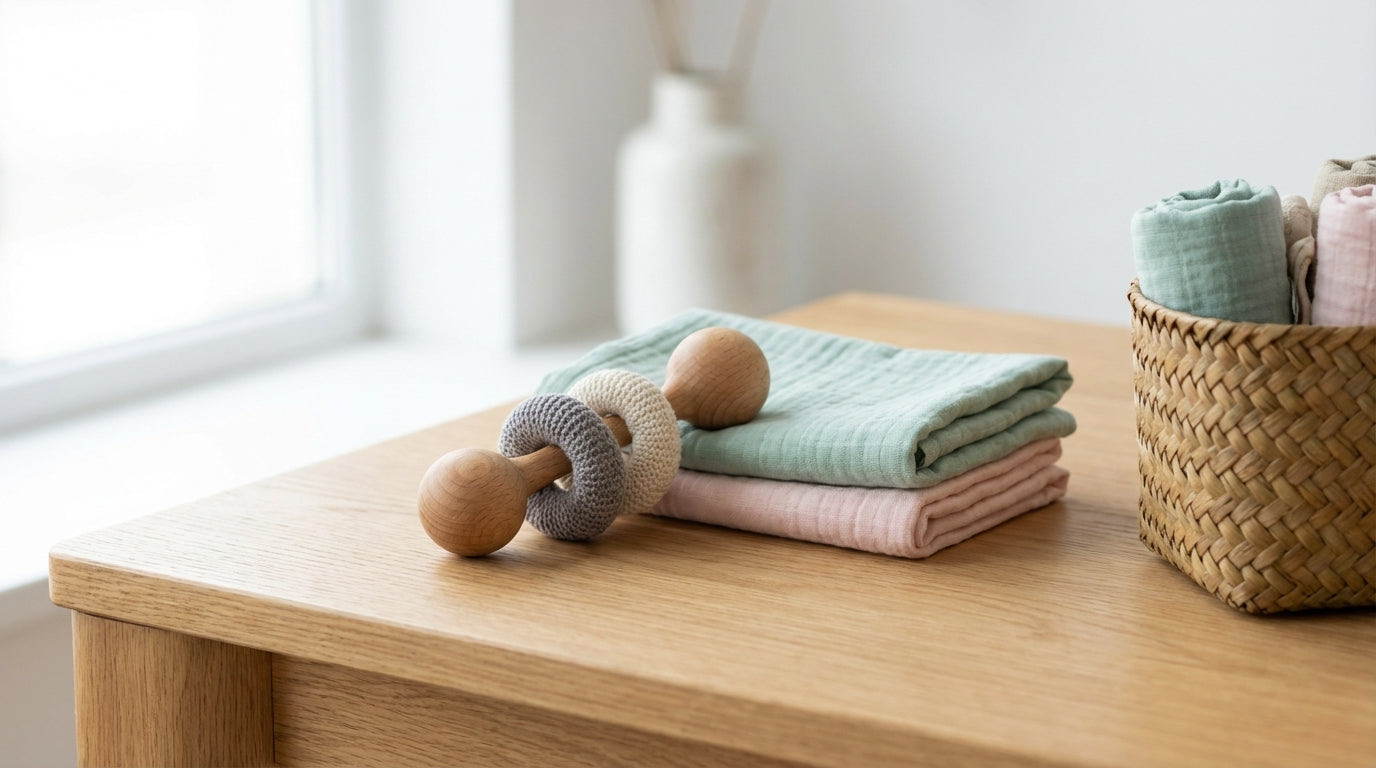
- Wooden rattles / dumbbell rattles: Often easy to grip, with a clearer sound depending on the filling.
- Maracas (for children): Usually only exciting later, when your child shakes with more strength and aim.
If you’d like to browse: you’ll find different options in the Rattle overview. And if you like wood, take a look at Wooden Baby Rattles – they often feel lovely and “honest” and sit nicely in the hand.
What are rattle eggs – and when do they make sense?
Rattle eggs are small rhythm instruments that sound evenly when shaken. They’re often more “instrument-like” than classic baby rattles – so great for rhythm games, but not necessarily the first thing for newborns.
A good fit means: the instrument can be grasped and held securely. Once your child can grasp more purposefully, rattle eggs get really interesting – and the famous “stop-and-go” game works without the egg going off on a world tour.
For rhythm ideas, find inspiration at Rattle Eggs & Rattle Instruments. That’s more about “making music” than cuddling.
Mini music games with the rattle (0–12 months): short, friendly, repeatable
Babies love repetition – and parents love short games. So: small bites that you weave into the day. 30–90 seconds is perfectly fine.

1) “Hello Sound” (from the first weeks, very gently)
A quiet rattle in a calm environment is all you need. Sit next to your baby, rattle once briefly, pause, then again. Watch whether your child turns their gaze or goes still. That’s already “music” – just without a stage and without a ticket.
2) Left-right localisation (when your baby starts looking for sounds)
Move the rattle slowly so your baby can follow the sound. Rattle on the left, pause, then on the right. Important: not directly at the ear. According to the WHO, the louder the sound, the shorter the listening time should be – so play gently and keep your distance rather than getting “up close”, according to the WHO (Safe listening).
3) “Stop!” – the favourite game as soon as your child joins in
Learning rhythm also means: tolerating and anticipating pauses. You shake 3–4 times, say “Stop”, hold still – and wait. Many babies eventually respond with a look, a movement or a little sound. That’s a sense of rhythm in miniature.
Practical tip: The “Stop” game fits perfectly into nappy changes – you’re there anyway, and your baby has something to listen to.
4) “Answer rattle” (when your baby shakes on their own)
You set a pattern – your baby answers however they can. For example: you shake “short-short-long”, then wait. Your child shakes somehow – and you respond warmly. This creates a first back-and-forth that feels to your baby like “we’re making music together”.
5) “Soft–loud” (for later, when your child finds differences exciting)
Contrasts make music understandable: sometimes gentle, sometimes a bit stronger. You shake very softly first, then normally, then softly again. Important: “loud” here doesn’t mean “racket”, just “a little more”. If your baby gets unsettled, turn it down straight away. And there you have it: your conducting career.
Which rattle sounds “good” to babies?
For babies, “good” usually means: gentle, not shrill and not too loud. A hard clatter can quickly become unpleasant in small rooms – for your child and for you (and yes: for the neighbours too, who already hear everything anyway).
A soft sound suits calm moments like cuddling or the evening ritual. A clearer sound is fun during the day when your child is more alert. If you’re unsure, choose the quieter option – you can always make “more music” by playing a little longer (with pauses) or varying the rhythm.
Safety & everyday life: What to look out for with rattles and rattle eggs
Safety note: Only use rattles under supervision and check them regularly for loose parts, cracks or split seams.
You can recognise a safe rattle by clear information on age, material and warnings. In the EU, the Toy Safety Directive 2009/48/EC sets out essential safety requirements for toys, according to the European Commission.
EN 71 is a key series of standards for toy safety in Europe. DIN EN 71-1 describes requirements and test methods for the mechanical and physical properties of toys, including special requirements for children under 36 months, according to DIN Media (DIN EN 71-1).
“Warning notice” means: a short mandatory text that draws attention to risks. For you, it’s not red tape but a quick orientation: Does the age fit? Are there small parts? Is there guidance on use?
Practical: read the safety information directly on the product page. At BIECO, this information is clearly shown in the product notes (e.g. age recommendation, warnings and information on standards) – not glamorous, but worth its weight in gold in everyday life.
As a Hamburg family business, we’ve been doing this for 66 years – and we know how toys are really used. Namely not just carefully, but sometimes with enthusiasm, drool and full-body commitment. That’s why clear materials, clean workmanship and transparent safety information aren’t “nice to have” for us, but standard equipment.
DIY: Making a simple rattle yourself (without the small-parts drama)
A DIY rattle for older children works best with a firmly sealed container. Important to say first: for babies and small children, homemade rattles are only a good idea if nothing can open, splinter or be swallowed.
A “sensory bottle” is a simple rattle variant in a sturdy format. This means a small, firm plastic bottle (e.g. travel size) that you fill and seal permanently and securely, so that it makes a sound when shaken.
What you need
- 1 small, sturdy plastic bottle with a screw cap (undamaged, no cracks)
- Filling such as dry rice or dry pasta (a small amount is enough)
- Optional: wide adhesive tape to secure the cap even further
How to do it (step by step)
- Check the bottle: No cracks, cap fits properly.
- Fill it: Only enough that it rattles well but still leaves some “air”.
- Seal it: Screw the cap on tightly and additionally secure it with tape.
- Test it: Shake it hard once, then pull on the cap – nothing must come loose.
- Only use under supervision: Especially when siblings are playing too.
Safety note: Homemade rattles are only suitable for babies if they are permanently and securely sealed and cannot release any small parts.
If you want something baby-friendly and worry-free, tested toys are usually the more relaxed choice. DIY is nice – but parenting is already enough of a craft project.
Rattle music in everyday life: How to keep it relaxed (for you too)
Music in a baby’s day often means: two minutes of sound, then quiet again. You don’t have to “push through” anything. If your baby is tired: pause. If you’re tired: definitely pause.

A mini ritual helps: same rattle, same moment, short and friendly. Many babies like predictability – and you benefit too, because you don’t have to think up something new every time.
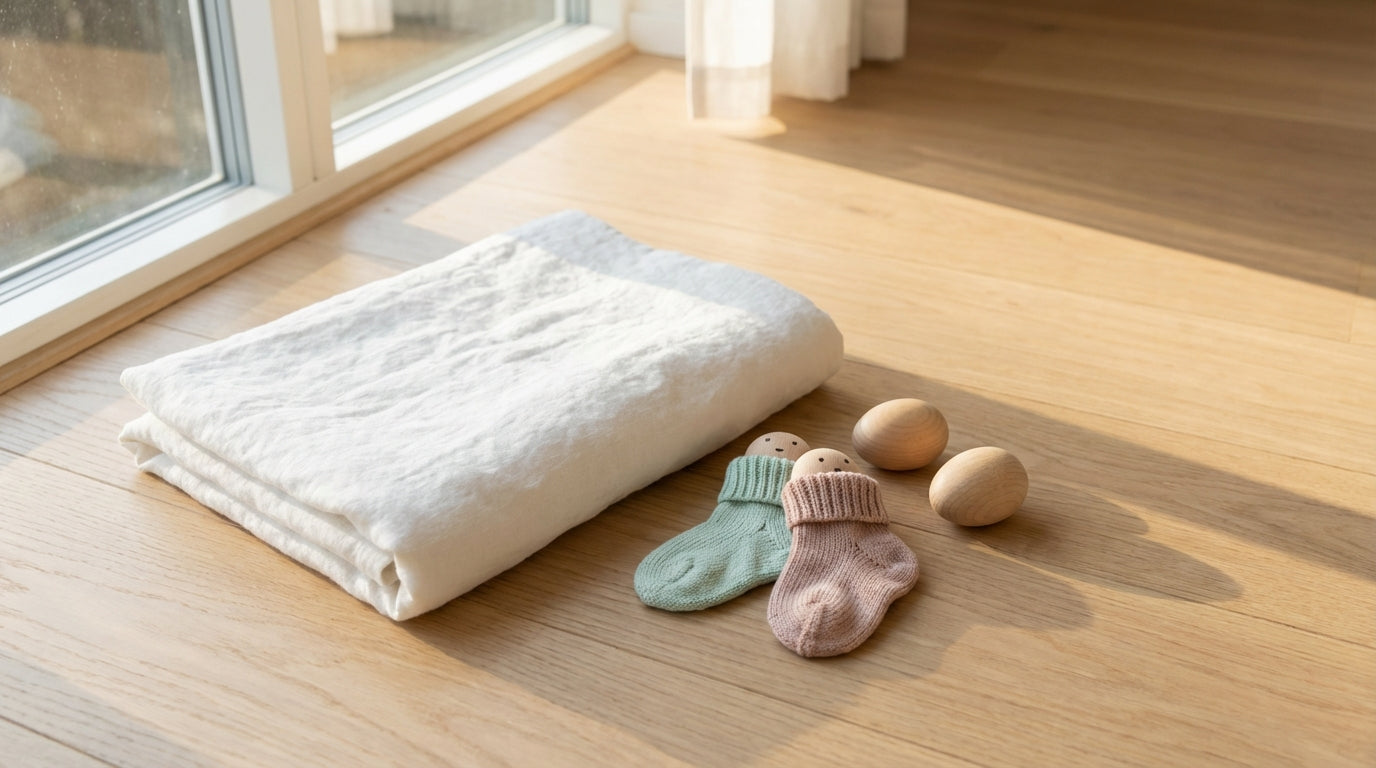
Rattle socks are a fun variation because your child hears themselves “make sound”. Move the feet – it sounds. This can be really exciting for some babies because they perceive their body in a new way. If that suits you, find inspiration at Rattle Socks for Babies.
FAQ
From what age does rattle music make sense?
Rattle music can start very gently from the first weeks. At first it’s not about “joining in” but about listening: a short sound, a pause, again. Once your baby grasps more purposefully, it turns into active shaking. If your child gets restless: quieter, shorter, try again later.
How loud is “too loud” for a rattle?
Anything that sounds shrill or startles your baby is too loud. As a rule of thumb: never play directly at the ear, keep your distance and take breaks. The WHO explains that as volume increases, safe listening time decreases, according to the WHO (Safe listening).
Rattle egg vs. baby rattle: What’s the difference?
A rattle egg is usually a pure rhythm instrument, while a baby rattle is often a grasping toy. Rattle eggs sound even and are great for rhythm games. Baby rattles are often designed to also support grasping, feeling or cuddling. For very small babies, “easy to hold” is often more important than “stage sound”.
How can I tell whether a rattle is safe?
Look for the age recommendation, warnings and information on standards. The EU Toy Safety Directive 2009/48/EC sets out essential safety requirements, according to the European Commission. In addition, DIN EN 71-1 describes tests for mechanical/physical properties, according to DIN Media.
How long should you play with the rattle at a time?
30–90 seconds per round is plenty for many babies. You can spread it over the day: briefly at nappy changes, briefly on the play mat, briefly before heading out. If your baby looks away, gets fussy or quietly “shuts down”, that’s a good sign to stop. There’s always music tomorrow.
Which rattle makes a good newborn gift?
A light, easy-to-hold rattle with a gentle sound is often the best fit. Look for an age recommendation from 0 months and for clear material and care instructions. Gift-givers don’t have to know everything – but it’s nice when you can see at a glance: this is well thought out and suited to everyday life.
If you’d like to look at different options, you’ll find them collected in the Rattle collection. For rhythm fans there are also Rattle Eggs & Rattle Instruments – and if you like the “self-sounding” idea, take a look at Rattle Socks for Babies.