
Wooden Puzzles
Sort by
1 product
zuletzt angesehen
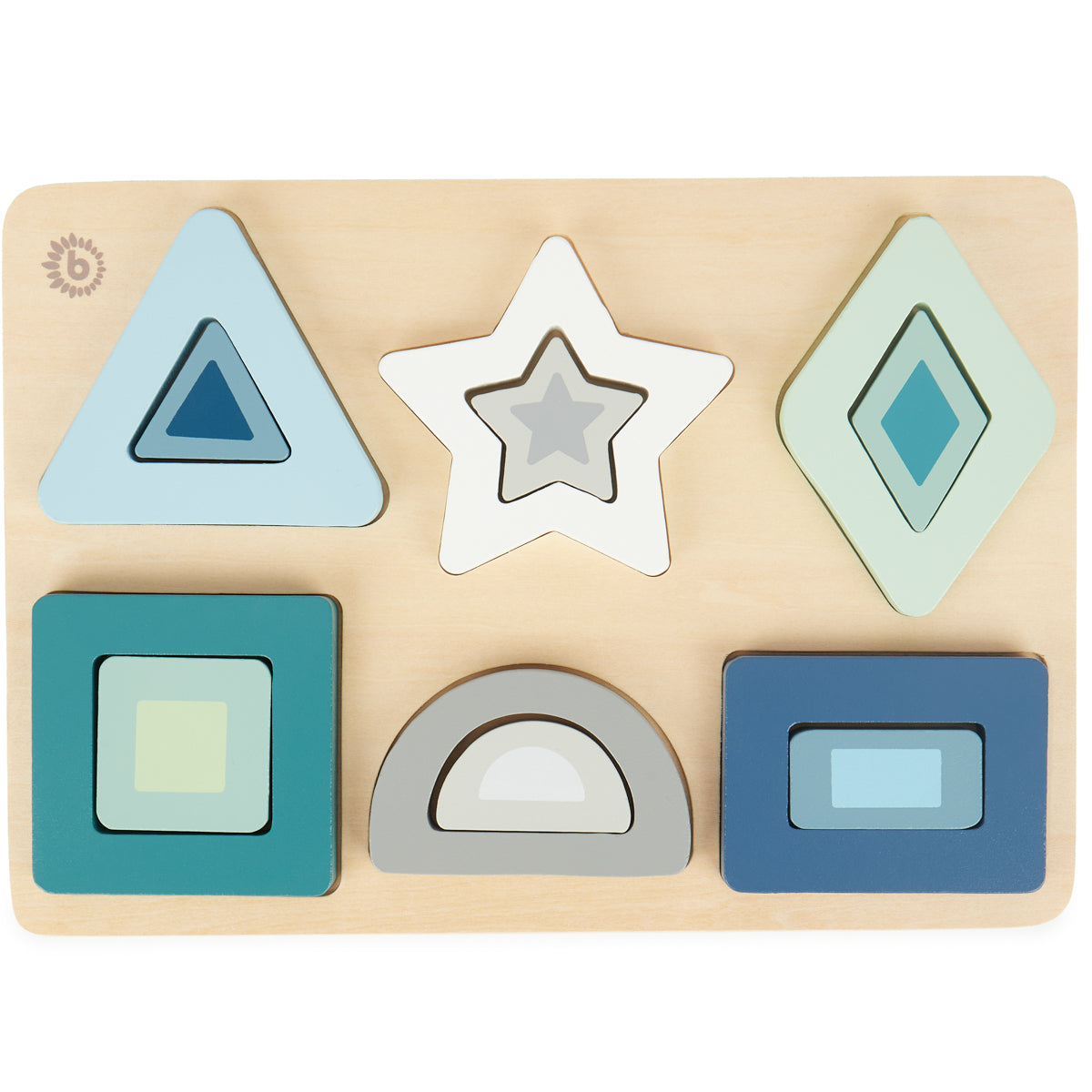
Wooden puzzles are children’s puzzles made of wood, where easy-to-grip pieces make placing them much simpler. That’s why this category deserves its own page: wooden puzzles are often the “first puzzle” that brings a few calm minutes at the kitchen table—and that keeps going even after the third tumble off the chair. If you’d like the big wooden-toy overview, hop over to wooden toys—there you’ll find everything we have made from wood.
- Gripping comes before piece count: For little hands, chunky pieces or peg knobs are worth their weight in gold.
- Peg puzzles = quick success: Cut-outs help you get started and save everyone’s nerves.
- Frame puzzles = more “real puzzling”: The border gives orientation without overwhelming.
- Quick safety check: CE mark, age recommendation, no loose small parts—done.
- Keep care simple: Wipe with a damp cloth, let dry well, don’t soak.
Last updated: 10 February 2026. Especially when it comes to safety and legal information, I prefer to double-check the original sources.
Which wooden puzzles suit which age? (from 1 year, from 2 years—nice and easy)
A wooden puzzle is a good fit when your child can deliberately grasp and turn pieces. The age recommendation on the packaging is a helpful guide—but in everyday life, what matters is: Can your child hold a piece securely, turn it, and let go again without everything immediately going into their mouth?
Wooden puzzles with handles or peg knobs are often the most relaxed way to start. These “fine-motor puzzles” feel like a little plug-in game for many children: touch, lift, place, done—and boom, a sense of achievement. (And yes: little wins are a hard currency in family life.)
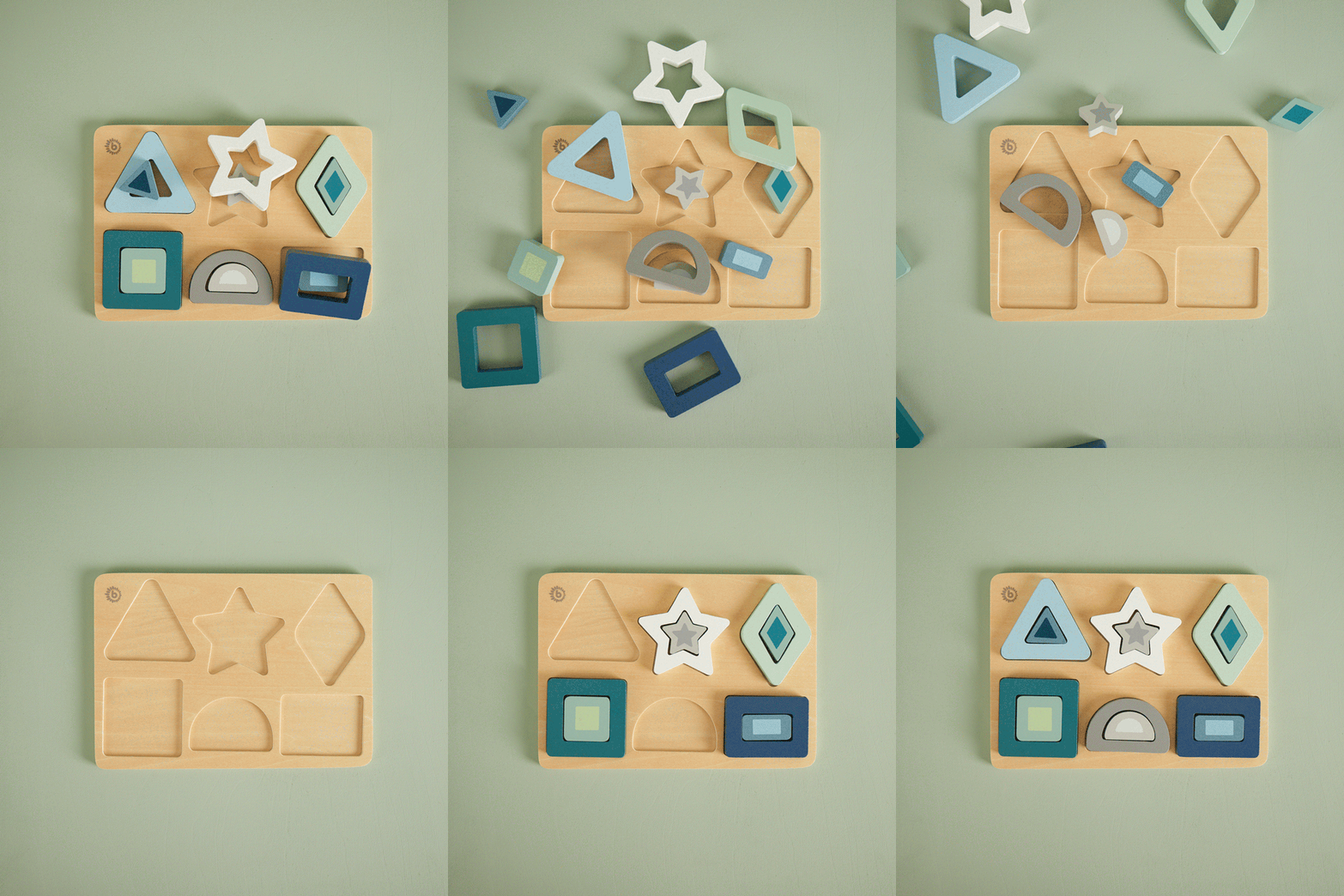
Wooden peg puzzles are low-frustration because the shape already “tells” you where it goes. If you’d like a closer look at the differences between peg puzzles, magnetic puzzles & more: our guide explains it in more detail—without you having to scroll forever here: Peg puzzles & magnetic puzzles: benefits, differences & recommendations.
Frame puzzles are great when your child is starting to enjoy “thinking in pictures.” The border works like a little guardrail: first the outside, then the inside—and suddenly you’re doing “real” puzzling, without it having to be 48 pieces right away.
Wooden peg puzzles, shape puzzles, frame puzzles: the variations—briefly explained
The type of puzzle decides whether it’s more “plugging in” or “puzzling.” So you can categorize things faster while browsing the collection, here’s a mini glossary you could even jot down on a note next to your coffee:
- Peg puzzle: Pieces go into cut-outs—this often works early on and motivates quickly.
- Shape puzzle (wood): Clear shapes (circle, star, animal shapes) help with matching—ideal if your child loves sorting.
- Wooden puzzle with handle/peg knobs: Small knobs make gripping easier—practical while finger skills are still developing.
- Frame puzzle: A fixed border keeps the picture together—great as the next step after a peg puzzle.
Wooden children’s puzzles are often a bit heavier—which can be a blessing and a curse on the go. It sits more steadily on the table (blessing), but every gram counts in the diaper bag (curse). If you’re out and about a lot, lightweight activities like stroller toys or a small grasping toy are often a great complement.
Safety & materials: what to look for with wooden puzzles (without panic mode)
With wooden puzzles, smooth edges and firmly attached parts are the be-all and end-all. Especially with the very youngest, “everything gets tested” should unfortunately be taken literally. The German consumer advice center explicitly recommends for wooden toys: no small parts should come loose; for paints/varnishes, the toy standard DIN EN 71-3 should be complied with (Verbraucherzentrale: Toys without harmful substances).
CE is mandatory—it’s the manufacturer’s declaration of compliance with EU toy rules. In the EU, toys must carry a CE marking; the Toy Safety Directive 2009/48/EC is the central basis for this (EUR-Lex: Directive 2009/48/EC).
Among other things, the EU regulates limit values for 19 “heavy elements” in accessible toy parts. The European Commission explicitly lists these 19 elements (e.g., lead, cadmium, mercury) in the context of toy safety (European Commission: Toy safety).
EN 71-1 and EN 71-2 are the “classics” for mechanics and flammability. DIN EN 71-1 describes requirements and test methods for mechanical/physical properties of toys (e.g., for children under 36 months) (DIN Media: DIN EN 71-1), and DIN EN 71-2 covers flammability; a current version is, for example, DIN EN 71-2:2025-08 (DIN Media: DIN EN 71-2).
New EU rules have been adopted—best to read the details directly from the EU. The European Commission states that the Toy Safety Regulation (EU) 2025/2509 entered into force on 1 January 2026 and will apply after a transition period from 1 August 2030 (European Commission: Legislation).
Which wooden puzzle fits when? A comparison that truly helps
If you’re unsure, decide based on grip, piece count, and your mood for tidying up. It’s not poetic, but it saves evenings.
BIECO & wooden puzzles: what we do differently (and where you can read about it)
BIECO is a family business from Hamburg—and for us, that’s not just something in the legal notice. If you’d like, you can read our story and values directly here: About us—including a timeline (starting in 1958) and what matters to us in design.
In everyday life, that means for you: calmer colors, Scandi-inspired design, and things you’re happy to leave out. BIECO itself describes that products in muted tones are meant to work as “mix & match” and visually fit into your home (BIECO: About us).
And now, very practically: you can browse the collection right here. In our wooden puzzles overview, you can browse by themes and puzzle type—and if you also need a little “movement in between,” pull-along and push toys or a classic little baby walker are often the perfect addition.
By the way, wooden puzzles also make a gift that rarely misses the mark. If you’re unsure: a simple wooden peg puzzle (ideally with peg knobs) is “just right” for many families—not too loud, not too big, not too complicated.
FAQ: wooden puzzles
From what age are wooden puzzles a good idea?
Wooden puzzles make sense as soon as your child wants to grasp and place pieces intentionally. Many start from 1 year with a simple wooden peg puzzle or a shape puzzle. If your child still puts everything in their mouth, choose very large pieces and always stay close by.
Which is better: a wooden puzzle with handles (peg knobs) or without?
Peg knobs often make getting started easier; without them feels more like a “classic puzzle.” Peg knobs help when hand and finger motor skills are still practicing—this fits well with the developmental steps described by kindergesundheit-info.de for the early years (BZgA: Hand and finger motor skills).
How do I recognize a good wooden puzzle (safety & workmanship)?
Good wooden puzzles have smooth edges, sturdy pieces, and no loose small parts. Look for the CE mark, a clear age recommendation, and clean workmanship. For wooden toys, the German consumer advice center also recommends: no detachable small parts and, for paints/varnishes, guidance based on DIN EN 71-3 (Verbraucherzentrale: Tips for wooden toys).
What’s the best way to clean a wooden puzzle?
Usually, wiping with a damp cloth and then letting it dry thoroughly is enough. Wood doesn’t like long baths in water—it can warp. If there was porridge or juice on it: wipe promptly, dry, done. Don’t worry, this won’t happen “maybe,” but pretty much for sure.
Wooden puzzle or puzzle mat—which is more practical?
Wooden puzzles are great for focused play; puzzle mats are great for “leaving it out.” If your child likes to pause mid-way, a mat can help keep things from slipping. More on this in our guide: Puzzle mats for kids: playtime fun & safety in the nursery.
If you’d like to start browsing right away: here you’ll find our wooden puzzles. And if you’re looking for even more wooden toys (from grasping toys to first-walker fun): wooden toys is the relaxed “everything at a glance” starting point.
Von Ulli & Flo · Inhaber & Eltern Mehr über uns ↓

Über diese Seite
Ulli & Flo
Inhaber von bieco · Hamburg · selbst Eltern
Wir lieben Holzpuzzle als „Küchentisch-Retter“: hinlegen, Kind beschäftigt, du atmest einmal durch. Und wenn’s runterfällt – na ja, Holz ist da meist weniger nachtragend als wir.